*The Green Inferno — A Trip to the Heart of Darkness (And a One-Way Ticket to Nausea)*
*The most scathing, gut-wrenching takedown of *The Green Inferno*—a film that will make you question humanity (and your own gag reflex).*

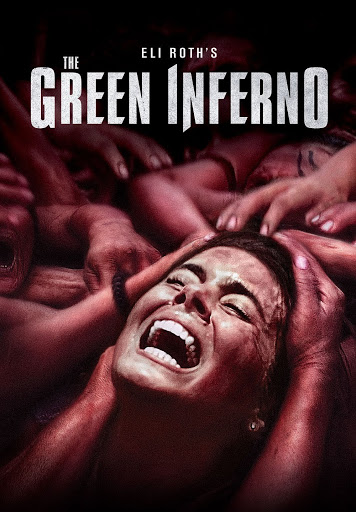
Eli Roth’s career is that rare cinematic specimen that swings between genius and excess—like Tobe Hooper on steroids with an MBA in nightmare marketing. Since bursting onto the horror scene with Cabin Fever (2002), a film that reeked of cheap beer, teenage sweat, and rotting flesh, Roth has proven that gore isn’t just a tool—it’s a sacred language. His filmography is a rollercoaster ride through the bowels of genre cinema: from the torture porn of Hostel (2005), where human flesh became a canvas for capitalist sadism, to the Giallo homage of The Green Inferno (2013), rebranded in Spanish as El infierno verde to leave no doubt that this isn’t eco-tourism—it’s cannibalism with a side of colonial guilt. Roth isn’t a director; he’s a surgeon of discomfort, a guy who understands that horror isn’t just about scaring you—it’s about inducing existential dry-heaves while you squirm in your seat like a worm on a sadist’s hook.
The Green Inferno was born at the worst possible time: when Hollywood decided horror had to be woke, inclusive, and—above all—safe for anxious teens. Fresh off directing The House with a Clock in Its Walls (2018), a family film where the only cannibals were Amblin executives, Roth decided to return to his roots with a script co-written by Guillermo Amoedo, that Chilean screenwriter who seems to hold a PhD in human despair. The premise was as old as exploitation cinema itself: a group of well-meaning activists travels to the Peruvian jungle to save an indigenous tribe from deforestation, only to discover the tribe would rather save them—for dinner. But Roth didn’t want to make Cannibal Holocaust 2.0 with smartphones and selfies. No, he wanted something filthier, more visceral, more physical. He wanted the audience to feel the mud under their nails, the stench of burning flesh in their throats, and the weight of Western guilt as the natives peeled their skin off in strips. And damn if he didn’t pull it off.
Shooting in Peru wasn’t exactly a stroll through Machu Picchu. The crew faced extreme conditions: humidity that glued clothes to skin like a second layer, fist-sized insects, and actors who—according to unconfirmed rumors—genuinely thought they were going to die when Roth told them some cannibalism scenes would use practical effects. The jungle isn’t a set; it’s a character in itself, one that breathes, sweats, and watches from the shadows with the patience of a predator. Roth, who had already shown in Hostel that he loves torturing his actors (literally), took the method to the extreme: the cast had to live in near-real conditions, eating local food and sleeping in bug-infested tents. Lorenza Izzo, the lead and Roth’s then-wife, said in an interview that making the film was like “performing a personal exorcism.” And she wasn’t wrong: The Green Inferno isn’t just a horror movie—it’s a purification ritual by fire, where the hypocrisy of Western activism burns in the bonfire of its own contradictions.
But beyond the morbidity and blood, what makes The Green Inferno fascinating is its sickly cinematography. Antonio Quercia, the director of photography, understood from the first frame that this wasn’t a film about nature—it was about rot. The jungle isn’t lush or beautiful here; it’s a labyrinth of sickly greens, bilious yellows, and bottomless blacks. Quercia uses natural light like a knife, filtering it through leaves to create patterns that look like veins in a dying body. When the tribe captures the protagonists, the lighting becomes even more claustrophobic, with reddish tones that evoke raw meat and shadows that slither like snakes. The editing, by Erick Hayden, is just as brutal: the cuts are fast, almost convulsive, as if the film itself is having a panic attack. There’s one sequence—when the activists discover the first corpse—that’s a masterclass in visual suspense: the camera circles the body, revealing grotesque details (flies, festering wounds, broken teeth) while Manuel Riveiro’s score—a collage of distorted ambient sounds and tribal percussion—drills into your brain like a rusty nail.
Direction: The Steady Hand of a Butcher with Style
Eli Roth doesn’t direct films—he dissects them. In The Green Inferno, his style reaches a maturity few would’ve predicted after Hostel: Part II (2007), where the gore was so over-the-top it bordered on comedy. Here, though, the terror is slow, viscous, and psychological, like an infection spreading under the skin. Roth proves he’s studied the greats: there are echoes of Werner Herzog in how he films the jungle as a living, hostile organism; of Dario Argento in his use of color and lighting; and even of John Carpenter in his tension-building. But what’s most interesting is how he subverts genre expectations. Instead of cheap jump scares, Roth prefers atmospheric dread—the kind that settles in your stomach and lingers long after you turn off the screen. The scene where the protagonists find the first corpse—a hanged activist displayed like a trophy—is a perfect example: no blaring music, no screams, no quick cuts. Just the sound of wind, creaking branches, and the uncomfortable silence of knowing something is watching from the dark.
But Roth isn’t a one-trick director. He also knows when to let chaos reign. The cannibalism scenes are brutal but never gratuitous: filmed with a realism that makes them unbearable, as if Roth decided the audience should feel the characters’ pain. There’s a moment when one of the natives tears a chunk of flesh from a thigh with his teeth, and the camera doesn’t flinch. No quick edits, no digital effects to soften the blow. It’s cinema in its purest, most primitive form, where horror isn’t simulated—it’s lived. And that, dear readers, is something 99% of today’s horror films wouldn’t dare attempt.
Cast: Fresh Meat for the Feast
The Green Inferno’s cast is young but not inexperienced. Lorenza Izzo, as Justine, the activist leader, proves why she’s one of the most interesting actresses in horror today. Her character is a mix of naive idealism and ironclad determination—someone who thinks she can change the world with a hashtag and a pair of hiking boots. Izzo conveys a vulnerability that makes the audience root for her, even when she’s making the dumbest mistakes (like venturing into the jungle without a map because “nature will guide us”). There’s a scene where Justine is dragged toward the tribe’s camp, sobbing, and it’s impossible not to feel her terror—not because Izzo is overacting, but because she looks genuinely broken. Roth, then still her husband, didn’t cut her any slack: rumors say he made her shoot the scene over and over in the rain until Izzo was so drenched and exhausted that her tears weren’t acting—they were survival.
Alongside her, Ariel Levy shines as Jonah, the group’s photographer and the only one who seems to sense something’s off from the start. Levy, a Chilean actor with a towering physical presence, brings a rawness that contrasts with the rest of the cast. His character is the group’s cynic, the one who doesn’t buy into the eco-rhetoric and—ironically—is the first to fall into the tribe’s trap. Levy has a memorable scene where he tries to negotiate with the natives using Google Translate, and the result is as absurd as it is terrifying: the cannibals don’t understand his words, but they sure as hell understand the fear in his eyes. It’s a moment that encapsulates the film: techno-colonialism vs. primitive savagery, with the audience caught in the middle, not knowing which side to root for.
The rest of the cast delivers, though some characters fall into clichés. Aaron Burns as Lars, the muscle-bound activist who thinks he can punch his way to saving the world, is the group’s token jock, but Burns gives him enough charisma to be bearable. Ignacia Allamand as Karla, the team’s medic, has an interesting arc: she starts as the voice of reason but ends up losing her mind in a way that recalls The Descent (2005). However, the film’s real discovery is Matías López, a Peruvian actor who plays the Shaman, the tribe’s leader. López has no dialogue, but his presence is hypnotic: with his body painted red and black, bloodshot eyes, and a grin full of sharpened teeth, he’s the perfect embodiment of ancestral terror. There’s a shot where the Shaman slowly approaches the camera, as if he knows the audience is there, and it’s one of those moments that leaves you breathless.
Technical Breakdown: When the Devil’s in the Details (and the Blood)
If there’s one thing that elevates The Green Inferno above the cannibal-movie pile, it’s its flawless technical execution. This isn’t just a well-shot film—it reeks of rot. Let’s start with Antonio Quercia’s cinematography, a guy who understands the jungle isn’t a pretty backdrop but a living, diseased organism. Quercia uses a color palette straight out of a Francis Bacon painting: acidic greens, blood-reds, and bottomless blacks. Lighting is key: in daytime scenes, light filters through leaves like blades, creating patterns that look like veins in a dying body. At night, the activists’ flashlights cast elongated shadows that move like specters, and the tribe’s firelight illuminates the cannibals’ faces with a demonic glow. There’s one shot—when Justine is dragged toward the camp—where the camera is at ground level, showing her legs moving through the undergrowth: it’s so realistic you can almost feel the mud on your own hands.
Erick Hayden’s editing is another highlight. Hayden, who’d worked with Roth on the original The Green Inferno, understands that horror’s pacing can’t be linear. Some sequences are slow and oppressive, like when the activists first explore the jungle, while others are fast and chaotic, like during the tribe’s attack. Hayden also knows when to use silence: moments where the score vanishes, leaving only the characters’ breathing and the crack of branches. It’s pure terror, the kind that makes you hold your breath without realizing it.
Manuel Riveiro’s score is another win. Riveiro, an Argentine composer specializing in experimental music, crafts a soundscape that’s an auditory nightmare. There are no recognizable melodies, just distorted ambient sounds, tribal percussion, and choirs that sound like lost souls. In the scene where the activists find the first corpse, the music is a constant buzz, like thousands of flies swarming inside your head. And in the film’s climax, when the tribe feasts, the score becomes a pagan ritual, with drums pounding like heartbeats and voices whispering in indigenous tongues. It’s so unsettling you’ll want to cover your ears.
But if any technical aspect deserves an honorary Oscar, it’s the practical effects and makeup. Roth, who’d already shown his love for gore in Hostel, outdoes himself here. KNB EFX Group’s work—the same team behind The Walking Dead—is so realistic it’s nauseating. Wounds fester, flesh rots, and dismembered bodies look like they’ve been freshly pulled from a morgue. There’s a scene where an activist is flayed alive, and the effect is so graphic and detailed you’ll have to look away. Roth doesn’t settle for blood—he wants you to feel the pain, smell the burning flesh, and taste the fear in your own mouth. It’s cinema at its most visceral and primitive, and it’s glorious.
Costumes and production design also deserve a nod. The activists wear brand-name gear—Patagonia tees, The North Face boots—like social-justice influencers. In contrast, the natives wear body paint made of blood and mud, bone necklaces, and wooden masks. The message is clear: green capitalism vs. primitive barbarism, with the audience stuck in the middle, not sure which side is worse. The tribe’s camp is especially unsettling: it’s littered with human skulls, bones hanging from trees, and altars caked in dried blood. It’s as if Dante and Hieronymus Bosch teamed up to decorate hell.
### The best
- Eli Roth’s direction: A sadistic surgeon’s work, where every frame is calculated to provoke discomfort. Roth proves horror isn’t just about scares—it’s about making the audience feel filthy.
- Antonio Quercia’s cinematography: A sickly color palette that turns the jungle into a living, hostile organism. The lighting is pure nightmare, with shadows that slither like snakes.
- The cast, especially Lorenza Izzo and Ariel Levy: Izzo delivers heartbreaking vulnerability, while Levy brings a raw physicality that steals scenes.
- Practical effects and makeup: KNB EFX Group works magic with flesh and blood, creating cannibalism scenes so realistic they’ll make you gag.
- Manuel Riveiro’s score: An auditory nightmare that drills into your brain like a rusty nail. No melodies, just sounds that raise the hairs on your neck.
- Production design: The tribe’s camp is a macabre masterpiece, where every bone and skull tells a story of ancestral horror.
### The worst
- Predictable plot: Though Guillermo Amoedo’s script is solid, the premise is as old as exploitation cinema. You know from the first act that everyone’s going to die, and the how isn’t exactly groundbreaking.
- Stereotypical characters: Lars, the muscle-bound activist, is the group’s token jock, and his arc is as predictable as it is dull.
- Uneven pacing: Some moments drag, especially in the first act, when the activists still haven’t realized the jungle isn’t a theme park.
- Anticlimactic ending: After so much tension and gore, the finale falls short, like Roth decided he’d tortured the audience enough and just wanted to go home.
- Excessive graphic violence: While effective, some scenes border on unbearable, even for genre fans. Not a film for the squeamish.
### The Verdict of Claqueta Ácida
The Green Inferno isn’t content with just scaring you—it wants you to feel guilty, dirty, and betrayed just for being human. Eli Roth has crafted a film that’s as uncomfortable as it is necessary, a warped mirror where the West can see its worst sins reflected. It’s not a perfect movie: it has predictable moments, stereotypical characters, and an ending that falls flat. But when it works, it works brilliantly. Roth’s direction is brutal yet intelligent, the cast is young but talented, and the technical work is flawless. If you’re a fan of extreme horror, well-executed gore, and films that leave a bitter taste in your mouth, this is your movie. If not, stick to Toy Story. Because The Green Inferno isn’t cinema for everyone—it’s cinema for those who enjoy feeling the devil whisper in their ear. And at Claqueta Ácida, we love that. 💀
🎬 Tráiler Oficial
💬 El Veredicto de la Comunidad
¿Qué te ha parecido la película? Deja tu nota de 0 a 10 para contrastarla con el análisis de la redacción.
Aún no has votado
📢 ¿Te ha gustado el ácido?
Comparte esta crítica con tus amigos cinéfilos o desata la polémica en redes.
📩 📩 Get the poison in your inbox
Join our weekly mailing list. Honest film reviews, acid festival coverage, and cult recommendations every Sunday morning. Zero spam, pure celluloid.
🔒 We promise weekly poisonous reviews and exclusive coverage.Related Reviews
Recommended autopsies for demanding film buffs.
 ⚡ Ácido Cítrico7.0
"Hostel: The Tourist Trap Where They Butcher You with a Smile"
Eli Roth turns Slovakia into a backpacker slaughterhouse with this festive gore-fest that reeks of blood, sweat, and adolescent testosterone. Art? No. Fun? Plenty.
 ⚡ Ácido Cítrico7.5
*The Green Inferno: A Trip to the Heart of Darkness (And a One-Way Ticket to Nausea)*
*The most scathing, gut-wrenching takedown of *The Green Inferno*—a film that will make you question humanity (and your own gag reflex).*
 ⚡ Ácido Cítrico6.2
*Exit 8*: The Horror Station That Can’t Find Its Way Out (And Neither Can You)
Genki Kawamura adapts *The Exit 8* video game with more loops than a politician’s campaign promises. Will it escape the purgatory of J-horror, or is it doomed to linger in its own terminal?