*Children of the Corn (1984) — When the Cornfield Becomes Hell and the Low Budget Your Worst Nightmare*
Fritz Kiersch gifts us a rural slasher with psychopathic kids, murderous corn, and a budget tighter than a chewing gum wrapper. Claqueta Ácida dissects this cult classic... only to bury it with full honors.

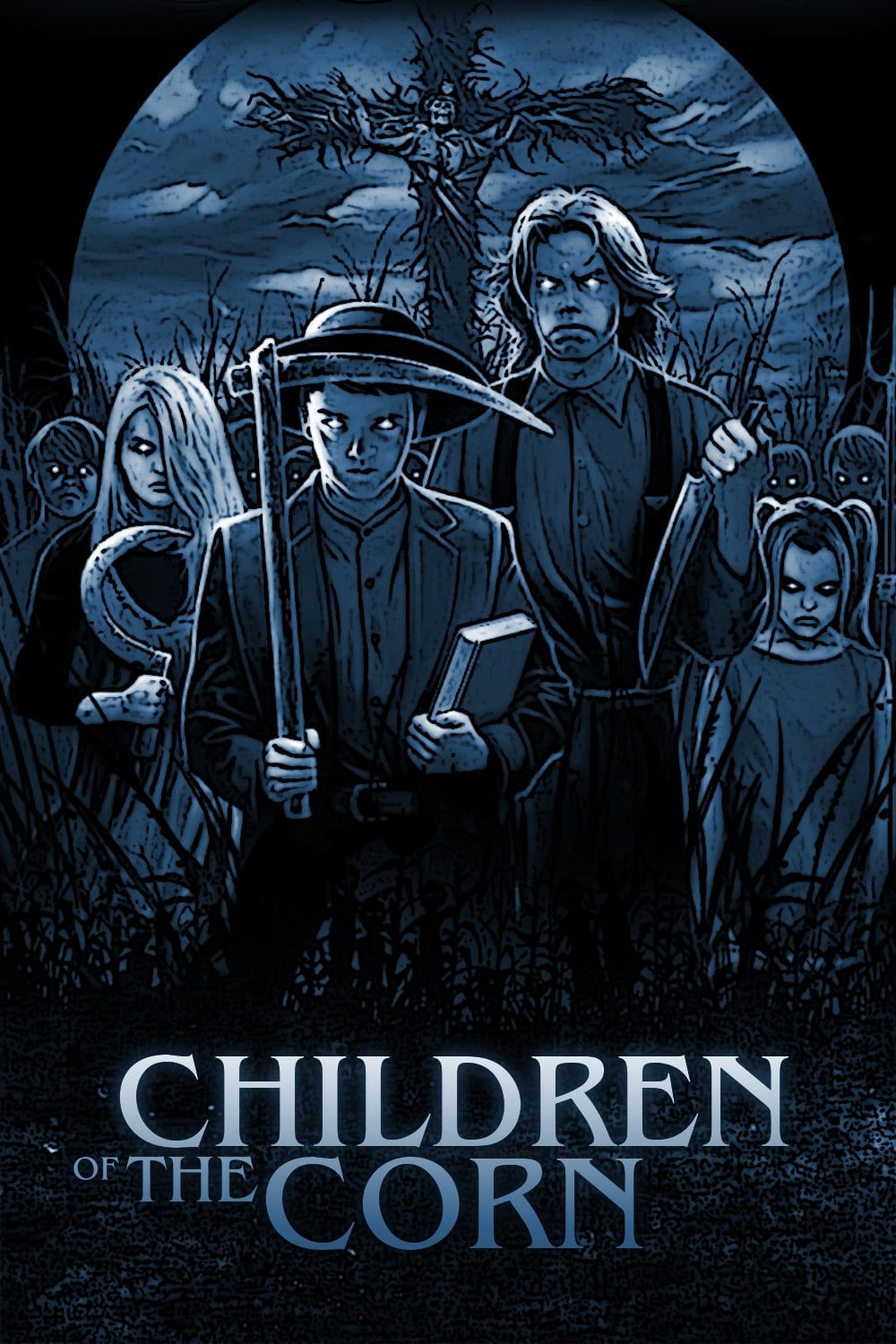
Children of the Corn (1984): When the Cornfield Becomes Hell and the Low Budget Your Worst Nightmare
The celluloid crackles like dry leaves under a fugitive’s feet in a low-budget horror flick—and no, that’s not a poetic metaphor, but a literal description of what happens when you venture into Children of the Corn (1984). This film emerges from the bowels of B-movie cinema like a misshapen yet fascinating freak, a hybrid of rural horror and Satanic folklore that reeks of burnt popcorn, teenage sweat, and that unmistakable scent of desperation only found in productions made in a hurry, with little money and a lot of faith that audiences will swallow anything as long as there’s blood and possessed kids. Fritz Kiersch, a first-time director making his feature debut, tackled a Stephen King story with the subtlety of a bull in a china shop. And, against all odds—or perhaps because of that—the result isn’t a total disaster, but a cult oddity that functions like a funhouse mirror reflecting 1980s American fears: the terror of the rural, the loss of innocence, and the dread of kids trading angelic halos for psychopathic grins and farming tools.
The Context: When VHS Ruled and Horror Was Its Court Jester
To understand Children of the Corn, you have to rewind to 1984, a year when horror cinema was enjoying a golden age of cheap but clever productions, where ingenuity more than made up for the lack of budget. It was the era of VHS, that devilish invention that let viewers devour movies from the comfort of their homes while producers rubbed their hands, filling video store shelves with anything that had blood, teens, and a vaguely original monster. In this case, the monster was the cornfield itself: an endless field turned claustrophobic labyrinth and the setting for a low-budget folk nightmare.
Kiersch, who until then had only directed commercials and music videos—explaining his knack for selling smoke with pretty shots—found himself with a script by George Goldsmith that adapted King’s story but significantly altered its tragic ending. But, oh surprise, the result had a naïf charm, as if a TV craftsman had decided to film a religious parable instead of a run-of-the-mill slasher. And here’s the paradox: Children of the Corn isn’t a good movie, but it’s an interesting one, and in 1980s horror, that was already more than most could say.
The Cast: From Future Stars to Kids with Chilling Gazes
The cast of Children of the Corn is a catalog of faces that would soon become familiar in 1980s film and TV, though they didn’t know it yet. Peter Horton and Linda Hamilton—yes, the same Linda Hamilton who that very year would become Sarah Connor in The Terminator—play Burt and Vicky, two city slickers lost in the middle of nowhere who end up in the wrong town. Their chemistry is solid for the drama they endure, and Hamilton shows the talent that would soon make her a legend, though here she’s not toting a rocket launcher but instead stuck with an insufferable husband and a patience that wears thin as the cornfield swallows their lives whole.
But the real standout is John Franklin, a 23-year-old actor with a growth hormone deficiency who delivers a masterclass as Isaac Chroner, the 12-year-old leader of the child cult. Franklin doesn’t just steal every scene he’s in; he conveys a chilling mix of religious fanaticism and childlike madness that’s more terrifying than any special effect of the era. With his deep voice and hollow stare, Isaac is the perfect bargain-bin prophet, a kid who talks like a Southern preacher and acts like God himself whispered in his ear that adults are the devil. At his side, Courtney Gains as Malachai, Isaac’s bloodthirsty lieutenant, delivers a deranged and magnetic performance, threatening adults with a sickle in hand and a grin straight out of a child psychopathy manual.
The rest of the child cast is hit-or-miss. While the young John Philbin and Anne Marie McEvoy bring much-needed empathy as the trapped kids who don’t want to be part of the cult, the horde of child cultists works better as a menacing group presence than when they’re forced to deliver lines in close-up. In those moments, it’s painfully clear not all the child actors had the same dramatic training, and some seem to be reciting their lines like they were promised ice cream if they got it right. But overall, the cast saves the movie from being a complete disaster, and that’s more than can be said for many similar productions of the era.
The Atmosphere: When the Cornfield Becomes a Character
But let’s talk about the elephant in the room—or rather, the cornfield. Children of the Corn lives and dies by its atmosphere, by that oppressive, claustrophobic vibe it manages to create on a budget that probably couldn’t even cover The Shining’s craft services. João Fernandes (hiding behind the pseudonym Raoul Lomas), the cinematographer, works miracles with a camera and natural sunlight, turning the cornfields into a living character, a green labyrinth hiding dark secrets and hollow-eyed children.
The problem is that when the movie tries to be more than its atmosphere in the climax, it crumbles like a house of cards. The script is a mess in its third act, packed with liberties taken from the original story, dialogue that sounds like a televangelist’s sermon, and a finale with early CGI optical effects that look like they were lifted from a cheap carnival ride. But—and this is the fascinating part—Children of the Corn transcends its own limitations thanks to its sheer will to be a no-holds-barred horror flick, with no pretensions of high art. It’s ugly, it’s clumsy, it’s ridiculous at times, but it’s got an energy that many slicker, more expensive productions can’t match.
Direction: The Art of Doing a Lot with Very Little (and Sometimes, Too Little)
Fritz Kiersch wasn’t exactly a visionary, but he had something many low-budget horror directors lack: a sense of pacing in the first half. Children of the Corn isn’t a slow movie, but it’s not an action-packed thrill ride either. Kiersch understands that horror works best when it’s doled out, letting tension build like steam in a pressure cooker. The first twenty minutes are a masterclass in creating an oppressive atmosphere on a shoestring, starting with the brutal opening massacre in the diner. The protagonists arrive in Gatlin, an abandoned town where corn grows wild, and the camera lingers on the details: empty streets, dusty interiors, makeshift altars of corn husks. It’s direction that tries to emulate the suffocating dread of The Texas Chain Saw Massacre, though without Tobe Hooper’s visual genius.
The problem is that when the movie shifts from atmospheric horror to a supernatural climax with "He Who Walks Behind the Rows," Kiersch seems to lose his grip. The scenes featuring the entity are clunky, almost comical, thanks to overlit effects that aged worse than milk left in the sun. The finale, where the protagonists try to burn the cornfield, is a mess of poorly edited shots and bargain-bin visual effects. But again, there’s something endearing about the era’s clumsiness, like watching a time capsule of 1980s commercial horror. It’s as if Kiersch said, "Well, this is what we’ve got, and if you don’t like it, you can always rewatch Poltergeist."
Performances: Between Drama and Fanaticism (and the Occasional "Seriously?")
The cast of Children of the Corn is a reminder that in the 1980s, horror sometimes served as a launching pad for great talent. Peter Horton and Linda Hamilton deliver more than respectable work with material that occasionally veers into the absurd. Their chemistry feels real as a couple in crisis trapped in a rural nightmare. Horton brings the right dose of rational skepticism, while Hamilton already shows glimpses of the vulnerability and strength that would make her an action icon that same year. That said, there are moments when their performances feel more like a Dallas episode than a horror movie, especially when Burt spouts lines like, "This is insane!" with the same conviction a dad uses to scold his kid for not picking up their toys.
But as is often the case in these kinds of films, the antagonists steal the show. John Franklin as Isaac Chroner is an absolute revelation; his real-life maturity lets him imbue the child preacher with a severe eloquence and a cold, empty, calculating stare that’s genuinely unsettling. At his side, Courtney Gains as Malachai is the perfect physical and visceral counterpart: a lanky redhead with a psychopathic glare whose defiance creates the film’s best tension. When Malachai screams, "Get out of here, adults!" with a sickle in hand, it’s not hard to imagine this scene inspiring future teen villains, from The Faculty to It.
The rest of the child cast is uneven. While John Philbin and Anne Marie McEvoy bring much-needed empathy as the trapped kids who don’t want to be part of the cult, the horde of child cultists works better as a menacing group presence than when they’re forced to deliver lines in close-up. In those moments, their lack of dramatic experience is painfully obvious, and some seem to be reciting their lines like they were told "corn is evil" and are repeating it parrot-fashion. But overall, the cast saves the movie from being a complete disaster, and that’s more than can be said for many similar productions of the era.
Technical Aspects: When Low Budget Becomes Style (or a Bad Joke)
The technical side of Children of the Corn is a testament to how ingenuity can make up for lack of money—though sometimes that ingenuity is nowhere to be found. João Fernandes’ cinematography is one of the film’s pillars, using Iowa’s endless expanses to convey absolute isolation under daylight that, instead of offering safety, feels desolate. The low-angle shots of cornstalks against the sky create a constant sense of being watched, as if the cornfield itself is spying on the protagonists. The problem is that the mechanical and optical effects in the finale, rushed out at the last minute, completely undermine the creature’s mystique. "He Who Walks Behind the Rows" looks more like a badly animated carnival puppet than a supernatural entity, and the scenes featuring it are so clumsy it’s hard not to laugh.
The production design makes the most of real locations. Gatlin, the abandoned town, exudes palpable desolation through its dusty shops and empty streets, frozen in time since the day of the massacre. However, the constant chases through the corn rows become visually monotonous in the final third, losing the sense of geographical danger. It’s as if Kiersch discovered a trick—"running through corn is scary!"—and decided to use it ad nauseam, consequences be damned.
On the other hand, the score by Jonathan Elias is one of the film’s standout achievements. Far from generic, Elias composed a haunting soundtrack based on eerie children’s choirs, atmospheric synthesizers, and tribal percussion that instantly ratchets up the tension and gives the cult a mythic, ancient quality. The main theme, with its mix of angelic voices and dark rhythms, sticks in the viewer’s mind long after the credits roll. It’s undoubtedly the best part of the movie, the only reason to endure it to the end.
The Script: When Folklore Becomes a Cheap Sermon
George Goldsmith’s script is, at best, a disaster with occasional flashes of brilliance. Adapting a Stephen King story is always a challenge, but Goldsmith decided the original’s tragic, desolate ending wasn’t commercial enough, so he swapped it for a happy ending straight out of a Disney movie. This choice not only dilutes the story’s power but turns the third act into a festival of inconsistencies and dialogue that sounds like a televangelist’s sermon. When Isaac Chroner spouts lines like, "God has chosen us to purify the earth," it’s hard not to think you’re watching a horror-tinged episode of The Waltons.
Moreover, the script is repetitive in its structure. The cornfield chases, though effective at first, become monotonous, and the revelation of "He Who Walks Behind the Rows" comes so late and is so poorly executed that it feels like a bargain-bin deus ex machina. But again, there’s something endearing about the script’s clumsiness, like watching a movie made by someone who truly believed in their story, no matter how absurd it was.
Cinematic Comparisons: What Movie Is Children of the Corn?
To better understand Children of the Corn, it’s useful to compare it to other films of its era and theme. First, there’s the undeniable influence of The Texas Chain Saw Massacre (1974), from which it borrows the oppressive rural atmosphere and the sense that the landscape itself is a threat. However, while Tobe Hooper managed to create a sense of cosmic horror, Kiersch stays on the surface, never delving into the underlying dread.
There are also echoes of The Wicker Man (1973) in the idea of an isolated community with pagan rituals, though Children of the Corn lacks the sophistication and symbolism of Robin Hardy’s film. Instead, it opts for a more direct, visceral approach—though less intelligent.
Finally, it’s impossible to ignore the influence Children of the Corn has had on later films. From The Faculty (1998), which borrows the idea of teens possessed by an alien entity, to It (2017), which explores childhood terror in a more sinister way, it’s clear this low-budget movie left its mark on the genre.
### The Best
- The initial atmosphere: Kiersch and Fernandes create an oppressive, isolated vibe using the rural landscape in broad daylight, as if the sun itself were complicit in the nightmare.
- John Franklin and Courtney Gains: The Isaac and Malachai duo is iconic; their power dynamic—a child preacher and his psychopathic lieutenant—holds the film’s tension and steals every scene.
### The Worst
The third act and visual effects: The supernatural climax with "He Who Walks Behind the Rows" is resolved with terrible optical effects that look like they were lifted from a 1990s Power Rangers* episode.- Altering King’s story: Changing the original’s bleak, brilliant ending for a Hollywood happy ending dilutes the story’s power and turns the movie into a generic slasher with religious parable pretensions.
### The Verdict of Claqueta Ácida (4/10)
Children of the Corn is the kind of movie that makes you wonder how the hell it became a cult classic. It’s not good, and it doesn’t need to be: it’s clumsy, ugly, ridiculous in its most over-the-top moments, and yet... it’s weirdly watchable. It’s the cinematic equivalent of a train wreck you can’t look away from, a B-movie so unapologetically bad it loops back around to being fascinating. If you’re a horror fan with a high tolerance for cheese and a love for the bizarre, it’s worth a watch—preferably with friends, popcorn, and a healthy dose of irony. If you’re looking for a well-crafted, coherent horror experience, run. Run like Burt and Vicky should have done the second they saw that damned cornfield.🎬 Tráiler Oficial
💬 El Veredicto de la Comunidad
¿Qué te ha parecido la película? Deja tu nota de 0 a 10 para contrastarla con el análisis de la redacción.
Aún no has votado
📢 ¿Te ha gustado el ácido?
Comparte esta crítica con tus amigos cinéfilos o desata la polémica en redes.
📩 📩 Get the poison in your inbox
Join our weekly mailing list. Honest film reviews, acid festival coverage, and cult recommendations every Sunday morning. Zero spam, pure celluloid.
🔒 We promise weekly poisonous reviews and exclusive coverage.Related Reviews
Recommended autopsies for demanding film buffs.
 ⚠️ Ácido Sulfúrico4.0
*Children of the Corn (1984): When the Cornfield Becomes Hell and the Low Budget Your Worst Nightmare*
Fritz Kiersch gifts us a rural slasher with psychopathic kids, murderous corn, and a budget tighter than a chewing gum wrapper. Claqueta Ácida dissects this cult classic... only to bury it with full honors.
 ⚡ Ácido Cítrico6.2
*Exit 8*: The Horror Station That Can’t Find Its Way Out (And Neither Can You)
Genki Kawamura adapts *The Exit 8* video game with more loops than a politician’s campaign promises. Will it escape the purgatory of J-horror, or is it doomed to linger in its own terminal?
 ⚠️ Ácido Sulfúrico4.2
**Good Boy: The Dog That Saved No One (Not Even Itself)**
A supernatural canine stars in a film that barks up the wrong tree. *Claqueta Ácida* dissects this rural dud with the precision of a scalpel in a slaughterhouse.