Obsession — The Spell That Turned Love Into a Cheap Plastic Nightmare
Curry Barker delivers this 'masterpiece' of teenage obsession with more holes than a Swiss cheese. Love or stalking? The line was never this blurry (or this poorly lit).

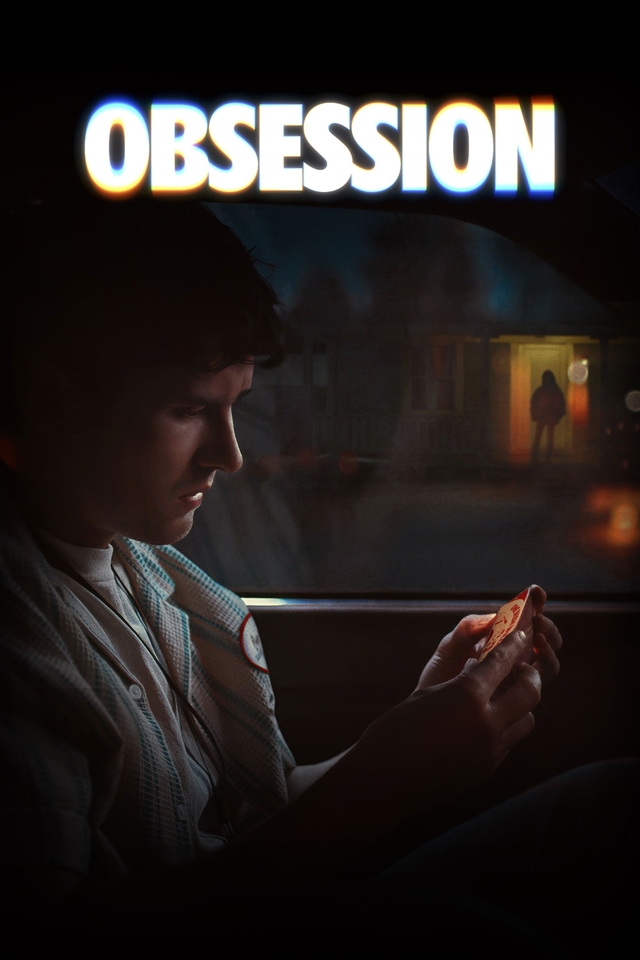
Teen horror cinema has found its new anti-hero in Curry Barker, a director who seems to have confused the storyboard of Twilight with the instruction manual for a low-budget exorcism. Obsession (2026) arrives as a poisoned gift from those indie producers who believe psychological drama is achieved by having a girl scream in front of a neon-lit mirror. Tea Shop Productions and Under the Shell have crafted what could be the cinematic equivalent of a botched spell: instead of eternal love, we’re left with a film that wavers between the ridiculous and the unsettlingly clumsy, as if Carrie and After had a baby on a film set abandoned due to a lack of funds for decent special effects.
Barker, whose résumé until now was limited to short films and the odd episode of forgotten teen series, dives into the supernatural thriller pool with the subtlety of an elephant in a china shop. The premise—a boy obsessed with his platonic love who triggers a spell turning the girl into his literal shadow—sounds like a Wattpad fanfic written by someone who just discovered that gothic isn’t just a makeup style. But, oh surprise!, Barker not only believes it, he films it with the solemnity of an arthouse director presenting his masterpiece at Cannes. The problem is, when the camera zooms in on Inde Navarrette’s eyes to convey her existential terror, all we see is the reflection of a poorly applied green screen and the desperation of an actress wondering how the hell she ended up here.
The industrial context of Obsession is as revealing as it is depressing. We live in the era of infinite content, where platforms like Netflix and Amazon churn out teen horror films like popcorn at a neighborhood cinema. The subgenre of romantic horror—or toxic romance with supernatural touches—has found its niche in stories where love is confused with possession, and obsession is sold as unbridled passion. Obsession doesn’t invent anything, but it doesn’t even bother to hide the fact that it’s a rehash of The Craft mixed with Twilight, seasoned with a touch of Black Swan if it had been directed by someone who’s only seen trailers of Darren Aronofsky. The film reeks of focus group: that stale odor of a calculated product for teens seeking thrills without leaving their comfort zone. And, like all calculated products, it ends up tasting like soggy cardboard.
But the saddest thing about Obsession isn’t its lack of originality, but its inability to even execute what it sets out to do. Barker seems to believe that psychological horror is built with poorly timed jump scares, dialogue that sounds like a telenovela script run through Google Translate, and cinematography that oscillates between clinically cold and accidentally comedic. Taylor Clemons, the director of photography, delivers such an uneven job here that it looks like he was experimenting with Instagram filters in real time. There are shots that try to be dreamlike but end up blurry, as if the camera were operated by someone who just discovered zooms exist. And then there are the close-ups of the characters’ eyes, those that should convey existential pain but only remind us that Michael Johnston has eyelashes longer than his ability to convey complex emotions.
Direction: The Art of Tripping Over the Same Stone Twice
Curry Barker directs Obsession as if he were solving a Rubik’s Cube blindfolded: with a lot of energy, zero precision, and the certainty that, in the end, everything will remain just as messy. His visual style is a collage of poorly digested references: there are long takes trying to emulate Ari Aster, neon lighting straight out of a The Weeknd music video, and an obsession with close-ups reminiscent of 90s thrillers, but without the charisma of a David Fincher to hold them up. The problem isn’t that Barker lacks vision, but that his vision seems to have been filtered through a TikTok algorithm that only understands horror as sudden scares and screeching violin music.
The film’s pacing is so erratic it feels like Barker edited scenes with a Dungeons & Dragons die: some sequences drag on like gum (like that mirror scene that lasts three minutes but feels like an eternity), while others fly by so fast you wonder if there was an editing error and we missed the climax of the plot. The jump scares are so predictable they could be used as teaching material in a screenwriting for dummies class: they always come after an awkward silence and a close-up of an innocuous object (a toothbrush, a stuffed animal, a Harry Styles poster). And then there’s the spell itself, that supernatural macguffin that turns Niki into Bear’s shadow: an idea so ridiculous it seems lifted from a Supernatural fanfic written by someone who just discovered metaphors exist.
Barker’s greatest sin, however, isn’t his lack of originality, but his inability to humanize his characters. Bear (Michael Johnston) is a walking cliché: the sensitive boy who writes poetry, wears flannel shirts, and cries in the shower. Niki (Inde Navarrette) is the popular girl who, oh surprise, isn’t as shallow as she seems (because, of course, all popular girls are secretly deep, right?). The dialogue between them sounds like a 2000s teen series script, with lines like «I can’t live without you» and «This isn’t love, it’s obsession», which could’ve been written during recess with a Hello Kitty pen. Barker seems to think drama is built with grandiloquent phrases and intense stares, when in reality all he achieves is making his characters sound like robots programmed to state the obvious.
Performances: The Cast That Deserved Better (and a Decent Script)
If there’s anything that saves Obsession from the abyss of cinematic oblivion, it’s the effort of its cast, especially Inde Navarrette, who at least tries to inject real fear into a premise that smells like cardboard. Navarrette, who already showed her talent in series like 13 Reasons Why and The Wilds, delivers a commendable performance within the circumstances: when Niki starts losing her mind (or whatever’s happening to her), the actress manages to convey that desperation Barker fails to capture with the camera. There’s a moment when Navarrette screams in front of a mirror, her eyes bloodshot and her voice breaking, that almost makes us forget we’re watching a film with a budget tighter than a bankrupt influencer’s Twitter account. Almost.
The rest of the cast, however, seems lost in limbo between overacting and apathy. Michael Johnston (Bear) has the charisma of a wax figure and the expressiveness of a pufferfish: his intense stares look more like strabismus than unbridled passion, and his monologues about eternal love sound like a graduation speech written by ChatGPT. Cooper Tomlinson and Megan Lawless, who play Bear and Niki’s friends, have less chemistry than a support group for singles on Valentine’s Day: their scenes together feel like rehearsals for a school play, with dialogue so forced you expect someone to yell «Cut! Even your mom wouldn’t buy this.»
And then there’s Andy Richter, the supporting actor who seems to have been teleported from a 90s sitcom and forced to play a literature professor who, for some reason, knows more about the spell than the protagonists themselves. Richter does what he can with a character straight out of a cliché manual: the wise adult who warns the kids about the dangers of love, but who, in reality, has no idea what’s going on. His performance is correct, but you can’t help wondering what the hell an actor like him is doing in a film like this. Did he need the money? Was he tricked? Or does he just like professional challenges?
Technical Aspects: When the Budget Shows (And Not in a Good Way)
The technical side of Obsession is like a roadside motel buffet: there’s a bit of everything, but nothing you’d want to eat twice. Taylor Clemons’ cinematography is, at best, functional, and at worst, a crime against cinema. There are shots that seem accidental, as if the camera had been placed there by mistake and no one bothered to fix it. The lighting swings between too dark (to hide the cheap special effects) and too bright (so we don’t miss a single detail of the actors’ expressionless faces). And then there are those filters straight out of Snapchat, giving the film a 2010s music video vibe but without the aesthetic or rhythm that made those things bearable.
The production design is another weak point. The sets look like recycled theater props: the high school where the protagonists study has that generic feel we’ve seen in a thousand films, with blue lockers and hallways that seem endless but are actually three meters long. Bear’s house is a sensitive boy cliché: walls covered in indie band posters, a guitar that’s never played, and a diary that, of course, contains bad love poems. And then there’s Niki’s house, straight out of an Ikea catalog: everything is white, minimalist, and cold, as if Barker wanted to tell us the popular girl lives in a mausoleum but only skimmed the surface.
The soundtrack is another black mark on the film. Composed by someone who seems to have confused psychological horror with elevator music, the score oscillates between generic and annoying. There are violins that sound like nails on a chalkboard, pianos that seem to cry on their own, and synthesizers reminiscent of 90s video games. The problem isn’t that the music is bad, but that it’s so predictable you can guess when the scare is coming before it happens. And then there are the silences, those awkward moments where Barker seems to think tension is built with absence of sound, when all he achieves is making the viewer wonder if their speaker is broken.
The editing is, perhaps, the most disastrous aspect of the film. There are scenes that seem randomly cut, as if Barker had decided the film’s rhythm should be chaotic to convey the characters’ confusion. There are flashbacks that add nothing, transitions that look like editing errors, and a climax that arrives so suddenly you wonder if you missed an entire reel. The editing is so clumsy that, more than once, you get the feeling the actors are waiting for someone to yell «Action!» in the middle of a scene.
The best
Inde Navarrette’s performance: The only one who seems to realize she’s in a horror film and not a self-help video for teens with self-esteem issues. Her scream in front of the mirror is the closest thing to art* we’ll see in this movie.
The premise (in theory): The idea of a spell that turns love into obsession is interesting, though Barker executes it with the grace of an elephant in a china shop*.
Some visual shots: There are a couple of compositions that try to be dreamlike and almost pull it off, though the lighting and editing* ruin everything.
The cast’s effort: Despite the poor material, the actors at least try to breathe life into characters straight out of a cliché manual*.
The worst
Curry Barker’s direction: A disaster of pacing, style, and coherence. Barker seems to think horror is built with jump scares and close-ups, when it’s actually a genre that requires patience, tension, and subtlety*.
The script: Forced dialogue, one-dimensional characters, and a plot straight out of a Wattpad fanfic written by someone who just discovered metaphors* exist.
The cinematography: Taylor Clemons delivers an uneven job here, with blurry shots, inconsistent lighting, and filters straight out of Snapchat*.
The editing: Chaotic, clumsy, and predictable. There are scenes that seem randomly cut and transitions that look like editing errors*.
The special effects: The spell that turns Niki into Bear’s shadow is so cheap it looks like it was made with 2005 After Effects*.
The soundtrack: Generic, annoying, and predictable. The music sounds like it was composed by someone who’s only heard horror scores on YouTube*.
The Verdict of Claqueta Ácida
Obsession is the kind of film that confirms an uncomfortable truth: teen horror cinema has hit rock bottom, and Curry Barker has arrived to grab the shovel and keep digging. It’s not a bad film in the classic sense (i.e., it’s not boring), but it’s such a pretentious and empty mess, a work that confuses ambition with self-indulgence and horror with cheap scares. Barker had an interesting idea—love as a spell, obsession as a disease—but executes it with the subtlety of a sledgehammer and the depth of a puddle. The result is a film that entertains because it’s so ridiculous, but hurts because it seems like its creators couldn’t care less. Obsession isn’t just a failure, it’s a symptom: the symptom of an industry that prefers recycling clichés over taking risks, that confuses originality with eccentricity, and that, in the end, leaves us with products as forgettable as this plastic nightmare. Final score: 3.8/10. Don’t watch it. Don’t recommend it. And, above all, don’t obsess over it. 💀
🎬 Tráiler Oficial
💬 El Veredicto de la Comunidad
¿Qué te ha parecido la película? Deja tu nota de 0 a 10 para contrastarla con el análisis de la redacción.
Aún no has votado
📢 ¿Te ha gustado el ácido?
Comparte esta crítica con tus amigos cinéfilos o desata la polémica en redes.
📩 📩 Get the poison in your inbox
Join our weekly mailing list. Honest film reviews, acid festival coverage, and cult recommendations every Sunday morning. Zero spam, pure celluloid.
🔒 We promise weekly poisonous reviews and exclusive coverage.Related Reviews
Recommended autopsies for demanding film buffs.
 ⚠️ Ácido Sulfúrico3.8
Obsession: The Spell That Turned Love Into a Cheap Plastic Nightmare
Curry Barker delivers this 'masterpiece' of teenage obsession with more holes than a Swiss cheese. Love or stalking? The line was never this blurry (or this poorly lit).
 🔥 Fusión Nuclear8.5
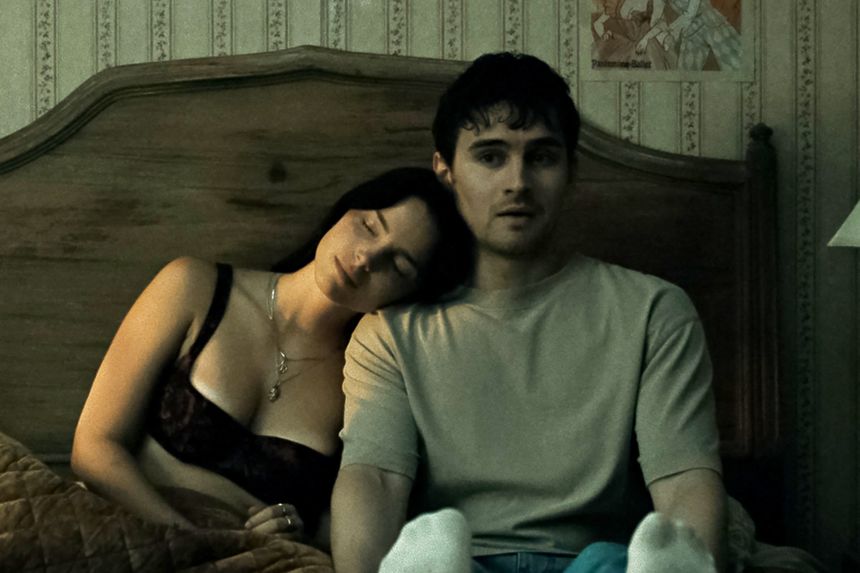
"Obsession: A Devotion to the Abyss – Or, How to Turn Love into a Dumpster Fire"
A scathing, nihilistic takedown of Curry Barker’s *Obsession*—where passion curdles into madness, and the only twist is how predictably it all unravels.
 ⚡ Ácido Cítrico6.2
*Exit 8*: The Horror Station That Can’t Find Its Way Out (And Neither Can You)
Genki Kawamura adapts *The Exit 8* video game with more loops than a politician’s campaign promises. Will it escape the purgatory of J-horror, or is it doomed to linger in its own terminal?