REC — The Scream that Fails to Impress
A ruthless autopsy of the overvalued work of Paco Plaza and Jaume Balagueró. Is it a revolution in terror or just another passage in the cinematic horror genre that confuses screams with art? We dismantle the myth of the most famous quarantine in Spanish cinema.

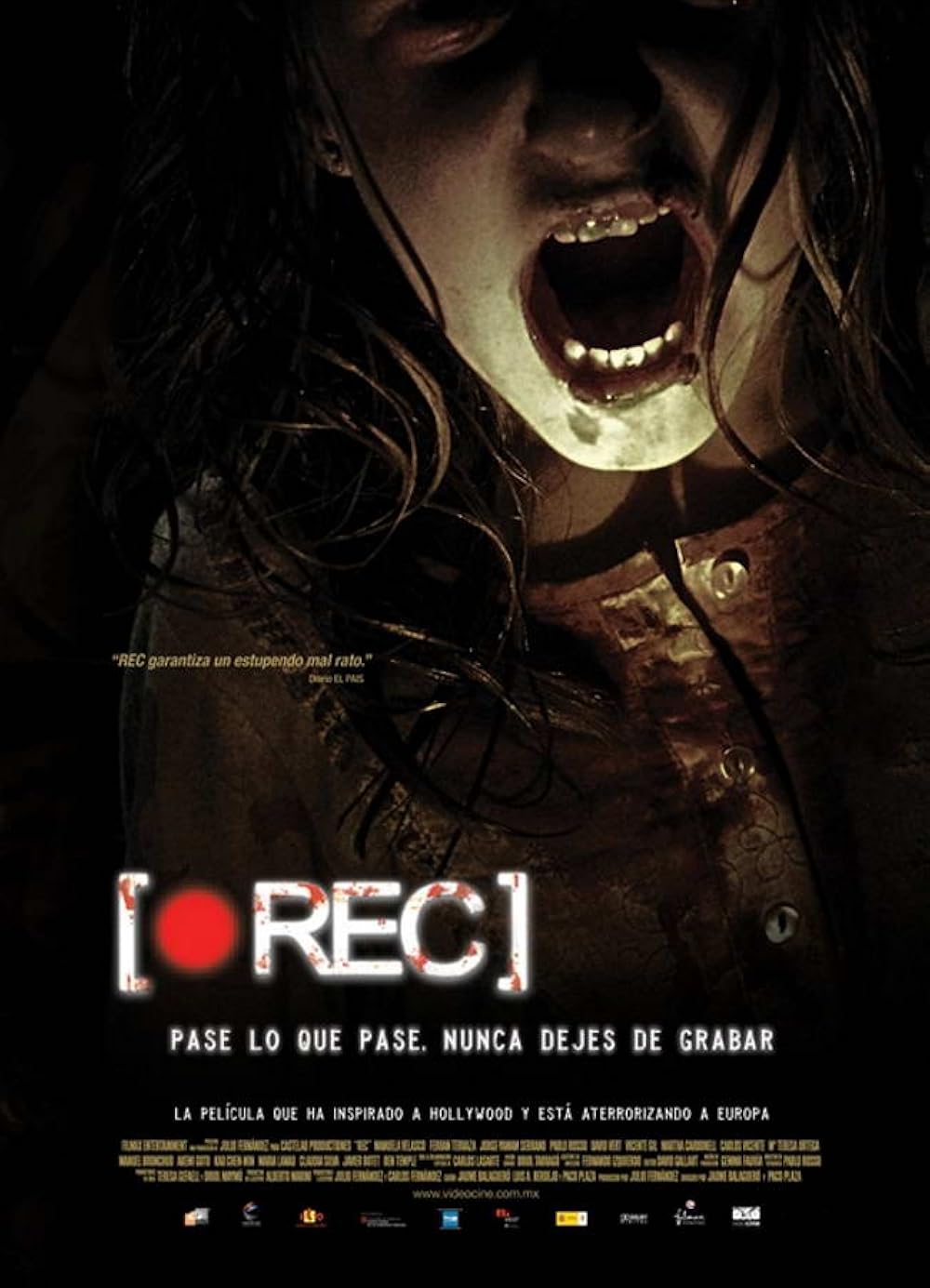
The cinema, dear readers, is an art of contrasts. Of lights and shadows, of genius and mediocrity, of works that transcend their time and others that should have been thrown into the purifying fire of an industrial incinerator. REC (2007), the Spanish film directed by Paco Plaza and Jaume Balagueró, belongs to the latter category with the elegance of an elephant in a porcelain shop. Let's not confuse, for the love of Tarkovsky, this monstrosity with the great works of classic horror cinema. While other directors were turning suspense into a visceral and claustrophobic nightmare with elegance, Spain gave us this dull fair attraction, a found footage film so predictable that it seems written by a Netflix algorithm designed to lull teenagers to sleep. The irony is so cruel that it hurts: the title that many sold as synonymous with innovative terror, here is nothing more than a bad joke, a rec of what could have been and never was.
To understand the artistic crime that this film represents, it is necessary to contextualize the historical moment. It was the year 2007, an annus mirabilis for genre cinema. International commercial cinema was trying to demonstrate that first-person terror could be something more than a cheap trick: it could be art. With proposals that sought oppressive atmospheres that would stick in the throat like a chicken bone and endings that would give nightmares to those who saw them, genre cinema was trying to rise as a beacon of creativity in a sea of unnecessary sequels and Hollywood remakes. Meanwhile, in Spain, Paco Plaza and Jaume Balagueró decided that what the world needed was another story about a screaming reporter and a cameraman trapped in a building of infected neighbors. The result is as exciting as watching paint dry, but with dialogue that sounds like it was written by a monkey with a keyboard screaming through a megaphone.
The problem is not that REC is a zombie movie or a film about infected people. The problem is that it is a bad horror movie. There is no trace here of the subtlety of George A. Romero, nor the emotional depth of Danny Boyle in 28 Days Later, nor even the superficial but effective charm of the horror blockbusters of the time. Instead, we find a script written by Plaza, Balagueró, and Luiso Berdejo, a trio of screenwriters who seem to have confused the formula for the faux documentary format with the instructions for assembling IKEA furniture in the dark. The characters are cardboard cutouts: the unbearable reporter, the invisible cameraman, the old lady in a nightgown who bites (because, of course, in Spanish horror, every building must have its dose of stale costumbrismo), and a cast of secondary characters that seem to have been taken from an episode of Aquí no hay quien viva directed by someone who hates humanity. The premise, that "every man for himself" in a quarantine, is as original as any B-movie, but without the charisma or humor that saves the function.
And then there is the technical aspect, that detail that in real cinema — the kind that hurts, the kind that bothers, the kind that sticks in the memory like a rusty knife — makes the difference between art and filler. Here, the direction of Plaza and Balagueró is so anodyne that it seems like a style exercise done by a first-year film school student who has just discovered the handheld camera. The shots are functional, yes, but they lack the visual intention that turns an image into something memorable. There is no trace here of that mise-en-scène that defines the great masters, nor of that attention to detail that makes a seemingly simple scene become unforgettable. Let's compare, for example, the great long takes of classic cinema, where composition creates tension, with this film, where the camera simply moves from side to side and follows the characters as if it were a documentary about the life of amoebas. The photography, signed by Pablo Rosso, is flat, dizzying, lacking in texture, as if they had filmed everything with a defective security camera from the 90s. And the editing, for God's sake, the editing is so predictable that you could anticipate the cuts and easy scares with your eyes closed.
The direction: An exercise in functional mediocrity If there's something that defines the cinema of Paco Plaza and Jaume Balagueró in this work, it's their ability to not stand out in anything except noise. It's not bad, it's not good, it's just... there, covered by the screams. Their direction in REC is a perfect example of how horror cinema can be both technically noisy and artistically irrelevant at the same time. There is no trace here of that obsession with framing that defines suspense directors, nor of that ability to create truly oppressive atmospheres. Instead, we find a film that seems to have been shot with the autopilot on, where each abrupt movement fulfills its narrative function of scaring the distracted spectator but adds nothing more. It's like watching a film directed by a committee that has read too many manuals on easy scares but has never felt the need to break the rules with elegance.
The greatest sin of the directing duo is not their lack of style, but their lack of conceptual ambition. In a subgenre like found footage, where the everyday must be elevated to the category of realistic nightmare, their direction is so dull that it makes even the most dramatic scenes — like the moments when the neighbors fall infected — sound like recycled clichés. There is no trace here of that ability to capture real psychological horror. Instead, what we have is a horror house attraction that seems designed to be consumed quickly. And that, dear readers, is the greatest crime a director can commit: being unable to sustain fear without resorting to screaming.
The performances: Cardboard cutouts with a television voice The cast of REC is a perfect example of how cinema can waste or misinterpret naturalism. Manuela Velasco, who brings the protagonist Ángela Vidal to life, does what she can with a character that seems designed to go from television-like sympathy to pure hysteria without intermediate transitions. Her interpretation is correct in the journalistic facet, yes, but lacks that spark that turns a horror heroine into something memorable. It's like watching a presenter repeating her lines in an empty studio: technically loud, but emotionally monotonous. The rest of the cast, which includes names like Ferrán Terraza (Manu) or Jorge-Yaman Serrano (Sergio), lend their faces to characters that could have been interesting if the script had not reduced them to a stereotype of a hysterical community of neighbors. Their performances are energetic, yes, but so generic that you could replace them with those of any other low-budget television production and no one would notice the difference.
The rest of the neighbors do not fare any better. The secondary actors do what they can with roles that seem to have been taken from a draft written in a hurry. The dialogue, for its part, is so flat and rushed that it seems written to avoid any kind of genuine character development. There is no trace here of that chemistry that defines the groups trapped in great survival cinema, nor of that ability to convey real panic with a simple silence. Instead, what we have is a cast of characters that seem to be shouting at each other's plans in a rehearsal room, without any intention of connecting with the spectator beyond transmitting a headache.
The script: A manual on how not to write a horror faux documentary The script by Plaza, Balagueró, and Berdejo is a perfect example of how zombie cinema can become a predictable exercise when written without ambition or deep originality. The premise — a local TV team trapped in a quarantined building — is a twist on the format that had already been seen in other international experiments. But while other works tried to bring psychological freshness to the format, REC limits itself to recycling the same tropes of infected cinema over and over, as if its screenwriters had decided that surprise was a luxury they could not afford. The dialogue is flat, lacking in nuances, and the script twists — when they exist, towards the final stretch with the religious background — are so abrupt that they feel forced into the last ten minutes of footage.
The most frustrating thing about the script is its inability to develop its characters so that we care about their fate. Ángela Vidal is a protagonist whose only evolving trait is the volume of her screams. The cameraman, Pablo, is a mechanical resource for us to see the action, but lacks his own identity. The neighbors are mere script tools designed to fulfill all the stereotypes: the suspicious neighbor, the brave mother, the foreigner... There is no trace here of that human complexity that defines great horror cinema, nor of that ability to challenge the spectator's expectations. Instead, what we have is a film that seems designed to please an audience that does not demand anything more than a dark amusement park and a lot of accelerated mediocrity.
The best The premise of the domestic faux documentary: At least someone thought that putting Spanish local television's costumbrismo in a Gothic-urban apartment building could be a good idea. The atmosphere of the building: Although the camera does not help, the real location of Rambla de Catalunya has a certain claustrophobic charm. The duration of the film: Seventy-eight minutes of footage is a blessing. At least it doesn't steal too much of your life. The design of the final monster: The appearance of the Niña Medeiros in the last minutes manages to aesthetically save the climax, offering the only iconic image of the film.
The worst The script: A manual on how to structure a passage of cinematic horror. Predictable in its scares and rushed in its explanations. The direction: So chaotic and dizzying that it seems directed by someone who confuses moving the camera with generating dramatic tension. The performances: Cardboard cutout histrionics. Much screaming, much crying, but no interpretation with real dramatic depth. The lack of real rhythm: Remove the special effects and the strident noises in the editing, and you're left with a stagnant plot that advances in fits and starts. The handheld photography: Flat, with constant blurring that tries to hide the production's seams and as exciting as watching a poorly made home video. The secondary characters: Soulless cannon fodder, included exclusively to fill the list of casualties in the building.
The Verdict of Claqueta Ácida REC (2007) is the cinematic equivalent of a cheap roller coaster: it shakes you, screams in your ear, makes you dizzy, but when you get off, you're left with absolutely nothing inside. While other international authors were maturing the language of suspense and claustrophobic horror, Spain gave us this effect-driven product, an exercise in first-person terror so dependent on the sudden scare that it seems designed to numb its audience's neurons with analgesic impacts. There is no trace here of the artistic ambition or revolutionary originality that many attributed to it. Instead, what we have is a film shot with the autopilot of effectism on, an exercise in functional mediocrity that seeks the quick shock but does not excite or disturb in the long term. If cinema is an art of contrasts, REC is proof that sometimes the only thing worse than a boring movie is a movie that only knows how to scream to get attention. 💀
🎬 Tráiler Oficial
💬 El Veredicto de la Comunidad
¿Qué te ha parecido la película? Deja tu nota de 0 a 10 para contrastarla con el análisis de la redacción.
Aún no has votado
📢 ¿Te ha gustado el ácido?
Comparte esta crítica con tus amigos cinéfilos o desata la polémica en redes.
📩 📩 Get the poison in your inbox
Join our weekly mailing list. Honest film reviews, acid festival coverage, and cult recommendations every Sunday morning. Zero spam, pure celluloid.
🔒 We promise weekly poisonous reviews and exclusive coverage.Related Reviews
Recommended autopsies for demanding film buffs.
 ⚠️ Ácido Sulfúrico4.0
REC: The Scream that Fails to Impress
A ruthless autopsy of the overvalued work of Paco Plaza and Jaume Balagueró. Is it a revolution in terror or just another passage in the cinematic horror genre that confuses screams with art? We dismantle the myth of the most famous quarantine in Spanish cinema.
 ⚡ Ácido Cítrico6.2
*Exit 8*: The Horror Station That Can’t Find Its Way Out (And Neither Can You)
Genki Kawamura adapts *The Exit 8* video game with more loops than a politician’s campaign promises. Will it escape the purgatory of J-horror, or is it doomed to linger in its own terminal?
 ⚠️ Ácido Sulfúrico4.2
**Good Boy: The Dog That Saved No One (Not Even Itself)**
A supernatural canine stars in a film that barks up the wrong tree. *Claqueta Ácida* dissects this rural dud with the precision of a scalpel in a slaughterhouse.