Baghead — A Nightmare in the Dark (And We Mean *Literal* Darkness)
A scathing, gut-punch review of *Baghead*, the psychological thriller that drags you into the abyss—kicking, screaming, and probably tripping over your own feet.

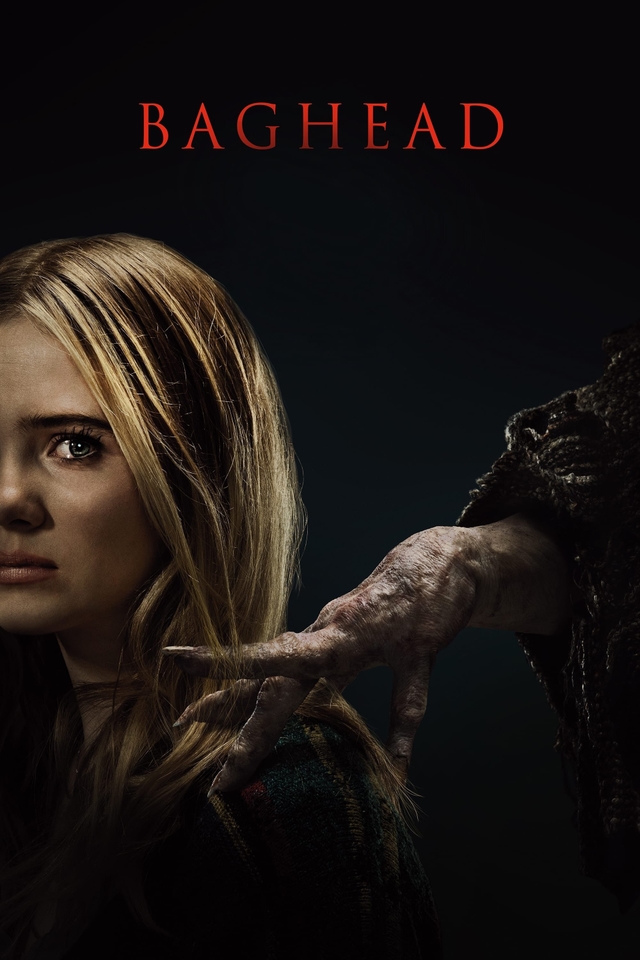
Darkness—that infinite canvas where cinema has spewed its stickiest nightmares—finds in Baghead a new sacrificial altar. Directed by Alberto Corredor, a filmmaker who seems to have nursed from the poisoned teats of Mario Bava and Dario Argento, this film isn’t just a rural horror exercise; it’s a cinematic possession ritual where the camera becomes a wandering spirit and the actors mere vessels for their own paranoia. Led by Freya Allan, that British actress who looks like she escaped a Pre-Raphaelite painting only to land in the maw of psychological horror, Jeremy Irvine, whose angular face could be carved into a cursed tree trunk, and Ruby Barker, the only one who seems to grasp she’s in a horror movie and not a shampoo commercial, Baghead stands as a monument to putrid atmosphere and suspense that reeks of mold and cold sweat. But is this a modern gothic horror masterpiece or just another corpse in the genre’s mass grave? Grab your flashlights—we’re digging this film up with fingernails caked in celluloid and dried blood.
The gestation of Baghead is as murky as its narrative. Corredor, a director who’d until now scraped by in indie cinema’s margins with short films smelling of damp basements and demagnetized VHS tapes, somehow convinced a handful of producers to revive British rural horror—that subgenre The Witch exhumed like a fine corpse and which has since rotted in the hands of talentless imitators. The script, penned by Christina Pamies (a screenwriter who seems to have studied at Robert Eggers’ school but with less patience for historical research), leans on a premise as old as the fear of darkness itself: a group of urban hipsters venture into the countryside to confront a local legend—here, a faceless woman lurking in the shadows. The legend? As original as a Supernatural episode, but Pamies tries to disguise its lack of originality with dialogue oscillating between the poetic and the pretentious, as if Lovecraft and Paulo Coelho co-wrote a self-help manual for nightmare victims.
The shoot took place in the Welsh forests, a landscape plucked from a Grimm Brothers tale after an LSD overdose. Obsessed with celluloid’s texture (or at least the romantic idea of it), Corredor shot on 16mm, a choice that lends the film a grainy patina of authenticity, like a ‘70s movie fished from a dumpster. The decision isn’t accidental: the grain, imperfections, and aggressive contrast aren’t just aesthetic tools but instruments to plunge the viewer into physical discomfort, as if the film itself were breathing down your neck. And damn if it doesn’t work. From the first shot, where the camera slithers like a wounded animal through the undergrowth, Baghead grabs you by the throat and doesn’t let go until the end credits spit you back into reality, gasping and feeling like you’ve been violated by a ghost with very bad intentions.
The cast, meanwhile, seems to have been selected from a pool of actors who’ve watched too many horror films and decided the best way to perform is to act like they’re in a permanent state of post-traumatic shock. Freya Allan, as Iris, carries the film’s weight like a crucifix in a Holy Week procession. Her performance swings between the sublime and the ridiculous, as if she’s trying to channel Sissy Spacek in Carrie but with half the emotional range. There are moments when her acting is so intense it feels like she might burst through the screen, and others where you suspect she’s about to crack up laughing. Jeremy Irvine, as Matt, the romantic lead who looks like he was plucked from an Abercrombie & Fitch catalog, fulfills his role of handsome-but-boring, though his chemistry with Allan is as palpable as a ghost in a long-exposure photo. Ruby Barker, however, steals every scene she’s in as Katie, the sarcastic friend who seems to be the only one with her wits about her. Her performance is fresh, acidic, and nuanced, like she knows she’s in a horror movie and has decided the best way to survive is not to take it too seriously. If there’s one performance that shines in Baghead, it’s hers—a flare in the darkness that briefly illuminates the mediocrity surrounding it.
Direction: The Art of Strangling the Audience with Shadows
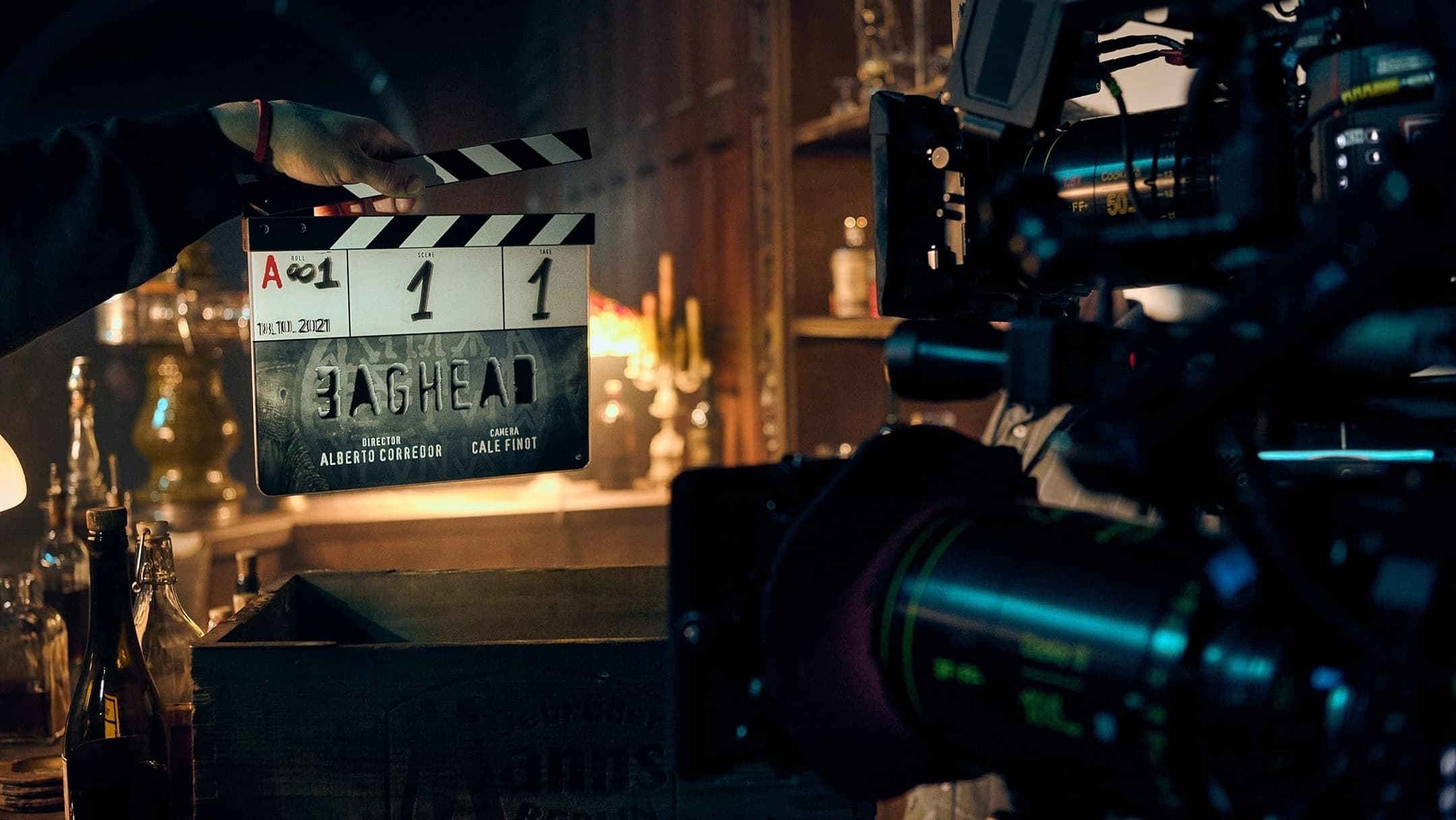
Alberto Corredor’s direction in Baghead is an exercise in cinematic sadism, a masterclass in turning a modest budget into a sensory experience that’ll leave you with white knuckles and your heart trying to escape through your throat. Corredor, who seems to have studied under David Lynch but with less money and more patience, demonstrates absolute mastery of narrative tempo—that rhythm oscillating between hypnotic and suffocating, like a film projected through a sabotaged projector with duct tape and bad intentions. His use of the long take is particularly brilliant: there’s a scene where the camera follows Iris down a dark hallway, her flashlight the only beacon, so tense you can feel the cold sweat trickling down your spine. No music, no cuts—just the sound of her footsteps and the creak of rotten wood beneath them. It’s the kind of scene that makes you forget you’re watching a movie and plunges you into primal paranoia, as if you’re the one walking down that hallway, waiting for something (or someone) to lunge from the shadows.
But where Corredor truly shines is in his use of lighting—that macabre dance between light and shadow that turns every scene into a Caravaggio painting if he’d used guts instead of oils. The cinematography by Cale Finot, a DP obsessed with Gordon Willis’ chiaroscuro but with a touch of Robbie Ryan, is a work of art in itself. Finot uses natural light almost religiously, as if every sunbeam filtering through dusty curtains were a divine (or demonic) gift. The night scenes, lit by flashlights, candles, and the sickly glow of phone screens, have a near-tactile quality, like you could reach out and touch the darkness. Then there’s the color palette—or rather, the lack thereof. Baghead reeks of sepia, desaturated tones, dried blood, and rotten wood. The greens of the Welsh forests turn into a sickly brown, as if nature itself were decaying before our eyes, and the night’s blues are so cold they could freeze your breath in the air.
Corredor also wields editing like a psychological torture device. The transitions between scenes are so fluid you sometimes don’t realize you’ve slipped from reality into hallucination until it’s too late. There’s a moment where Iris sees something in the woods, and the camera cuts to a close-up of her sweaty, unhinged face before fading to black. We don’t see what she saw, but we feel her terror as if it were our own. It’s the kind of editing choice Hitchcock would’ve applauded, proving Corredor doesn’t just understand horror’s language—he speaks it fluently, as if born with a razor blade in one hand and a storyboard in the other.

Actors: Between Ecstasy and Ridicule
The cast of Baghead is a fascinating study in how a group of actors can swing between the sublime and the ridiculous in seconds, like they’re being possessed by the spirit of Vincent Price and Paris Hilton simultaneously. Freya Allan, as Iris, is the film’s throbbing (and sometimes overthrobbing) heart. Her performance is an emotional rollercoaster, veering from heartbreakingly vulnerable to hysterically overacted, as if she’s channeling Tippi Hedren in The Birds but with half the training and twice the caffeine. There are moments when her acting is so intense it feels like she might leap out of the screen—like when she screams her missing sister’s name in the woods, her voice shattering like glass under a hammer. But then there are others, like when she tries to convey terror with wide eyes and a slack jaw, where you can’t help but think she’s about to blurt, “Oh my God, this is so scary!” and bolt for craft services.
Jeremy Irvine, meanwhile, seems to have mistaken Baghead for a Nicholas Sparks movie. His character, Matt, is the quintessential generic love interest—handsome, boring, and plucked straight from an Abercrombie & Fitch catalog. Irvine does his job, but his performance is so flat you’d think he could be replaced by a mannequin without anyone noticing. His chemistry with Allan is nonexistent, like they’re acting in different films that were accidentally spliced together. There’s a kiss scene so awkward you half-expect the camera to cut to a dog puking in the corner.
But if there’s one performance that saves Baghead from the abyss of mediocrity, it’s Ruby Barker as Katie, the sarcastic friend who seems to be the only person in the movie who gets she’s in a horror film. Barker, with her “I know this is trash but I’m gonna sell it” glare, steals every scene she’s in. Her performance is fresh, acidic, and layered, like she’s decided the best way to survive is not to take any of it too seriously. There’s a scene where Katie tells Iris, “If you’re gonna die, do it with style,” and it’s delivered so perfectly you can’t help but laugh, even as the film desperately tries to scare you. Barker is the kind of actress who could make even the dumbest script seem smart, and her presence in Baghead is a beacon in the darkness, reminding us that even in the most pretentious horror, there’s room for a little black humor.
Technical: When the Devil’s in the Details (and the Soundtrack)
The technical aspects of Baghead are a fascinating mix of virtuosity and questionable choices, like a Michelin-starred chef whipping up a feast with Lidl ingredients. Let’s start with the cinematography, because this is where the film shines with an almost supernatural glow. Cale Finot, the DP, demonstrates absolute mastery of natural light, turning every scene into a Rembrandt painting if he’d used chicken blood and cat piss instead of oils. His use of chiaroscuro is simply masterful: there’s a scene where Iris sits in a room lit only by a candle, the light caressing her face while shadows writhe around her—so beautiful it hurts. Finot also excels in subjective shots, like when the camera adopts Baghead’s POV, dragging us through dark hallways as if we’re the faceless entity. It’s the kind of cinematography that makes you forget you’re watching a movie and plunges you into primal paranoia, like the camera itself is alive and breathing beside you.
The soundtrack, composed by Ben Lovett, is another highlight. Lovett, who seems to have studied under John Carpenter but with a touch of Clint Mansell, crafts a score that oscillates between hypnotic and terrifying. The main theme—a repetitive, obsessive melody that sounds like someone playing piano with boxing gloves—drills into your brain like a rusty nail and doesn’t let go until the credits roll. There are moments when the music cuts out entirely, leaving only ambient sound (the creak of branches, the whisper of wind, the thud of your own heartbeat), and it’s in those moments that Baghead becomes truly terrifying. Lovett also brilliantly uses silence, like in the scene where Iris finds her sister’s body and the music stops, leaving only her ragged breathing. It’s the kind of choice that proves Lovett doesn’t just understand sound’s power—he knows how to use it to strangle the audience.
The production design, by Hattie Collins, is another standout. Collins, who seems to have raided Tim Burton’s closets and Guillermo del Toro’s basements, creates a world that’s both beautiful and grotesque. The abandoned house where much of the action takes place is a character in itself, with moldy walls, creaky floors, and rooms filled with objects plucked from a nightmare. There’s a moment where Iris finds an old diary, and the way Collins has aged the pages—ink stains, dried blood—is so realistic you expect it to reek of rot. The costumes, designed by Emma Potter, are also noteworthy, especially the characters’ outfits, which look like they were plucked from a 1970s flea market but with a folk horror twist. The wool coats, knit sweaters, and rain boots aren’t just period-accurate—they help create that sense of isolation and claustrophobia essential to rural horror.
But not everything in Baghead’s technical department is flawless. The makeup, for instance, is where the film stumbles more than once. There’s a scene where Baghead finally reveals itself, and the design is so disappointing you can’t help but laugh. Instead of a terrifying, original creature, we get a latex mask that looks like it was lifted from a Goosebumps episode, with empty eyes and a mouth that seems drawn by a five-year-old. It’s the kind of design that makes you wonder if the makeup team ran out of budget or just gave up. The CGI, thankfully, is almost nonexistent, but there are a couple of moments where the film resorts to cheap digital effects—like when Baghead moves supernaturally—and the result is so unconvincing you half-expect the film to cut to an actor in a Power Rangers costume.
The best
- Alberto Corredor’s direction: A cinematic sadism masterclass that turns every scene into a physical, sensory experience. Corredor demonstrates absolute control over narrative tempo, lighting, and editing, crafting a horror atmosphere that’ll leave you white-knuckled and heart-in-throat.
- Ruby Barker’s performance: A flare in the darkness, Barker steals every scene with her fresh, acidic, and nuanced acting. It’s the kind of performance that saves the film from mediocrity and reminds us that even in pretentious horror, there’s room for black humor.
- Ben Lovett’s soundtrack: A hypnotic, terrifying score that drills into your brain like a rusty nail. Lovett knows how to use silence and music to strangle the audience, creating an auditory experience as vital as the visual.
- Hattie Collins’ production design: A beautiful, grotesque world plucked from a nightmare. The abandoned house, antique objects, and costumes help create the isolation and claustrophobia essential to rural horror.
The worst
The script’s lack of originality: Baghead brings nothing* new to rural horror. The premise is as old as the fear of darkness, and the dialogue swings between poetic and pretentious, like Lovecraft and Paulo Coelho co-wrote a self-help book for nightmare victims.
- Jeremy Irvine’s performance: Flat, boring, and generic, like he was replaced by an Abercrombie & Fitch mannequin. His chemistry with Freya Allan is nonexistent, and his character is so insipid you’ll pray the film kills him off just for some excitement.
- Baghead’s design: A disappointment so massive you’ll laugh out loud. Instead of a terrifying, original creature, we get a latex mask that looks like it was lifted from Goosebumps, with empty eyes and a mouth drawn by a child.
- Runtime and pacing: Though the film is short, some scenes feel slow and repetitive. A few could’ve been trimmed without losing impact, and the third act feels rushed, like someone suddenly remembered the film had to end.
- Lack of secondary character development: Aside from Ruby Barker, the side characters are so flat you’ll pray the film kills them off just for variety. The script doesn’t bother giving them depth, leaving them as mere cannon fodder.
The Verdict of Claqueta Ácida
Baghead is a film that swings between the sublime and the ridiculous, like Mario Bava and Ed Wood teamed up to shoot a rural horror flick on a three-dollar budget and a gallon of coffee. Alberto Corredor’s direction is undeniably talented, crafting a horror atmosphere that’s as physical as it is psychological, with masterful use of lighting, cinematography, and editing. Ruby Barker’s performance is a flare in the darkness, and Ben Lovett’s soundtrack is a masterclass in auditory suspense. But the script—that rotting skeleton holding the whole thing up—is so unoriginal you’ll yawn every time the characters open their mouths. Baghead will leave your nerves frayed, but also with the nagging sense you’ve seen it all before, like someone recycled the leftovers of The Witch and Hereditary and served them cold. Is it worth watching? If you’re a rural horror fan and don’t mind being served reheated leftovers with a side of pretension, knock yourself out. Otherwise, you might want to keep your flashlight aimed at something with a little more bite. 💀
🎬 Tráiler Oficial
💬 El Veredicto de la Comunidad
¿Qué te ha parecido la película? Deja tu nota de 0 a 10 para contrastarla con el análisis de la redacción.
Aún no has votado
📢 ¿Te ha gustado el ácido?
Comparte esta crítica con tus amigos cinéfilos o desata la polémica en redes.
📩 📩 Get the poison in your inbox
Join our weekly mailing list. Honest film reviews, acid festival coverage, and cult recommendations every Sunday morning. Zero spam, pure celluloid.
🔒 We promise weekly poisonous reviews and exclusive coverage.Related Reviews
Recommended autopsies for demanding film buffs.
 ⚡ Ácido Cítrico7.5
**Baghead: A Nightmare in the Dark (And We Mean *Literal* Darkness)**
A scathing, gut-punch review of *Baghead*, the psychological thriller that drags you into the abyss—kicking, screaming, and probably tripping over your own feet.
 ⚡ Ácido Cítrico6.2
*Exit 8*: The Horror Station That Can’t Find Its Way Out (And Neither Can You)
Genki Kawamura adapts *The Exit 8* video game with more loops than a politician’s campaign promises. Will it escape the purgatory of J-horror, or is it doomed to linger in its own terminal?
 ⚠️ Ácido Sulfúrico4.2
**Good Boy: The Dog That Saved No One (Not Even Itself)**
A supernatural canine stars in a film that barks up the wrong tree. *Claqueta Ácida* dissects this rural dud with the precision of a scalpel in a slaughterhouse.