All-You-Can-Eat — A Feast of Flesh, Shame, and Rotten Celluloid
Zoe Berriatúa serves up a grotesque buffet of social gore and pitch-black humor in this all-you-can-eat orgy of bodies, guilt, and egg fried rice. Is it too raw, or just perfectly decomposed?

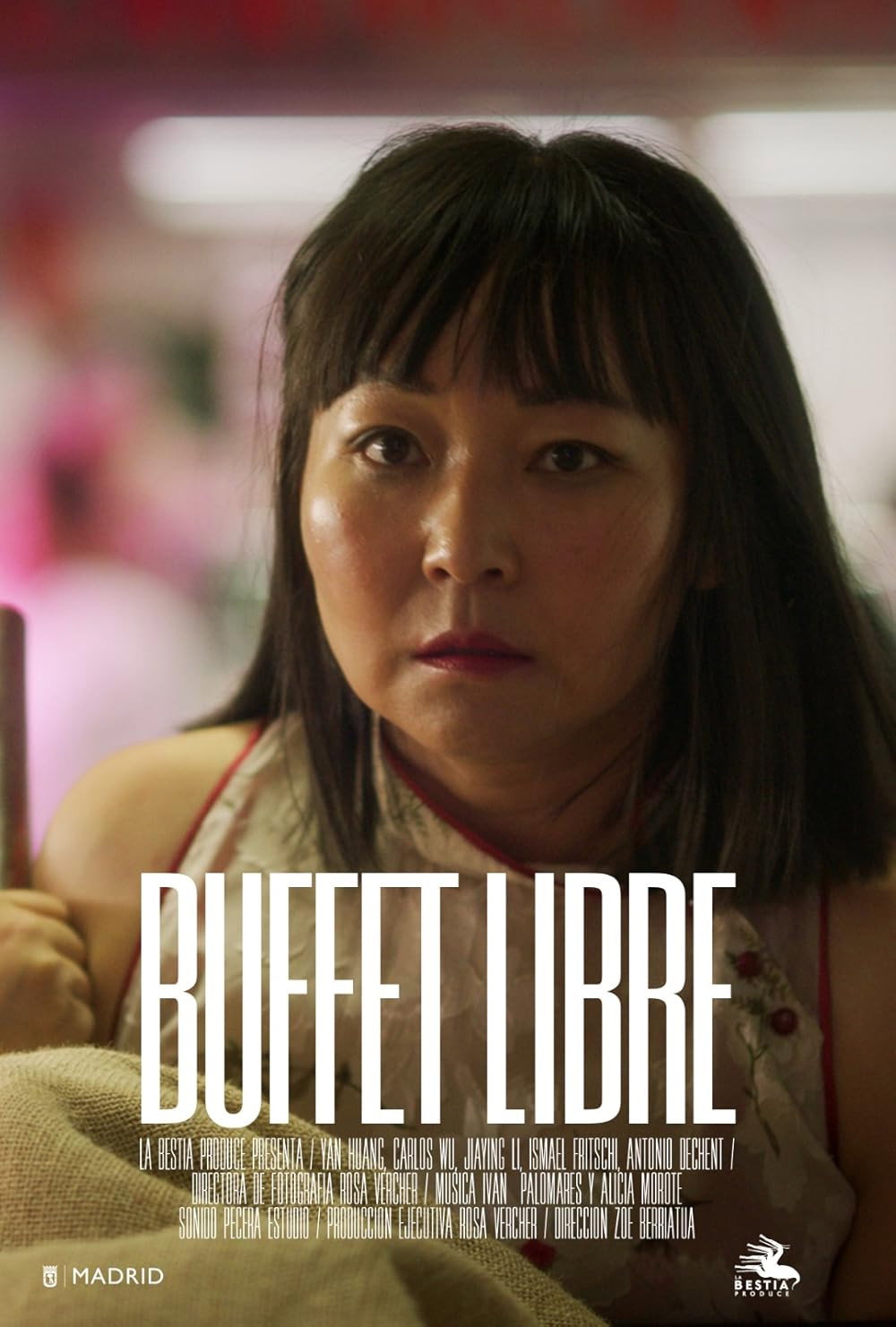
Spanish cinema has a sickly obsession with food. We’re not talking about those bowls of lentils in 80s social dramas, the ones that reeked of poverty and mothballs, but something far more visceral: food as a metaphor for exploitation, hunger not just of the stomach but of dignity. All-You-Can-Eat, the latest monstrosity from Zoe Berriatúa, arrives to remind us that in this country, the daily special is still served with tears and someone else’s sweat. And where else would it be served but in a Chinese buffet, that temple of capitalist excess where the customer is always right… until their stomach turns. The film reeks of reheated oil, cheap soy sauce, and the desperation of those who know that, in the end, they’ll always foot the bill. It’s no coincidence Berriatúa chose this setting: the Chinese buffet is the perfect mirror of a society that devours the last crumbs of humanity and then asks for dessert. And oh, how it asks—even if dessert is the viewer’s own rotting conscience, served on a platter with a bow of Catholic guilt and a drizzle of black humor to ease the intestinal transit of cheap moralizing.
But let’s talk about Zoe Berriatúa, that enfant terrible of Spanish cinema who seems to have struck a deal with the devil so his films always smell of raw meat and indigestion. After his debut, The Heroes of Evil (2015), where he proved he had talent to spare and mercy to none, the Madrid-born director has spent the last decade flirting with genre in all its forms: from psychological thrillers to visceral horror, always with that touch of social gore that feels plucked from a Pasolini nightmare mixed with the aesthetic of a TelePizza ad. All-You-Can-Eat isn’t an exception but rather the culmination of that obsession with portraying the human body as a battleground for wars no one wants to see: the war of immigrants frying spring rolls while dreaming of papers, the war of parents selling their daughters to the highest bidder, the war of customers gorging themselves while looking the other way. Berriatúa films all this with a camera that seems slathered in duck fat and an editing style that alternates between suffocating long takes and cuts as sharp as a hatchet to the jugular. The result is a film that hurts, that disgusts, and that, in its best moments, achieves the impossible: making the viewer feel like they’re partaking in the banquet of shame.
The problem is that All-You-Can-Eat doesn’t always know what kind of film it wants to be. Is it a social drama with touches of black comedy? A grindhouse thriller in the vein of Takashi Miike but with less budget and more rice? Or perhaps a body-horror experiment where bodies don’t transform into monsters but into victims of a system that devours them without mercy? The answer, like a Chinese buffet menu, is a bit of everything—and that, dear readers, is both its greatest virtue and its gravest sin. Because when Berriatúa nails it—and he does, oh how he does—the film shines with a sickly light, like a Chinese restaurant neon reflected in a puddle of grease. But when he misses the mark, and he misses more than he should, All-You-Can-Eat becomes a collage of good intentions and bad decisions, like a plate of chop suey where someone’s mixed dubious chunks of meat with a handful of half-digested metaphors. And that, folks, is a cardinal sin in a cinema that aims to be as uncomfortable as it is necessary.
The industrial context of this film is as murky as its plot. Produced by la bestia produce, that production company that seems to have made provocation its calling card, All-You-Can-Eat arrives at a time when Spanish cinema seems more interested in churning out Netflix movies starring Elite actors than in taking risks with projects that smell of celluloid and blood. Berriatúa, no fool he, knows his film is a weirdo in a landscape dominated by Álex de la Iglesia’s romantic comedies and Isabel Coixet’s social dramas. But instead of surrendering to trends, he’s embraced his outsider status to the bitter end. The result is a film that feels shot on the fringes of the system, with a budget that reeks of sweat and sleepless nights, and a cast of unknowns and weathered veterans who seem to be improvising on the fly. It’s not the kind of cinema that wins Goyas, of course, but it is the kind that lingers in the viewer’s memory like a bad aftertaste, like that piece of meat you’re not sure was chicken or pork but has left you with a residue of guilt and bad conscience. And in the end, that’s far more valuable than any award.
Direction: Between the Long Take and Existential Puke
Zoe Berriatúa directs All-You-Can-Eat with the same delicacy as a surgeon opening an abdomen with a kitchen knife: no anesthesia, no mercy, and the certainty that someone’s going to end up bleeding. His visual style is a mix of gritty realism and grotesque expressionism, as if Luis Buñuel and John Waters had teamed up to shoot a film in a roadside Chinese buffet. The long takes, especially those that traverse the restaurant’s kitchens like the guts of a mechanical monster, are among the best Spanish cinema has offered in years. Berriatúa knows hell isn’t other people—it’s the stoves of a place where the oil never gets changed and dreams are fried on low heat. Yet there are moments when the film seems to lose its way, as if the director isn’t quite sure whether he wants to make a social critique or a black comedy. The result is an uneven tone, where scenes of harrowing rawness—like the one where a mother sells her daughter to a customer for a plate of fried rice—coexist with others that border on the caricatured, as if Berriatúa had decided black humor was the only way not to drown in his own existential vomit.
The direction’s greatest success, without a doubt, is its ability to turn the mundane into something sinister. A simple shot of a waiter serving soup becomes a metaphor for labor exploitation, while a sequence where customers devour plates nonstop feels like a ferocious critique of obscene consumerism. But where All-You-Can-Eat truly shines is in its use of sound: the crunch of fried food, the gurgling of sauces, the clatter of cutlery against plates… Everything is amplified to the point of unbearable, as if Berriatúa wanted to remind us that hell isn’t just visual—it’s sonic too. The problem is that, in his eagerness to discomfort, the film sometimes falls into self-indulgence. There are scenes that seem designed solely to shock, like that moment when a character vomits live onto a customer’s table, and one can’t help but think Berriatúa is more interested in the shock value than the reflection. And that, dear readers, is a luxury a film like this can’t afford.
Performances: Between Gritty Realism and Absurdist Theater
The cast of All-You-Can-Eat is an explosive cocktail of unknowns and veterans who seem to have been selected for their ability to convey despair with just a glance. Yan Huang, as the exploited daughter, is a revelation: her performance is so restrained it feels like she might shatter at any moment, like a cheap porcelain plate. Carlos Wu, the father who runs the buffet with an iron fist, has brilliant moments, especially in scenes where his character oscillates between cruelty and compassion, as if he’s not quite sure whether he’s a monster or just another victim of the system. But if anyone steals the show in this horror play, it’s Antonio Dechent, who plays the obese, repulsive customer with a mix of pathos and malice that recalls David Lynch’s best villains. Dechent doesn’t act—he inhabits his character with a naturalness that’s terrifying, as if he’s spent his entire life eating at Chinese buffets and dreaming of redemption that will never come.
The problem is not all the actors rise to the occasion. Magüi Mira, as the mother, seems lost in a register that swings between melodrama and unintentional comedy, as if she’s not sure whether she’s in a social drama or a Almodóvar parody. Ismael Fritschi, meanwhile, has brilliant moments as the waiter dreaming of escape, but his performance sometimes feels too theatrical, as if he’s acting in a Bertolt Brecht play rather than a film aiming for realism. The result is an uneven cast, where the most natural performances coexist with others that feel plucked from an amateur theater workshop. And that, in a film so dependent on its characters’ credibility, is a serious problem.
Technical Aspects: When Celluloid Smells Like Rancid Oil
The cinematography by Rosa Vercher is, without a doubt, one of All-You-Can-Eat’s strongest points. Vercher, who has worked with Berriatúa on previous projects, once again demonstrates her mastery in capturing dirt and beauty in the most unexpected places. The film’s sickly warm tones—those yellows and reds that seem lifted from a John Carpenter poster—create an oppressive atmosphere that recalls the nightmares of David Cronenberg. The close-ups of food, with their greasy textures and artificial colors, are as repulsive as they are hypnotic, as if Vercher had decided to turn the buffet into another character in the film. The use of light is especially brilliant: the elongated shadows in the kitchens, the neon reflections in oil puddles, the darkness that envelops the characters like a shroud… Everything is calculated to create a sense of claustrophobia and decay.
The art direction, meanwhile, is impeccable. The buffet’s decor—with its sticky tables, stained tablecloths, and cracked walls—is so realistic you can almost smell the fried food and cheap disinfectant. The objects have an almost physical presence, as if you could touch them: the rusted cutlery, the chipped plates, the “all-you-can-eat” signs that seem to scream “come exploit us.” But where the technical aspects truly shine is in the makeup and costumes. The characters look unkempt and realistic, as if plucked straight from the street. Yan Huang’s dark circles, Carlos Wu’s cracked hands, Antonio Dechent’s sweaty belly… Everything is designed to convey a sense of authenticity that contrasts with the film’s sometimes excessive tone.
The editing, however, is All-You-Can-Eat’s Achilles’ heel. There are moments when the film seems to lose its rhythm, as if the editor didn’t quite know how to handle the material. Transitions between scenes are sometimes too abrupt, and there are sequences that feel unnecessarily drawn out, as if Berriatúa had decided the longer the viewer spent in the buffet, the more uncomfortable they’d feel. The score, composed by Zeltia Montes, is functional but forgettable: it does its job of creating tension but adds nothing new to the mix. In short, All-You-Can-Eat’s technical aspects are uneven, with brilliant successes and mistakes that could have been avoided with a bit more rigor.
The best
- Rosa Vercher’s cinematography: A masterclass in lighting and color that turns the mundane into something sinister and fascinating. The sickly warm tones are pure visual nightmare fuel.
- Antonio Dechent’s performance: A pathetic, repulsive villain who steals every scene he’s in. His acting is so natural it’s terrifying.
- The long takes in the kitchen: Hypnotic sequences that turn the buffet into a living, suffocating, grotesque organism. Berriatúa proves he wields a camera like a surgeon wields a scalpel.
- The art direction: A Chinese buffet plucked straight from a David Lynch nightmare, with details so realistic you can almost smell the grease and sweat.
- The use of sound: The crunch of fried food, the gurgling of sauces, the clatter of cutlery… Everything is amplified to the unbearable, creating a unique sonic atmosphere.
The worst
- The uneven tone: The film doesn’t know if it wants to be a social drama, a black comedy, or an exploitation thriller. The result is a collage of good intentions and bad decisions.
- Magüi Mira’s performance: A character that swings between melodrama and unintentional comedy, as if she’s not sure what film she’s in.
- The editing: Some sequences feel unnecessarily drawn out, as if the editor thought boredom was part of the experience.
- The script: While it has brilliant moments, it sometimes seems more interested in shocking than reflecting. Some scenes reek of self-indulgence.
- The score: Functional but forgettable. It does its job but adds nothing new to the mix.
The Verdict of Claqueta Ácida
All-You-Can-Eat is one of those films that arrives to remind us Spanish cinema still has salvation, even if it comes in the form of a plate of egg fried rice with dubious chunks of meat. Zoe Berriatúa has crafted a work that’s uncomfortable, repulsive, and, in its best moments, brilliant—but also uneven, self-indulgent, and sometimes too obsessed with easy shock value. It’s not the masterpiece some will try to sell, nor the disaster others will proclaim. It’s simply a film that hurts, that disgusts, and, above all, leaves no one indifferent. Like that roadside Chinese buffet where you never know what you’re eating but always end up with indigestion. All-You-Can-Eat isn’t for every stomach, but those brave enough to try it will leave with their palate scorched and their conscience a little more rotten. And in the end, that’s all that matters. 💀
💬 El Veredicto de la Comunidad
¿Qué te ha parecido la película? Deja tu nota de 0 a 10 para contrastarla con el análisis de la redacción.
Aún no has votado
📢 ¿Te ha gustado el ácido?
Comparte esta crítica con tus amigos cinéfilos o desata la polémica en redes.
📩 📩 Get the poison in your inbox
Join our weekly mailing list. Honest film reviews, acid festival coverage, and cult recommendations every Sunday morning. Zero spam, pure celluloid.
🔒 We promise weekly poisonous reviews and exclusive coverage.Related Reviews
Recommended autopsies for demanding film buffs.
 ⚡ Ácido Cítrico7.0
All-You-Can-Eat: A Feast of Flesh, Shame, and Rotten Celluloid
Zoe Berriatúa serves up a grotesque buffet of social gore and pitch-black humor in this all-you-can-eat orgy of bodies, guilt, and egg fried rice. Is it too raw, or just perfectly decomposed?
 ⚠️ Ácido Sulfúrico0.0
**PUFA 2026: "Bad Haircut" Wins the Festival—and Its Barber Gives Us a One-Way Ticket to Nuremberg (The Definitive Palmares, or How to Learn to Love the Absurd)**
*"Bad Haircut" takes home Best Film at the third edition of the Valladolid International Fantastic and Horror Film Festival, while the jury and critics remain deeply divided over the film’s quality.*
 ⚡ Ácido Cítrico5.0
Quantum Rave: The Neon Feast Nobody Asked For (And We All Deserved)
Paco Campano serves us a cocktail of cheap psychedelia and rusted robotics in 'Quantum Rave.' Art or cosmic vomit? Claqueta Ácida decides with boxing gloves on.