Buried — 90 Minutes of Methodical Anguish, Where the Coffin is the Best Stage
Ryan Reynolds buried alive in a pine box: 90 minutes of cinematic claustrophobia that redefines minimalist terror. Art or refined exploitation? Both, but with style.

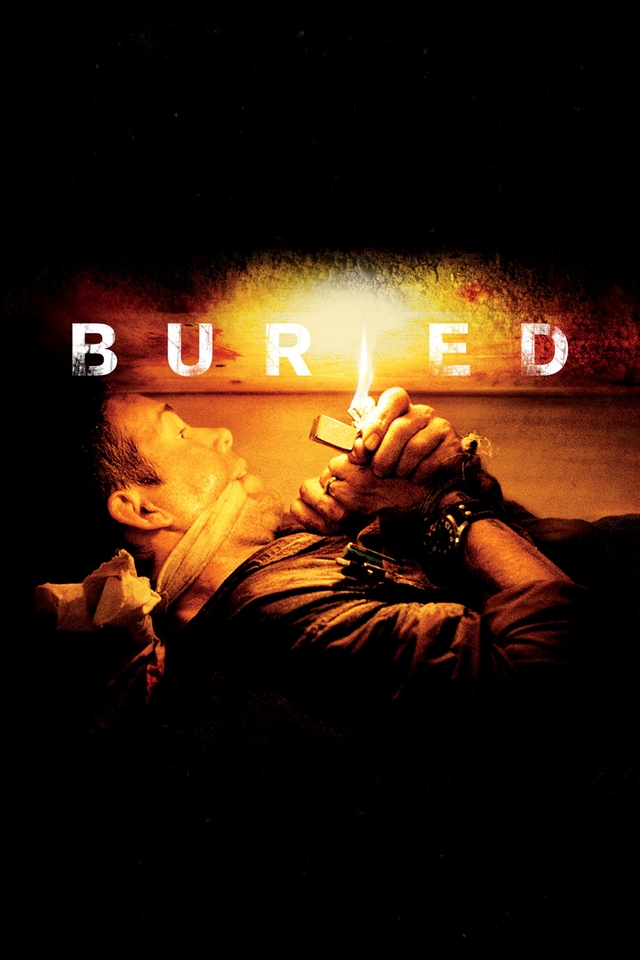
The pine coffin as the main stage isn’t a whim—it’s a declaration of war on contemporary horror cinema. Buried (2010) arrives in the wake of a Hollywood obsessed with CGI, shared universes, and villains who change colors like shirts, to remind us that true horror doesn’t need green screens or digital creatures: it just needs a confined space, a relentless ticking clock, and an actor ballsy enough to sweat bullets inside a wooden box. Rodrigo Cortés, the Spanish illusionist who already proved in Concursante his knack for turning psychological suffocation into an Olympic sport, delivers here one of the most brutal and elegant works of 21st-century horror—a minimalist industrial exercise that reeks of varnished pine and human desperation condensed into 93 minutes of runtime that feel like hours underground with a lighter in hand and spotty cell service.
The making of Buried is almost as claustrophobic as the film itself. Born from a Chris Sparling script that originally sought a Twilight Zone episode but ended up torpedoing the waterline of commercial cinema, the film was shot in 20 days with a skeleton crew and a $2 million budget that seems like a joke compared to today’s blockbuster millions. It’s the kind of movie the studio system loathes: no sequels, no merch, no characters ripe for franchises. Just Ryan Reynolds, sweating literally and metaphorically inside a 1.5 x 2-meter coffin, and a director who knows anguish isn’t sold in soda cans. The result is a work that burns like a cigarette in the dead of night: it scorches without mercy but leaves you craving more.
Rodrigo Cortés isn’t your typical horror director, resorting to cheap scares or moody lighting to impress. In Buried, Eduard Grau’s cinematography (the same visual genius behind A Single Man and Trumbo) turns the darkness of an Iraqi hole into an expressionist canvas where the phone’s glow is the only beacon in a sea of shadows. The coffin’s walls aren’t just walls—they’re textured surfaces, cracks like scars, splinters digging into the viewer’s back like needles. Cortés and Grau understood that in a film where physical space is as limited as the audience’s patience, the cinematography had to be aggressive, intimate, and claustrophobic, as if we were watching through a hole in the coffin’s lid. And damn, do they pull it off: every shot of Reynolds gasping, every desperate gesture when the signal cuts out, is a visual stab forcing you to feel the suffocation as if you were buried yourself.
Sparling’s script is a masterclass in narrative economy. No unnecessary flashbacks, no villains with endless monologues, no alternate climaxes or red herrings to distract from the main goal: survival. The structure is as relentless as the on-screen clock: every call, every message, every escape attempt is a microcosm of tension resolved in seconds but felt like hours. It’s the kind of writing that harks back to the best ‘70s thrillers, when suspense didn’t need special effects or muscle-bound actors—just a brilliant idea, an actor to execute it, and an audience willing to hold its breath. Cortés takes this premise and turns it into a real-time nightmare, a cinematic experiment daring the viewer not to look away, as if doing so would betray Reynolds. And damn, we don’t.
Direction
Rodrigo Cortés proves here he’s one of the most daring and original directors in contemporary Spanish cinema. His ability to turn a confined space into another character is simply masterful. Every camera movement inside the coffin is an act of visual resistance: extreme close-ups of Reynolds, sweaty and desperate, alternate with tight shots of the coffin lid looming over him like the sword of Damocles. Cortés avoids unnecessary fast cutting or cheap jump scares, opting for a slow, oppressive rhythm reminiscent of Kubrick’s The Shining or the urban anguish of François Ozon’s Under the Sand. The direction is so precise it’s hard to believe it was all shot on a soundstage in Albuquerque, New Mexico, not a real hole in the Iraqi desert. The narrative pulse is flawless: no pauses, no breaths, no concessions to the viewer. Cortés locks us in the coffin with Reynolds and doesn’t let us out until the screen goes black.
Lighting is another pillar of his direction. Eduard Grau delivers one of his best works here, with cinematography oscillating between expressionist darkness and the cold, bluish light of Reynolds’ phone. Every frame is a masterpiece of composition: shadows stretch like fingers trying to strangle the protagonist, reflections on the phone’s screen act as distorting mirrors. Cortés and Grau understood that in a film where space is so limited, every frame had to tell a story, and damn, do they pull it off. The cinematography isn’t just visual accompaniment—it’s another character, an oppressive presence constantly reminding you that you’re buried alive.
Editing is another standout aspect of the direction. Oscar-winning editor Steven Rosenblum (Braveheart) cuts with surgical precision, eliminating any unnecessary breath and accelerating the pace in moments of maximum tension. The film has no superfluous shots: every second counts, every cut stings. It’s the kind of editing that leaves you exhausted, as if you’ve run a marathon inside a coffin. Cortés and Rosenblum prove suspense doesn’t need digital effects or action choreography—just a brilliant idea, an actor to execute it, and an editor who knows where to cut.
Acting
Ryan Reynolds is at his best here. Far from the comedic roles that made him famous, the Canadian actor strips down emotionally and physically to play Paul Conroy, a civilian contractor kidnapped in Iraq and buried alive in a pine coffin. Reynolds doesn’t resort to hysterical screams or exaggerated gestures: his performance is subtle, intimate, and heart-wrenching, as if he’s leaving a piece of his soul in that coffin. Every bead of sweat, every gasp, every desperate glance at the camera is a display of acting mastery few could pull off in such a confined space. Reynolds isn’t the center of attention—he’s the only light in total darkness, and he burns with an intensity that scorches from within.
The rest of the cast is relatively minor, but everyone delivers. José Luis García Pérez as Jamal, the kidnapper, has an unsettling presence, though his role is more functional than deep. Robert Paterson as Dan Brenner, Reynolds’ superior, adds a touch of humanity amid the despair. Stephen Tobolowsky as lawyer Mark White has a memorable, if brief, cameo reminiscent of his iconic role in Groundhog Day. Samantha Mathis and Ivana Miño round out the cast with solid but secondary performances, in a script that prioritizes tension over character development. It’s a film that didn’t need an ensemble cast—Reynolds and his agony were enough.
Reynolds’ performance is so powerful that the rest of the cast seems to exist only to contrast him. His Paul Conroy isn’t a hero—he’s an ordinary man trapped in an extraordinary situation, and that raw realism is what makes the film work. Reynolds doesn’t show us an invincible character—he shows us a man who collapses, pulls himself together, and collapses again, and that’s far more terrifying than any digital monster. His performance is definitive proof that horror cinema doesn’t need special effects or supernatural villains—just a good story, a good actor, and a space to hide. And Reynolds does it all, and does it well.
Technical Aspects
The production design and costume design are two of the most outstanding technical aspects. Though the film was shot on a soundstage, María José Recalde’s costumes and Carlos Botet’s production design create a brutally authentic feel. The pine coffin isn’t just a prop—it’s another character, an object loaded with symbolism and texture. Every splinter, every rusty screw, every sweat and grime stain feels real, as if Reynolds were literally buried in a hole in the Iraqi desert. Reynolds’ costume—his contractor’s suit covered in dust and stains—adds a layer of gritty realism that reinforces the claustrophobia.
Concha Rodríguez’s makeup is another detail that elevates the film. Reynolds isn’t overly made up—he has real wounds, sweat, and dirt, as if he’s been buried for days without a shower or shave. It’s a small but crucial detail: in a film where space is limited, every little detail counts, and the makeup helps create a character who feels alive, sweaty, and desperate.
Victor Reyes’ score is another worthy mention. Known for his work on The Young Pope and Autómata, Reyes composes a minimalist soundtrack oscillating between oppressive silence and the dissonant chords of an out-of-tune piano. The music isn’t intrusive—it’s a constant but subtle presence, like a mosquito’s buzz on a windless night. It’s the perfect score for a film where tension doesn’t need drums or epic choirs—just silence and Reynolds’ ragged breathing.
The sound design is another standout technical aspect. Kami Asgar and Darren ‘Sunny’ Warkentin’s sound work is impeccable: every sound, from the coffin’s creaking to the phone’s beeping, feels real and oppressive. The sound mix is so precise it’s hard to believe it was all recorded on a soundstage. The sound contributes to an absolute sense of claustrophobia, as if the viewer were trapped in the same coffin as Reynolds. It’s the kind of sound you don’t notice until it’s gone, and when it’s gone, the film becomes unbearable silence.
The best
- Rodrigo Cortés’ direction: Turns a confined space into a suspense masterpiece, proving horror cinema doesn’t need digital effects or supernatural villains to be terrifying. His narrative pulse is flawless, and his ability to create tension with minimal resources is simply masterful.
- Eduard Grau’s cinematography: Every frame is a visual work of art, with lighting oscillating between expressionist darkness and the cold glow of a phone. The cinematography isn’t just an accompaniment—it’s another character in the film.
- Ryan Reynolds’ performance: In his best role to date, Reynolds proves he’s more than a comedian. His Paul Conroy is heart-wrenching, sweaty, and desperate, and his on-screen presence is so powerful it eclipses the rest of the cast.
- Chris Sparling’s script: A masterclass in narrative economy, with a relentless structure that gives the viewer no respite. No filler, no concessions—just pure tension.
- Steven Rosenblum’s editing: Cuts with surgical precision, eliminating any unnecessary breath and accelerating the pace in moments of maximum tension. Every second counts, and every cut stings.
The worst
- Victor Reyes’ score: Though minimalist and effective, it’s sometimes too understated for a film demanding so much visual intensity. A bit more drama in key moments would’ve been welcome.
- The pace in the first 10 minutes: The film takes a while to sink in, and the viewer might feel lost at the start without clear references to the setting or the protagonist. A minor detail, but enough to cause initial confusion.
- Lack of development for secondary characters: Though the script prioritizes tension over ensemble development, characters like Jamal or Dan Brenner feel too schematic. A bit more depth would’ve made them more memorable.
- The ending: It’s not bad, but it’s predictable. Though the film is so well-constructed that the viewer senses things won’t end well, a more unexpected twist would’ve elevated the final tension.
- The artificial feel of the set: Despite the production design’s efforts, the coffin sometimes feels like it’s on a soundstage. A small detail, but enough to slightly break the total immersion.
The Verdict of Claqueta Ácida
Buried isn’t a film for the faint-hearted, nor for those who believe terror is measured in decibels, green screens, or monsters with sharp teeth. It’s a brutal, elegant, and heart-wrenching work proving that sometimes the best horror cinema uses the most minimal resources: an actor, a coffin, and a relentless ticking clock. Rodrigo Cortés delivers one of the most original and agonizing Spanish films of the last decade, and Ryan Reynolds shines with an intensity that burns from within. It’s not perfect: it has its flaws, moments of hesitation, and an ending that, while effective, isn’t unexpected. But that doesn’t detract from its greatness. It’s a film that feels like a real nightmare, and in a world of movies trying to sell you nightmares with popcorn, that’s something worth celebrating. If you dare to watch it, prepare to sweat. Literally. 💀
🎬 Tráiler Oficial
💬 El Veredicto de la Comunidad
¿Qué te ha parecido la película? Deja tu nota de 0 a 10 para contrastarla con el análisis de la redacción.
Aún no has votado
📢 ¿Te ha gustado el ácido?
Comparte esta crítica con tus amigos cinéfilos o desata la polémica en redes.
📩 📩 Get the poison in your inbox
Join our weekly mailing list. Honest film reviews, acid festival coverage, and cult recommendations every Sunday morning. Zero spam, pure celluloid.
🔒 We promise weekly poisonous reviews and exclusive coverage.Related Reviews
Recommended autopsies for demanding film buffs.
 🔥 Fusión Nuclear8.5
Buried: 90 Minutes of Methodical Anguish, Where the Coffin is the Best Stage
Ryan Reynolds buried alive in a pine box: 90 minutes of cinematic claustrophobia that redefines minimalist terror. Art or refined exploitation? Both, but with style.
 ⚡ Ácido Cítrico5.0
"Escape: Rodrigo Cortés and the Wet Dream of Prison as a Luxury Resort"
Rodrigo Cortés delivers a prison thriller that reeks of mothballs and a screenwriting workshop script. Mario Casas shines, but not even he can save this self-help pamphlet with handcuffs.
 ⚡ Ácido Cítrico6.2
*Exit 8*: The Horror Station That Can’t Find Its Way Out (And Neither Can You)
Genki Kawamura adapts *The Exit 8* video game with more loops than a politician’s campaign promises. Will it escape the purgatory of J-horror, or is it doomed to linger in its own terminal?