The Wicker Man — The Cinematic Ritual That Burns You Alive (And No, It’s Not a Metaphor)
Robin Hardy and Anthony Shaffer forged a pagan celluloid cult: 94 minutes of suffocating tension that choke you like the smoke of a sacrifice. Edward Woodward burns on screen. Will you accept the challenge?

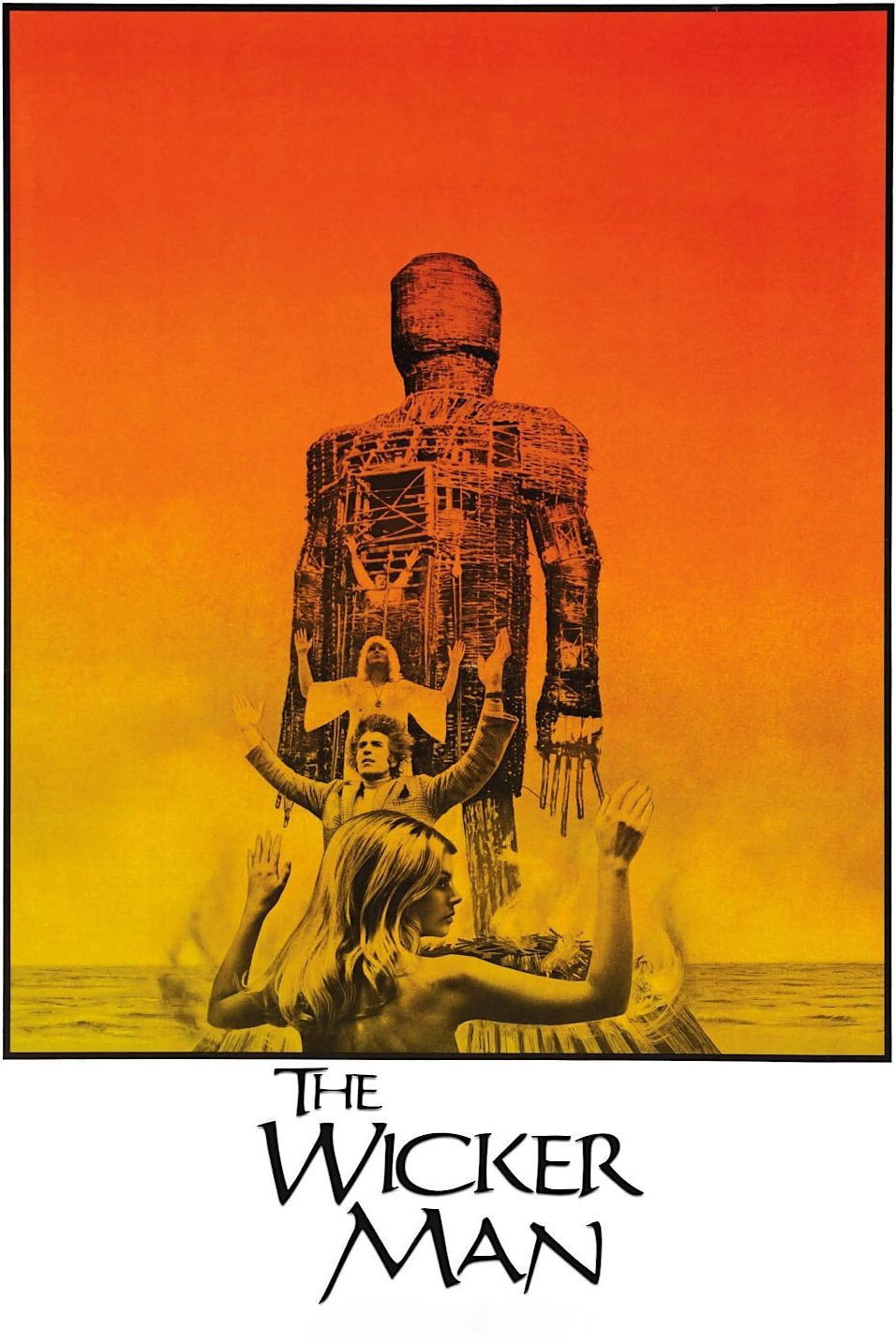
Celluloid ignites like a Beltane bonfire when Robin Hardy decides terror doesn’t need latex monsters or digital effects to strangle you. The Wicker Man (1973) isn’t a film—it’s a pagan ritual shot with the precision of a surgeon and the patience of an executioner. At the height of the British horror boom—when Hammer Films was churning out vampires with plastic fangs and strawberry blood—Hardy and screenwriter Anthony Shaffer stood before the industry with a premise as simple as it was devastating: what if the real horror isn’t a masked killer, but an entire community that’s decided to revive the worship of ancient gods? The answer is a technical knockout to conventional horror, an uppercut straight to the jaw of Christian moralizing, and a one-way trip to an island where common sense drowns in mead and macabre folk songs.
The genesis of this masterpiece is as fascinating as its plot. Anthony Shaffer, the mastermind behind the script, was a maestro of psychological thrillers (his Sleuth from 1972 remains a masterclass in suspense), but here he decided to play in another league: anthropological terror. Inspired by Celtic myths and pagan traditions still pulsing in the British Isles, Shaffer crafted a story where religion isn’t a comfort but a deadly trap. Meanwhile, Robin Hardy, a television director with more craft than pomp, understood that real terror lay not in what was shown, but in what was hinted at. Summerisle Island isn’t a set—it’s a character in itself: damp, green, sticky like fermented honey. Hardy films every shot as if documenting a real coven, with a coldness that contrasts with the story’s stifling heat. The result is pure atmospheric cinema, where Sergeant Howie’s sweat mingles with yours in the theater seat.
But let’s not kid ourselves: the real heavyweight of this film isn’t its direction or script (though both are flawless), but its cast. In one corner, Edward Woodward as Sergeant Howie, a devout, rigid, and moralistic cop who arrives on the island like a crusader in infidel territory. Woodward doesn’t act—he burns: his face is a map of cracks through which panic, indignation, and, finally, pure terror seep. In the other corner, Christopher Lee as Lord Summerisle, a pagan aristocrat who smiles as if he knows a secret you’ll never understand. Lee, the king of Gothic horror, proves here he doesn’t need fangs or capes to be terrifying: a white suit, a condescending smile, and the certainty that, in the end, he always wins are enough. Between them, a chorus of villagers who sing, dance, and weave wicker with the same naturalness as they plan a human sacrifice. Britt Ekland, as the seductive Willow, embodies pagan temptation: her naked dance isn’t erotic—it’s ritual, and her lullaby sounds like a spell. Even Ingrid Pitt, the queen of Hammer’s lesbian horror, has a cameo that burns brighter than her scenes in Count Dracula.
The cultural climate of 1973 was the perfect breeding ground for a film like this. The world was nursing a hangover from the 60s: the counterculture had exploded, traditional religions were faltering, and paganism was resurging as a spiritual alternative for the disillusioned. The Wicker Man didn’t just reflect that zeitgeist—it exploited it with ferocious intelligence. It’s no coincidence the film was divisive: for some, it was a masterpiece of psychological horror; for others, a blasphemy disguised as art. The truth is, nearly fifty years later, its power remains intact. There are no spoilers to ruin it, no special effects to age it, no plot twists that lose their punch over time. The Wicker Man is timeless because the fear of the unknown, of the collective, of what lurks behind kind smiles, never goes out of style. And if you think you’ve seen it all in horror cinema, this film will prove, with a smile, that you’re wrong.
Direction: The Art of Strangling with a Smile
Robin Hardy doesn’t direct The Wicker Man—he choreographs it. Every shot is a calculated movement, as if the camera were just another dancer in the coven. Hardy understands that terror doesn’t need screams or chases to be effective; a close-up of Edward Woodward sweating under his uniform, with the wind rustling the leaves like nature itself conspiring against him, is enough. Summerisle Island isn’t a set—it’s a living organism, and Hardy films it with a mix of fascination and revulsion, as if he knows that, in the end, the viewer will also be devoured by it. The pace is deliberately slow but never boring: it’s the rhythm of a ritual, a countdown to the inevitable. Hardy uses sound as a weapon: the folk songs, the villagers’ whispers, the creaking of wicker. Everything contributes to a symphony of discomfort that envelops you like a thick fog.
The climax, that moment when Sergeant Howie is led to his fate, is a masterclass in suspense. Hardy doesn’t show the sacrifice—he doesn’t need to. The terror lies in Woodward’s eyes, in Lee’s smile, in the silence before the fire. It’s pure cinema, uncompromising, without a safety net. And when the screen turns white from the flames’ glare, you know you’ve just witnessed something unforgettable.
Performances: The Coven of Celluloid Gods
If The Wicker Man is a ritual, its cast is the chorus of priests and victims. Edward Woodward delivers one of the most intense performances in British cinema: his Sergeant Howie is a man of faith in a godless world, and his desperation is so palpable you can smell the sweat and bile in every scene. Woodward doesn’t play a hero—he plays a broken man, the last bastion of morality in a place where morality doesn’t exist. His final confrontation with Christopher Lee is a clash of titans: Woodward, with his blind faith, against Lee, with his air of superiority. And, as in any good duel, only one can remain.
Christopher Lee, for his part, proves why he was (and still is) the king of horror. His Lord Summerisle isn’t a typical villain—he’s a pagan philosopher, a man who’s embraced chaos and turned it into art. Lee doesn’t need to shout or gesture to dominate the screen; a look, a smile, a single movement is enough. He’s the kind of villain who makes you question your own beliefs, and that, my friends, is terror in its purest form. The rest of the cast doesn’t lag behind: Britt Ekland as Willow, the temptation made flesh; Diane Cilento as the witch Miss Rose; even Ingrid Pitt in a cameo that burns brighter than her scenes in Count Dracula. Together, they form a macabre choreography, where every movement, every word, every song is designed to drag you into the abyss.
Technical Breakdown: The Alchemy of Terror
Anthony Shaffer’s script is a masterpiece of manipulation. Every line of dialogue, every song, every sideways glance is calculated to destabilize you. Shaffer doesn’t write a horror story—he crafts a psychological game where the viewer is the victim. The structure is impeccable: the film moves like an hourglass, with each grain of sand representing a clue, a detail, a moment of tension that brings you closer to the inevitable end. And just when you think you’ve figured it all out, Shaffer hits you with a twist that leaves you breathless. There are no plot holes, no loose ends—everything fits together like the pieces of a macabre puzzle.
The cinematography by Harry Waxman is another highlight. Waxman doesn’t just light Summerisle Island—he reveals it: every shadow, every reflection in the water, every ray of sunlight filtering through the trees seems to hold a hidden meaning. The color palette is warm, almost inviting, but beneath that idyllic surface beats a dark heart. Waxman uses color as a weapon: the red of the apples, the green of the fields, the white of the villagers’ clothes. Everything is designed to deceive you, to make you feel safe before pulling the rug out from under you.
The score, composed by Paul Giovanni, is one of the most original and unsettling in horror cinema. There are no epic orchestrations or dramatic choirs—just folk songs, ancient instruments, and voices whispering as if invoking something. The music doesn’t accompany the film—it devours it. Every note, every chord, every melody is designed to raise the hairs on your neck. And when the film reaches its climax, the music becomes a battle cry, a pagan hymn that drags you into the fire.
The best
- Robin Hardy’s direction: A masterclass in patience and precision, where every shot is a knockout. Hardy doesn’t direct—he choreographs a ritual.
- Edward Woodward’s performance: A Sergeant Howie who burns on screen with an intensity few actors have matched. Woodward doesn’t act—he suffers.
- Christopher Lee as Lord Summerisle: The most elegant and terrifying villain in horror cinema. Lee doesn’t need fangs to be a monster.
- Anthony Shaffer’s script: A masterpiece of psychological manipulation, where every word, every silence, is calculated to destabilize you.
- Paul Giovanni’s score: Folk songs that sound like spells, ancient instruments that raise the hairs on your neck. The music doesn’t accompany—it devours.
- Harry Waxman’s cinematography: A warm color palette hiding a dark heart. Waxman doesn’t light—he reveals.
The worst
- The pace in the first 30 minutes: It might feel too slow for impatient viewers. Hardy isn’t in a hurry, and if you are, this film isn’t for you.
- The lack of development for some side characters: The villagers are more of a chorus than individuals, and some brilliant actors (like Ingrid Pitt) are relegated to cameos.
- The predictable ending (for some): If you know the wicker man myth, the climax won’t surprise you. But the journey, my friends, is worth every second.
- The editing in some versions: Some aged copies lose image and sound quality, which detracts from the experience.
The Verdict of Claqueta Ácida
The Wicker Man isn’t a horror film—it’s a cinematic exorcism. Robin Hardy and Anthony Shaffer created a work that transcends the genre, a pagan nightmare that burns you alive without special effects. Edward Woodward burns on screen with an intensity few actors have matched, and Christopher Lee proves, once again, that he’s the undisputed king of terror. The cinematography, the music, the script—everything in this film is designed to drag you into a coven you can’t escape. If you think horror cinema has nothing new to offer, The Wicker Man will prove, with a smile, that you’re wrong. And when the flames consume the screen, you’ll remember that the real horror isn’t in monsters—it’s in the smile of the one offering you the apple. 💀
🎬 Tráiler Oficial
💬 El Veredicto de la Comunidad
¿Qué te ha parecido la película? Deja tu nota de 0 a 10 para contrastarla con el análisis de la redacción.
Aún no has votado
📢 ¿Te ha gustado el ácido?
Comparte esta crítica con tus amigos cinéfilos o desata la polémica en redes.
📩 📩 Get the poison in your inbox
Join our weekly mailing list. Honest film reviews, acid festival coverage, and cult recommendations every Sunday morning. Zero spam, pure celluloid.
🔒 We promise weekly poisonous reviews and exclusive coverage.Related Reviews
Recommended autopsies for demanding film buffs.
 🔥 Fusión Nuclear8.5
The Wicker Man: The Cinematic Ritual That Burns You Alive (And No, It’s Not a Metaphor)
Robin Hardy and Anthony Shaffer forged a pagan celluloid cult: 94 minutes of suffocating tension that choke you like the smoke of a sacrifice. Edward Woodward burns on screen. Will you accept the challenge?
 ⚡ Ácido Cítrico6.2
*Exit 8*: The Horror Station That Can’t Find Its Way Out (And Neither Can You)
Genki Kawamura adapts *The Exit 8* video game with more loops than a politician’s campaign promises. Will it escape the purgatory of J-horror, or is it doomed to linger in its own terminal?
 ⚠️ Ácido Sulfúrico4.2
**Good Boy: The Dog That Saved No One (Not Even Itself)**
A supernatural canine stars in a film that barks up the wrong tree. *Claqueta Ácida* dissects this rural dud with the precision of a scalpel in a slaughterhouse.