Crash — Cronenberg’s Carnal Collision That Left Us in a (Sexual) Coma
David Cronenberg turns a traffic accident into a carnival of flesh, metal, and perversion. Art or autopsy? Here’s the acidic verdict.

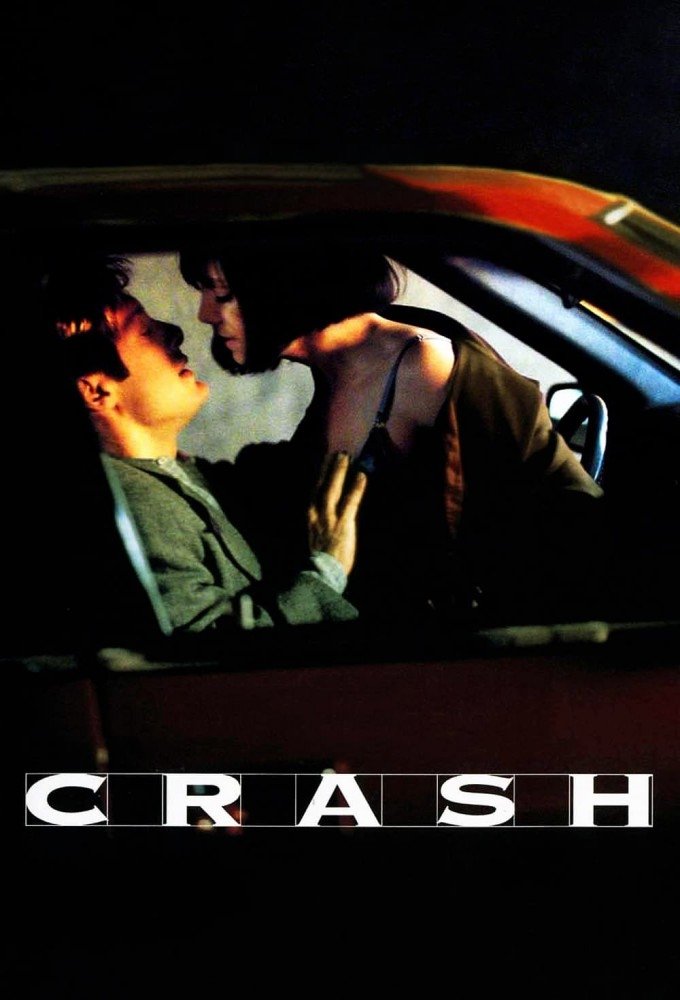
The cinema of David Cronenberg has always been a ring where flesh and machine beat the living hell out of each other. Back in the '90s, while the world was obsessed with cyberpunk neon and heroes with implants, the Canadian maestro was already wallowing in the muck, exploring how technology corrupts us from the inside out. Crash (1996) is his dirtiest low blow: a film that turns a traffic accident into a sexual ritual so disturbing even your car insurance would demand a second opinion. This isn’t a movie about cars—it’s about how pain and pleasure blend into a cocktail that tastes like gasoline and sweat. Cronenberg doesn’t film scenes; he performs emotional autopsies where characters strip down (literally) to reveal their scars, their fetishes, and that strange attraction to what should kill them. If psychological horror had an instruction manual, this would be the forbidden chapter: How to Turn a Crash Into an Orgasm Without Dying in the Process.
The context of Crash is key to grasping its impact. Released in 1996, smack in the middle of the American indie boom and European auteur cinema, the film landed like a sucker punch to the gut of political correctness. While Hollywood was obsessed with redemption arcs and happy endings, Cronenberg was laughing in everyone’s face with a story where characters not only learn nothing but get off on their own destruction. Based on the novel by J.G. Ballard (yes, the same guy who wrote Empire of the Sun), the film is such a faithful adaptation it hurts. Ballard, a writer who understood the eroticism of machinery like no other, found in Cronenberg the only director capable of translating his vision without sugarcoating. The result is a film that feels like it was shot in a body shop, where every frame reeks of burnt oil and every line of dialogue sounds like the confession of a psychopath with impeccable taste. Alliance Films and Recorded Picture Company rolled the dice financing this, but what other studio would dare bankroll a movie where the climax isn’t a kiss but a 75 mph head-on collision between two cars?
Shooting Crash was a logistical nightmare and a wet dream for extreme cinema lovers. Cronenberg, a director who’s always preferred real locations over studios, turned Toronto’s streets into a stage for urban perversion. The cars weren’t props—they were co-stars: every dent, every shattered headlight, every oil stain on the asphalt told a story. Peter Suschitzky, the cinematographer, captured the coldness of metal and the warmth of flesh with surgical precision, as if filming a documentary on bumper fetishists. Then there was the cast, a group of actors willing to push their bodies to the limit. James Spader, as James Ballard (yes, same name as the novel’s author—a meta wink that reeks of self-indulgence), stalks through the film like a sexual predator in an expensive suit. Holly Hunter, on the other hand, is the voice of reason in a world that’s lost its way, though even she succumbs to the allure of airbags. But if anyone steals the show, it’s Deborah Kara Unger, whose on-screen presence is so magnetic even the cars seem to ogle her. Her character, Catherine Ballard, is the beating heart of this nightmare: a woman who finds pleasure in pain and beauty in the grotesque.
And then there’s Vaughan, played by Elias Koteas, the guru of this crash cult. Vaughan isn’t a villain—he’s a prophet: a guy who’s turned his obsession with collisions into a philosophy of life. His home is a museum of disaster, a place where wrecked cars are relics and scars are medals. Koteas plays him with calculated coldness, as if reciting a sermon instead of a line of dialogue. Vaughan doesn’t seduce—he recruits. And he does it with a smile more dangerous than any accident. The chemistry between the characters is toxic but irresistible. There’s no love in Crash, only obsession. No redemption, only freefall. Yet there’s something deeply human in this film: the recognition that we’ve all, at some point, felt that pull toward what destroys us. Cronenberg doesn’t judge his characters; he observes them like a scientist watching an experiment. And the experiment, dear readers, is us.
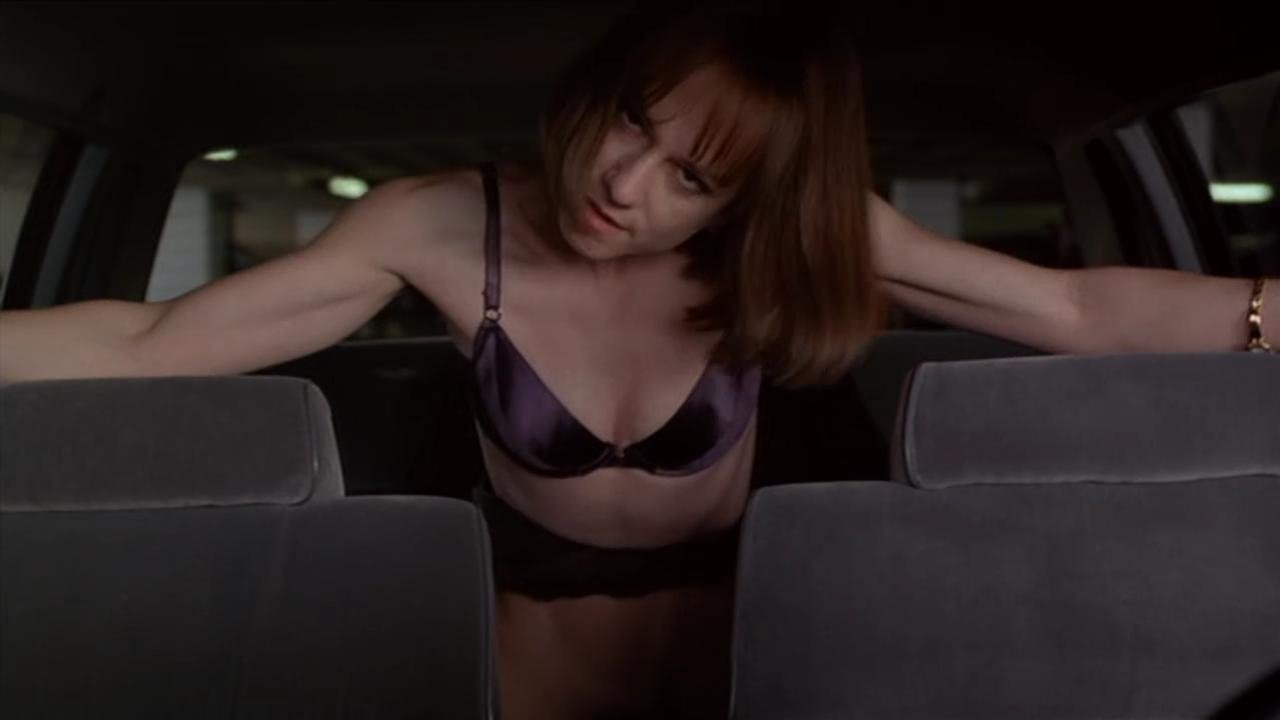
Direction: Cronenberg at His Coldest and Most Calculating
If there’s one thing that defines David Cronenberg’s style, it’s his ability to turn the repulsive into the hypnotic. In Crash, he takes this skill to its extreme. There isn’t a single frame that isn’t loaded with meaning, not a single shot that doesn’t feel like a threat. Cronenberg doesn’t shoot scenes—he dissects his characters with the precision of a surgeon. Every camera movement is slow, deliberate, as if measuring how long it takes the viewer to squirm. And squirm you will. The film moves like a car with no brakes: you know it’s going to crash, but you can’t look away.
Cronenberg’s use of space in Crash is masterful. He turns Toronto into a concrete-and-steel labyrinth, a place where characters lose themselves both physically and emotionally. The scenes in Vaughan’s garage, with its wrecked cars and walls plastered with accident photos, are a constant reminder that danger lurks everywhere. Then there are the sex scenes, filmed with a coldness that makes them even more disturbing. There’s no passion in these encounters, just a cold, mechanical transaction. Cronenberg isn’t trying to arouse the viewer—he’s trying to unsettle them. And he succeeds brilliantly.
The film’s pacing is another strength. Crash isn’t in a hurry, but it never stops. Each scene flows into the next with relentless logic, as if the characters are trapped in a loop they can’t (or won’t) escape. The editing, by Ronald Sanders, is flawless: transitions between scenes are seamless, almost imperceptible, as if the film itself is breathing. And in a way, it is. Crash isn’t a movie you watch—it’s a movie you feel. And what you feel, dear readers, is a mix of fascination and revulsion that lingers long after the credits roll.
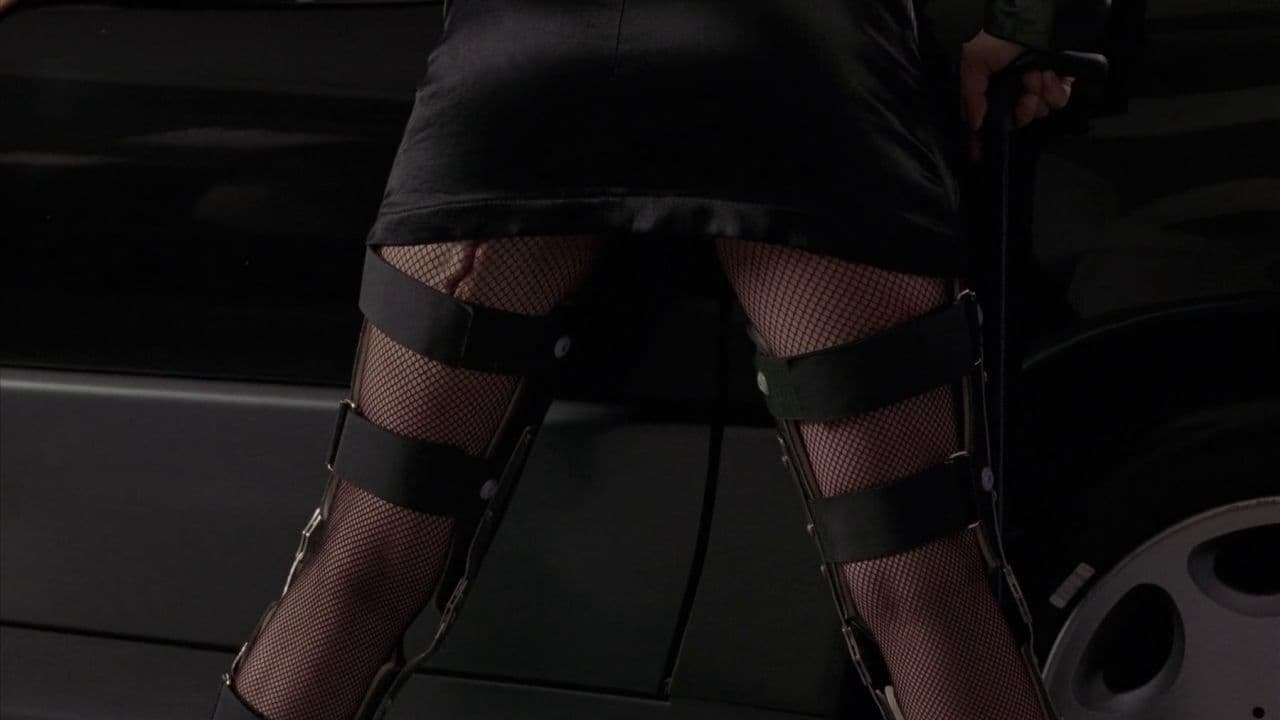
Actors: A Cast in a State of Grace (and Shock)
The cast of Crash is a dream team of actors willing to push their bodies and minds to the limit. James Spader, as James Ballard, is the film’s soul. Spader has always had a knack for playing ambiguous characters, and here he takes it to the extreme. His Ballard isn’t a hero or a villain—he’s a guy who’s found pleasure in what should destroy him. Spader plays him with a coldness that’s mesmerizing: there’s no judgment in his gaze, just curiosity. It’s as if he’s exploring the limits of his own sexuality, and we’re privileged (or cursed) to witness it.
Holly Hunter, meanwhile, is the voice of reason in a world that’s lost its way. Her character, Helen Remington, is a woman dragged into this world of fetish and danger without quite understanding how she got there. Hunter plays her with a mix of vulnerability and determination that makes her incredibly human. She’s not a victim—she’s a survivor. Yet even she succumbs to Vaughan’s crash cult. The scene where Helen and James have sex in a car after their first crash is one of the film’s most intense: there’s no passion, just a physical need bordering on desperation.
But if anyone steals the movie, it’s Deborah Kara Unger. Her Catherine Ballard is the beating heart of this nightmare. Unger has a screen presence that’s impossible to ignore: her body seems made of porcelain, but her gaze is pure dynamite. Catherine isn’t a victim—she’s an active participant in this dangerous game. Unger plays her with a mix of elegance and perversion that’s hypnotic. There’s a scene where Catherine and James have sex in a car while Vaughan watches from a distance. No dialogue, just looks and ragged breathing. It’s one of the most erotic—and disturbing—scenes I’ve seen in a long time.
And then there’s Elias Koteas, whose Vaughan is the mastermind behind this obsession. Koteas plays him with a coldness that’s terrifying. Vaughan isn’t a villain—he’s a prophet: a man who’s found meaning in chaos. Koteas plays him with an intensity that leaves you breathless. There isn’t a single moment where you don’t feel Vaughan is about to do something unpredictable. And that, dear readers, is what makes Crash so addictive.
Technical Aspects: When Metal and Flesh Merge
The technical craft of Crash is impeccable. From Peter Suschitzky’s cinematography to Carol Spier’s production design, everything in this film is designed to create an atmosphere of constant danger. Suschitzky, a frequent Cronenberg collaborator, captures the coldness of metal and the warmth of flesh with surgical precision. The shots of wrecked cars are almost poetic: every dent, every broken headlight, every oil stain on the asphalt tells a story. Then there are the shots of bodies, filmed with an intimacy that’s unsettling. Cronenberg doesn’t glorify sex—he shows it for what it is: a physical act, sometimes pleasurable, sometimes painful, but always real.
The sound design is another highlight. Howard Shore, another Cronenberg regular, composes a score as cold as the film itself. There are no epic melodies, just ambient sounds that reinforce the sense of danger. The roar of engines, the screech of tires, the crunch of metal on impact—everything is designed to raise the hairs on the back of your neck. And it works. There’s a scene where James and Catherine have sex while Vaughan talks to them on the phone. The sound of Vaughan’s breathing, mixed with the background traffic noise, is one of the most erotic (and disturbing) things I’ve heard in a long time.
The screenplay, written by Cronenberg himself, is a faithful adaptation of J.G. Ballard’s novel. There are no concessions to the audience: the dialogue is cold, almost clinical, and the characters speak as if reciting an instruction manual. But that’s precisely what makes the film work. Crash isn’t a movie about emotions—it’s about instincts. The characters don’t talk about love; they talk about desire. They don’t talk about redemption; they talk about destruction. Yet there’s something deeply human in this film: the recognition that we’ve all, at some point, felt that pull toward what destroys us.
The best
- David Cronenberg’s direction: A masterclass in surgical precision that turns the repulsive into the hypnotic. Every frame is a threat, every camera movement a reminder that danger is everywhere.
- The cast’s performances: James Spader, Holly Hunter, and Deborah Kara Unger push their bodies and minds to the limit, creating characters as fascinating as they are disturbing.
- Peter Suschitzky’s cinematography: Captures the coldness of metal and the warmth of flesh with a precision that’s almost poetic. The shots of wrecked cars are works of art.
- The sound design: Howard Shore’s score reinforces the sense of constant danger. The roar of engines and the crunch of metal are as important as the dialogue.
- Cronenberg’s screenplay: A faithful adaptation of Ballard’s novel that makes no concessions to the audience. The dialogue is cold, almost clinical, but that’s what makes the film work.
The worst
- Pacing in some moments: While generally impeccable, there are scenes that drag on longer than necessary. Not a major issue, but it’s noticeable.
- Lack of development for some side characters: Rosanna Arquette and Peter MacNeill have significant roles, but their characters aren’t as fleshed out as the leads. A shame, because both actors have a lot to offer.
- Emotional coldness: Crash isn’t a film for those seeking warm, fuzzy feelings. If you’re looking for a love story, look elsewhere.
- The ending: No spoilers, but it might feel anticlimactic to some. It’s not bad, but it’s not the epic payoff you’d expect after so much tension.
- Accessibility: This isn’t a film for everyone. If explicit sex or graphic violence makes you uncomfortable, steer clear.
The Verdict of Claqueta Ácida
Crash is one of those films that lodges in your brain like a rusty nail. It’s not a flawless masterpiece, but it’s so bold, so disturbing, and so damn unique that ignoring it is impossible. David Cronenberg doesn’t make movies to entertain—he makes them to challenge. And Crash is his filthiest challenge: a film that turns pain into pleasure, danger into desire, and accidents into art. It’s not for everyone, but if you dare to watch it, prepare for a journey you won’t soon forget. Just don’t be surprised if, afterward, you start looking at your car a little differently. And that, dear readers, is the highest compliment you can pay a film. Crash doesn’t leave you indifferent. It leaves you in shock. And sometimes, that’s better than love. 💀
🎬 Tráiler Oficial
💬 El Veredicto de la Comunidad
¿Qué te ha parecido la película? Deja tu nota de 0 a 10 para contrastarla con el análisis de la redacción.
Aún no has votado
📢 ¿Te ha gustado el ácido?
Comparte esta crítica con tus amigos cinéfilos o desata la polémica en redes.
📩 📩 Get the poison in your inbox
Join our weekly mailing list. Honest film reviews, acid festival coverage, and cult recommendations every Sunday morning. Zero spam, pure celluloid.
🔒 We promise weekly poisonous reviews and exclusive coverage.Related Reviews
Recommended autopsies for demanding film buffs.
 🔥 Fusión Nuclear8.1
Crash: Cronenberg’s Carnal Collision That Left Us in a (Sexual) Coma
David Cronenberg turns a traffic accident into a carnival of flesh, metal, and perversion. Art or autopsy? Here’s the acidic verdict.
 🔥 Fusión Nuclear8.5
**Eastern Promises: A Dark Journey into the Heart of the Mafia – Cronenberg’s Scalpel Meets Russian Rot**
A scathing takedown of David Cronenberg’s *Eastern Promises*—where the mafia gets the autopsy it deserves.
 ⚡ Ácido Cítrico6.2
*Exit 8*: The Horror Station That Can’t Find Its Way Out (And Neither Can You)
Genki Kawamura adapts *The Exit 8* video game with more loops than a politician’s campaign promises. Will it escape the purgatory of J-horror, or is it doomed to linger in its own terminal?