Leviticus — The Exorcism That Floats Over the Void (Or How to Sell Smoke with Low-Budget Levitation)
Adrian Chiarella delivers this 'Australian exorcism' that hovers between gothic pretension and unintentional absurdity. Art or autopsy of a soulless script?

Celluloid groans under the weight of Leviticus like a rusted metal frame in an abandoned industrial park. Adrian Chiarella—until now just another name echoing in the credits of Australian indie shorts—dives headfirst into the pool of psychological and social terror with a project oozing as much artistic ambition as it does conceptual viscera. Causeway Films and Salmira Productions handed him a blank check to shoot this devastating debut: a queer, contemporary folk-horror tale that flees from the genre’s greatest hits to choke the viewer with the purely human dread of conversion therapy and religious fanaticism. The problem isn’t that Chiarella aims high; it’s that his aim is so frontal and razor-sharp it’ll unsettle anyone looking for a cheap carnival scare. In 2026, genre cinema remains the refuge of bold propositions, and Leviticus is the perfect example of how to wring every drop from its meager 88 minutes in a clinical-atmosphere exercise that burrows under your skin.
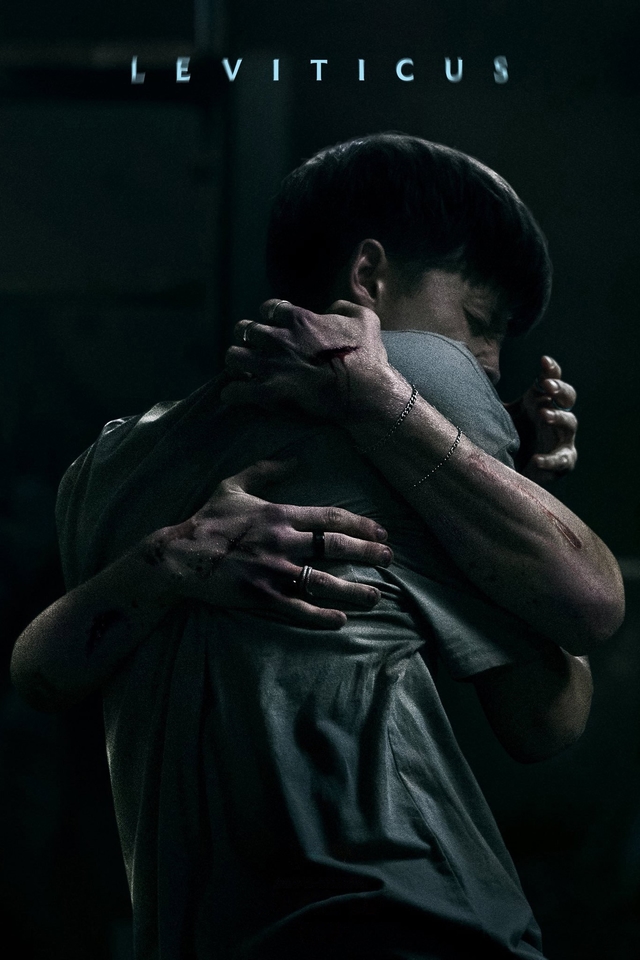
The premise, of course, is a twisted, brilliant gut-punch: in a setting dominated by a suffocating congregation, a supernatural entity is unleashed with one perverse rule—it takes the exact form of the person you desire most. Joe Bird, the young actor bearing the weight of embodying Naim’s fragility and pain, plays the afflicted protagonist with a gaze steeped in raw, devastating resistance. Beside him, Stacy Clausen delivers a flawless performance as Ryan, masking absolute panic behind a veneer of youthful arrogance. The acting soars thanks to a script written with brutal emotional depth, while the cinematography insists on illuminating every scene with the icy sobriety of desolate concrete. The result? A film that floats, yes—but like a lucid nightmare: precise, tense, and with a third act so suffocating it offers no quarter.
Chiarella, who also penned the script, seems obsessed with the idea that contemporary horror boils down to urban isolation, constant paranoia, and the subtext of familial trauma. The triumph lies in the execution: every scene feels plucked from a clinical map of internalized homophobia and social rejection. The director attempts to craft an oppressive atmosphere within a brutalist setting, and his staging is as subtle as it is devastating. The long takes are sustained and fluid, trapping characters within the frame. The lighting, supposedly inspired by industrial emptiness, becomes a desaturated color palette where gray seeps into everything. And the sound—God, the sound. Leviticus’ audio effects slice like a scalpel, amplifying the environment with hyperrealistic precision. The uncomfortable silences, the creaking metal, the characters’ held breaths—all cut deeper than any blaring score. If this is the future of psychological horror, then the genre is more alive than ever.
But Leviticus isn’t all clinical detachment. There’s one moment—just one among many—where the film detonates with cathartic force: the final climax, where the protagonists are forced to flee from the living image of what they love to survive. It’s the crowning instant where Chiarella delivers true psychological terror and emotional agony. The brilliance? After that flash of genius, the film doesn’t deflate—it drags the viewer into an unrelenting resolution. It’s clear the director had a brilliant idea and knew how to commit to it on screen without pandering to the masses. The runtime is an exercise in relentless tension, immersing the audience in a collective paranoia where the worst cruelty is wielded by a mother convinced she’s “saving her son.” Ambition in independent cinema is usually proportional to risk. And Leviticus is living proof of that.
Direction: The Art of Holding the Gaze Adrian Chiarella directs Leviticus with the surgical precision of someone who knows the seams of contemporary psychological thrillers inside out. His visual style leans on claustrophobic compositions and sustained static shots that amplify the sensation of being perpetually watched. Chiarella shuns the cheap fireworks of jump scares, using the camera in a pretentious yet justified way to suffocate the viewer. Every time the tension should explode into a cheap thrill, the staging prefers to linger, to discomfort. The director demonstrates impeccable judgment in balancing industrial aestheticism with narrative depth. The transitions are abrupt, the framing clinical, and the pacing unfolds like an implacable slow burn that detonates in the final stretch. If this is the future of Australian genre cinema, we’re dealing with a filmmaker who demands close attention.
The script, also by Chiarella, is a masterclass in social horror goldsmithing. The dialogue is rough and raw, stripped of any sugary romanticism, and the character arcs lay bare the scars of religious fanaticism with brutal honesty. Naim shifts from alienation to a physical and mental fight for survival in a matter of minutes, maintaining flawless psychological coherence. The characters’ motivations are clear through their silences and glances, and the plot twists materialize desire as a self-inflicted threat with devastating brilliance. Chiarella infuses symbolism into every corner of the abandoned industrial park, turning the impossibility of embracing the beloved into a metaphor as painful as it is real. The final climax is a catharsis that shatters the copy-paste conventions of multiplex horror, landing with devastating force.
Performances: The Cast That Understood the Pain The ensemble of Leviticus commits entirely to the raw material at hand. The small group of actors trapped in the desolate industrial setting seems to exist in a state of real tension, delivering performances that are rough and laden with dramatic weight. Joe Bird is the standout revelation, carrying the emotional burden with a physical and intimate performance that disarms the viewer. Beside him, Stacy Clausen shines, bringing the perfect blend of harshness and vulnerability. But the one who truly freezes the blood is Mia Wasikowska as the icy Arlene, the congregation’s matriarch—a flawless, understated performance that terrifies because her psychological sadism stems from distorted devotion.
What’s most gratifying is seeing how this cast, especially established names like Mia Wasikowska, elevates the script. Wasikowska demonstrates a chilling ability to unsettle from a place of calm, wielding mystery and cruelty with bone-chilling subtlety. Scene after scene, the ensemble locks into a text that gives them space to thrive in discomfort. The result is a film where the performances dodge tedium, becoming as memorable as they are disturbing within the industrial gray where it was shot.
Technical Breakdown: When Industrial Coldness Becomes Cinema If Leviticus proves anything, it’s that psychological horror thrives on a production design stripped of ornamentation and laser-focused on emptiness. The cinematography is a cornerstone, turning the artificial, clinical lighting of abandoned warehouses into a cinematic atmosphere of pure terror. An oppressive mood is crafted through static shots in empty rooms, and the camerawork masterfully exploits the industrial space’s dimensions. The framing is precise, and the desaturated color palette is so consistent it immerses the viewer in an uncomfortable, grayish stupor.
The production design is one of the film’s strongest points. The industrial park and warehouses where the action unfolds are deliberately soulless, achieving a minimalist decor that radiates desolation and paranoia. The set pieces and industrial environments feel hostile and real. The entity’s manifestations, far from relying on conventional makeup or crude digital effects, maintain their terrifying impact by playing with reflection and the disturbing physical presence of the desired being. The crisis scenes become suffocating, eschewing the clumsy choreography of commercial cinema.
The score and sound design are other standout elements. Leviticus’ audio treatment avoids the clichés of cheap atmospheric synthesizers, opting instead for hyperrealistic amplification of the environment. Instead of forcing the audience to react with predictable volume spikes, the music and effects build organic tension at a slow burn. The editing, meanwhile, handles the dramatic progression with ruthless precision over its 88 minutes. The transitions are jarring, and the pacing starts as an adolescent coming-of-age drama before seamlessly transforming into a mental chase with no brakes.
The Best - The ruthless audacity of its premise: Using the form of the beloved as the engine of terror is a conceptual stroke of genius—brilliant and painful—that shatters the genre’s comfort zone. - The final climax: That stretch where the film reaches its peak in an emotional and visual catharsis that closes the story with unassailable force. - Joe Bird and Stacy Clausen: The brutal chemistry between the two actors, who bring an excellent physicality and contained pain to complex characters. - The clinical sound design: The use of uncomfortable silence and the amplification of the industrial environment that burrows under the viewer’s skin without resorting to cheap scares.
The Worst - Its total lack of discursive subtlety: The film isn’t interested in gray areas; its political and social thesis against conversion therapy is so frontal and sharp it’ll alienate anyone looking for lightweight multiplex entertainment. - The discomfort of its slow-burn pacing: Purists of commercial horror seeking a frenetic slasher or a milimetric jump-scare structure will find the first act too sluggish. - The rejection of traditional codes: By completely abandoning gothic imagery, churches, or crucifixes, it may disorient viewers expecting a canonical possession film.
The Verdict of Claqueta Ácida Leviticus is the kind of film that proves the immense value of independent producers who bet on risk. It’s not lightweight multiplex entertainment but an instant cult gem—disturbing, heart-wrenching, and in equal measure. Adrian Chiarella had a golden opportunity to revitalize Australian social and psychological horror, and he delivers a suffocating 88-minute runtime that offers no respite, squeezing every drop from its industrial atmosphere. It’s the cinematic equivalent of a black bile transfusion: raw, uncomfortable, and with an unrelenting clarity of ideas. The film cements itself firmly in the major leagues of contemporary horror. At Claqueta Ácida, we recommend this cursed gem without hesitation—a raw masterpiece that proves genre cinema remains the best tool for gutting the monsters of the real world. 💀
🎬 Tráiler Oficial
💬 El Veredicto de la Comunidad
¿Qué te ha parecido la película? Deja tu nota de 0 a 10 para contrastarla con el análisis de la redacción.
Aún no has votado
📢 ¿Te ha gustado el ácido?
Comparte esta crítica con tus amigos cinéfilos o desata la polémica en redes.
📩 📩 Get the poison in your inbox
Join our weekly mailing list. Honest film reviews, acid festival coverage, and cult recommendations every Sunday morning. Zero spam, pure celluloid.
🔒 We promise weekly poisonous reviews and exclusive coverage.Related Reviews
Recommended autopsies for demanding film buffs.
 ⚡ Ácido Cítrico5.0
Leviticus: The Exorcism That Floats Over the Void (Or How to Sell Smoke with Low-Budget Levitation)
Adrian Chiarella delivers this 'Australian exorcism' that hovers between gothic pretension and unintentional absurdity. Art or autopsy of a soulless script?
 ⚡ Ácido Cítrico6.2
*Exit 8*: The Horror Station That Can’t Find Its Way Out (And Neither Can You)
Genki Kawamura adapts *The Exit 8* video game with more loops than a politician’s campaign promises. Will it escape the purgatory of J-horror, or is it doomed to linger in its own terminal?
 ⚠️ Ácido Sulfúrico4.2
**Good Boy: The Dog That Saved No One (Not Even Itself)**
A supernatural canine stars in a film that barks up the wrong tree. *Claqueta Ácida* dissects this rural dud with the precision of a scalpel in a slaughterhouse.