Evil — Juanma Bajo Ulloa and the Poetics of Analog Horror in the Age of Soulless Streaming
Juanma Bajo Ulloa returns with a gothic thriller that reeks of scorched celluloid and dried blood. Does *Evil* escape the folklore of domestic terror, or does it drown in its own symbolism?

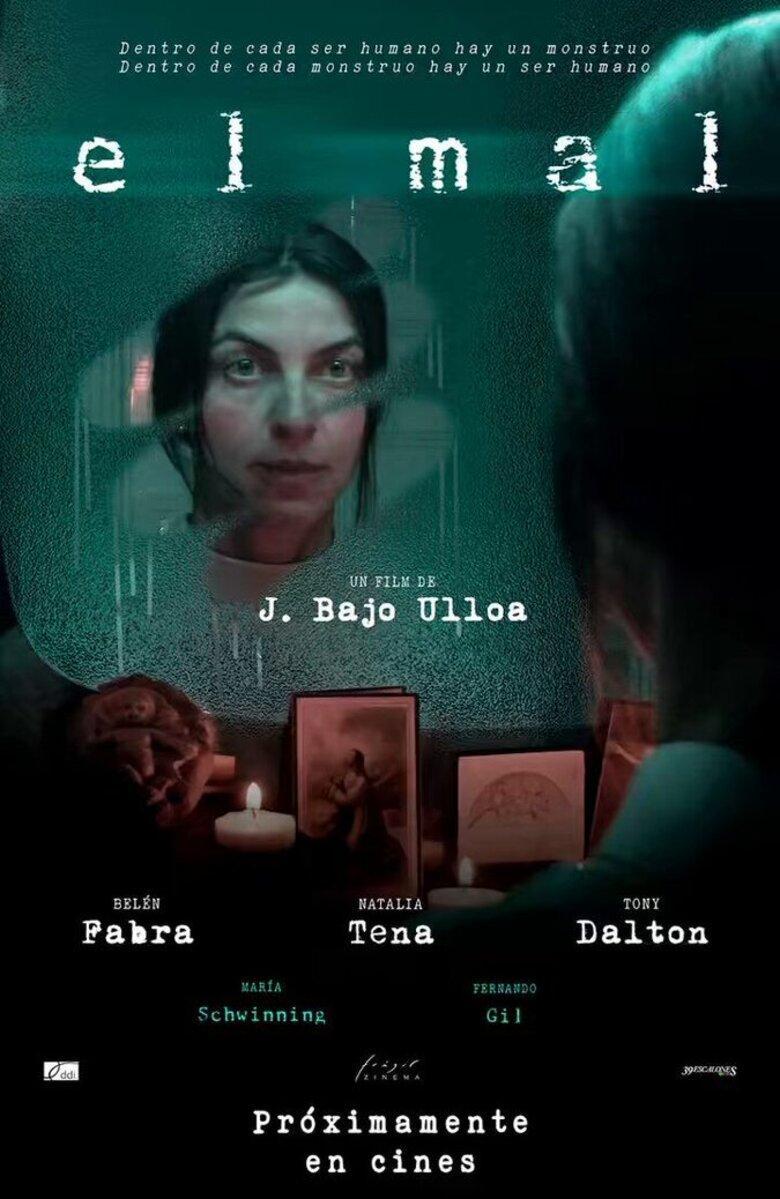
Celluloid groans under the weight of Juanma Bajo Ulloa’s elongated shadows—a director who has made decomposition not just a recurring theme, but a lifestyle. Evil arrives in 2026 like a death rattle in a Spanish cinematic landscape dominated by bargain-bin horror and afternoon comedies stuffed with more filler than a Christmas turkey. Bajo Ulloa, that Basque alchemist who turned body-horror into poetry with Butterfly Wings (1991) and gothic eroticism into nightmare with The Dead Mother (1993), returns with a project that smells of burning: of melted celluloid, of dried blood under fingernails, of the ink from a typewriter that’s recorded too many macabre confessions. Frágil Zinema and RTVE—an unlikely marriage of indie grit and institutional bureaucracy—bet on a psychological thriller promising to delve into the sewers of ambition, journalism, and the nature of evil. But is this a triumphant comeback or the last gasp of a filmmaker refusing to surrender to the algorithm?
The irony couldn’t be thicker: Evil gestates in a Spain where genre cinema has often been reduced to fast-food consumption, where terror is measured in jumpscares per minute, and where the word gothic is usually accompanied by a skull emoji on a poster designed by some marketing intern. Bajo Ulloa, however, remains faithful to his creed: horror isn’t a scare—it’s a texture. It’s the slimy touch of rotting flesh, the damp stench of a basement where someone’s been sobbing for decades, the sound of a quill scraping paper like it’s skin. His cinema is analog in the digital age, a near-Quixotic resistance against the antiseptic cleanliness of modern visual effects. Diego Trenas, his cinematographer, knows this well: the light in Bajo Ulloa’s films doesn’t illuminate—it stains. As if every frame were bathed in a cocktail of sweat, tears, and something thicker, darker.
Synopsis The premise of Evil is as old as sensationalist journalism and as fresh as a freshly slaughtered corpse: Elvira Nous, an ambitious journalist and writer in her twilight years, receives the offer that could change her life. Martín, a mysterious and disturbing woman who claims to possess the talent of being History’s greatest murderer, offers her exclusive material to write her definitive biography. Alongside her, Thomas Luhr, her smitten editor, becomes the third vertex of this macabre triangle where ethics, love, and ambition slowly bleed out. The official synopsis promises pure horror, but in Bajo Ulloa’s films, horror is never pure: it’s contaminated with humanity, doubt, and ambition. It’s the kind of terror that clings to the skin like a second layer of epidermis, impossible to wash off even with bleach.
What unsettles most about Evil isn’t what it shows, but what it suggests. Bajo Ulloa has always been a master of the off-screen, of what’s intuited but unseen. In The Dead Mother, the real horror wasn’t the explicit violence, but the silence preceding it. Now, the director seems determined to explore the limits of complicity: How far is a journalist willing to go for success? Where does information end and horror literature begin? And what happens when the monster isn’t the killer, but the mirror you stare into every morning while brushing your teeth?
Direction: The Ritual of Controlled Decomposition Juanma Bajo Ulloa doesn’t direct films—he officiates rituals. His mise-en-scène is an act of cinematic witchcraft where every shot seems conjured rather than filmed. In Evil, the camera moves like a predator in the dark: slow, stealthy, with the patience of someone who knows the prey will eventually fall into the trap. The framings are deliberately claustrophobic, as if the characters were trapped not just in the plot, but in the celluloid itself. Diego Trenas lights the spaces with a palette of deep blacks, bloody reds, and sickly whites. The interiors—decadent newspaper offices, apartments with more books than oxygen, basements that reek of secrets—are designed to suffocate, to make the viewer feel the weight of every moral decision the characters make.
The editing, by Demis Heras, is an exercise in controlled tension. The cuts aren’t clean—they’re dirty, as if the editor used a rusty knife to splice the shots. There are moments when the film seems to grind to a halt, as if time itself had coagulated on screen. It’s in these instances that the film wields its greatest power: not when it shows violence, but when it suggests it. The ambient sound becomes the soundtrack of paranoia. Bajo Ulloa understands that real terror isn’t in what you see, but in what you hear when you think no one’s listening.
The influence of David Lynch or Roman Polanski is evident, but Bajo Ulloa doesn’t copy—he transmutes. If others turn the mundane into nightmare through distortion, he does it through texture. His films aren’t dreams—they’re open wounds. The scene where Elvira interviews Martín for the first time is a masterclass in psychological tension: the camera creeps closer to their faces, as if trying to absorb their secrets through their pores. The close-ups are so intimate they’re obscene, like we’re spying through a keyhole. And when the conversation veers into the macabre, there’s only silence. And in the silence, evil grows like fungus.
Actors: Faces Cinema Forgot (And Should Remember) The cast of Evil is a superb mix of veterans seasoned in risk and faces with magnetic presence. Leading the charge, Belén Fabra embodies Elvira Nous with an intensity that oscillates between unbridled ambition and the fragility of someone playing with fire. Fabra doesn’t act—she inhabits her character like a suit made of human skin. Her gaze is a battleground where wars between ethics and success are waged. Beside her, a disturbing Natalia Tena strips away every cliché to build a killer who doesn’t resemble a carnival freak, but a force of nature—cold, calculating, and fascinating.
The male counterpoint is Tony Dalton as Thomas Luhr, the editor trapped in a moral dilemma. Dalton delivers a restrained, mature performance full of nuance, stepping away from his more explosive registers to show the freefall of a man dragged down by someone else’s fascination. The chemistry in the love triangle isn’t romantic—it’s electrical, like exposed wires that threaten to set the screen ablaze when they touch.
The rest of the cast delivers admirably, with standout roles from Fernando Gil, whose character provides a necessary anchor of humanity amid the chaos, and María Schwinning, with impeccable corporate coldness. Natalia Ruiz and Aritz Kortabarria round out a solid supporting cast, proving that Bajo Ulloa knows how to extract gold from performances, mining fragments of genuine nightmares.
Technical Breakdown: When Horror is a Matter of Textures The script of Evil is a two-headed beast: on one hand, it explores universal themes like ambition and journalistic ethics; on the other, it plunges into the abysses of the human psyche with Dostoevskian rawness. Bajo Ulloa doesn’t write dialogue—he writes confessions. The conversations between Elvira and Martín are a cat-and-mouse game where it’s never clear who’s hunting whom. There are moments when the script stumbles—some plot twists are predictable, and Thomas’s romantic-professional arc occasionally veers into conventional melodrama—but even in its narrative valleys, the film never loses its unique voice. It’s a screenplay that smells of ink and blood.
The art direction and costume design, by Azegiñe Urigoitia, are simply spectacular. The spaces are designed to oppress: offices older than ethical journalism and apartments crammed with objects that seem salvaged from a memory dumpster. The costumes are a perfect psychological extension: Elvira dresses as if attending a perpetual funeral, while Martín wears impeccable clothes that reek of mothballs, the past, and lies.
The score, composed by Bingen Mendizábal and Koldo Uriarte, is an exercise in disturbing minimalism. There are no epic melodies or memorable themes, just sonic textures and dissonances that burrow into the brain like needles: the hum of a fluorescent light, the creak of a wooden floor, the echo of a breath that shouldn’t be there. It’s clear that silence isn’t the absence of sound, but the presence of something hiding.
The Best - The cinematography of Diego Trenas: Every shot is a gothic painting where light doesn’t illuminate—it stains. The spaces are bathed in a palette that reeks of decay and nostalgia. - Juanma Bajo Ulloa’s return: His formal comeback to dark, textured psychological thrillers, far from commercial trends. - The acting duel: The magnificent and unsettling performances of Belén Fabra and Natalia Tena, backed by a magnetic Tony Dalton. - The production design by Azegiñe Urigoitia: Claustrophobic spaces that suffocate the viewer and visually convey moral decay. - The editing by Demis Heras: Dirty cuts and uncomfortable silences that build tension without resorting to clichéd jumpscares.
The Worst - Some predictable plot twists: The script stumbles in certain moments of the second act, falling back on 90s thriller structures. - Thomas’s character: At times, the editor’s love-struck arc feels lifted from a conventional melodrama, unbalancing the film’s potent gothic tone. - Pacing in the middle act: Some conversational scenes drag on longer than necessary, where the director confuses atmosphere with sluggishness. - Excessive symbolism: The recurring use of mirrors, shadows, and ink metaphors can feel repetitive and sap freshness from the whole. - Underdeveloped supporting characters: Actors like María Schwinning or Fernando Gil have brilliant moments but fade into the background due to the obsession with the central triangle.
The Verdict of Claqueta Ácida Evil isn’t a film—it’s an exorcism. Juanma Bajo Ulloa returns with a gothic thriller that reeks of scorched celluloid, old ink, and the dried blood of those who dared to stare into the abyss for too long. It’s not perfect—it has predictable twists, underdeveloped side characters, and a pace that occasionally drags like a corpse—but it’s radically necessary. In a cinematic landscape dominated by algorithmic formulas, it’s a reminder that horror is, above all, a texture. Bajo Ulloa doesn’t make films to please—he makes open wounds, and this is one of the deepest in his recent filmography. 7.8/10 for a work that hurts, fascinates, and—above all—won’t be forgotten. Evil, dear readers, isn’t an abstract concept; it’s something that seeps into your pores and, once inside, never leaves. 💀
💬 El Veredicto de la Comunidad
¿Qué te ha parecido la película? Deja tu nota de 0 a 10 para contrastarla con el análisis de la redacción.
Aún no has votado
📢 ¿Te ha gustado el ácido?
Comparte esta crítica con tus amigos cinéfilos o desata la polémica en redes.
📩 📩 Get the poison in your inbox
Join our weekly mailing list. Honest film reviews, acid festival coverage, and cult recommendations every Sunday morning. Zero spam, pure celluloid.
🔒 We promise weekly poisonous reviews and exclusive coverage.Related Reviews
Recommended autopsies for demanding film buffs.
 🔥 Fusión Nuclear8.0
Evil: Juanma Bajo Ulloa and the Poetics of Analog Horror in the Age of Soulless Streaming
Juanma Bajo Ulloa returns with a gothic thriller that reeks of scorched celluloid and dried blood. Does *Evil* escape the folklore of domestic terror, or does it drown in its own symbolism?
 🔥 Fusión Nuclear8.5
*Airbag: The 90s’ Orgy of Chaos with Style (or How the Decade Taught Us to Laugh at Death)*
Juanma Bajo Ulloa turns mayhem into art with this psychedelic road movie, where the A/C reeks of cheap whiskey and the celluloid sweats testosterone. A cult gem that time hasn’t been able to tarnish.
 🔥 Fusión Nuclear9.0
*The Dead Mother: The Basque Gothic That Left Us With Our Hearts in Our Throats (And Our Brains in the Freezer)*
Juanma Bajo Ulloa dissects trauma with a butcher’s knife and frames that reek of mold and dried blood. Claqueta Ácida performs an autopsy on his macabre masterpiece.