Eraserhead — Eraser Brain or How to Birth a Monster in Celluloid
David Lynch turns fatherhood into an industrial nightmare of viscous textures and drowned screams in 89 minutes of pure analog body-horror. Art or cinematic miscarriage? We dissect it here.

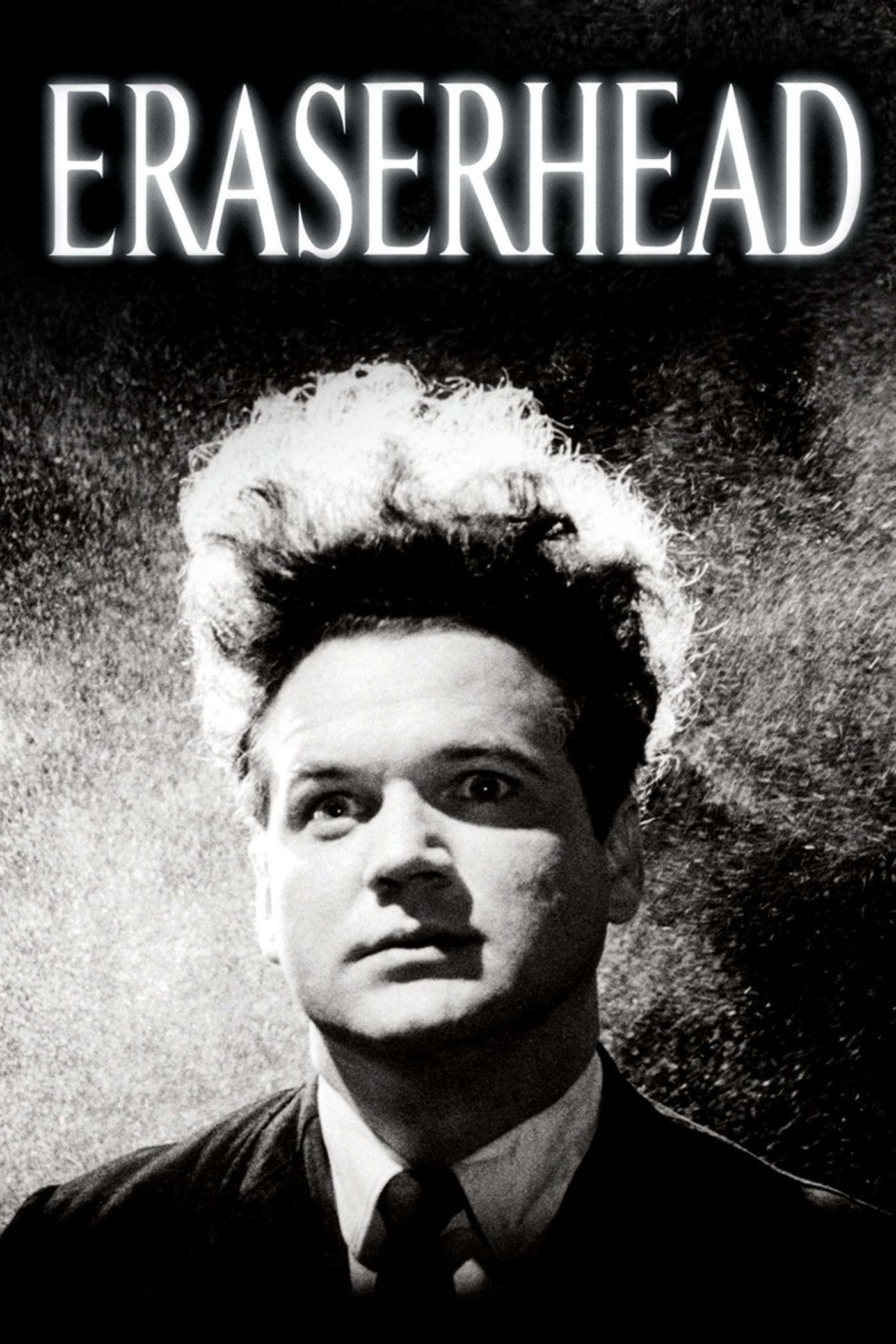
The celluloid writhes like a fetus in formaldehyde under the projector’s deathly glow. Eraserhead isn’t a film—it’s a five-year miscarriage, a spontaneous abortion of the film industry that David Lynch incubated in the American Film Institute’s basements like a discarded lab experiment. It was 1972 when the young Lynch, barely 26 with hair more rebellious than his grasp of narrative, received a grant to shoot his debut. No one expected that project to become an eternal gestation, a cinematic fetus feeding on Philadelphia’s industrial waste and its director’s feverish dreams. Five years of intermittent filming, budgets vanishing like factory smoke, and a crew likely more traumatized than the characters. Eraserhead wasn’t shot—it rotted in life, like a corpse forgotten in a prop warehouse, waiting for its moment to be reborn as underground cinema legend.
The context couldn’t be more Lynchian: America in the 70s, a country hungover from Vietnam, Watergate still fresh in the collective memory, and a generation discovering the American Dream tasted like lead and gasoline. While Hollywood obsessed over blockbusters (thanks, Jaws and Star Wars), Lynch locked himself in a Philadelphia apartment to film what can only be described as an instruction manual for domestic apocalypse. The city, with its abandoned factories and atmosphere of industrial decay, became the perfect stage for this nightmare of viscous textures and metallic sounds. Lynch himself has confessed the film’s sound—a symphony of pipe noises, engines, and distorted groans—was recorded in a real factory, as if industrial hell had composed its own soundtrack. Eraserhead isn’t just a film; it’s a sonic document of an era’s existential anxiety, reeking of burnt oil and despair.
But let’s talk about the monster in the room: the baby. That deformed abomination, that sausage with eyes straight out of a nightmare slaughterhouse, isn’t just a cheap special effect (though it is)—it’s the perfect embodiment of paternal terror. Lynch, already a father to a daughter with severe health issues, turned his own anguish into a universal symbol. The Eraserhead baby doesn’t cry; it gurgles. It doesn’t breathe; it drowns in its own mucus. It’s the most visceral, disturbing representation of what it means to bring life into a world that seems like a design flaw. And the most terrifying part isn’t the baby itself, but Jack Nance’s gaze—that poor Henry Spencer—whose face looks carved from cardboard by a sculptor with Parkinson’s. Nance doesn’t act; he survives, as if every frame were a desperate attempt not to drown in the film’s suffocating atmosphere.
And then there’s the sound. My God, the sound. If Eraserhead were a disease, its soundtrack would be the virus: a constant hum, like a fluorescent light about to explode, mixed with the distant roar of engines that never shut off. Alan Splet, the sound designer, didn’t create a score—he crafted an auditory nightmare that lodges in your brain like a rusted nail. The hissing pipes, the distorted groans, that background noise like the wail of a lost soul... Everything is calculated to make the viewer feel trapped in an abandoned factory, walls sweating oil and air thick with toxic particles. Eraserhead isn’t watched; it’s suffered. It isn’t heard; it’s endured. It’s the cinematic equivalent of a migraine with aura—just in the best possible way.
The direction: Lynch in his purest form (or pure Lynchian state)
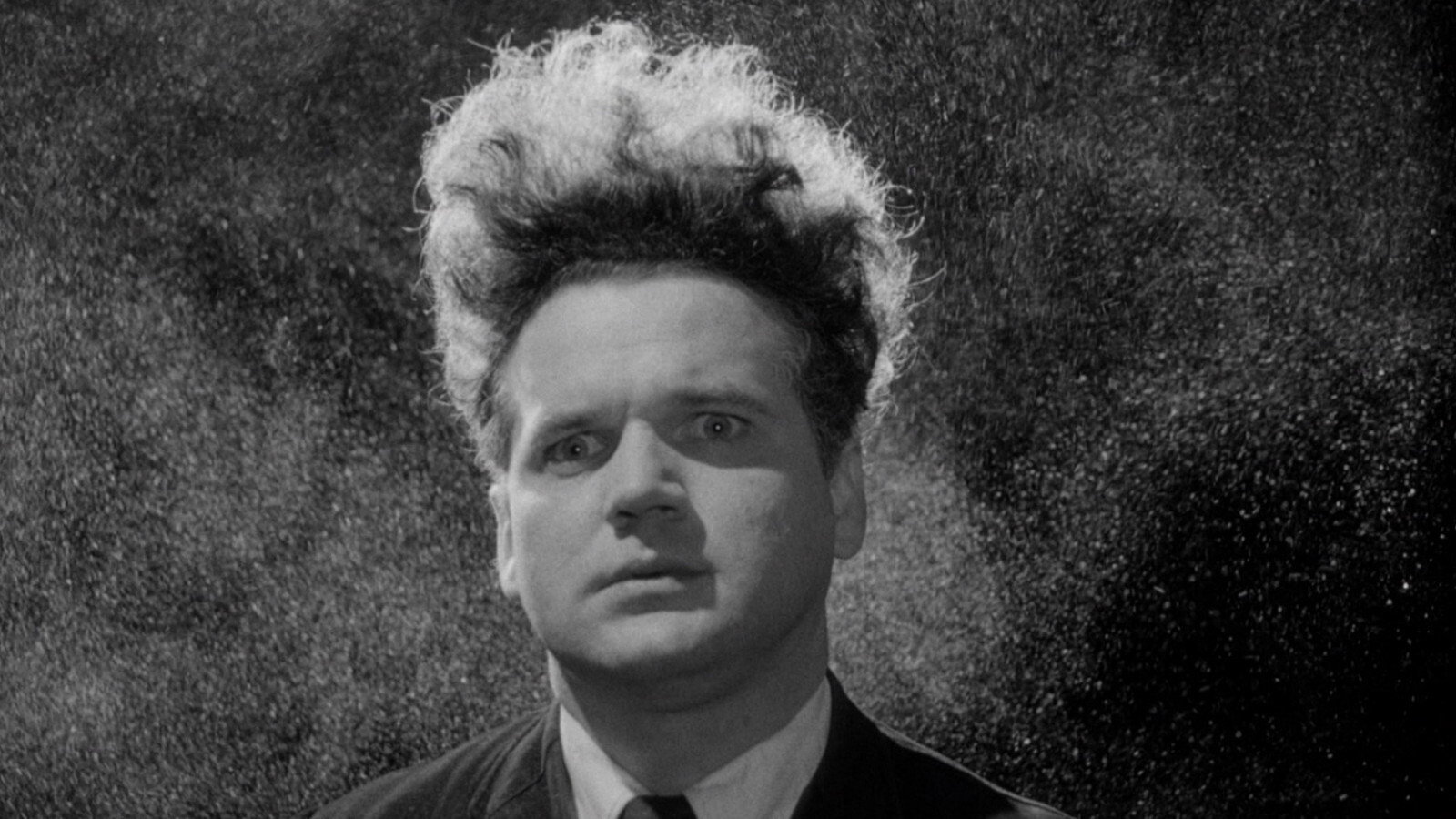
David Lynch doesn’t direct Eraserhead; he exorcises it. Every frame seems torn from a fever dream, every shot an open wound in reality. The film is a manual on how to turn the mundane into something sinister: a curtain becomes a shroud, a table an altar of sacrifice, and a simple chicken dinner an involuntary cannibalistic ritual. Lynch wields off-screen space like a surgeon with a scalpel: we never see the origin of the sounds, never know what’s behind the doors, and the baby—that damned baby—is always partially hidden, as if the director knows showing it fully would break the spell. Eraserhead is cinema as extreme sensory experience, where the viewer doesn’t just see the film but smells it (of damp, oil, rotting flesh) and touches it (the grain of the celluloid, the rough texture of the sets).
The film’s pacing is deliberately slow, as if Lynch decided time itself should rot on screen. Scenes don’t progress; they decompose, like a corpse in the rain. But far from boring, this slowness is hypnotic, like staring at a wound that won’t stop oozing. Lynch understands terror isn’t in what’s shown but in what’s suggested, and Eraserhead is a masterclass in suggesting horror without resorting to easy gore. The moment Henry Spencer dreams of his baby’s head being turned into an eraser isn’t just a shock—it’s a perfect metaphor for parenthood: your child isn’t yours; it’s a defective product someone else manufactured, and you’re stuck with it.

The performances: Jack Nance and the art of looking like a walking corpse
If any actor embodies Eraserhead’s spirit, it’s Jack Nance. His portrayal of Henry Spencer isn’t acting; it’s a documentary on depression. Nance doesn’t play a man; he plays a specter, a lost soul trapped in a body made of papier-mâché and barbed wire. His face, gaunt and wearing the expression of someone who just received bad news but lacks the energy to react, is the perfect canvas for the film’s existential horror. Every gesture, every lost gaze, every stifled sigh conveys the feeling that Henry Spencer isn’t living his life but surviving it, like a castaway in a sea of industrial noise and loneliness.
But Nance isn’t alone in this hell. Charlotte Stewart, as Mary X, the abomination’s mother, brings a calculated coldness that contrasts with Henry’s passivity. Her performance is like a sharpened knife: she doesn’t scream or cry; she simply cuts with her indifference. And then there’s the baby, played by... well, whatever Lynch and his team used to create that thing. It’s not a puppet; it’s not a standard special effect. It’s a nightmare object, something plucked from a dream slaughterhouse. Its on-screen presence is so disturbing the viewer can’t help but feel they’re witnessing something that shouldn’t exist, as if Lynch filmed a miscarriage and turned it into art.
The technical department: Nightmare textures and hellish sounds
If Eraserhead were a dish, it’d be a mix of raw viscera, motor oil, and moldy bread. The cinematography by Herbert Cardwell and Frederick Elmes doesn’t illuminate; it stains. It doesn’t compose; it contaminates. Shots are filled with shadows that seem to move on their own, as if darkness had a life of its own. The lighting is so precarious it feels like the film was shot with a flashlight and a lighter, but that precariousness is exactly what gives it its unique character. Eraserhead doesn’t look like a film; it looks like a documentary about the end of the world, shot with a camera stolen from a medical supply warehouse.
The sound design, by Alan Splet, is as crucial as the visuals. The background noises—that constant hum, those distorted groans—aren’t just ambiance; they’re characters in their own right. Splet doesn’t create a score; he crafts a suffocating sonic atmosphere, as if the film were being projected inside a giant machine that never stops running. The silences, when they occur, are even more terrifying because they mean something worse is coming. And then there’s the music, that distorted organ theme that sounds like it was recorded in an abandoned church during an exorcism. Eraserhead doesn’t have a soundtrack; it has auditory nightmares.
The editing, meanwhile, is deliberately clumsy at times, as if Lynch decided technical perfection would ruin the nightmare’s texture. Transitions between scenes aren’t smooth; they’re jarring, as if the film itself struggles to move forward. But that clumsiness isn’t a flaw; it’s an artistic choice. Eraserhead doesn’t aim to be a polished film; it wants to be a visceral experience, something felt in the guts more than the head.
The best
- David Lynch’s direction: An exercise in existential terror that turns the mundane into something sinister. Every shot is an open wound in reality.
- Jack Nance’s performance: He doesn’t act; he survives. His Henry Spencer is the most harrowing portrait of depression and failed fatherhood.
- The baby: It’s not a special effect; it’s a nightmare object. Its on-screen presence is so disturbing it feels plucked from a dream slaughterhouse.
- The cinematography: Herbert Cardwell and Frederick Elmes stain the screen with shadows that seem to move on their own. The precarious lighting gives it a unique character.
The worst
- The pacing: The deliberate slowness can be exhausting for some viewers. Eraserhead isn’t a film for the impatient.
- The lack of explanations: Lynch doesn’t provide answers, only questions. If you’re looking for conventional narrative, look elsewhere.
- The budget: The baby’s special effects are cheap even by 70s standards. Fortunately, their crudeness adds to the horror.
- The repetition: Some scenes feel redundant, as if Lynch decided to torment the viewer with the same nightmare over and over.
The Verdict of Claqueta Ácida
Eraserhead isn’t a film; it’s a celluloid exorcism, a failed birth that became a masterpiece of analog body-horror. David Lynch didn’t shoot a story; he shot a damp nightmare, a journey into the heart of existential anxiety with textures of rotting flesh and the sounds of machines that never shut off. Jack Nance is the perfect face for this industrial hell, a man whose expression seems carved by the rusted gears of an abandoned factory. Eraserhead hurts, discomforts, disturbs—but above all, it lingers, like a virus that settles in your brain and refuses to leave. It’s not a film to watch; it’s a film to survive. And if you manage to endure its 89 minutes without vomiting, screaming, or turning off the projector, then maybe—just maybe—you’ve understood what true horror means. Not the horror of monsters, but the horror of life itself. 💀
🎬 Tráiler Oficial
💬 El Veredicto de la Comunidad
¿Qué te ha parecido la película? Deja tu nota de 0 a 10 para contrastarla con el análisis de la redacción.
Aún no has votado
📢 ¿Te ha gustado el ácido?
Comparte esta crítica con tus amigos cinéfilos o desata la polémica en redes.
📩 📩 Get the poison in your inbox
Join our weekly mailing list. Honest film reviews, acid festival coverage, and cult recommendations every Sunday morning. Zero spam, pure celluloid.
🔒 We promise weekly poisonous reviews and exclusive coverage.Related Reviews
Recommended autopsies for demanding film buffs.
 🔥 Fusión Nuclear9.2
Eraserhead: Eraser Brain or How to Birth a Monster in Celluloid
David Lynch turns fatherhood into an industrial nightmare of viscous textures and drowned screams in 89 minutes of pure analog body-horror. Art or cinematic miscarriage? We dissect it here.
 🔥 Fusión Nuclear8.2
The Boarding School: A Dormitory of Dread
The Boarding School (1969), a film that revives terror within the walls of a girls' boarding school—where repression and sadism dance a waltz in crinoline
 🔥 Fusión Nuclear9.0
The Texas Chain Saw Massacre: The Bloody Dawn of Modern Terror (Or How Tobe Hooper Gifted Us Nightmares with a Chainsaw and Zero Budget)
Tobe Hooper turned $140,000 and an abandoned slaughterhouse into hell on Earth. Claqueta Ácida dissects this horror classic with a chainsaw, pitch-black humor, and a devotion to bloodstained celluloid.