*The Island — Kim Ki-duk and Cinema as a Rusty Knife in the Throat*
Kim Ki-duk tears through Korea with *The Island*: a visual poem of violence, silence, and love that hurts more than a thousand razor blades. 9.0 out of sheer exquisite suffering.

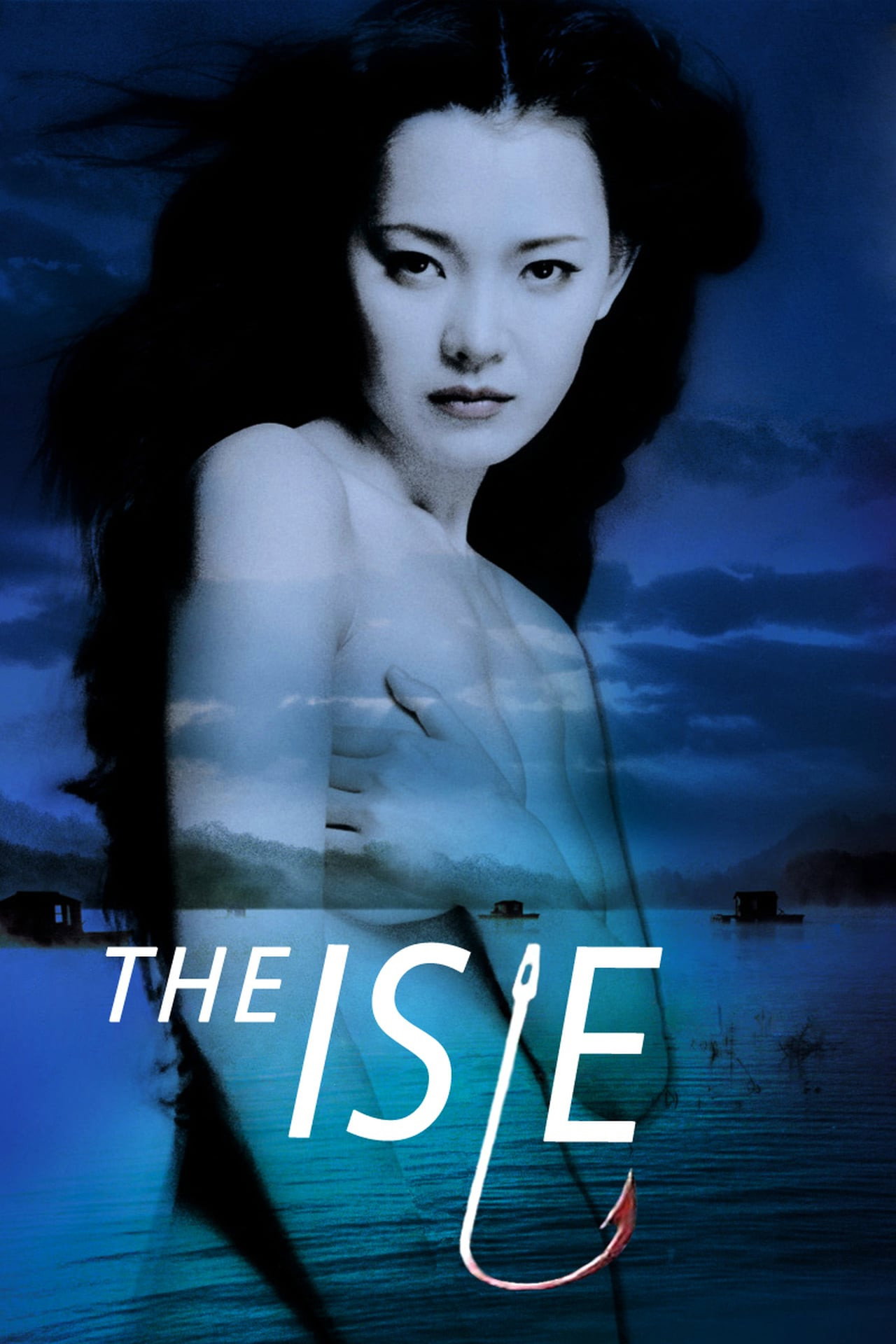
Late-90s Asian cinema was a boiling pot of ideas swinging between Hou Hsiao-hsien’s Zen minimalism and Takashi Miike’s gore frenzy. But amid that creative chaos, Kim Ki-duk emerged like a lone sniper—a Buddhist monk with a machine gun loaded with symbolism and violence. The Island (2000) wasn’t his debut—that dubious honor goes to Crocodile (1996), a debut so brutal it felt like a dress rehearsal for what was to come—but it was the film that cemented him as a master of cinema as an open wound. While Hollywood drowned in the self-satisfaction of prefab blockbusters and Europe lost itself in the intellectual labyrinths of Haneke and Von Trier, Kim Ki-duk took refuge in the margins of South Korea, in a remote lake where fishing and prostitution blended like perfect metaphors for the human condition: animals caught in their own nets, willing to drown for a little affection or a handful of won.
The making of The Island is almost as fascinating as the film itself. Kim Ki-duk, a former soldier and self-taught painter with no formal film training, burst into cinema like an intruder—as if Bresson and Pasolini had had a bastard child in a Seoul brothel. His working method was as chaotic as his vision: he shot without a final script, improvising dialogue and situations with non-professional actors or, at best, performers willing to submit to his creative sadism. In The Island, that methodology reaches its peak. The film was shot under extreme conditions, with a laughable budget and a skeleton crew, forcing Kim Ki-duk to strip his style down to its essence: long takes, eloquent silences, and cinematography that feels plucked from a fever dream. It’s no coincidence that Hwang Seo-sik, his cinematographer, captured the lake’s light with a near-tactile texture, as if the water were soaked in sweat, tears, and semen. Every frame is a moving painting, a perverse homage to Tarkovsky’s landscapes but with Loach’s grimy realism.
The cultural context in which The Island was released is key to understanding its impact. In 2000, South Korea was in a moment of political and social transition, still scarred by the 1997 financial crisis and a youth increasingly disillusioned with the economic miracle that had turned Seoul into a neon-and-concrete monster. Kim Ki-duk, an absolute outsider, reflected that discontent through characters who inhabited society’s cracks: prostitutes, fishermen, fugitive ex-cops. Hee-jin (Suh Jung) and Hyun-shik (Kim Yu-seok) aren’t heroes or villains but survivors in a world that has condemned them to ostracism. She sells her body to keep her fishing-platform rental business afloat; he, a guilt-ridden ex-cop, arrives at the lake intending to kill himself. Their relationship isn’t romantic in the traditional sense but a macabre dance of mutual dependence, a pact of blood and silence that recalls Cassavetes’ dysfunctional couples—with the added bonus of physical and emotional violence that verges on unbearable.
What makes The Island a masterpiece isn’t just its rawness but how Kim Ki-duk transcends grimy realism to venture into the mythic. The lake where the story unfolds isn’t just a setting but a character in itself, a distorting mirror reflecting the protagonists’ souls. Hwang Seo-sik’s cinematography plays with water reflections, creating compositions that seem lifted from a Caravaggio painting but with the rawness of a war documentary. Every long take is a lesson in how cinema can be both beautiful and repulsive, poetic and brutal. Kim Ki-duk shows no mercy to his characters—or to the audience: he forces us to look, to feel the weight of every decision, every act of violence or tenderness. In that sense, The Island is a deeply moral film, though its morality has nothing to do with traditional values. Here, love and hate, life and death intertwine in a way that defies categorization.
Direction: The Steady Hand of a Surgeon with Parkinson’s
Kim Ki-duk directs The Island as if performing open-heart surgery with a kitchen knife and no anesthesia. Every shot is a precise incision, every camera movement a caress that stings. The Korean director demonstrates absolute mastery of framing, using the 1.85:1 aspect ratio to compress his characters into claustrophobic spaces that mirror their emotional prisons. The long takes—like the one where Hee-jin drags Hyun-shik’s unconscious body across the lake—are exercises in pure tension, where time seems to stop and every second stretches like poisoned gum. Kim Ki-duk isn’t afraid of silence; on the contrary, he wields it like a weapon, forcing the audience to fill the void with their own discomfort. In that sense, his cinema is a direct heir to Ozu and Bresson, but with a dose of sadism those Japanese and French masters never dared explore.The mise-en-scène is minimalist to the point of obsession, but every element is loaded with meaning. Fishhooks, floating platforms, dead fish—everything takes on a symbolic dimension that transcends the literal. Kim Ki-duk doesn’t explain, doesn’t judge; he just shows, and in that showing, there’s a brutal honesty few directors dare to exhibit. The scene where Hee-jin swallows fishhooks to get Hyun-shik’s attention isn’t just an act of desperation but a perfect metaphor for love as self-destruction. The Korean director films this moment with clinical coldness, contrasting the act’s violence to create a cognitive dissonance that leaves the audience breathless. This is cinema in its purest form—uncompromising, without a safety net.
Performances: Stanislavski’s Method, Kamikaze Edition
The cast of The Island doesn’t act—they survive. Suh Jung, as Hee-jin, delivers a performance that oscillates between the sublime and the disturbing. Her face is a canvas where pain, rage, and tenderness are drawn with a naturalism that verges on documentary. There’s one scene in particular—where she cries while cleaning Hyun-shik’s body—that’s so intimate and heartbreaking, you feel like you’re invading someone’s privacy. Her chemistry with Kim Yu-seok, who plays Hyun-shik, is electric, but not in the traditional romantic sense. It’s more like the fatal attraction between two magnets with opposite polarities. Kim Yu-seok, with his wounded-animal gaze, conveys a vulnerability that contrasts with his character’s violent outbursts. Together, they form one of the most uncomfortable and fascinating couples in Asian cinema.The rest of the cast, mostly non-professional actors, brings an authenticity that would be impossible with more seasoned performers. Seo Won, who plays the fisherman harassing Hee-jin, is particularly memorable for his ability to convey menace with a single look. Kim Ki-duk doesn’t ask them to act; he asks them to exist, and in that existence, there’s a truth that transcends any acting technique. It’s as if the director had grabbed a group of people off the street, handed them a script scribbled on napkins, and said, “Live.” The result is a grimy realism, almost unbearable, that turns The Island into a physical experience rather than an emotional one.
Technical Aspects: The Beauty of Rot
Hwang Seo-sik’s cinematography is one of The Island’s standout elements. Every shot feels plucked from a fever dream, with a color palette oscillating between the lake’s sickly greens and the fishing platforms’ metallic grays. Seo-sik uses natural light masterfully, creating contrasts that recall Rembrandt’s chiaroscuro but with the rawness of a war documentary. Water reflections, elongated shadows, close-ups of sweaty faces—everything is calculated to generate discomfort, as if the viewer were trapped in a living painting they can’t escape.The sound design is another triumph. Kim Ki-duk almost entirely forgoes extradiegetic music, opting instead for silence punctuated by ambient sounds: the splash of water, the creak of wooden platforms, the characters’ moans. In one particularly memorable scene, the sound of fishhooks being swallowed by Hee-jin is amplified to unbearable levels, turning an intimate act into a spectacle of bodily horror. The editing, handled by Kim Ki-duk himself, is equally bold, with abrupt transitions that mirror the protagonists’ emotional fragmentation. There’s no respite, no mercy: The Island is a film that grabs you by the throat and doesn’t let go until it’s done with you.
The Best
- Kim Ki-duk’s direction: A masterclass in creative sadism that turns pain into art. Every shot is an open wound, every scene a lesson in how cinema can be both beautiful and repulsive.
- Suh Jung’s performance: An acting feat that transcends performance to become an act of physical and emotional courage. Hee-jin isn’t just a character—she’s a force of nature.
- Hwang Seo-sik’s cinematography: The lake has never been so beautiful or so sinister. Every frame is a painting that hurts to look at but you can’t tear your eyes away from.
The Worst
- Pacing in some moments: Some scenes drag on longer than necessary, as if Kim Ki-duk wants to punish the audience for daring to watch. It’s not a fatal flaw, but it can be exhausting.
- Underdeveloped secondary characters: The fisherman played by Seo Won has the potential to be a memorable villain, but his arc remains anecdotal.
- Sometimes too-obvious symbolism: Fishhooks, fish, the lake... Kim Ki-duk doesn’t always trust the audience’s intelligence, occasionally resorting to metaphors that border on the pedestrian.
The Verdict of Claqueta Ácida
The Island isn’t just a film—it’s an experience. Kim Ki-duk takes the viewer by the hand, dunks them into a murky lake, and forces them to drown in the beauty and horror of the human condition. There’s no escape, no consolation: just the rawness of life in its purest form, filmed with an honesty that stings more than a thousand razor blades. This is one of those rare works that transcends cinema to become something akin to a ritual, a pagan ceremony where love and violence shake hands under the impassive gaze of a lake that’s seen it all. If cinema is, as Godard said, “truth 24 times per second,” then The Island is a truth that will haunt you long after the screen fades to black. 9.0, because art that hurts is the only kind worth remembering. 💀🎬 Tráiler Oficial
💬 El Veredicto de la Comunidad
¿Qué te ha parecido la película? Deja tu nota de 0 a 10 para contrastarla con el análisis de la redacción.
Aún no has votado
📢 ¿Te ha gustado el ácido?
Comparte esta crítica con tus amigos cinéfilos o desata la polémica en redes.
📩 📩 Get the poison in your inbox
Join our weekly mailing list. Honest film reviews, acid festival coverage, and cult recommendations every Sunday morning. Zero spam, pure celluloid.
🔒 We promise weekly poisonous reviews and exclusive coverage.Related Reviews
Recommended autopsies for demanding film buffs.
 🔥 Fusión Nuclear9.0
*The Island: Kim Ki-duk and Cinema as a Rusty Knife in the Throat*
Kim Ki-duk tears through Korea with *The Island*: a visual poem of violence, silence, and love that hurts more than a thousand razor blades. 9.0 out of sheer exquisite suffering.
 🔥 Fusión Nuclear8.2
The Boarding School: A Dormitory of Dread
The Boarding School (1969), a film that revives terror within the walls of a girls' boarding school—where repression and sadism dance a waltz in crinoline
 🔥 Fusión Nuclear9.0
The Texas Chain Saw Massacre: The Bloody Dawn of Modern Terror (Or How Tobe Hooper Gifted Us Nightmares with a Chainsaw and Zero Budget)
Tobe Hooper turned $140,000 and an abandoned slaughterhouse into hell on Earth. Claqueta Ácida dissects this horror classic with a chainsaw, pitch-black humor, and a devotion to bloodstained celluloid.