*The Maldoror Dossier — Claqueta Ácida’s Verdict*
Fabrice Du Welz and his shadow ballet in the Belgian underworld. Du Welz delivers a gothic thriller teetering between visual virtuosity and baroque excess—155 minutes of nightmare and obsession.

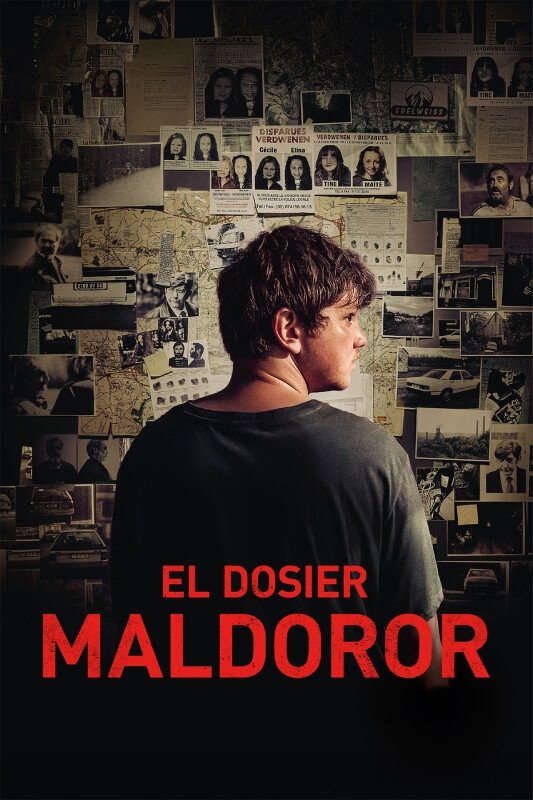
Fabrice Du Welz, that Belgian shaman of cinematic damnation, is back with The Maldoror Dossier, a filmic witch’s sabbath that cements his status as the plastic surgeon of other people’s nightmares. In an era where auteur cinema struggles not to be devoured by algorithms or the latest superhero franchise chewed into oblivion, Du Welz clings on with the stubbornness of an octopus latched onto a submarine cliff—he’s not a director who asks for permission. He’s a sadist with a camera, demanding our submission, an aesthete of psychological torture who loves to dress his atrocities in the most elegant mourning attire. Since Calvaire, that rural descent into hell that left our stomachs churning and our souls bruised, Du Welz has been building a filmography as coherent as it is monolithic, obsessed with flesh, guilt, and the fracturing of the human soul. His films aren’t for the faint-hearted or those seeking soothing balm; they’re a punch to the gut, a brutal reminder of the darkness inherent in the human condition, seasoned with a visual virtuosity that borders on the obscene.
The industry—that shapeless beast that devours talent and regurgitates prefab mediocrity—eyes figures like Du Welz with suspicion. How do you sell a film that refuses easy digestion, one that demands the same effort from the viewer as a forced psychoanalysis session? The answer, obviously, is you don’t sell it. You cultivate it. You worship it in discreet circles of cinephiles who still value shock and twisted beauty. The Maldoror Dossier arrives weighed down by this tradition, invoking from its very title the French poet Comte de Lautréamont and his Les Chants de Maldoror, a text that is, by its own right, a war cry of the darkest surrealism and literary cruelty. The choice isn’t accidental; it’s a statement of intent, a gauntlet thrown in the face of anyone expecting a linear narrative or a happy ending. Du Welz positions himself not just as a filmmaker, but as a heretic refusing to abandon his pulpit of shadows, an alchemist transmuting pain and perversion into cinematic art. And this time, he does so with unbridled ambition, flirting with the gothic and the psychological thriller until the boundaries between them blur, delivering 155 minutes of pure Du Welz: a macabre ballet where beauty coexists with the most explicit horror, and obsession becomes the sole narrative engine. Brace yourselves to be swept away by the tide.
The Direction: A Hymn to the Baroque of Anguish
Fabrice Du Welz orchestrates The Maldoror Dossier with the precision of a Swiss sadist clockmaker and the grandiloquence of a Flemish painter in ecstasy. His camera isn’t a mere witness; it’s an active participant, an extension of his characters’ disturbed gaze—and, by extension, our own. Every shot is a pictorial composition, bathed in chiaroscuro that evokes Caravaggio, but with the palette of a suburban hell. The film’s 155 minutes, despite their length, are a visual tour de force that, in less capable hands, would have collapsed into a pedantic exercise in self-indulgence. Here, however, the baroque excess is justified by the story’s nature: a downward spiral into the psyche of an obsessed man. Du Welz uses light and shadow as brushes, sculpting oppressive, decadent atmospheres that weave a web around the protagonist, Vincent (Anthony Bajon). There’s no respite; the rhythm is hypnotic, almost ritualistic, dragging us through filthy hallways, dark alleys, and rooms where light barely dares to enter. The mise-en-scène is meticulous, every camera movement and frame serving to intensify the sense of claustrophobia and the looming madness. If there’s a director who has mastered the aesthetics of decay with exquisite taste, it’s Du Welz. His gaze is corrosive, yes, but also fascinating—like watching a carnivorous flower devour its prey.
The Parade of Lost Souls: A Cast for Purgatory
The cast of The Maldoror Dossier is a true witch’s coven of talents hardened in the shadows, an all-star lineup for a descent into hell. Anthony Bajon (Vincent) throws himself body and soul into a role that demands vulnerability, fury, and a progressive mental disintegration. His transformation is the film’s axis, and he carries it out with a conviction that hurts, becoming the perfect medium for the obsession consuming him. There’s no heroism, just the pathetic and fascinating fall of a man. By his side, Alba Gaïa Bellugi (Chloé) embodies the fatal muse, the spark that ignites the fire of madness, with an ethereal and disturbing presence. Her moral ambiguity is key to immersing the viewer in the labyrinth of guilt and fascination. And then there are the veterans, the titans of transgressive cinema who, with their mere presence, raise the bar. Laurent Lucas, a Du Welz regular and a staple of French extremism, slips into his role with the ease of a specter, adding that layer of subtle unease he’s known for. His gaze, always hovering between threat and twisted compassion, is a gift. But it’s Beatrice Dalle and Sergi López who, despite their perhaps more peripheral roles, leave an indelible mark. Dalle, with her volcanic charisma, radiates an almost demonic authority, while López, a master at embodying squalor with a touch of jovial perversion, is pure gasoline for the fire. Each of them, with their shadows and their rotting light, contributes to the film’s suffocating atmosphere.
The Architecture of Trauma: A Nightmare’s Technical Department
If Fabrice Du Welz’s eye is the architect of trauma, the technical department of The Maldoror Dossier is the mortar that holds it together—a testament to the devil being, as always, in the details. The cinematography, by Manuel Dacosse (another frequent collaborator and Du Welz’s accomplice), is a marvel of visual oppression. It employs a desaturated color palette, dominated by grays, ochres, and deep blacks that absorb light and the viewer alike. The shadows aren’t mere absences of light; they’re living entities, characters in their own right, dancing on the periphery, hiding horrors and suggesting perversions. Claustrophobic framing and long takes that drag like a slow agony contribute to the sense of mental and physical imprisonment. Meanwhile, the production design turns every location into a reflection of the characters’ emotional states. From dilapidated, filthy apartments to endless hallways and abandoned factories, everything exudes an atmosphere of decay, of something rotting slowly from within. It’s a palpable, tactile world in its grime and despair. And, of course, the sound design is a masterclass in how the absence and presence of noise can manipulate the psyche. Whispers, distant knocks, deafening silence—everything combines to create an auditory score as disturbing as the images, elevating tension and suffocation to unsuspected limits. It’s a symphony of desolation.
The Best
- Fabrice Du Welz’s direction: A staggering visual virtuosity that transforms horror into baroque art.
- The performances: Anthony Bajon gives his all, and the presence of Laurent Lucas, Beatrice Dalle, and Sergi López is a treat for the cinephile palate.
- The oppressive atmosphere: A gothic thriller that suffocates with its density and darkness.
- The cinematography and sound design: Essential for building such an immersive nightmare world.
- The audacity and auteur commitment: A film that doesn’t apologize for its darkness or its ambition.
The Worst
- The 155-minute runtime: The excess can sometimes border on viewer fatigue beyond masochistic enjoyment.
- Some narrative redundancy: The downward spiral, though brilliant, could have been tightened in places.
- Occasional opacity: In its pursuit of ambiguity, the film sometimes loses itself in its own shadows, making emotional connection difficult.
- The festival of misery: Not for viewers seeking even a shred of hope or sunlight.
The Verdict of Claqueta Ácida
With The Maldoror Dossier, Fabrice Du Welz confirms he’s the Belgian demiurge of descents into hell, a master goldsmith of unease who refuses the light of day. It’s a film dazzling in its darkness, excessive in its macabre beauty, and utterly unyielding in its commitment to human perversion. If you’re looking for comfort, go watch an animated film. If you crave a gothic thriller that spits in your face and makes you lick the blood, Du Welz has your feast served. An exhausting experience, yes, but so deliciously cruel it’ll make you crave more. A journey to the heart of the muck, guided by a tour operator who smiles with sharpened fangs. Sanity is for the weak. 💀
💬 El Veredicto de la Comunidad
¿Qué te ha parecido la película? Deja tu nota de 0 a 10 para contrastarla con el análisis de la redacción.
Aún no has votado
📢 ¿Te ha gustado el ácido?
Comparte esta crítica con tus amigos cinéfilos o desata la polémica en redes.
📩 📩 Get the poison in your inbox
Join our weekly mailing list. Honest film reviews, acid festival coverage, and cult recommendations every Sunday morning. Zero spam, pure celluloid.
🔒 We promise weekly poisonous reviews and exclusive coverage.Related Reviews
Recommended autopsies for demanding film buffs.
 ⚡ Ácido Cítrico7.5
*The Maldoror Dossier: Claqueta Ácida’s Verdict*
Fabrice Du Welz and his shadow ballet in the Belgian underworld. Du Welz delivers a gothic thriller teetering between visual virtuosity and baroque excess—155 minutes of nightmare and obsession.
 🔥 Fusión Nuclear8.5
*Alleluia: Love as a Terminal Illness (or How to Turn Crimes of Passion into a Sweaty, Fleshy Spectacle)*
Fabrice Du Welz reimagines the myth of the lonely hearts killers in a feverish whirlwind of jealousy, submission, and blood, led by Lola Dueñas in a performance that’s equal parts hypnotic and harrowing.
 🔥 Fusión Nuclear9.0
*Calvaire: The Belgian Nightmare Hollywood Will Never Understand (And That’s Why It’s Perfect)*
Fabrice Du Welz makes his debut with a masterpiece of European transgressive cinema—a fog-drenched, deeply unsettling ordeal that dissects loneliness and rural madness.