The Birds — When the Sky Became a Feathered Slaughterhouse of Psychosis
Hitchcock turns birds into winged assassins in this ornithological nightmare. Masterpiece or feathered panic? Claqueta Ácida dissects the chaos.

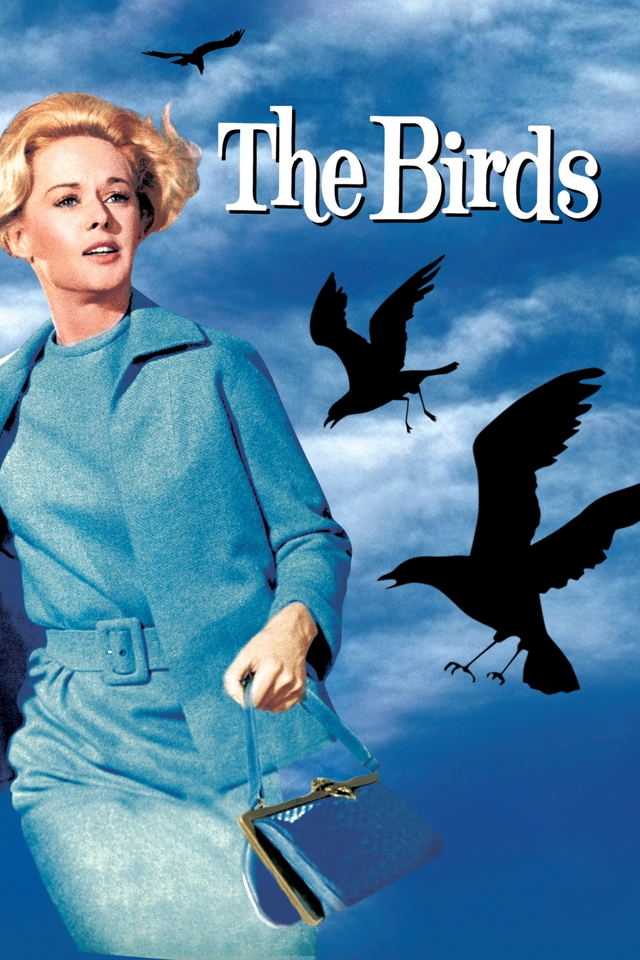
Celluloid groans under the weight of an uneasy silence, the kind of stillness that precedes a storm. In the projection room, the projector’s beam sketches dust motes in the air like omens, while the screen bleeds into a frigid blue—the same hue bathing the cliffs of Bodega Bay. Alfred Hitchcock, that maestro of visual manipulation and psychological suspense, didn’t need digital effects or cardboard monsters to sow panic. All he required was a handful of birds, a few subjective shots, and the certainty that the real horror isn’t in what you see, but in what you sense. The Birds (1963) isn’t just a film; it’s a social experiment dressed as an ornithological thriller, a bloody metaphor about human fragility in the face of the inexplicable. And damn, does it work—though not always as it should.
It was 1963, and the world was still licking its wounds from the Cuban Missile Crisis. The Cold War had turned the planet into a powder keg, and cinema, ever attuned to collective fears, sought new ways to channel that existential dread. Hitchcock, who had already revolutionized suspense with Psycho three years earlier, decided this time the enemy wouldn’t be a guy with mommy issues—it would be nature itself. Or rather, nature when it decides humans have fucked up enough. Based on a short story by Daphne du Maurier (yes, the same mind behind Rebecca), the film was conceived in an atmosphere of collective paranoia, where even a sparrow’s chirp could sound like a threat. The script, penned by Evan Hunter, started with a simple premise: what if birds suddenly declared war on us? The answer, as poor Mitch Brenner would discover, was a bloodbath with feathers.
But The Birds isn’t just a movie about murderous avians. It’s, above all, a study of characters trapped in a nightmare they don’t understand. Melanie Daniels, played by a Tippi Hedren who went from model to terror muse in the blink of an eye (and beak), embodies the perfect Hitchcockian archetype: the icy, sophisticated blonde who crumbles under pressure like a house of cards. Her evolution—from spoiled rich girl to desperate victim—is one of the script’s few triumphs, even if Hunter insists on stuffing the dialogue with bad jokes and romantic subplots that reek of cheap filler. Because yes, friends, even the master of suspense had his lazy moments. Can anyone coherently explain why Melanie chases Mitch to Bodega Bay like a deranged groupie? The script limps worse than a sparrow with a broken leg, but fortunately, Hitchcock was there to save the day with his visual genius.
And save it he does. From the first shot—Melanie crossing a deserted San Francisco (yes, deserted, because Hitchcock sent a crew to shoot on a Sunday to avoid extras)—to the climax in the Brenners’ house, where the birds become a shapeless mass of feathers and claws, the film is a feast of pure tension. Robert Burks, the cinematographer, bathes every scene in a cold, bluish light, as if the sky itself were about to collapse onto the characters. The subjective shots, where we see the world through the birds’ eyes, are so effective they still raise the hairs on your neck half a century later. And then there’s the sound. Or rather, the lack of it. Because Hitchcock, in a stroke of sonic sadism, decided to forgo incidental music during the attack scenes. All you hear is flapping, squawking, and screaming. In The Birds, silence is more terrifying than any Bernard Herrmann score.
Direction: The Hitchcock We Crave (and the One Who Occasionally Disappoints)
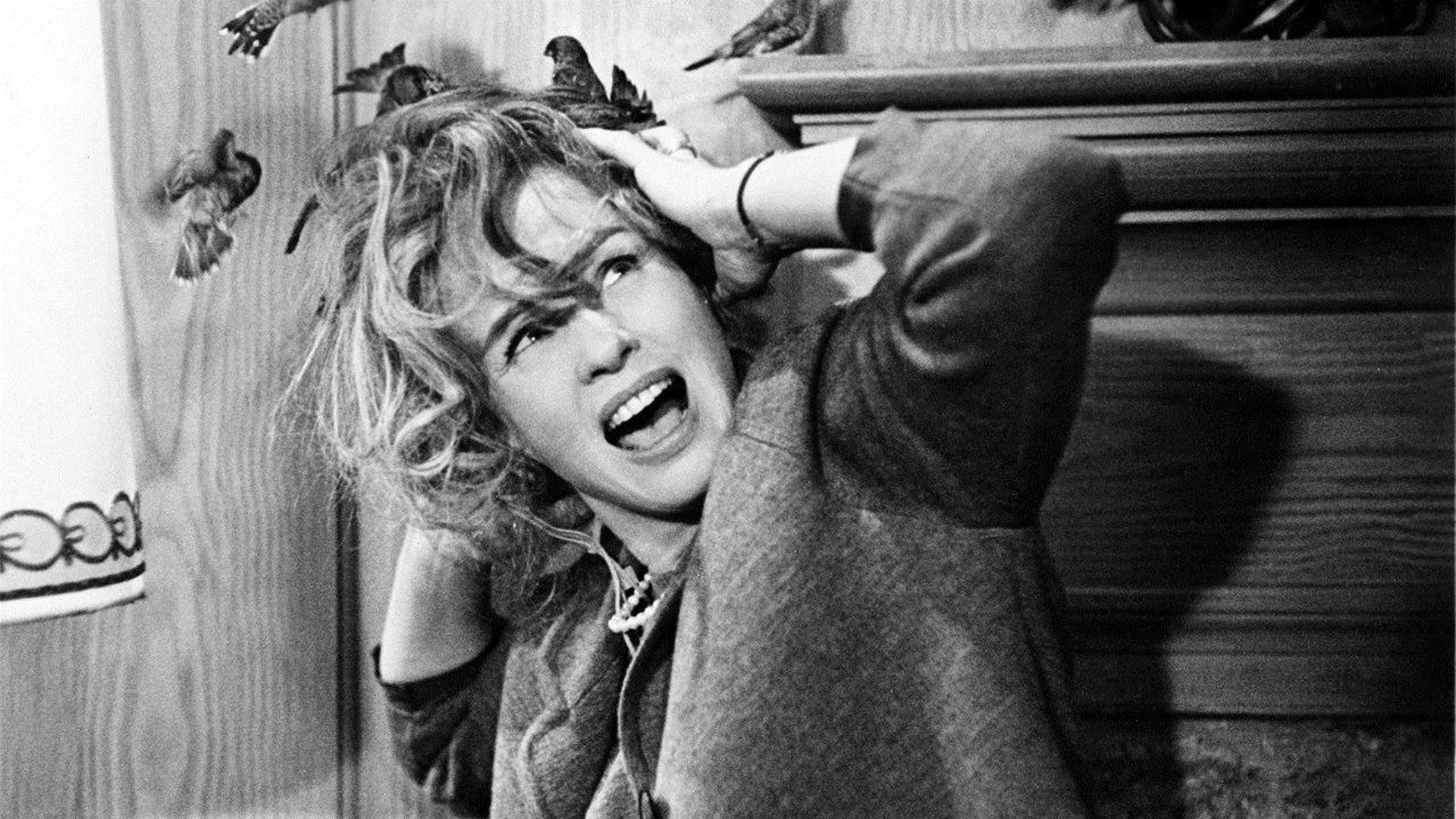
What defines Alfred Hitchcock is his ability to turn the mundane into the terrifying. In The Birds, he achieves this with a mastery bordering on the supernatural. Every shot is calculated to the millimeter, every frame a visual trap designed to make the audience feel as trapped as the characters. Take the school attack scene, for example—a masterpiece of suspense. While the children sing a nursery rhyme, crows land on the jungle gym one by one, like executioners of a divine sentence. Hitchcock doesn’t need to show blood to make you feel the panic; a wide shot of the motionless birds, waiting, is enough. It’s the kind of sequence that makes you understand why cinema is an art, not just entertainment.
But not everything is genius in Hitchcock’s direction. There are moments when the film suffers from its own ambition. The special effects, for instance, haven’t aged well. The mechanical birds, which must have seemed revolutionary at the time, now look like they escaped from an episode of The Muppets. Then there’s the pacing problem. The first hour of the film is an insufferably slow romantic flirtation, with dialogue straight out of a 1950s rom-com. It’s as if Hitchcock suddenly decided his film needed a dash of Sabrina to appeal to female audiences. Spoiler: it didn’t work. Fortunately, once the birds decide to strike, the film transforms into a whirlwind of pure terror, and everything before is forgiven.
The real issue with The Birds, though, isn’t its effects or its pacing—it’s its lack of explanation. Hitchcock, in a fit of narrative sadism, decided the mystery of why the birds attack should remain unsolved. Not even a hint. Divine punishment? Genetic mutation? Fallout from a secret military experiment? No one knows, and that, instead of being intriguing, is just frustrating. It’s like being told a joke and forgetting the punchline. But hey, this is Hitchcock, and with him, you always have to accept that the journey is more important than the destination.
Cast: Between Drama and Melodrama (With the Occasional Squawk)
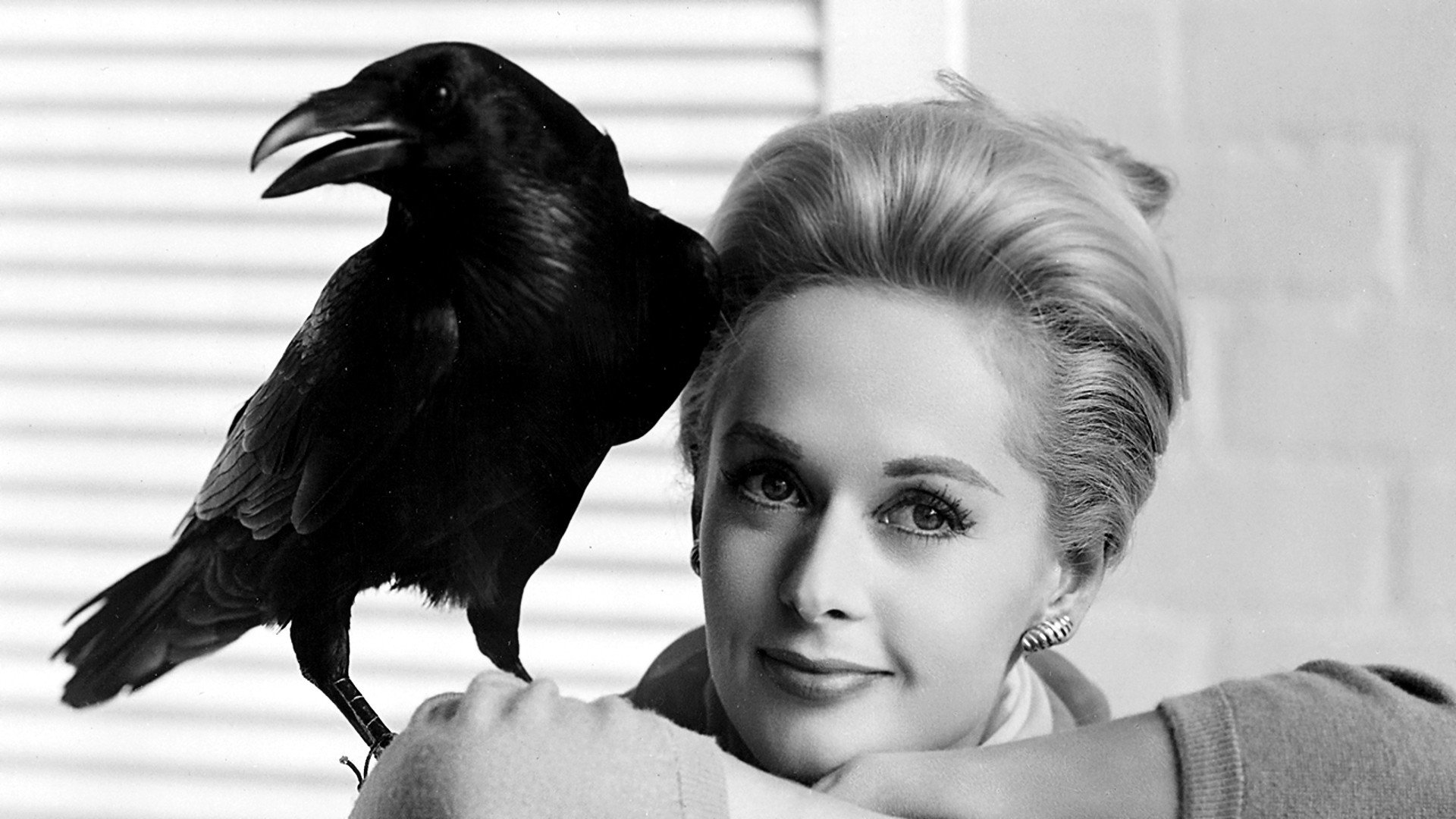
The cast of The Birds is a strange cocktail of talent and waste. Tippi Hedren, in her first leading role, proves she had star quality, though her performance oscillates between the sublime and the ridiculous. There are moments when her Melanie Daniels is a goddess of suspense, exuding that mix of coldness and vulnerability only Hitchcock blondes seem to master. But then there are scenes where she overacts like a soap opera star, chewing the scenery as if she were in an episode of Dallas. Fortunately, when the birds attack, Hedren transforms into a believable survivor, and her attic scene—with crows pecking at the door—is one of the most intense moments in horror cinema.
Beside her, Rod Taylor plays Mitch Brenner, the handsome lawyer who looks like he stepped out of an aftershave ad. Taylor isn’t a bad actor, but his character is so flat you could iron clothes on him. Jessica Tandy, however, shines as Lydia Brenner, the overprotective mother straight out of a Freudian nightmare. Her relationship with Mitch is the film’s emotional core, and Tandy gives it a depth the script doesn’t always deserve. Suzanne Pleshette, as teacher Annie Hayworth, brings a touch of melancholy and tragedy to the story, though her character vanishes too soon. And then there’s Veronica Cartwright, playing Cathy Brenner, Mitch’s little sister. Cartwright, who would later become a scream queen thanks to Alien, proves here that her talent for fear runs in the blood.
The only one who seems to be in another movie entirely is Ethel Griffies, as ornithologist Mrs. Bundy. Her character is an excuse to deliver a pseudo-scientific monologue about bird behavior, and Griffies plays it with a seriousness that borders on comedy. It’s like Hitchcock decided to include a cameo from David Attenborough, but on a budget. A waste of talent in a film that already has too many loose ends.
Technical Aspects: When Artistry Outshines the Script (and the Rubber Birds)
If anything saves The Birds from being forgettable, it’s its technical aspects. Robert Burks, the cinematographer, turns every shot into a gothic horror painting. The Bodega Bay exteriors, with their cliffs and deathly light, seem lifted from an Edward Hopper canvas, but with a Lovecraftian twist. The interiors, meanwhile, are drenched in elongated shadows and cold light, as if the Brenners’ house itself were infected by the birds’ madness. Burks doesn’t just light the film; he poisons it.
The editing, by George Tomasini, is another highlight. The attack scenes are cut with a frenetic yet precise rhythm, maximizing impact. The subjective shots—where we see the birds from the characters’ perspectives—are so effective they’ve been copied (and never equaled) for half a century. The editing of The Birds is a masterclass in building tension with just a few well-placed shots.
The score—or rather, the absence of one—is another of the film’s triumphs. Hitchcock’s decision to forgo incidental music during the attack scenes is chilling. All you hear is flapping, squawking, and screaming. In The Birds, silence speaks louder than any Bernard Herrmann score. That said, when music does appear—whether as children’s songs or a choir of kids singing—the contrast is so jarring it leaves you breathless. It’s as if Hitchcock decided terror needed no embellishment, just reality.
The production design, by Robert Boyle, is another element that elevates the film. The Brenners’ house, with its antique furniture and lace curtains, seems like a safe haven... until the birds turn it into ground zero. The birds themselves, though some are clearly rubber, are integrated into the shots with a naturalness that would be unthinkable today. Hitchcock didn’t need CGI; all he required was a good frame and a little imagination.
The script, however, is the film’s Achilles’ heel. Evan Hunter, fresh off The Man with the Golden Arm, insists on stuffing the dialogue with bad jokes and romantic subplots that add nothing. The relationship between Melanie and Mitch, for example, is so forced it feels like it was lifted from an episode of Beverly Hills, 90210. And then there are the secondary characters, like ornithologist Mrs. Bundy, who seem plucked from a Monty Python sketch. The script of The Birds is like a bird with broken wings: it has brilliant moments, but it can’t fly.
The best
- Hitchcock’s direction: A master in his element, turning the mundane into the terrifying with a single shot.
- Robert Burks’ cinematography: Every frame is a gothic horror painting, with cold lights and elongated shadows.
- George Tomasini’s editing: The attack scenes are cut with a frenetic yet precise rhythm, maximizing impact.
- The absence of music in attack scenes: Silence is more terrifying than any score.
- Jessica Tandy’s performance: Lydia Brenner is one of the film’s most complex and well-acted characters.
- The birds’ subjective shots: Seeing the world through their eyes is one of horror cinema’s most unsettling experiences.
The worst
- Evan Hunter’s script: Packed with forced dialogue, bad jokes, and unnecessary romantic subplots.
- The first hour’s pacing: An insufferably slow romantic flirtation straight out of a 1950s rom-com.
- The lack of explanation: The mystery of why the birds attack is never resolved, which is frustrating.
- Rod Taylor’s character: Mitch Brenner is so flat you could iron clothes on him.
- Tippi Hedren’s overacting in some scenes: There are moments when she seems like a soap opera actress.
- The waste of secondary characters: Mrs. Bundy and others feel like they wandered in from a comedy sketch.
The Verdict of Claqueta Ácida
The Birds is one of those films that splits critics and audiences like an axe through wood. On one hand, it’s a pure suspense exercise, with moments of terror so intense they glue you to your seat. On the other, it’s a script riddled with holes, with characters straight out of a soap opera and pacing that limps worse than a sparrow with a broken leg. But in the end, what lingers is Hitchcock’s genius—that man who turned birds into the most unexpected (and terrifying) villains in cinema history. It’s not his best film, but it’s one of his boldest, and that, in a world of predictable blockbusters, is reason enough to celebrate. That said, if you’re looking for narrative coherence, go watch Psycho. Here, all you’ll find is a sky full of feathers and an ending that’ll leave you staring at the ceiling every time you hear a squawk. Terror, dear readers, doesn’t always need an explanation. Sometimes, all it takes is a pair of wings and a murderous gaze. 💀
🎬 Tráiler Oficial
💬 El Veredicto de la Comunidad
¿Qué te ha parecido la película? Deja tu nota de 0 a 10 para contrastarla con el análisis de la redacción.
Aún no has votado
📢 ¿Te ha gustado el ácido?
Comparte esta crítica con tus amigos cinéfilos o desata la polémica en redes.
📩 📩 Get the poison in your inbox
Join our weekly mailing list. Honest film reviews, acid festival coverage, and cult recommendations every Sunday morning. Zero spam, pure celluloid.
🔒 We promise weekly poisonous reviews and exclusive coverage.Related Reviews
Recommended autopsies for demanding film buffs.
 🔥 Fusión Nuclear8.5
The Birds: When the Sky Became a Feathered Slaughterhouse of Psychosis
Hitchcock turns birds into winged assassins in this ornithological nightmare. Masterpiece or feathered panic? Claqueta Ácida dissects the chaos.
 🔥 Fusión Nuclear9.5
*Vertigo: Hitchcock’s Broken Mirror or How to Turn Jimmy Stewart Into a Stylish Psychopath*
A scathing, analytical takedown of *Vertigo*, Alfred Hitchcock’s suspense masterpiece. A descent into psychological obsession and visual fetishism that exposes Hollywood’s necrophilic romance.
 🔥 Fusión Nuclear8.2
The Boarding School: A Dormitory of Dread
The Boarding School (1969), a film that revives terror within the walls of a girls' boarding school—where repression and sadism dance a waltz in crinoline