The Changeling — The Odyssey of Grief in 8mm or How to Lose Your Kid and Find a Monster Under the Bed
Apollo and Emma were living a fairy tale until folk horror reminded them that babies aren’t always what they seem. Or are they?

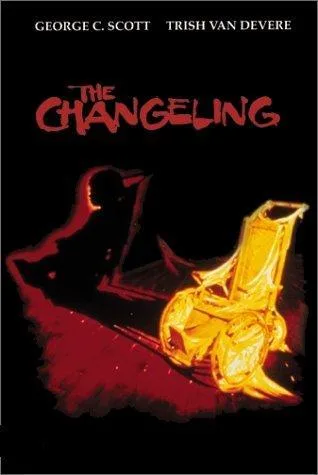
The celluloid coils around the projector like a sick serpent, oozing that stench of rancid chemicals and rotten nostalgia only known to abandoned neighborhood cinemas. The Changeling isn’t just another series—it’s a living organism, a creature of eight episodes that breathes in the cracks between the real and the supernatural, its texture as viscous as the fear of losing a child. Kelly Marcel, that architect of nightmares with a résumé to die for—screenwriter of Saving Mr. Banks and Fifty Shades of Grey (yes, that same one, the woman who turned sadomasochism into a bedtime story for bored executives)—here ventures into far darker territory. This isn’t her debut, but it might as well be: this is the work where she proves she can wield a scalpel with the same precision she once wielded a whip. The question is, does she cut to the bone or just leave bruises on the viewer’s skin?
The premise reeks of European folklore reheated in a New York microwave: Apollo (LaKeith Stanfield, that actor carved from ebony and anguish) and Emma (Clark Backo, a revelation that stings) are a dream couple until their baby vanishes under circumstances that smell of sulfur and Grimm Brothers tales. What follows is an urban odyssey where horror doesn’t lurk in dark alleys but in luxury apartments with Hudson views and hospitals plucked from a fever dream. 1980 isn’t just a date on the calendar—it’s the year analog terror slithered into VHS tapes, its grain coarse and colors faded, as if fear had a physical texture. Marcel drinks from that aesthetic like a thirsty vampire, but she doesn’t just imitate—she turns it into language, a grammar of panic where every frame feels recorded on magnetic tape decomposing in real time.
The project was born from Victor LaValle’s eponymous novel, an author who knows the scariest monsters aren’t the ones lurking in the woods but the ones sitting at your dinner table. Annapurna Television, that production house with a magnet for projects that blend art and self-destruction (see Hereditary or Euphoria), bet on this adaptation like someone betting on a lame horse at the TV racetrack: blind faith and the certainty that it’ll either crash and burn or win the race. The result is a series that oscillates between gut-wrenching family drama and pure gothic terror, as if Rosemary’s Baby and The Wire had a bastard child in a roadside motel. And at the center of it all, LaKeith Stanfield, that actor who seems capable of conveying the weight of the universe with a mere shrug, carries the burden of a story that demands more from him than any supernatural creature.
But let’s not kid ourselves: The Changeling isn’t perfect. There are moments when the series stumbles over its own symbolism, like a drunk trying to tap-dance on ice. The pacing sometimes stagnates in pools of melancholy that reek of pretension, and there are plot twists straight out of a second-rate screenwriter’s manual. Yet when it hits, it does so with a force that leaves a mark, like a branding iron on skin. Because, after all, what is horror if not the distorted reflection of our deepest fears? And in this case, the fear of losing what we love most, of the world turning upside down, and of the real monster being ourselves.
Direction: Horror as Visual Language
Kelly Marcel doesn’t direct this series like someone filming a script—she paints with blood and shadows. Every frame is loaded with an almost obsessive intent, as if she wants to sear Apollo’s anguish into the viewer’s retina. The influence of 80s cinema is palpable, but not as an empty homage—it’s a reinvention. The saturated colors of Suspiria blend with the raw documentary style of The Wire, creating an aesthetic that’s both dreamlike and brutally realistic. Entire sequences seem shot in a trance, with lighting that swings between clinical and supernatural, as if David Lynch and David Fincher had decided to collaborate on an episode of Law & Order.
The use of space is particularly brilliant. New York isn’t just a setting—it’s another character, one that breathes and writhes like a sick organism. The protagonists’ apartments, with their peeling walls and furniture plucked from a flea market, contrast with the sterile hospitals and luxury hotels where horror hides behind velvet curtains. Marcel plays with depth of field like a surgeon, isolating her characters in shots that make them seem small and insignificant against the vastness of their grief. And when terror erupts, it does so with restrained violence, as if every scream is muffled by a feather pillow.
But not everything is a hit. There are moments when the direction gets lost in its own ambition, especially in flashbacks and dream sequences, which sometimes feel too literal or weighed down by obvious symbolism. Marcel seems afraid to let the viewer breathe, to let the horror simmer. In her rush to maintain tension, she occasionally resorts to tired tricks: cheap jump scares, jarring music at key moments, subjective shots that scream "this is scary!" instead of suggesting it. It’s as if, in her haste to prove she can frighten, she forgets that real terror isn’t in the easy scare but in the atmosphere that settles in your gut and won’t leave even after three cups of chamomile tea.
Performances: The Physicality of Pain
If anything saves The Changeling from drowning in generic horror, it’s the performances. LaKeith Stanfield doesn’t play Apollo—he embodies him, tears him apart, turns him into flesh and blood. His performance is a masterclass in restraint and explosiveness, a delicate balance between the fragility of a man on the edge and the ferocity of a father willing to burn the world to get his son back. Stanfield has that unique quality of great actors: he makes every gesture, every glance, every silence count. When Apollo cries, he doesn’t do it like a soap opera character—he cries like a man who feels his life slipping through his fingers. And when he laughs, it’s a laugh that tastes like ash, like something breaking inside.
Clark Backo, as Emma, is a revelation. Her performance is more restrained than Stanfield’s but no less powerful. Emma is a complex character, a woman trapped between love for her child and the suspicion that something’s wrong, that the baby in her arms isn’t hers. Backo conveys that ambiguity with a subtlety that hurts, as if every word she utters is laced with hidden meaning. There’s one scene in particular—a close-up of Emma staring at her baby with a mix of tenderness and terror—that’s among the best things you’ll see on TV in recent years. It’s the kind of performance that leaves you breathless because you know you’re witnessing something rare, something special.
The rest of the cast doesn’t lag far behind, though some secondary characters veer into caricature. Adina Porter, as Lillian, the matriarch of a family of "changelings," is pure dynamite. Her on-screen presence is electrifying, a mix of gothic elegance and latent menace that recalls the great villainesses of classic horror cinema. In contrast, Jared Abrahamson and Samuel T. Herring have more schematic roles, sometimes feeling like they were plucked from a "protagonist’s friends in horror movies" manual. Fortunately, their performances are solid enough to avoid being annoying, though they don’t leave much of a mark.
Technical Breakdown: When the Devil’s in the Details
Kelly Marcel’s script is a two-headed beast: on one hand, it’s packed with razor-sharp dialogue and tension that cuts like blades; on the other, it limps in its structure, especially in the season’s second half, where plot twists feel forced and some characters make decisions that reek of narrative convenience. Marcel has a knack for crafting unforgettable scenes—a birth in a filthy apartment, a chase through New York subway tunnels, a hospital monologue plucked from a David Cronenberg nightmare—but sometimes she seems more interested in impressing than telling a coherent story. The changeling folklore is fascinating, but its development is uneven: there are moments when the mythology feels deep and others when it’s reduced to a MacGuffin to keep the viewer hooked.
The cinematography, though uncredited, is one of the series’ strongest points. The shots are loaded with an almost tactile texture, as if the viewer could feel the film grain under their fingers. The colors are rich and saturated, with a palette that swings between the earthy tones of the protagonists’ apartments and the sickly blues and greens of hospitals and supernatural spaces. There’s one sequence in particular, shot in a forest at night, that’s a masterclass in lighting: shadows stretch like skeletal fingers, and moonlight seems to filter through a veil of fog, creating an atmosphere that’s both beautiful and terrifying.
The sound design is another win. The score, while not particularly memorable, does its job: it underscores tense moments without drowning them out, and in quieter sequences, it steps back to let ambient sounds—the creak of a door, a baby’s cry, the hum of a fluorescent light—do the real work of generating fear. The editing, however, is uneven. There are moments when the pacing is impeccable, with cuts that build unbearable tension, but in others, the series seems lost in its own narrative, unsure of where it’s headed. Fortunately, these moments are the exception, not the rule.
The best
- LaKeith Stanfield’s performance: A devastating, physical, and deeply human portrayal that elevates the series to greatness. Apollo isn’t a character—he’s an open wound.
- Kelly Marcel’s visual direction: An aesthetic that blends the dreamlike and the realistic with surgical precision, creating images that stab into the retina like needles.
- The sound design: Flawless work that turns silence into horror’s best ally and ambient sounds into daggers in the gut.
- The changeling mythology: An original and fascinating folklore that, when it works, transcends genre clichés.
- Clark Backo as Emma: An absolute revelation, an actress who conveys pain and ambiguity with a single glance.
The worst
- Uneven pacing: Moments of genius mixed with filler, especially in the season’s second half, where the series seems to lose its way.
- Forced plot twists: Some character decisions reek of narrative convenience and break immersion.
- Flat secondary characters: Some talented actors, like Jared Abrahamson, are relegated to roles that don’t do them justice.
- Obvious symbolism: Some dream sequences and flashbacks are too literal, as if Marcel feared the audience wouldn’t get the metaphor.
- Generic score: While it does its job, it’s not particularly memorable and sometimes resorts to genre clichés.
The Verdict of Claqueta Ácida
The Changeling is one of those series that arrives to remind us horror doesn’t always need special effects or CGI monsters to terrify. Sometimes, all it takes is a desperate father, a doubting mother, and a baby staring with eyes that aren’t its own. Kelly Marcel has crafted a work that swings between the sublime and the pretentious, between gothic terror and family drama, between an homage to 80s cinema and a reinvention of the genre. It’s not perfect—it has its filler moments, forced twists, and forgettable secondary characters—but when it hits, it does so with a force that hurts, like a gut punch that leaves you breathless. If you’re looking for a series that makes you question reality, churns your insides, and leaves you with that discomfort only good horror can provoke, The Changeling is your next obsession. Just don’t say we didn’t warn you: after watching it, you’ll look at your baby with different eyes. And that, dear readers, is horror’s true triumph. 💀
💬 El Veredicto de la Comunidad
¿Qué te ha parecido la película? Deja tu nota de 0 a 10 para contrastarla con el análisis de la redacción.
Aún no has votado
📢 ¿Te ha gustado el ácido?
Comparte esta crítica con tus amigos cinéfilos o desata la polémica en redes.
📩 📩 Get the poison in your inbox
Join our weekly mailing list. Honest film reviews, acid festival coverage, and cult recommendations every Sunday morning. Zero spam, pure celluloid.
🔒 We promise weekly poisonous reviews and exclusive coverage.Related Reviews
Recommended autopsies for demanding film buffs.
 🔥 Fusión Nuclear8.0
The Changeling: The Odyssey of Grief in 8mm or How to Lose Your Kid and Find a Monster Under the Bed
Apollo and Emma were living a fairy tale until folk horror reminded them that babies aren’t always what they seem. Or are they?
 ⚡ Ácido Cítrico6.2
*Exit 8*: The Horror Station That Can’t Find Its Way Out (And Neither Can You)
Genki Kawamura adapts *The Exit 8* video game with more loops than a politician’s campaign promises. Will it escape the purgatory of J-horror, or is it doomed to linger in its own terminal?
 ⚠️ Ácido Sulfúrico4.2
**Good Boy: The Dog That Saved No One (Not Even Itself)**
A supernatural canine stars in a film that barks up the wrong tree. *Claqueta Ácida* dissects this rural dud with the precision of a scalpel in a slaughterhouse.