Verónica — The Eclipse of Dread
A scathing critique of the horror flick *Verónica*, based on an unsolved—and deeply unsettling—real-life case

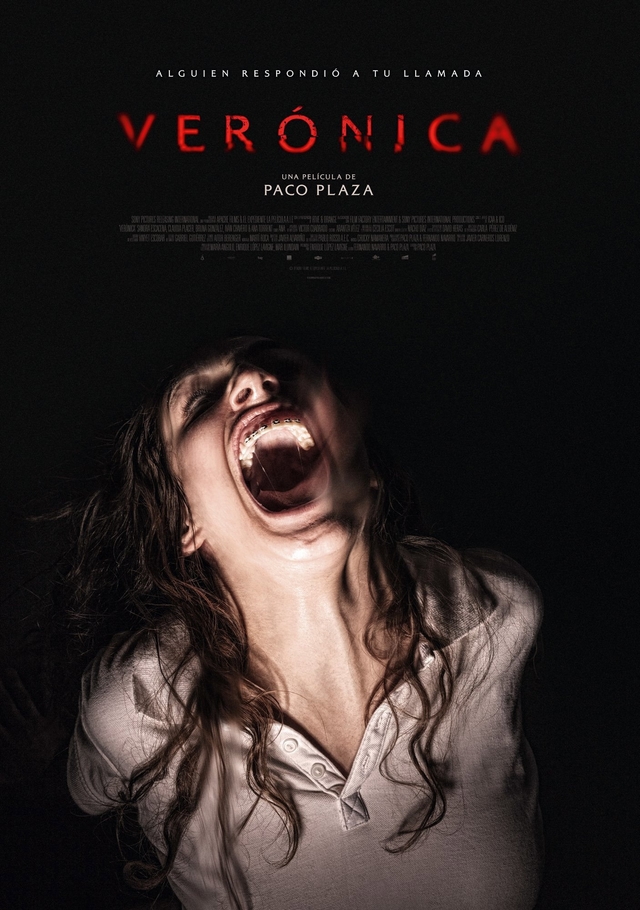
The horror film industry—that circus of horrors where the clowns are serial killers and the trapeze artists plummet into bottomless pits of madness—has enjoyed a renaissance as spectacular as a zombie clawing its way out of a grave in Return of the Living Dead. Paco Plaza, the sorcerer of scares who turned a high-rise apartment into a labyrinth of nightmares with [REC], has now decided to dig through Spain’s police archives to exhume the only case ever classified as supernatural in the history of the Benemérita. Yes, we’re talking about Verónica, a film that reeks of burnt incense, bargain-bin Ouija boards, and teenagers with more bravado than brains. But make no mistake: this isn’t some Hollywood exorcism with flowing white robes and butchered Latin. This is terror with a national ID, complete with unpaid electricity bills and the greasy stench of a Vallecas apartment in the ‘80s. Plaza isn’t playing William Friedkin; he’s playing the neighbor on the fifth floor who hears thumping in the walls at 3 AM and would rather blame the super’s ghost than admit the building’s crumbling like a politician’s morality mid-campaign trail.
The real-life case that inspired Verónica—that Spanish X-Files dossier the cops slammed shut with a shrug and a “We don’t know what the hell happened, but don’t touch the board”—is the kind of story that would make H.P. Lovecraft drool and Iker Jiménez break into a cold sweat. A teenage girl, a Ouija session, a solar eclipse, and a gaggle of witnesses who swore they saw things that would make Samara from The Ring look like a kindergarten teacher. Instead of falling into the found footage trap (you know, the ones where the camera shakes so violently it looks like the DP is mid-delirium tremens), Plaza opts for gritty, grainy realism, as if the film were shot on a Handycam swiped from a MediaMarkt. The cinematography by Pablo Rosso, the shadow whisperer who proved his chops in [REC], here becomes even more suffocating, as if light itself is too terrified to enter the frame. Verónica’s apartment is lit like a budget satanic ritual: flickering bulbs, elongated shadows that look like accusing fingers, and a color palette that oscillates between baby-shit brown and hospital-vomit green. It’s as if Gordon Willis decided to shoot The Godfather in a subsidized housing unit in Usera.
But let’s not kid ourselves: the real mastermind of mayhem here is the script by Fernando Navarro, a screenwriter who seems to have studied under Roman Polanski and Jaume Balagueró, with a PhD in domestic terror. Navarro doesn’t just regurgitate the classic teen horror formula (Ouija + curse + creative deaths = box office gold). No, here the Ouija board is just the MacGuffin that kicks off the nightmare, but the real horror lies in the mundane: a mother working the night shift, leaving her kids alone; a little brother playing with lead soldiers while something inhuman watches from the closet; an older sister clinging to sanity in a world crumbling like a poorly baked cake. This is social horror on steroids, where the monsters aren’t horned demons but loneliness, poverty, and guilt given physical form. And it’s all delivered with relentless pacing, like a cuckoo clock about to detonate.
Direction: The Art of Drowning the Audience in a Shot Glass
Paco Plaza doesn’t direct films; he orchestrates sensory assaults. Verónica is a dive into acid, where every frame, sound, and silence is calculated to suffocate you like a plastic bag over your face. From the first minute, Plaza proves he’s a master of claustrophobic framing: the shots are so tight it feels like the characters might burst out of the screen like in Scanners, except instead of exploding heads, it’s tension that detonates. The opening sequence—that solar eclipse shot with a sickly light filtered through grime—is a mission statement: this isn’t just a horror movie; it’s a one-way trip to paranoia central.
But where Plaza truly shines is in his use of off-screen space. In Verónica, what you don’t see is just as important as what you do. The noises in the hallway, the whispers behind the door, the sound of something dragging itself across the ceiling—Plaza turns sound into a character, nearly as vital as Verónica herself. It’s as if David Lynch and Alfred Hitchcock had a bastard child and raised it on churros and El Víbora comics. And let’s not even get started on the long takes, those moments where the camera moves like it’s possessed, stalking Verónica down the hallway like a bloodhound sniffing out fear. This is physical cinema, the kind that leaves you with white-knuckled grips on your armrests.
The editing, by David Gallart, is another cornerstone of this film. Gallart, who already proved his mettle in Timecrimes, here outdoes himself with a rhythm that oscillates between agonizing slowness and sudden explosions. There are moments when the film seems to freeze, as if time itself has stalled, only to unleash chaos in the blink of an eye. It’s as if Stanley Kubrick and Dario Argento had a fight over how to cut a movie and, instead of compromising, decided to screw the audience with the best of both worlds.
Performances: When Terror Takes Flesh (and Bone, and Sweat)
If there’s one thing that elevates Verónica above generic horror, it’s the cast—and, in particular, its absolute lead: Sandra Escacena. At just 15 years old during filming, Escacena pulls off something most actors never achieve: making you forget you’re watching a movie. Her Verónica isn’t a teen horror cliché—she’s not a passive victim, nor a final girl by the book. She’s a real teenager, with all the fear, contradictions, and pent-up rage that entails. Escacena radiates naturalism, whether she’s sharing tender moments with her siblings or spiraling into sheer panic when things go south. There’s one scene in particular—where Verónica stares into a mirror and sees something that shouldn’t be there—that’s so disturbing it feels like it was ripped from a ‘70s snuff film. Escacena doesn’t act fear; she lives it, and that’s not something they teach in acting school.
But Verónica wouldn’t be the same without its supporting cast, that chorus of characters plucked straight from a Cuatro docu-reality show. Bruna González, Claudia Placer, and Iván Chaverri as Verónica’s siblings are nothing short of phenomenal. González, as little Anita, is a force of nature, stealing every scene she’s in. Her chemistry with Escacena is so authentic it feels like they’re playing siblings who’ve spent a lifetime bickering over the TV remote. And then there’s Ana Torrent, that living legend of Spanish cinema, who here plays the blind nun with a presence so unsettling it’s as if she might start reciting the Apocalypse in Latin at any moment. Torrent, who already chilled our bones in The Spirit of the Beehive, proves once again that she’s one of the most intense actresses in our cinema. Her scene with Verónica—where she speaks of the shadow—is pure emotional dynamite.
Technical Department: When the Devil’s in the Details (and the Makeup)
What defines Verónica is its obsession with detail. This isn’t a film of digital effects and green screen monsters; this is analog terror, the kind you can smell, touch, and feel crawling on your skin like a cold sweat. The production design, by Sylvia Steinbrecht, is simply flawless. Every object, every piece of furniture, every stain on the wall seems to have a history. Verónica’s apartment isn’t a set; it’s a character, a living space that breathes and rots simultaneously. The ‘90s are recreated with surgical precision: from Take That posters on the walls to rotary phones that look like they were plucked from a museum of obsolete tech. It’s as if John Carpenter decided to shoot Halloween in a subsidized housing unit in Madrid.
But if anything steals the show in the technical department, it’s the makeup, courtesy of Sarai Rodríguez. Rodríguez, who already worked her magic in Shrew’s Nest, here outdoes herself with a blend of realism and surrealism. The practical effects—like that burnt hand that appears at a pivotal moment—are so convincing they look like they’re from a medical documentary. And let’s not even talk about the distorted faces of some characters, which seem painted by Goya in one of his darker moods. The makeup doesn’t just scare; it disturbs, because it feels real, as if the actors were possessed for real.
The score, composed by Chucky Namanera, is another triumph. Namanera, who already showed his talent in Timecrimes, here opts for a minimalist yet effective soundtrack, with dissonant strings and ambient sounds that seem plucked from a nightmare. There’s one scene in particular—where Verónica descends into the basement—where the music blends with the sound effects to create a symphony of terror. It’s as if Bernard Herrmann and John Cage collaborated on a score for the end of the world.
And then there’s the cinematography, that two-headed beast we’ve already gushed over. Pablo Rosso doesn’t just light the film; he dissects it, as if searching for the dark heart beating beneath the surface. The chiaroscuro is so stark it looks like it was lifted from a Caravaggio painting, and the close-ups of Verónica are so emotionally charged they feel burned into your retinas. Rosso plays with natural light like an Impressionist painter, but instead of capturing beauty, he captures fear. There’s one scene—where Verónica lights a candle in the dark—that’s so visually striking it feels like a Gregory Crewdson photograph brought to life.
The best
- Paco Plaza’s direction: A tour de force of visual and narrative brilliance, proving Spanish horror has nothing to envy Hollywood. Plaza doesn’t direct; he exorcises.
- Sandra Escacena’s performance: An absolute revelation. Escacena doesn’t play Verónica; she becomes her, with an intensity that leaves you breathless.
- Pablo Rosso’s cinematography: A masterpiece of chiaroscuro and elongated shadows. Rosso doesn’t light the film; he drowns it in darkness.
- Fernando Navarro’s script: A masterclass in psychological terror that transcends genre clichés. Navarro doesn’t write a horror story; he writes a nightmare.
- The production design: A hyperrealistic portrait of the ‘90s, plucked straight from a TVE documentary. Steinbrecht turns Verónica’s apartment into a character.
- Sarai Rodríguez’s makeup: Practical effects so convincing they feel real. Rodríguez doesn’t apply makeup; she warps reality.
The worst
- The pacing in some scenes: A few moments drag on longer than necessary, as if the film is afraid to let go of the gas pedal. Sometimes, less is more.
- The underdeveloped side characters: Characters like Verónica’s mother or father are sketchy, mere extras in the story.
- Some digital effects: There are a couple of moments where the CGI sticks out like a sore thumb, breaking the immersion the film so carefully built.
- The ending: No spoilers, but let’s just say it doesn’t live up to the rest of the film. It’s as if Plaza aimed for a grand finale and fell short.
The Verdict of Claqueta Ácida
Verónica isn’t just a horror movie; it’s a cinematic exorcism, a dive into the unknown that leaves the viewer dizzy, sweaty, and craving holy water. Paco Plaza has crafted a masterpiece of Spanish horror, a film that transcends the genre to become something bigger, darker, and more real. With flawless direction, powerhouse performances, and a technical department that’s pure luxury, Verónica is one of those films that sticks in your memory like a rusty knife. Just don’t expect a happy ending: this isn’t Poltergeist; this is terror with a national ID, the kind that lingers even after three Hail Marys and flushing the Ouija board down the toilet. Rating: 8.5/10. If you’ve got the stomach for 100 minutes of pure tension, this is your film. If not, you can always watch Annabelle and sob quietly while the porcelain dolls smirk at you in solidarity. The eclipse of dread has begun... 💀
🎬 Tráiler Oficial
💬 El Veredicto de la Comunidad
¿Qué te ha parecido la película? Deja tu nota de 0 a 10 para contrastarla con el análisis de la redacción.
Aún no has votado
📢 ¿Te ha gustado el ácido?
Comparte esta crítica con tus amigos cinéfilos o desata la polémica en redes.
📩 📩 Get the poison in your inbox
Join our weekly mailing list. Honest film reviews, acid festival coverage, and cult recommendations every Sunday morning. Zero spam, pure celluloid.
🔒 We promise weekly poisonous reviews and exclusive coverage.Related Reviews
Recommended autopsies for demanding film buffs.
 ⚡ Ácido Cítrico7.0
"Who Lives by the Iron: Revenge as Bloody Poetry (and a Bit Clumsy)"
Paco Plaza delivers a Galician thriller with more bile than brilliance, where Luis Tosar shines amid a limp script and violence that leaves you wanting. Revenge or just routine?
 ⚡ Ácido Cítrico7.0
**"The Grandmother": Paco Plaza’s Chilling, Daring Dive into the Horror of Decay**
Paco Plaza teams up with Carlos Vermut to deliver his most restrained and stylized film yet. A disturbing yet breathtaking intergenerational duel between Almudena Amor and Vera Valdez, swapping cheap scares for the real horror of time’s passage. We break down why this pivot to "elevated horror" deserves high marks under our microscope. 💀
 ⚡ Ácido Cítrico7.5
Verónica: The Eclipse of Dread
A scathing critique of the horror flick *Verónica*, based on an unsolved—and deeply unsettling—real-life case