Coherence — The Night the Comet Shat the Bed
One night, one comet, and reality goes down the cosmic toilet.

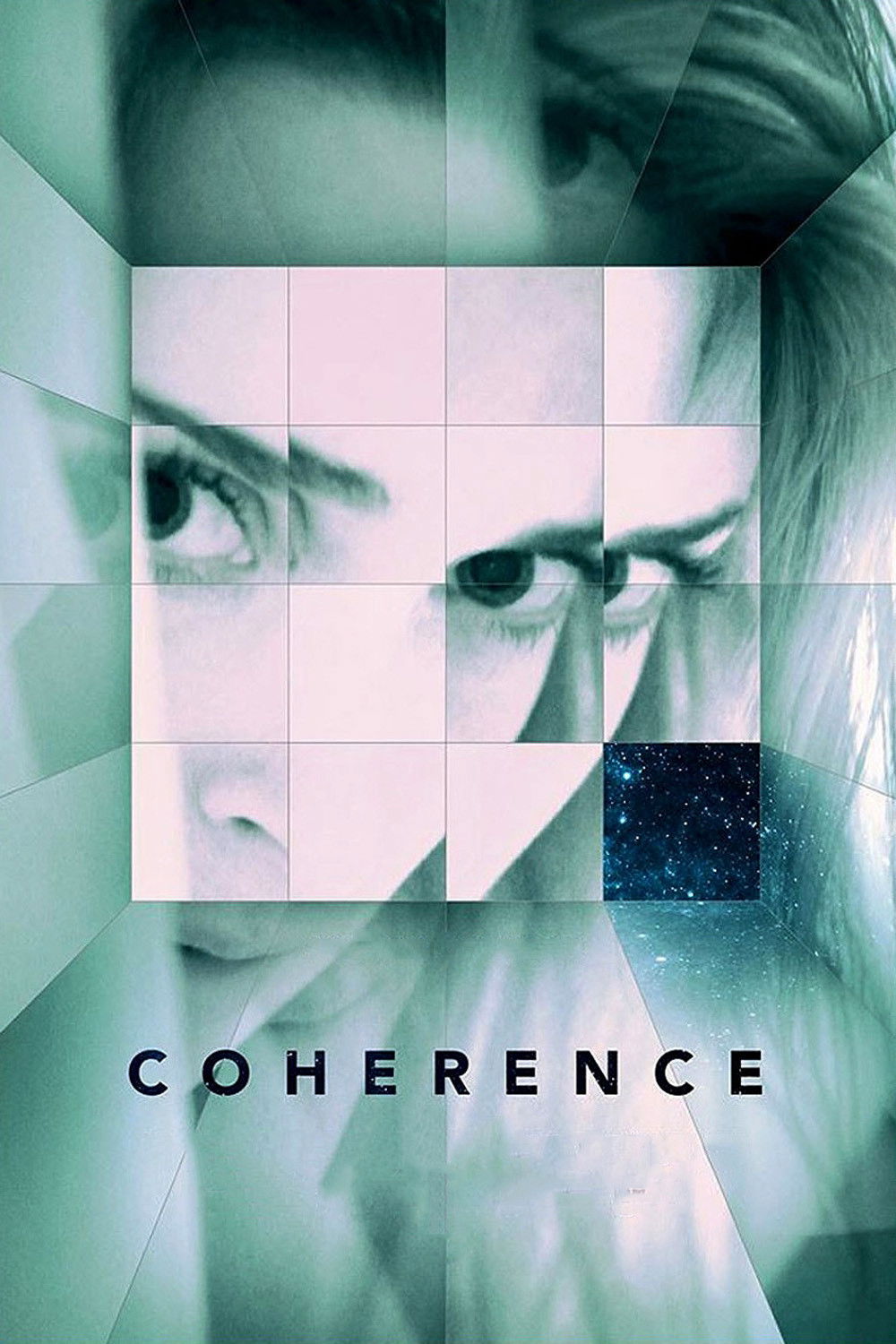
Celluloid tangles around paranoia’s fingers when James Ward Byrkit decides, back in the distant year of 2014, that it’s the perfect time to projectile-vomit one of the most claustrophobic and brain-melting low-budget sci-fi nightmares onto the screen. Coherence isn’t a movie—it’s a social experiment filmed with the precision of a neurosurgeon who’s decided to operate on the viewer’s brain without anesthesia. The premise is so simple it hurts: eight friends gather for a dinner party in a California suburb while Comet 45P/Honda-Mrkos-Pajdušáková—yes, that’s its real name, as if the universe signed its work with a cosmic scribble—streaks across the sky like a harbinger of impending doom. What begins as a domestic drama over cheap wine and forced laughter morphs into a labyrinth of fractured realities, where every decision, every glance, every sigh becomes another link in a chain dragging us into the abyss of the incomprehensible. Byrkit, a guy who until then had only flirted with filmmaking as the screenwriter of Rango (yes, that animated movie about a chameleon who talks like he swallowed a self-help manual), decides it’s time to play David Lynch on a student budget, and the result is a masterpiece of psychological tension that makes Black Mirror look like an episode of Sesame Street by comparison.
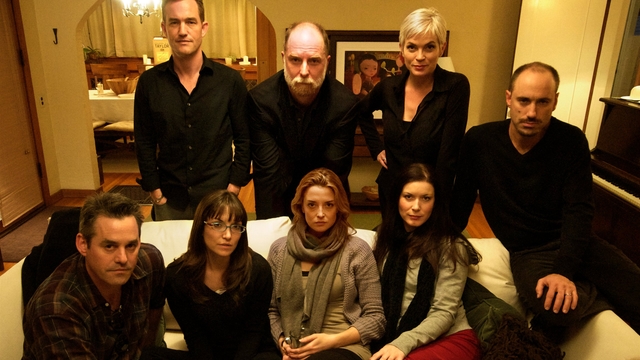
The industrial context of Coherence is as fascinating as its plot. In 2014, Hollywood was obsessed with superhero blockbusters and franchise sequels that smelled like rotting corpses. While Marvel served up another helping of overstuffed CGI, and Michael Bay remained hellbent on turning the planet into a parking lot of explosions, Byrkit and his team locked themselves in a house for five nights with a 12-page script and a handful of actors willing to improvise like their lives depended on it. No storyboards, no million-dollar effects, no army of producers breathing down the director’s neck. Just one camera, a group of friends, and an idea so insane it could only work if everyone bought into the bit. And boy, did they buy in. The film was shot in chronological order, as if Byrkit had decided the chaos needed to be real, not simulated. The actors had no idea what would happen next, decisions were made on the fly, and the script was rewritten in real time like a D&D campaign run by a drunk god. The result is a film that breathes authenticity, where every confused glance, every desperate gesture, every stammered word in the grip of panic feels so real it hurts. This isn’t cinema—it’s anthropology of everyday terror.
But let’s not kid ourselves: Coherence isn’t just an improvisation experiment. It’s a meticulously crafted work of art, where every element—from lighting to sound to editing—is designed to fuck with the viewer’s mind in the most sadistic way possible. Byrkit doesn’t just tell us a story about alternate realities; he forces us to live it, to sweat alongside the characters, to feel the same vertigo when they realize the world they know has become a puzzle of shattered mirrors. And he does it with a budget so lean it’s practically obscene. No special effects, no monsters, no villains in ridiculous costumes. Just eight people trapped in a house while the universe decides to play chess with their lives. It’s as if Roman Polanski and Charlie Kaufman got drunk together and decided to shoot a movie in their living room, armed with a couple of whiskey bottles and a quantum physics textbook.
The cultural climate in which Coherence emerged is just as interesting. In 2014, sci-fi cinema was dominated by two trends: on one hand, Hollywood blockbusters with hundred-million-dollar budgets and effects designed by a committee of bored accountants; on the other, low-budget indie films trying to replicate the success of Primer (2004) but without the same genius. Coherence arrived like a gut-punch to both trends. It wasn’t a studio film, but neither was it some pretentious indie flick that smelled like a small-town film festival. It was something new, fresh, and deeply unsettling: a movie that doesn’t let you breathe, that forces you to think, to question, to sweat. In an era where cinema had become just another consumer product, designed to be digested and forgotten by the weekend, Coherence was an anomaly, a virus that slithered into your brain and stayed there, replicating like a meme of paranoia.
Direction: The Art of Dismantling Reality with a Screwdriver and a Flashlight
If there’s one thing that defines James Ward Byrkit’s direction in Coherence, it’s his ability to turn the mundane into something sinister with just a few camera adjustments and lighting straight out of a David Fincher nightmare. Byrkit doesn’t need special effects to create tension; all he needs is a long take of Emily Baldoni walking down a dark hallway while her breathing grows increasingly ragged, or a close-up of Maury Sterling biting his lips until they bleed as he tries to figure out what the hell is going on. The film is shot almost entirely with a single camera, giving it the feel of a found-footage horror doc that makes you believe what you’re watching isn’t fiction, but a record of something that actually happened. And damn, does it hurt.
The director plays with space and time like they’re Play-Doh. The house where the action takes place isn’t just a set—it’s a psychological labyrinth, where every room, every object, every shadow has a hidden meaning. Byrkit uses tight shots and claustrophobic framing to convey the feeling that the characters—and by extension, the audience—are trapped in an inescapable snare. There’s no way out, no easy answers, just the oppressive weight of the unknown. And when reality starts to crumble, Byrkit doesn’t rely on digital effects or jarring cuts to convey the chaos; he lets the actors do it for him. The improvisation isn’t a gimmick—it’s a narrative tool, a way to ensure the panic the characters feel is so real it infects the viewer like a virus.
But the most brilliant thing about Byrkit’s direction is his ability to toy with the audience’s perception. The film is full of moments of false calm, scenes that seem innocuous but hide a disturbing detail—a gesture, a glance—that changes everything. It’s as if Byrkit studied the suspense cinema of the ‘70s—from Polanski to De Palma—and decided, instead of copying their techniques, he’d reinvent them for the 21st century. No blaring music to announce danger, no forced plot twists, no unnecessary explanations. Just silence, confusion, and the certainty that something is terribly wrong. And when the film reaches its climax, when reality shatters for good, Byrkit gifts us a final scene that’s as brilliant as it is hopeless, a reminder that, deep down, we’re all alone in the universe.
Performances: The Cast That Ate the Script (and Then Puked It Back Up)
If Coherence works, it’s largely thanks to a cast that seems to have sold their souls to the devil in exchange for the ability to act like they’re on the verge of a nervous breakdown. There are no Hollywood stars here, no familiar faces to pull you out of the experience. Just eight actors committed to a lost cause, willing to improvise, suffer, sweat, cry, and laugh like their lives depend on it. And damn, do they deliver.
At the center of it all is Emily Baldoni, an actress who until then had been relegated to bit parts in shows like The Mentalist and CSI. But in Coherence, Baldoni becomes the film’s beating heart, the emotional anchor keeping us from losing our minds alongside the characters. Her portrayal of Em is a masterclass in restraint and emotional explosion: one moment she’s calm, chatting with friends like nothing’s wrong, and the next she’s on the brink of a nervous breakdown, eyes wide, voice cracking under the weight of panic. Baldoni doesn’t act—she suffers, and that authenticity is what makes the film work. When Em realizes something’s wrong, when she starts questioning her own sanity, we’re not watching an actress play a role—we’re watching a person teetering on the edge of the abyss. And that, dear readers, is cinema in its purest form.
But if Baldoni is the heart of the film, Maury Sterling is its twisted brain. Sterling, a character actor who’s appeared in everything from Homeland to The Dark Knight Rises, plays Kevin, the guy who seems to have all the answers but is, in reality, just as lost as everyone else. Sterling has a commanding physical presence, a deep voice, and a face carved from granite, but what’s truly impressive is his ability to convey intelligence and vulnerability at the same time. Kevin is the character trying to rationalize the irrational, searching for logical explanations where none exist, and Sterling plays him with a mix of arrogance and desperation that’s utterly compelling. When Kevin realizes he’s not in control, that the universe doesn’t follow the rules he thought he knew, his look of terror is so real it hurts.
And then there’s Nicholas Brendon, eternal Xander Harris from Buffy the Vampire Slayer, who here plays Mike, the guy who seems like the most normal of the bunch but is actually the most fragile. Brendon has that everyman charm that makes you like him instantly, but when reality starts to unravel, his performance becomes increasingly erratic, increasingly desperate, as if Mike knows something’s wrong but can’t do anything to stop it. There’s a scene where Mike suddenly bursts into tears for no apparent reason, and Brendon plays it with a rawness so vulnerable it’s impossible not to feel his pain. Coherence wouldn’t be the same without him.
The rest of the cast—Lorene Scafaria, Hugo Armstrong, Elizabeth Gracen, Alex Manugian, and Lauren Maher—also turn in exceptional work, adding layers to their characters that enrich the story. They’re not just supporting players; they’re essential pieces of a puzzle that only works if everything fits perfectly. And fit it does.
Technical Aspects: The Magic of Imperfection
If there’s one thing that defines Coherence’s technical side, it’s its ability to turn limitations into strengths. This isn’t a film with a million-dollar budget or cutting-edge effects. It’s a movie shot in a house, with one camera and a handful of actors, yet it manages to create an atmosphere of tension and paranoia that many blockbusters can’t even touch. And it does so thanks to a technical team that understood from the get-go that cinema isn’t about money—it’s about ideas.
The cinematography by Nic Sadler is, quite simply, brilliant. Sadler, who had previously worked on indie films like The One I Love and The Invitation, demonstrates a mastery of light and shadow here. The film is shot almost entirely with natural or minimal artificial lighting, giving it the feel of a horror documentary that heightens the sense of realism. Sadler uses tight shots and suffocating framing to convey the characters’ claustrophobia, and as reality begins to fracture, his cinematography grows darker, more confused, as if the camera itself is losing control. There’s a scene where Emily Baldoni walks down a dark hallway, lit only by a flashlight, and the way Sadler plays with shadows is so effective it feels like something out of a Dario Argento nightmare.
The editing by Lance Edmands is another of the film’s strengths. Edmands, who also worked on The Invitation, has a flawless narrative rhythm, knowing exactly when to cut to maintain tension and when to linger on a shot so the audience feels the weight of the silence. The film is full of moments of false calm, scenes that seem harmless but hide a disturbing detail, and Edmands handles them with surgical precision. When reality starts to crumble, the editing becomes more chaotic, more frenetic, mirroring the characters’ mental state. And when the film reaches its climax, Edmands delivers an ending that’s as brilliant as it is hopeless, a reminder that, in the end, chaos always wins.
The score by Kristin Øhrn Dyrud is, like everything else in this film, minimalist but effective. There are no epic orchestral swells or memorable themes, just ambient sounds, whispers, and uncomfortable silences that amplify the paranoia. Dyrud understands that sometimes, silence is more terrifying than any musical note, and she wields it like a master. There’s a scene where the characters sit in silence, listening to the sounds of the house, and the tension is so thick you could cut it with a knife. That’s cinema in its purest form.
The production design by Rachel Myers is another standout. Myers, who also worked on The Invitation, turns the house where the action takes place into a character in its own right. It’s not just any house—it’s a psychological maze, a space that reflects the characters’ mental states. Every room, every object, every detail has a hidden meaning, and Myers uses it to heighten the paranoia. There’s a scene where the characters realize the house has changed, that objects aren’t where they should be, and the way Myers plays with space is so effective it feels like something out of The Twilight Zone.
### The best
- James Ward Byrkit’s direction: A tour de force of psychological tension that turns the mundane into something sinister with just a few camera tweaks. Byrkit doesn’t need special effects to create paranoia—a long take and a flashlight are enough.
- Emily Baldoni’s performance: A heart-wrenching portrayal that goes from calm to nervous breakdown in seconds. Baldoni doesn’t act—she suffers, and that’s what makes the film work.
- Nic Sadler’s cinematography: A masterclass in light and shadow that turns the house into a nightmare labyrinth. Sadler plays with shadows like they’re another character.
- The improvised script: The freshness of spontaneity makes every line, every gesture, every glance real, authentic, painful. This isn’t cinema—it’s anthropology of terror.
- Lance Edmands’ editing: Flawless narrative rhythm that knows exactly when to cut to maintain tension and when to linger so the audience feels the weight of the silence.
- The minimalist score: Silence as a weapon. Sometimes, there’s nothing scarier than the sound of your own breathing.
### The worst
- The plot can be confusing for some: If you’re the type who needs everything explained in neon lights with a voiceover, Coherence will leave you with more questions than answers. But let’s be honest—that’s part of its genius.
- The improvisation doesn’t always work: There are moments where the lack of a script shows, especially in some dialogues that feel like real conversations but don’t add anything to the plot. Less is more, folks.
- Some side characters get shortchanged: Lorene Scafaria and Hugo Armstrong have brilliant moments, but their characters aren’t as developed as they should be. A shame, because they could’ve given so much more.
- The ending might disappoint some: If you’re expecting an epic climax with explosions and shocking revelations, Coherence isn’t your movie. The ending is brilliant but hopeless, and some viewers might feel cheated.
### The Verdict of Claqueta Ácida
Coherence isn’t a movie—it’s an experience. A low-budget nightmare that achieves what many blockbusters can’t even scratch: getting under your skin and staying there, replicating like a virus. James Ward Byrkit proves that cinema isn’t about money—it’s about ideas, courage, risk. And damn, does he risk it. Coherence is uncomfortable, confusing, terrifying, and brilliant, all at once. It’s not a film for everyone, but for those brave enough to dive into its labyrinth of fractured realities, it’ll be unforgettable. Just don’t watch it alone. Because when the screen goes dark and the lights come back on, you’ll need someone to argue with about what the hell you just saw. And if you don’t have anyone, maybe don’t watch it at all. Because Coherence won’t leave you indifferent—and it won’t leave you in peace. And that, dear readers, is the highest compliment you can pay a film. 💀
🎬 Tráiler Oficial
💬 El Veredicto de la Comunidad
¿Qué te ha parecido la película? Deja tu nota de 0 a 10 para contrastarla con el análisis de la redacción.
Aún no has votado
📢 ¿Te ha gustado el ácido?
Comparte esta crítica con tus amigos cinéfilos o desata la polémica en redes.
📩 📩 Get the poison in your inbox
Join our weekly mailing list. Honest film reviews, acid festival coverage, and cult recommendations every Sunday morning. Zero spam, pure celluloid.
🔒 We promise weekly poisonous reviews and exclusive coverage.Related Reviews
Recommended autopsies for demanding film buffs.
 🔥 Fusión Nuclear8.0
**Coherence: The Night the Comet Shat the Bed**
One night, one comet, and reality goes down the cosmic toilet.
 ⚡ Ácido Cítrico7.5
**Bugonia: The Cosmic Snatch**
Two young men convinced an executive is an alien kidnap her. Will they save Earth—or just their own delusions?
 ⚡ Ácido Cítrico7.5
Night Passenger: A Roadside Nightmare (Or How to Pick Up the Devil Without Really Trying)
A scathing, pitch-black critique of the horror flick 'Night Passenger'—where cinematic analysis meets the kind of wit that leaves third-degree burns.