Luger — Neon, Gunpowder, and the Miracle of Spanish Guerrilla Thrillers
A scathing, no-holds-barred review of *Luger*, the Spanish film that dares to challenge morality.

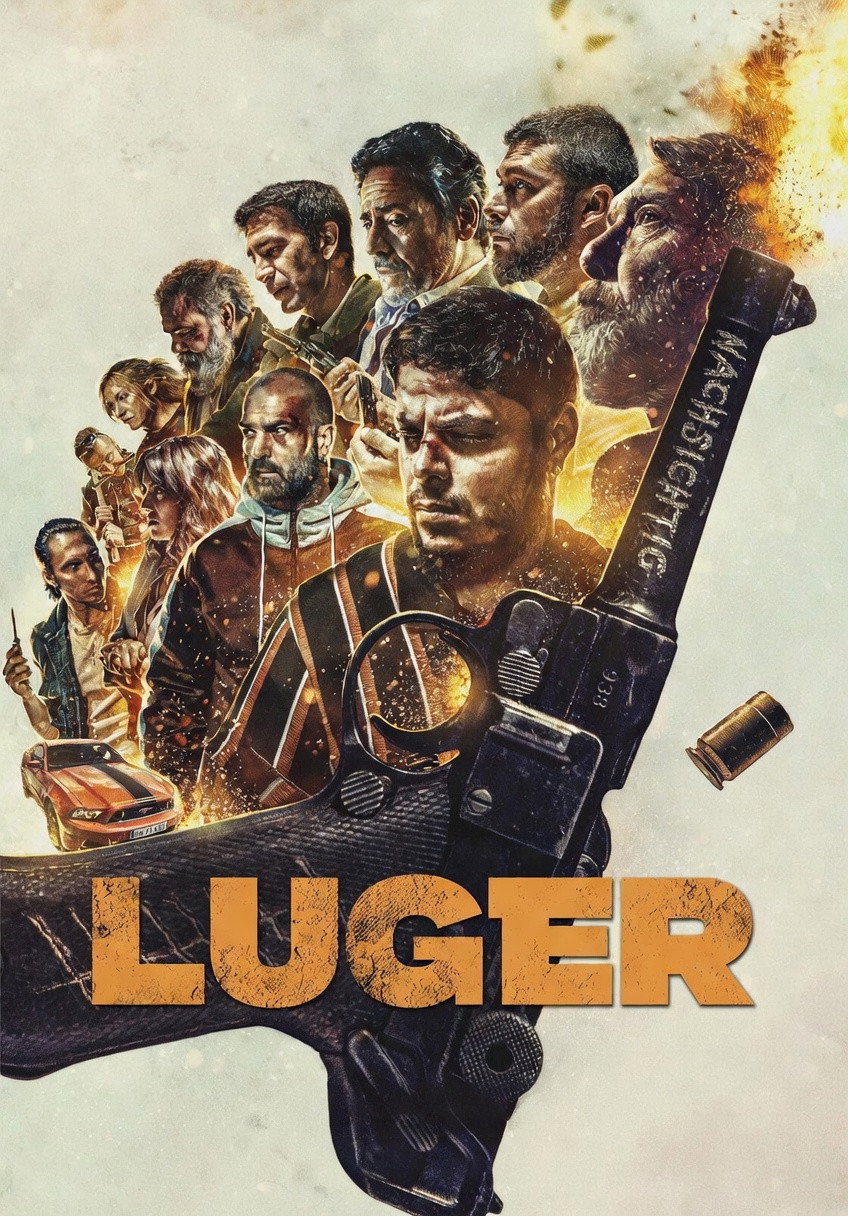
Luger: Neon, Gunpowder, and the Miracle of Spanish Guerrilla Thrillers
The first time Luger’s trailer flickered onto the screen of our trusted local cinema—that charming dive with its threadbare seats, nostalgic creaks, and the unmistakable scent of burnt popcorn, where only those of us still clinging to cinema as a collective ritual dare to tread—we knew we were in for something different. It didn’t look like your typical back-alley thriller, all testosterone and no brain cells, nor did it feel like another failed attempt to ape American noir with stiff dialogue straight out of a bargain-bin self-help manual.
Bruno Martín seemed hell-bent on making a statement with his feature debut. His goal? To prove that Spain’s shoestring budgets don’t have to mean visual or narrative mediocrity.
But trailers, as we at Claqueta Ácida know all too well, are like first kisses: they promise the moon and the stars, only to leave you with a limp handshake. The question hanging in the air as the theater lights dimmed was inevitable: Could Luger sustain its visual tension, breakneck pacing, and suffocating atmosphere of industrial wastelands without deflating halfway through?
After savoring its run in theaters and genre festivals, the answer isn’t just a resounding yes—it’s a full-throated confirmation: we’re looking at one of the most potent, honest, and magnetic surprises in recent Spanish cinema, blessed with a direction that borders on the miraculous.
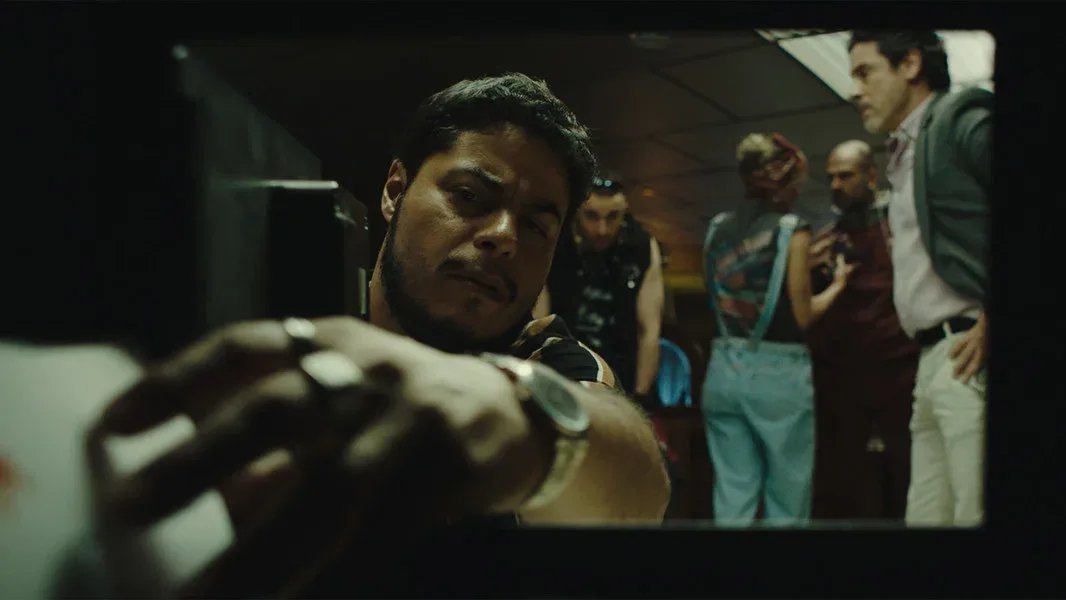
A cold open that reeks of motor oil, asphalt, and desperation
The film throws us headfirst into the suffocating, monotonous existence of Rafa (David Sainz) and Toni (Mario Mayo), a pair of small-time debt collectors and hustlers scraping by on the fringes of legality in a peripheral Madrid—gray, unforgiving, and merciless. Both operate under the thumb of Ángela (Ana Turpin), a lawyer with glacial elegance and a morality as flexible as a rubber band, pulling their strings at will. The nightmare begins with what should’ve been a routine job: retrieving a stolen car for one of the lawyer’s clients.
What was supposed to be a quick "in, grab, out" goes sideways the moment they pop the trunk and find a safe that has no business being there. Inside? The film’s true metallic and conceptual heart: a pristine Luger P08, a semi-automatic pistol from World War II, steeped in a near-mystical aura of violence.
This historical relic, heavy with the weight of its own bloody legacy, becomes a magnet for the greed of the city’s most dangerous, ruthless lowlifes. From that moment on, the labyrinthine industrial park where the action unfolds stops being mere backdrop and becomes a character in its own right—a concrete hell of rusted metal and elongated shadows, from which escape seems impossible.

Bruno Martín: The Triumph of a Prodigious Debut
Let’s be clear: making a feature film in Spain on a tight budget is already a feat. That this debut turns out to be such a mature, magnetic, and dazzling cinematic exercise? That’s nothing short of a miracle. Bruno Martín’s direction in his first film is simply masterful.
Where other first-time directors might’ve fallen into the trap of empty stylization, frantic editing to hide budget seams, or overused visual clichés, Martín demonstrates the poise and precision of a seasoned veteran. His control over the mise-en-scène is surgical. He knows exactly when to keep the camera still, letting the dramatic weight rest on his actors’ shoulders, and when to move it with a fluidity and elegance that astonishes, turning a Madrid industrial park into a mythic, claustrophobic labyrinth.
Martín’s greatest triumph lies in his masterful handling of tone. Balancing a film that starts as a gritty, darkly comedic tale of peripheral life, only to drag the viewer—without anesthesia—into the depths of raw, violent, and heart-wrenching tragedy, is a kamikaze mission. One wrong step, and the whole thing would’ve collapsed like a house of cards. Yet Martín transitions between street humor, suffocating tension, and raw human drama with jaw-dropping naturalness. He directs with his gut but keeps a cool head, measuring every climax and doling out visual information with a sacred respect for the audience. This debut isn’t just a promise for the future—it’s the immediate confirmation of a filmmaker in capital letters.

A Cast in a State of Grace: Truth Written in Blood
The miracle of a guerrilla film hitting this hard lies, in large part, in the raw truth its actors convey under the director’s guidance. And here, the leading trio delivers a monumental performance.
David Sainz (Rafa): Stripped of the comedic persona that made him a digital darling, Sainz crafts a character who’s weary, wounded, and broken. His performance is physical, silent, and magnetic. There’s a latent vulnerability in his gaze that gives Rafa a heartbreaking humanity.
Mario Mayo (Toni): The perfect counterpoint. Mayo, already a staple of cult action cinema, doesn’t just throw punches here—he oozes charisma and crushing authenticity. The chemistry between Toni and Rafa, their unbreakable bond of friendship, feels utterly organic, becoming the film’s true emotional engine.
Ana Turpin (Ángela): As the icy, calculating lawyer, Turpin shines. She sidesteps the femme fatale cliché with ease, delivering a pragmatist who pulls the underworld’s strings with chilling calm and confidence. Her presence on screen is magnetic, ratcheting up the tension with every appearance.

Hebrero and Star’s Dark Canvas
Supporting Martín’s vision, Luger’s visual punch is nothing short of spectacular, thanks to David Hebrero’s brutal cinematography. Hebrero’s direction of photography is a flawless exercise in style, wringing every drop of atmosphere from the industrial lighting. The cold tones of fluorescent bulbs blend with the warm glow of streetlamps, creating a suffocating, nocturnal, textured world that gives the film an overwhelming personality.
The pacing, meanwhile, is masterfully sustained by the direction and the oppressive score by Levi Star. Star’s music—oscillating between dark analog synths and industrial rhythms—acts as a metronome for the tension, accelerating as the noose tightens around Rafa and Toni.
The Best
- Dazzling Direction: Bruno Martín’s marvelous direction—a debut so brimming with personality, perfect pacing, and narrative maturity it belies its first-film status.
- Lead Chemistry: The explosive dynamic between the leads—David Sainz and Mario Mayo’s subtle humor and gut-wrenching drama are the film’s soul.
- Transformative Cinematography: David Hebrero’s cinematography—turning a Madrid industrial park into a suffocating, magnetic, and stunningly beautiful nightmare.
- Oppressive Score: Levi Star’s soundtrack—a synth-heavy soundscape that burrows under your skin and refuses to let go.
The Worst
- Rushed Finale: A slightly rushed final act—the climax is thrilling and emotional, but at times it feels like the accelerator’s been stomped a bit too abruptly.
- Underused Side Characters: Side characters begging for more screen time—with such a well-drawn rogues’ gallery of local thugs and mobsters, it’s a shame some didn’t get more minutes.
The Verdict of Claqueta Ácida
Luger is one of those rare, precious, and revitalizing anomalies that Spanish indie cinema gifts us once in a blue moon. Bruno Martín makes a triumphant entrance into feature filmmaking with a debut that’s bold, brimming with personality, and sidesteps the easy paths of commercial cinema to deliver a thriller that’s violent, magnetic, and—above all—devastatingly human. With masterful direction that squeezes every ounce of value from its resources, top-tier technical craftsmanship, and a cast in a state of absolute grace, Luger is a must-see for any lover of cinema made with blood, sweat, and guts.
Rating: 8.5/10 💀
🎬 Tráiler Oficial
💬 El Veredicto de la Comunidad
¿Qué te ha parecido la película? Deja tu nota de 0 a 10 para contrastarla con el análisis de la redacción.
Aún no has votado
📢 ¿Te ha gustado el ácido?
Comparte esta crítica con tus amigos cinéfilos o desata la polémica en redes.
📩 📩 Get the poison in your inbox
Join our weekly mailing list. Honest film reviews, acid festival coverage, and cult recommendations every Sunday morning. Zero spam, pure celluloid.
🔒 We promise weekly poisonous reviews and exclusive coverage.Related Reviews
Recommended autopsies for demanding film buffs.
 🔥 Fusión Nuclear8.5
**Luger: Neon, Gunpowder, and the Miracle of Spanish Guerrilla Thrillers**
A scathing, no-holds-barred review of *Luger*, the Spanish film that dares to challenge morality.
 ⚡ Ácido Cítrico7.5
**Bugonia: The Cosmic Snatch**
Two young men convinced an executive is an alien kidnap her. Will they save Earth—or just their own delusions?
 ⚡ Ácido Cítrico7.5
Night Passenger: A Roadside Nightmare (Or How to Pick Up the Devil Without Really Trying)
A scathing, pitch-black critique of the horror flick 'Night Passenger'—where cinematic analysis meets the kind of wit that leaves third-degree burns.