Night Passenger — A Roadside Nightmare (Or How to Pick Up the Devil Without Really Trying)
A scathing, pitch-black critique of the horror flick 'Night Passenger'—where cinematic analysis meets the kind of wit that leaves third-degree burns.

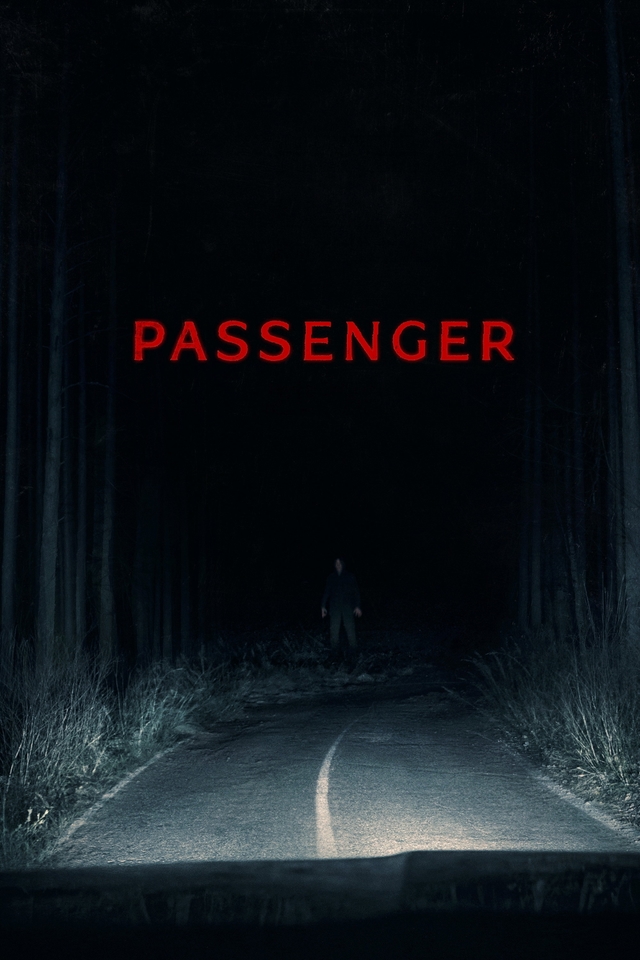
The celluloid unspools like a serpent in the theater’s darkness, and onto the screen slithers Night Passenger, a title that reeks of bargain-bin ‘90s video store promises—yet, against all odds, manages to spew a few pints of fresh blood into the horror genre’s stagnant veins. Directed by André Øvredal, that Norwegian iceberg of a filmmaker who previously gifted us the found-footage gem Trollhunter (2010) and the claustrophobic nightmare The Autopsy of Jane Doe (2016), this film feels like it was concocted in a lab where they spliced the DNA of Spielberg’s Duel with the cold sweat of It Follows and a dash of George A. Romero’s grimy realism. But does Øvredal escape the curse of modern horror’s endless remakes and sequels, or does he end up as just another corpse in the genre’s roadside ditch? Buckle up, darlings—this ride promises hairpin turns and a few scares that’ll leave your knuckles bone-white and your heart lodged in your throat like a chicken bone you can’t cough up.
The genesis of Night Passenger is as intriguing as its plot. After the success of Scary Stories to Tell in the Dark (2019), that illustrated nightmare fuel that left us all with childhood traumas we’re still unpacking, Øvredal seemed poised to become horror’s new Midas. But—plot twist!—the Norwegian auteur took an unexpected detour and signed on for this project, penned by T. W. Burgess, a screenwriter with more TV hours (think The Terror and Outcast) than actual genre film credits. The question hangs in the air like the stench of rotting roadkill: Is this a director in creative crisis, seeking refuge in low-budget terror, or an artist hellbent on proving the genre still has a pulse beyond jumpscares and CGI monsters? The answer, as always, lies on the screen—but don’t be fooled: this film reeks of risk, that desperate gamble to reclaim the essence of roadside horror, a subgenre that gave us masterpieces like The Hitcher (1986) and Near Dark (1987) but now feels reduced to a graveyard of clichés and bargain-bin scares.
The industrial landscape in which Night Passenger was born is as desolate as the backroad where its story unfolds. We live in the age of corporate horror, where studios would rather hemorrhage cash on The Conjuring sequels or Asian remakes than take a chance on an original idea. In this wasteland, a film like this—modest budget, unknown cast—seems like a miracle. But as any horror fan worth their salt knows, miracles sometimes smell like sulfur. Netflix, that content factory that’s done more to democratize cinema (and murder the magic of dark theaters) than any other entity, snapped up the distribution rights, ensuring Night Passenger would bypass the critical gauntlet and land directly in millions of homes. Is this a blessing or a curse? For Øvredal, it’s probably both: more eyeballs on his work, but also the risk of his film getting lost in the algorithm, sandwiched between recommendations for Bird Box and The Babysitter like a vegan at a BBQ.
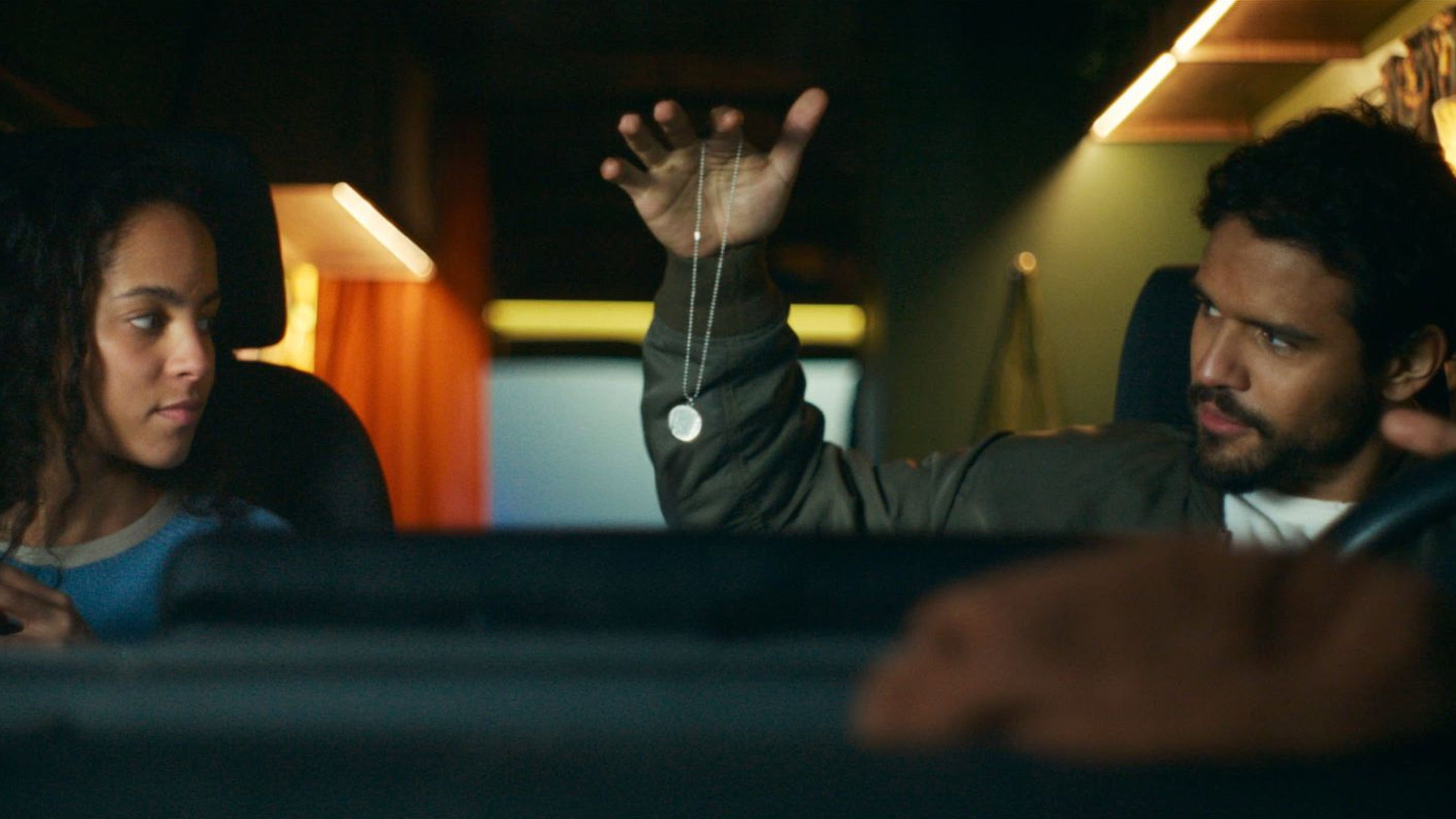
The premise is so simple it hurts: a young couple, Lou Llobell and Jacob Scipio, drive through the night on a backroad when they pick up a hitchhiker who’s not quite what he seems. What begins as a road thriller quickly spirals into a Lovecraftian nightmare, where the unknown lurks around every bend and the real terror isn’t what you see—it’s what you sense. Øvredal, ever the stylist, opts for slow-burn terror, almost suffocating in its patience, where tension is built through long takes, uncomfortable silences, and cinematography that turns darkness into a character. But does this approach escape the genre’s tropes, or is it just another exercise in style that drowns in its own pretension?
The Direction: Øvredal and the Art of Suffocating the Audience
If anything defines André Øvredal’s style, it’s his obsession with grimy realism—an almost documentary-like approach he first explored in Trollhunter and now elevates to new heights of sophistication. Night Passenger isn’t a film about cheap scares; it’s an exercise in patience, a claustrophobic journey where the real terror isn’t the monsters—it’s the uncertainty. Øvredal proves once again he’s a master of suspense, capable of turning a simple shot of an empty road into a visual nightmare. His use of lighting is particularly brilliant: the car’s headlights, the flicker of traffic signs, the brief flashes of flashlights—all create a dance of shadows and light that’d make John Carpenter nod in approval, especially that The Thing (1982) vibe, the holy grail of atmospheric horror.
But Øvredal’s kingdom isn’t all gold. There are moments where the film loses itself in its own ambition, particularly in the second half, where the pacing falters and some plot twists veer into predictability. The Norwegian has a bad habit of trusting atmosphere too much, forgetting that even the most atmospheric horror needs a solid script to avoid deflating like a punctured balloon. Still, there are sequences that showcase his innate talent: that unbroken take following the protagonists as they explore an abandoned gas station is pure cinema, a tension exercise that’d make David Fincher proud. And then there’s the climax—a blood-soaked descent into madness that feels plucked from a fever dream of Dario Argento, with a color palette so saturated it looks painted in the protagonists’ own blood.
Øvredal’s greatest achievement, though, is his ability to turn the mundane into something sinister. A simple car ride becomes a nightmare, and everyday objects (a walkie-talkie, a roadmap, a rearview mirror) take on an almost ritualistic significance. It’s in these details where the film shines, reminding us that real terror isn’t in CGI monsters—it’s in the paranoia and distrust that festers between characters. Night Passenger is, in many ways, a film about losing control, about that moment when you realize you’re not driving your own life anymore. And Øvredal delivers that realization with a rawness that stings.
The Performances: When Terror Becomes Flesh (and Bone)
If anything saves Night Passenger from fading into obscurity, it’s its cast. Lou Llobell, that British actress with a gaze sharp enough to cut glass (who already wowed us in The Last Bus, 2021), proves here she’s got the chops to be horror’s next scream queen. Her portrayal of Lena, the protagonist, is a masterclass in restraint and vulnerability: she’s not your typical horror heroine—screaming, stupid, and running in heels—but a smart, scared woman fighting to keep her sanity in a world that’s crumbling around her. Llobell has that rare quality in genre actresses: she’s believable in both quiet moments and full-blown hysteria, and her chemistry with Jacob Scipio is so palpable you can almost feel the cold sweat between their clenched hands.
Speaking of Scipio, this British actor of Guyanese descent is poised to become one of horror’s next big names. His Jay, Lena’s boyfriend, is a complex character full of contradictions: protective yet insecure, brave yet vulnerable. Scipio conveys that duality with a naturalism that’s downright unsettling, especially in scenes where terror bleeds into the couple’s intimacy. There’s a particular moment—when Jay and Lena argue in the car, the camera slowly closing in on their sweat-slicked faces—that’s pure psychological horror. Scipio doesn’t need to scream or overact; his fear is so real it lodges in your skin like a splinter.
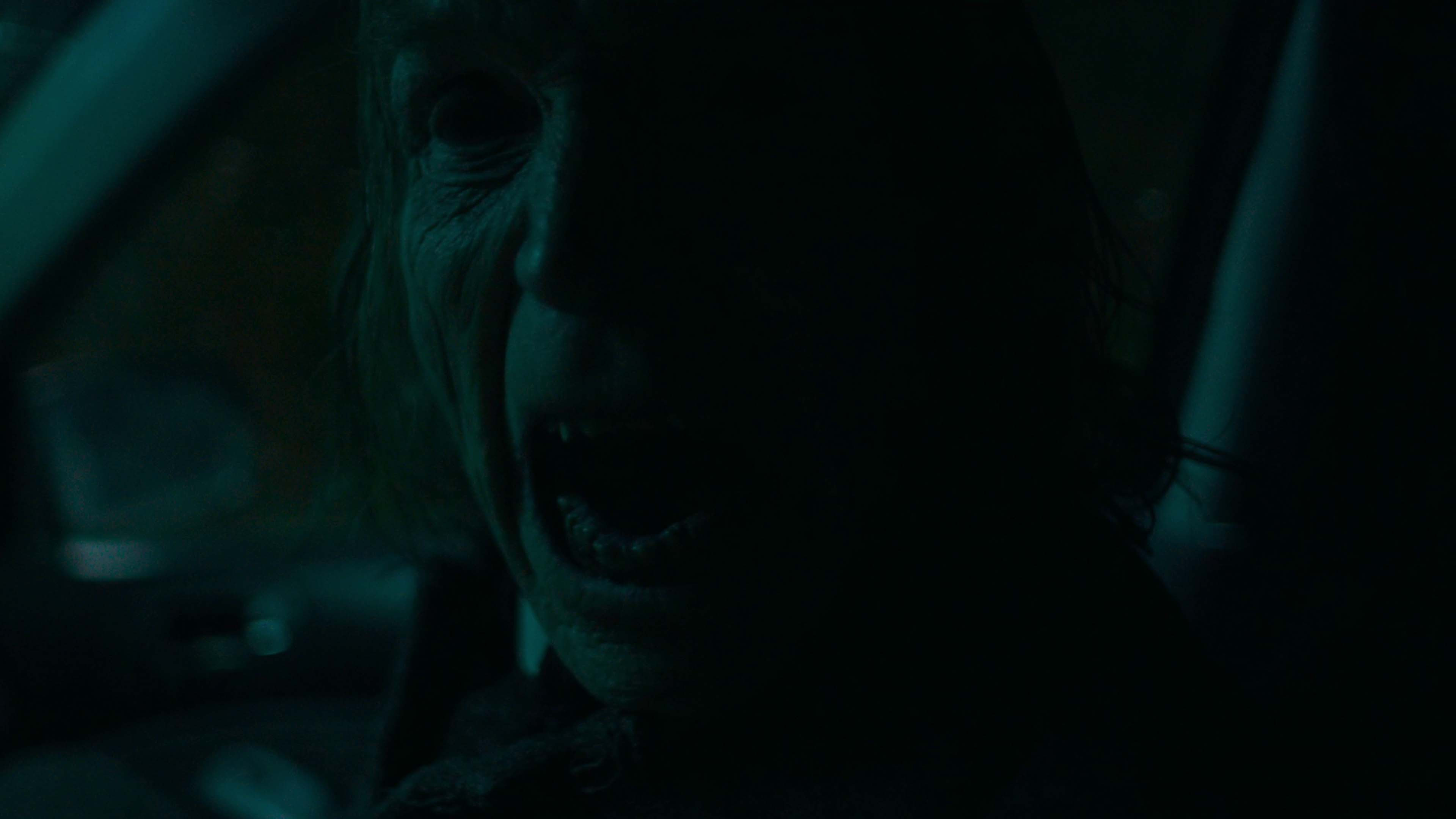
But if there’s one actor who steals every scene he’s in, it’s David Dastmalchian, that maestro of psychological terror who already left us breathless in The Boogeyman (2023) and, yes, even Ant-Man. His portrayal of the mysterious passenger is a masterclass in ambiguity: Is he a frightened man? A psychopath? Or something far worse? Dastmalchian conveys a constant sense of danger with just a glance or a gesture, and his on-screen presence is so unsettling you can almost feel his character’s cold breath on the back of your neck. There’s a scene where the passenger tells a story about a car accident that’s one of the film’s most chilling moments. No special effects, no blood, no monsters—just an actor, a whispering voice, and a tale that burrows into your brain like a rusty nail.
The rest of the cast delivers, though they don’t quite reach the heights of the three leads. Kirsty Mitchell, as a mysterious trucker, has a couple of memorable scenes, but her character is so underdeveloped she ends up feeling like an extended cameo. The same goes for Andrew French, whose local cop role seems plucked straight from a horror cliché handbook. Still, the ensemble manages to convey that sense of desperation and paranoia Øvredal aims for, turning Night Passenger into an experience that’s as physical as it is emotional.
The Technical Department: When the Devil’s in the Details
If anything elevates Night Passenger above the average modern horror flick, it’s its technical department, a feast of textures, sounds, and shadows that turns the film into an almost sensory experience. Let’s start with the cinematography, courtesy of Italian maestro Federico Verardi, a virtuoso of light and shadow who already proved his mettle in The Autopsy of Jane Doe. Verardi turns night into a character, using a palette of cold, desaturated colors that’d make Roger Deakins nod in approval, but with a grime and realism that gives the film a near-documentary feel. The night shots, lit only by car headlights and gas station fluorescents, are visual poetry, and there are moments where the cinematography conveys more terror than any dialogue or special effect.
The sound design is another standout. The team behind it, Paul Davies and Stuart Wilson, craft a soundscape of ambient noises that drill into your brain like needles: the crunch of leaves underfoot, the hum of gas station neon, the metallic groan of a rusted door opening. Everything is designed to raise the hairs on your neck, and they succeed with terrifying efficiency. The score, composed by Mark Korven (the man behind The Witch and The Lighthouse), is minimalist but effective, with those screeching violins and whispered choirs that feel plucked from a Jerry Goldsmith nightmare. Korven proves once again that he doesn’t need grand orchestras to create tension—sometimes, a whisper or a single bow stroke is enough to freeze your blood.
The editing, handled by Patrick Larsgaard, is another of the film’s strengths. Larsgaard keeps the pacing tight without resorting to quick cuts or cheap jumpscares. There are sequences, like the chase in the abandoned gas station, that are edited with surgical precision, alternating long takes and quick cuts to create a sense of controlled chaos. But where Larsgaard truly shines is in the quiet moments—those unbroken takes where the camera follows the characters through empty spaces, conveying a loneliness and despair that’s pure cinematic magic.
The production design, by Eve Stewart (Oscar winner for Les Misérables), is another highlight. Stewart turns every setting into a character: the abandoned gas station, with its peeling walls and faded ads, is a macabre feast of details; the protagonists’ car, with its claustrophobic interior and sweat-stained seats, becomes a mobile prison. Even the most mundane objects—a walkie-talkie, a roadmap—take on an almost ritualistic significance in Stewart’s hands. There’s a moment when Lena finds an abandoned toy on the gas station floor that’s one of the film’s most unsettling details. It’s not a monster, not a ghost, not a psychopath—just a toy. But in the context of the film, it becomes a symbol of lost innocence and the terror lurking in the everyday.
The screenplay, written by T. W. Burgess, is smart and well-structured, but not without its flaws. Burgess demonstrates a masterful grasp of suspense, with unexpected twists and razor-sharp dialogue that keep the viewer hooked. However, there are moments where the film loses its way, particularly in the second half, where some plot developments veer into predictability. The script’s greatest strength is its ability to turn the mundane into something sinister, but its biggest weakness is the underdevelopment of secondary characters, who end up as little more than walking clichés. Still, there are scenes that showcase Burgess’s talent, like the passenger’s monologue about a car accident—a moment of pure psychological terror that’ll haunt you long after the credits roll.
The best
- Federico Verardi’s cinematography: A masterclass in light and shadow that turns night into a character, with a cold, desaturated palette that’d make Roger Deakins proud—but with a grime and realism that gives the film a near-documentary edge.
- David Dastmalchian’s performance: A psychological terror virtuoso who conveys constant danger with just a glance or a gesture. His portrayal of the mysterious passenger is a masterclass in ambiguity.
- André Øvredal’s direction: A slow-burn exercise in tension that proves horror doesn’t need cheap jumpscares to work. Øvredal turns the mundane into the sinister, and his use of lighting and cinematography is nothing short of masterful.
- The sound design: A soundscape of ambient noises that drill into your brain like needles, with an effectiveness that’s downright terrifying. The team behind it conveys more terror with a whisper than most films do with grand special effects.
- The chemistry between Lou Llobell and Jacob Scipio: A believable, vulnerable couple fighting to keep their sanity in a crumbling world. Their chemistry is so palpable you can almost feel the cold sweat between their clenched hands.
The worst
- Underdeveloped secondary characters: Some characters, like the mysterious trucker or the local cop, end up as little more than walking clichés, lacking depth or nuance.
- Predictable plot twists: While the script is smart, there are moments—especially in the second half—where the film veers into predictability.
- Uneven pacing: The film starts with suffocating tension, but the second half drags, with some scenes feeling unnecessarily stretched.
- The final monster design: No spoilers, but let’s just say the climax resorts to a creature design that looks like it was lifted from a ‘90s video game, shattering the realistic atmosphere Øvredal so carefully built.
- Lack of originality in some elements: While the premise is fresh, there are moments where the film leans on genre tropes—mysterious hitchhikers, abandoned gas stations—that we’ve seen a thousand times before.
The Verdict of Claqueta Ácida
Night Passenger isn’t a horror masterpiece, but it’s one of those films that proves the genre still has life beyond remakes and endless sequels. Øvredal crafts a suffocating atmosphere, a claustrophobic journey down a backroad that spirals into a Lovecraftian nightmare. The cinematography, sound design, and performances are excellent, and there are moments of pure psychological terror that’ll lodge in your brain like rusty nails. That said, the film isn’t without its flaws: uneven pacing, underdeveloped side characters, and a climax that shatters the realistic atmosphere it worked so hard to build. Still, Night Passenger is worth watching, especially if you’re a fan of atmospheric horror and stories that leave your knuckles white and your heart in your throat. Just don’t say we didn’t warn you—if you pick up a hitchhiker in the middle of the night, you’re on your own. 💀
🎬 Tráiler Oficial
💬 El Veredicto de la Comunidad
¿Qué te ha parecido la película? Deja tu nota de 0 a 10 para contrastarla con el análisis de la redacción.
Aún no has votado
📢 ¿Te ha gustado el ácido?
Comparte esta crítica con tus amigos cinéfilos o desata la polémica en redes.
📩 📩 Get the poison in your inbox
Join our weekly mailing list. Honest film reviews, acid festival coverage, and cult recommendations every Sunday morning. Zero spam, pure celluloid.
🔒 We promise weekly poisonous reviews and exclusive coverage.Related Reviews
Recommended autopsies for demanding film buffs.
 ⚡ Ácido Cítrico7.5
Night Passenger: A Roadside Nightmare (Or How to Pick Up the Devil Without Really Trying)
A scathing, pitch-black critique of the horror flick 'Night Passenger'—where cinematic analysis meets the kind of wit that leaves third-degree burns.
 🔥 Fusión Nuclear8.5
The Autopsy of Jane Doe: The Frostbitten Forensics of Witchcraft
André Øvredal locks Brian Cox and Emile Hirsch in an underground morgue to dissect the corpse of a medieval witch in this suffocatingly clinical thriller.
 ⚡ Ácido Cítrico7.5
**Bugonia: The Cosmic Snatch**
Two young men convinced an executive is an alien kidnap her. Will they save Earth—or just their own delusions?