Frankie, Maniac Woman — A Descent into the Abyss
A scathing, gut-punching critique of 2026’s most disturbing horror—if you dare to look

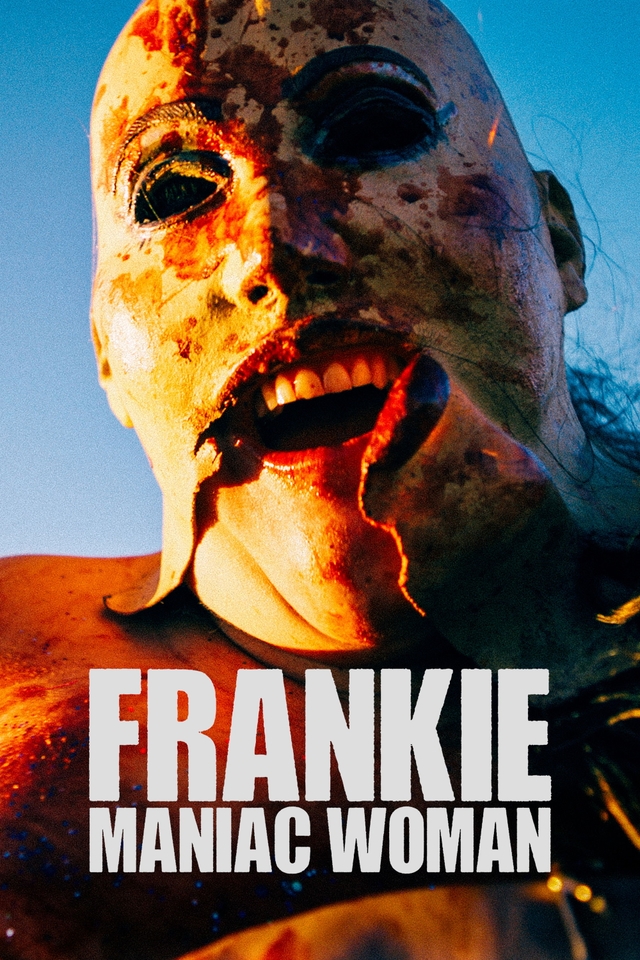
Celluloid groans under the weight of madness in this clandestine screening room, where the stench of stale popcorn mingles with the cold sweat of viewers—like us—who’ve just been dragged kicking and screaming into the abyss of Frankie, Maniac Woman. Pierre Tsigaridis, that Greek alchemist of terror who once gifted us The Man Who Killed Don Quixote of sanity, is back with a film that reeks of rotting flesh and shattered dreams. Released in 2026 under the Two Witches Films banner, this isn’t just a stylistic exercise—it’s a real-time autopsy of the human mind, dissected with scalpels of dim light and syringes filled with elongated shadows. With a budget rumored to have barely covered a decent coffee during its Romanian shoot, Tsigaridis has pulled off the impossible: turning limitations into virtues and the actors’ sweat into the audience’s own. 95 minutes of runtime that feel like a forced psychoanalysis session, where the couch is a rusted dentist’s chair and the therapist wields an axe instead of a notepad.
The genesis of Frankie, Maniac Woman is as murky as its cinematography. Tsigaridis, obsessed with real-life cases of dissociative disorders, locked himself in a Budapest library for months, devouring 19th-century psychopathology treatises. The result is a script written in menstrual blood and squid ink, where dialogue sounds like whispers from a voice that isn’t yours—but somehow, you know it belongs to you. The shoot, according to leaked actor testimonies on Reddit, was a Lovecraftian nightmare: Dina Silva (Frankie) spent three weeks holed up in her trailer, surviving on coffee and cigarettes, while Pierre Tsigaridis whispered ancient Greek phrases into her ear to “prepare” her for the most intense scenes. The crew, meanwhile, faced an unexpected issue: the lights blew out every time Silva entered a trance, as if her psychic energy could fry the wiring. Urban legend claims that during the climax—where Frankie literally peels the skin off her face—the practical effects makeup (crafted by the genius Mark Coulier, the man behind The Wolfman and Suspiria 2018) was so convincing that several crew members vomited on set. Two Witches Films tried to sell the movie as “the European Hereditary,” but the truth is Frankie, Maniac Woman is grittier, more intimate, and above all, more real than anything Ari Aster has ever shot with Hollywood’s deep pockets.
Audiences, as expected, are divided. On Filmaffinity, the film holds a 6.8 rating, with comments ranging from “a masterpiece of psychological horror” to “pretentious trash shot on a phone.” On Letterboxd, users gush over Dina Silva’s performance but criticize the “erratic” pacing and the “too open” ending. Rotten Tomatoes critics grant it a 78% approval, though some argue the film “loses itself in its own labyrinth of symbolism.” What no one can deny is that Frankie, Maniac Woman is a unique sensory experience—a movie you don’t watch but feel like a velvet-wrapped hammer blow to the back of the skull. Tsigaridis doesn’t just direct; he inhabits the film, as if every frame were a fragment of his own subconscious projected in 35mm. And that, dear readers, is something Netflix’s algorithm will never replicate.
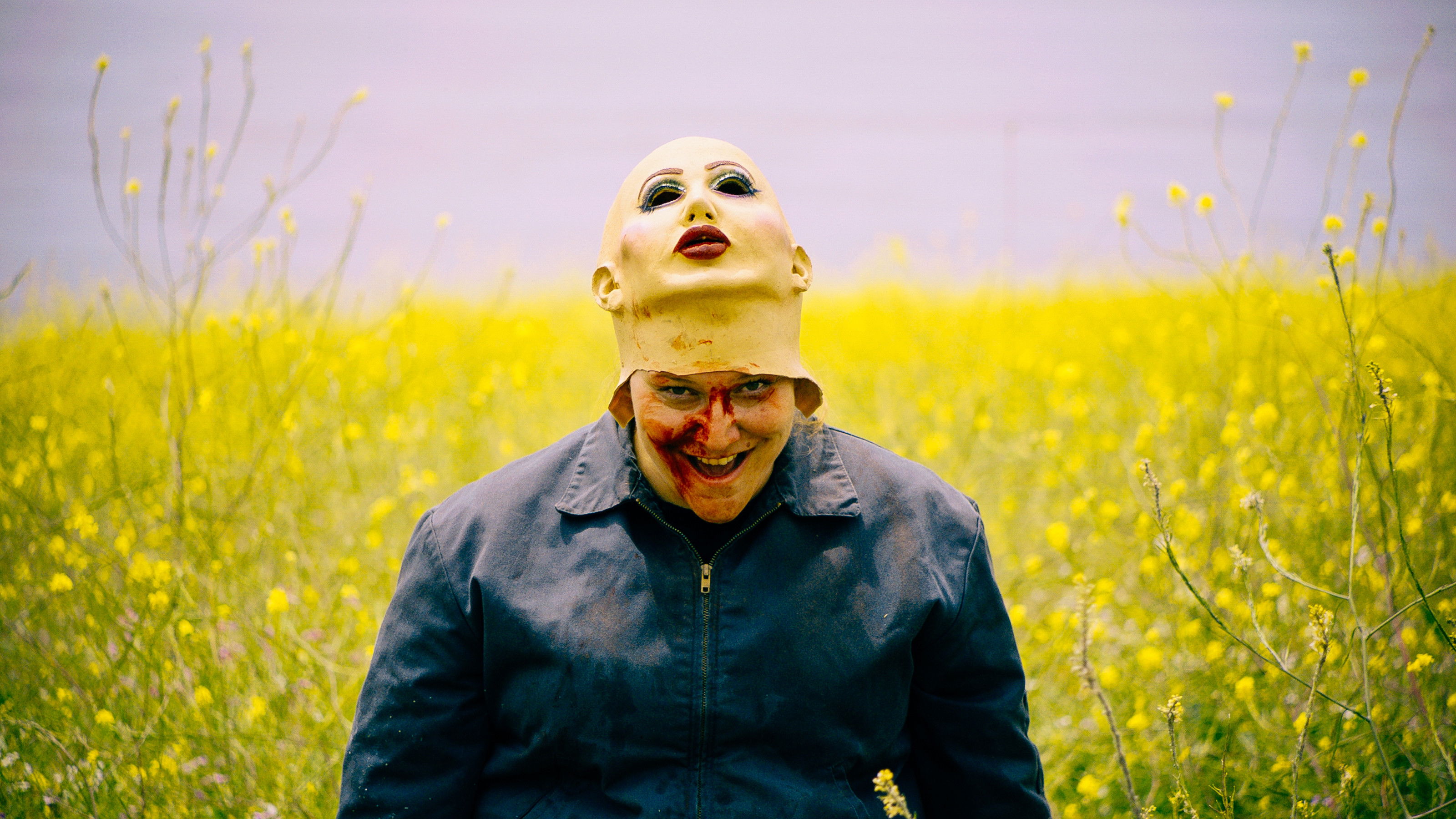
Direction: Terror as a State of Mind
If anything defines Pierre Tsigaridis’ style, it’s his obsession with sensory horror. In Frankie, Maniac Woman, every frame is a stab to the retina. The film opens with a five-minute long take following Frankie (Dina Silva) as she walks down a psychiatric hospital hallway, bathed in a sickly green light that seems filtered through rotting algae. The camera, operated by cinematographer Mihai Malaimare Jr. (a frequent collaborator with Coppola and Paul Thomas Anderson), moves as if drunk, lurching between the bodies of patients crawling on the floor like dying insects. The ambient sound is a symphony of moans, stifled laughter, and the crunch of bones that shouldn’t crunch, all mixed with the constant buzz of a flickering fluorescent light—like a heartbeat on the verge of stopping. Tsigaridis isn’t afraid to let the camera linger for minutes, forcing us to stare into Frankie’s eyes as her face contorts into an expression that’s neither a smile nor a cry, but something far worse: the acceptance of madness.
The editing, handled by Yorgos Lamprinos (Oscar-nominated for The Father), is a masterclass in temporal manipulation. In a key scene, Frankie flashes back to her childhood, where her mother forces her to eat live worms. The transition between present and past isn’t a fade to black but a tear in the screen, as if someone had sliced the celluloid with rusty scissors. The sound accompanies this effect with a wet crack, like we’re hearing the exact moment Frankie’s mind splits in two. Tsigaridis also toys with off-screen space in a sadistic way: in the bathroom scene, where Frankie slashes her wrists with a shard of broken mirror, the camera stays fixed on her face while we hear the sound of shattering glass and red-tinged water swirling down the drain. We never see the blood, but we imagine it—and that’s far more terrifying.
The film’s color palette is another standout. Malaimare Jr. uses a combination of sickly greens and rusted reds that evoke Francis Bacon’s paintings, as well as the posters of 1970s Italian horror films. In the abandoned asylum scene, the hallways are bathed in an amber light that seems filtered through spoiled honey, while the patients’ faces are lit with a cold blue, making them look like freshly exhumed corpses. Tsigaridis also sneaks in some cinephile winks: at one point, Frankie stares directly into the camera as her face distorts, recalling Polanski’s Repulsion (1965). The difference? This time, it’s not the lens warping—it’s our perception of reality.
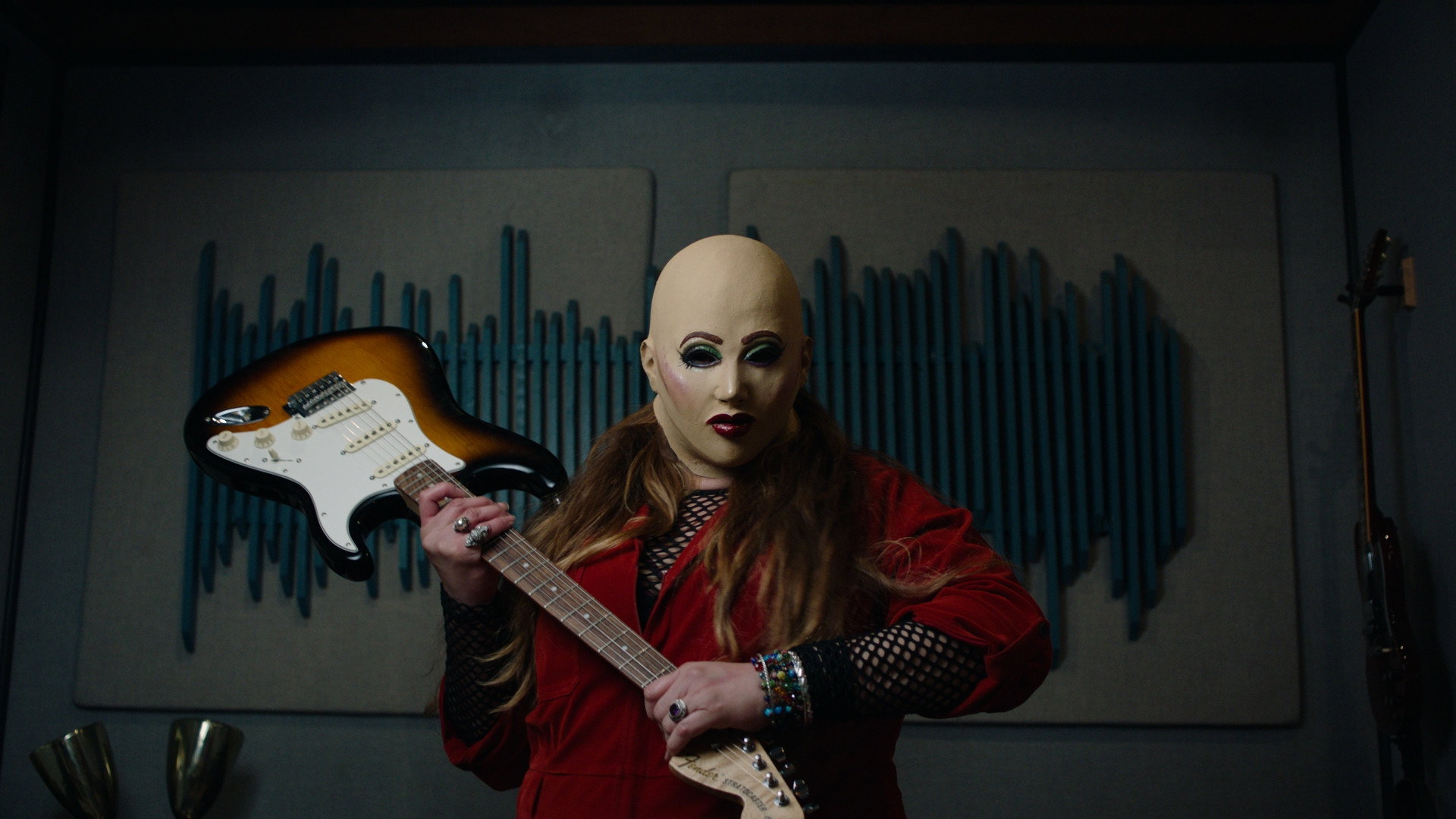
Actors: Madness as Method
Dina Silva doesn’t act in Frankie, Maniac Woman—she inhabits the role like a parasite feeding on her sanity. Her performance is so visceral that, more than once, we wonder if she’s actually possessed by some Stanislavski-method spirit. Silva, a Brazilian actress with a spotty but brilliant career (including her role in Bacurau), takes a no-net plunge into this film. Her Frankie is a woman oscillating between the fragility of a broken-winged bird and the ferocity of a cornered beast. In the scene where Frankie claws the skin off her face, Silva doesn’t use prosthetics: she scratches herself for real, leaving red marks that took weeks to fade. The makeup team had to intervene at the last minute to cover the wounds with latex, but the pain in her eyes is 100% genuine. Tsigaridis, in an interview with The Hollywood Reporter, confessed that Silva “lost eleven pounds during the shoot” and that, on one occasion, “she had to be hospitalized for dehydration after a take where she had to scream nonstop for ten minutes.”
The rest of the cast doesn’t lag behind. Pierre Tsigaridis, playing Dr. Vasile—a psychiatrist with more shadows than a midnight tree—conveys a clinical coldness that raises goosebumps. His performance is so restrained that when he finally snaps into violence, the contrast is so brutal it leaves us breathless. Stefanie Estes, as Mara, the nurse who might be an ally or an enemy (we’ll never know), adds a touch of humanity to the film, though her character is so ambiguous we’re never sure if she’s helping Frankie or preparing her for sacrifice. The chemistry among the three actors is palpable, but not in a romantic or friendly way—it’s the kind of three predators recognizing each other in the dark.
There’s a moment in the film that perfectly captures the cast’s work: when Frankie, Vasile, and Mara sit down for a candlelit dinner, and the doctor asks Frankie, “Do you know why the mad always think they’re right?” Frankie responds with a smile carved from ice: “Because sanity is just a shared illusion.” The silence that follows is so thick you could cut it with a knife. No music, no sound effects—just the crackle of candles and the characters’ ragged breathing. In that instant, Frankie, Maniac Woman stops being a horror movie and becomes a documentary about the fragility of the human mind.
Technical Department: Terror as Craftsmanship
If Frankie, Maniac Woman proves anything, it’s that horror doesn’t need million-dollar budgets or hyper-realistic CGI to be effective. What it needs is craft, and this film is dripping with it. Let’s start with the production design, helmed by Cristina Casali (the mind behind the decadent aesthetics of The Duke and The Personal History of David Copperfield). The asylum where much of the film takes place isn’t a cardboard set—it’s a real building in Romania, dating back to the Communist era. Casali and her team stumbled upon the location while scouting, and they knew instantly it was perfect: peeling walls, rusted pipes dripping a dark liquid, and rooms with doors that don’t quite close—as if the building itself were breathing. In one of the most shocking scenes, Frankie walks down a hallway as the walls sweat a viscous liquid that looks like diluted blood. It’s not CGI: it’s paint mixed with gelatin and water, applied with brushes by a team of artists who worked for hours to achieve the effect.
The costumes, designed by Andrea Flesch (a collaborator with Yorgos Lanthimos on The Lobster and The Killing of a Sacred Deer), are another highlight. The asylum patients wear hospital gowns that look like they’ve been pulled from a 1950s storage room, stained with bodily fluids that may or may not be real. Frankie, meanwhile, wears a white dress that gradually dirties, as if her own madness were seeping through the fabric. In the final scene, when Frankie removes her dress to reveal a body covered in scars, the effect is so jarring that several viewers at the Sitges Film Festival walked out.
The score, composed by Colin Stetson (the saxophonist behind the oppressive atmosphere of Hereditary), is a masterpiece of sonic terror. Stetson uses his saxophone to create a cacophony of sounds, from unintelligible whispers to distorted screams, even melodies that seem plucked from a David Lynch nightmare. In the climax, when Frankie confronts her reflection in a broken mirror, the music cuts out completely, leaving only the sound of her ragged breathing and her heartbeat, amplified to sound like a war drum. The silence that follows is so deafening it forces us to cover our ears, as if the sound might leap from the screen and drag us with it.
The script, written by Tsigaridis himself, is a labyrinth of symbolism and Freudian psychology references. The film is packed with dialogue that sounds like it’s been lifted from a psychiatry textbook but with a poetic edge that makes it unforgettable. In one scene, Frankie tells Mara, “Madness isn’t not knowing who you are. Madness is knowing it too well.” In another, Vasile asks Frankie, “Do you prefer the truth or comfort?”—a question that echoes throughout the film. Tsigaridis also plays with narrative structure, jumping between past and present without warning, as if the film itself suffers from dissociative disorder. The result is a disorienting but fascinating experience, like reading the diary of a woman who can no longer tell reality from fiction.
The best
- Pierre Tsigaridis’ direction: A sensory horror masterclass that immerses us in Frankie’s mind like a bottomless pit. Every frame is an open wound, every transition a tear in reality.
- Mihai Malaimare Jr.’s cinematography: A sickly color palette that turns the asylum into a living, pulsating, rotting organism. The film’s greens and reds are so intense they seem to burn the retina.
- Colin Stetson’s score: A symphony of saxophone and distorted screams that lodges in the brain like a rusty nail. When the silence comes, it’s even more terrifying than the noise.
- Cristina Casali’s production design: An asylum plucked from a Communist nightmare, with sweating walls and pipes dripping a liquid we’d rather not identify.
The worst
- The erratic pacing: The film has moments of absolute genius, but it also gets lost in its own labyrinth of symbolism. Some viewers might feel frustrated by the lack of narrative coherence.
- The graphic violence: Some scenes, like the broken mirror or the skin-peeling, are so intense they might be unbearable for sensitive viewers. This isn’t a film for the faint of heart.
- The lack of context: The film assumes the audience is familiar with dissociative disorders and doesn’t bother explaining anything. This can make some scenes confusing for those not in the know.
The Verdict of Claqueta Ácida
Frankie, Maniac Woman isn’t a movie—it’s an experience. A descent into madness so visceral that, when we leave the theater, we pat our faces to make sure we still have skin. Pierre Tsigaridis has crafted a work that defies psychological horror conventions, blending the most explicit gore with a poetic sensibility reminiscent of David Cronenberg and Lynch at their best. Dina Silva’s performance is one of those interpretations that lingers like a scar, and Mihai Malaimare Jr.’s cinematography turns every frame into a living nightmare. That said, this isn’t a film for everyone: its erratic pacing, graphic violence, and open ending may frustrate those looking for a conventional story. But if you want to feel terror in every fiber of your being, Frankie, Maniac Woman is your film. Just don’t say we didn’t warn you—after watching it, you might need therapy. And no, we don’t offer refunds. 💀
🎬 Tráiler Oficial
💬 El Veredicto de la Comunidad
¿Qué te ha parecido la película? Deja tu nota de 0 a 10 para contrastarla con el análisis de la redacción.
Aún no has votado
📢 ¿Te ha gustado el ácido?
Comparte esta crítica con tus amigos cinéfilos o desata la polémica en redes.
📩 📩 Get the poison in your inbox
Join our weekly mailing list. Honest film reviews, acid festival coverage, and cult recommendations every Sunday morning. Zero spam, pure celluloid.
🔒 We promise weekly poisonous reviews and exclusive coverage.Related Reviews
Recommended autopsies for demanding film buffs.
 🔥 Fusión Nuclear8.5
Frankie, Maniac Woman: A Descent into the Abyss
A scathing, gut-punching critique of 2026’s most disturbing horror—if you dare to look
 ⚠️ Ácido Sulfúrico0.0
**PUFA 2026: "Bad Haircut" Wins the Festival—and Its Barber Gives Us a One-Way Ticket to Nuremberg (The Definitive Palmares, or How to Learn to Love the Absurd)**
*"Bad Haircut" takes home Best Film at the third edition of the Valladolid International Fantastic and Horror Film Festival, while the jury and critics remain deeply divided over the film’s quality.*
 ⚡ Ácido Cítrico5.0
Quantum Rave: The Neon Feast Nobody Asked For (And We All Deserved)
Paco Campano serves us a cocktail of cheap psychedelia and rusted robotics in 'Quantum Rave.' Art or cosmic vomit? Claqueta Ácida decides with boxing gloves on.