Horror and Love — A Descent into the Heart of Cinematic Terror (and Cringe)
A scathing critique of *Horror and Love*, the film that blends terror and romance like a drunk chef mixing bleach and tequila—equally toxic, equally unforgettable.

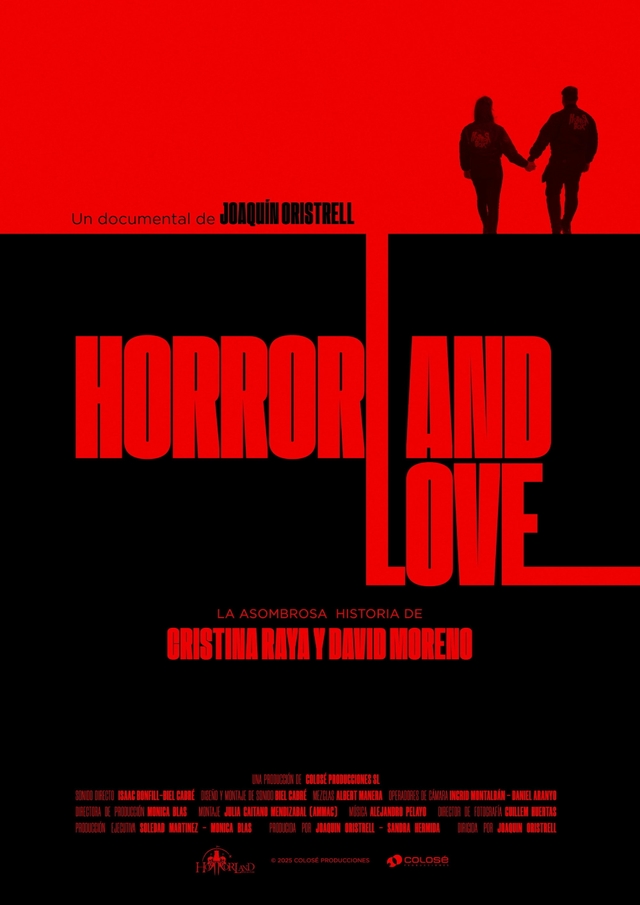
The theater reeked of stale popcorn and repressed despair as the lights dimmed and the screen flickered to life with Horror and Love, the latest cinematic abomination from Joaquín Oristrell, a director who appears to have confused horror with a daytime soap opera and love with an IKEA instruction manual. The screening kicked off with an interminable long take of Cristina Roya gliding down a hallway with the grace of a zombie in a shopping mall, while Arnau Bataller’s score desperately tried to convince us we were about to witness something more thrilling than an episode of Cuéntame cómo pasó. Spoiler: we weren’t. But oh, how they tried, those deluded fools.
The script, penned by Oristrell himself in what must have been a fit of creative masochism, introduces us to Cristina, a young woman who believes in love like it’s her religion, and David Moreno, a failed actor and musician dreaming of creating the tackiest horror theme park in Europe. Yes, you read that right: a theme park. Because apparently, in 2024 Spain, terror isn’t just about serial killers or vengeful ghosts—it’s also about entrepreneurs with ideas so brilliant they could only be conceived in a Badalona industrial park. The premise is so absurd that for the first twenty minutes, we wondered if we were watching a The Room parody directed by Tommy Wiseau on a bad day. But no, this was dead serious. Painfully serious.
The chemistry between Cristina Roya and David Moreno is the sole lifeline in this shipwreck of clichés and self-help manual dialogue. Roya, with her doe-eyed gaze and the smile of an influencer hawking organic products, radiates an innocence that borders on the pathological. Moreno, meanwhile, seems to have studied acting via the «smile a lot and hope the audience doesn’t notice you have no clue what you’re doing» method. Together, they form a couple as believable as a politician promising to lower taxes. Yet, against all odds, their relationship works. Or at least, it doesn’t make us want to puke. That’s an achievement in a film where terror is reduced to a couple of jump scares so predictable you could time them with a cuckoo clock.
Speaking of terror, where the hell is it? Because, aside from a few scenes where Guillem Huertas insists on reminding us he can play with shadows like the bastard lovechild of Roger Deakins and John Carpenter, the film seems more interested in dissecting the intricacies of a toxic relationship than in scaring us. Huertas, bless his soul, juggles a color palette that oscillates between the bilious green of hospital fluorescents and the bubblegum pink of an Ibiza afterparty, creating an atmosphere as uncomfortable as a wet wetsuit. But no matter how hard he tries, he can’t salvage a script that reads like it was scribbled on a bar napkin during a bender. The horror scenes, when they appear, hit with the subtlety of a sledgehammer to the temple: a shattering mirror, a door slamming shut on its own, a black cat meowing at just the right moment. If this is 21st-century horror, then the genre is deader than the slasher in the ‘90s.
The filming of Horror and Love was, according to whispers from the darkest corners of Reddit’s cinephile forums, a living hell. Oristrell, known for his temper tantrums worthy of a third-rate dictator, demanded his actors improvise entire dialogues in key scenes, which explains why some exchanges sound like they’re being recited by hungover robots. On top of that, the film’s budget was so tight that the horror theme park on screen looks like it was cobbled together from Big Brother set leftovers. The practical effects, when they exist, are so cheap they could’ve been lifted from a X-Files episode directed by a first-year vocational student. And the CGI? So bad it makes Sharknado’s effects look like Stanley Kubrick’s handiwork.
But not everything is desolation in this landscape of mediocrity. Arnau Bataller’s score is, without a doubt, one of the film’s saving graces. Bataller, a master at crafting oppressive atmospheres with just a few chords, makes even the most ridiculous scenes sound epic. There’s a moment where the music swells to such dramatic heights that you almost forget you’re watching a guy in a clown costume chasing a girl down an empty hallway. Almost. Julián Elvira’s editing is another highlight. Though the material he’s working with is as uneven as a dirt road, Elvira manages to give the film a rhythm that, while not saving it, at least keeps us from dozing off. That said, there’s a flashback at the 47-minute mark that lasts so long you could leave for coffee, return, and still be in the same spot.
The direction: Oristrell and his obsession with the saccharine
Joaquín Oristrell directs this film as if he’s shooting a ‘90s perfume commercial. Every shot seems designed to sell something: love, fear, hope, a horror theme park on the Costa Brava. His style is so overloaded it sometimes feels like we’re watching a Mecano music video directed by Brian De Palma in his kitsch phase. Oristrell has a sick obsession with close-ups that border on the pornographic. There’s a scene where Cristina Roya cries while eating an ice cream that’s so intimate you almost feel like you’re invading her privacy. But instead of being moving, it’s so uncomfortable you want to scream at the screen: «Stop crying and eat the damn ice cream already, for fuck’s sake!»
His handling of terror is, at best, bewildering. Instead of building tension, Oristrell opts for cheap thrills: a scare here, a scream there, a cat leaping out of nowhere. It’s like he’s confusing horror with an episode of Camera Café. And yet, there are moments where his direction shines. There’s a sequence where David Moreno walks through the abandoned theme park at night, lit only by neon greens and reds, that’s so visually striking you almost forget the script is garbage. Almost. Oristrell proves he knows how to play with mise-en-scène, but his lack of narrative control makes the film feel like a collage of brilliant ideas held together by a thread of mediocrity.
Oristrell’s biggest sin, however, is his inability to decide what kind of film he wants to make. Is Horror and Love a love story? A horror movie? A drama about millennial entrepreneurship? The answer is a resounding yes to all, and that’s the problem. The film lurches between saccharine melodrama and teen horror with the grace of an elephant in a china shop. There’s a scene where Cristina and David argue about their relationship while a killer clown lurks in the shadows that’s so ridiculous you wonder if you’re watching a crossover between Verano Azul and It. But this is 21st-century Spanish cinema, where coherence is a luxury few can afford.
The cast: between drama and farce
The cast of Horror and Love is, at best, uneven. Cristina Roya, playing Cristina (yes, her character shares her name, because the script couldn’t be bothered to get creative), is the film’s heart. Roya has a screen presence that oscillates between angelic and psychotic, and she conveys a vulnerability that makes us care about her, despite everything. There’s a scene where she cries while looking at a childhood photo that’s so over-the-top dramatic it could’ve been lifted from a Venezuelan telenovela. Yet, against all odds, it works. Or at least, it doesn’t make us want to stab the screen with a fork.
David Moreno, on the other hand, is the weak link in the duo. Moreno, who seems to have based his performance on Javier Bardem’s turn in Jamón, jamón but without the charisma or talent, spends the entire film with the same expression of «I just smelled something rotten.» His character, David, is a hipster with artist delusions dreaming of opening a horror theme park. Yes, we’ve said it before. But the premise is so absurd it bears repeating. Moreno tries to give his character depth, but the script doesn’t make it easy. There’s a scene where he delivers a monologue about love and fear while strumming a guitar that’s so pretentious it makes you want to scream: «Shut up and play something by Los Rodríguez, damn it!»
The rest of the cast is, for the most part, forgettable. There’s a supporting actor playing Cristina’s ex-boyfriend, a guy so generic he looks like he was plucked from a stock catalog of rom-com characters. His sole purpose in the plot is to pop up occasionally to remind us Cristina has a past, as if that’s some kind of revolutionary plot twist. Then there’s Cristina’s mother, played by an actress whose name we won’t remember because her character is as flat as an ironing board. Her performance consists of crying, spouting phrases like «love hurts», and serving tea. Bravo.
But the most surreal moment in the cast comes with the appearance of a killer clown, who, according to the script, is the film’s villain. The clown, played by an actor whose name doesn’t appear in the credits (probably out of shame), is about as terrifying as a Sesame Street puppet. His design is so cheap it looks like it was pulled from an ‘80s birthday party, and his performance is limited to robotic movements and lines like «fear is just love in disguise.» Seriously, if this clown is the future of Spanish horror, then the genre is deader than destape in the ‘90s.
Technical breakdown: lights, shadows, and a whole lot of kitsch
The technical aspects of Horror and Love are, like the rest of the film, a rollercoaster of hits and misses. Let’s start with the obvious: Guillem Huertas’ cinematography. Huertas, a director of photography with a career as uneven as a goat path, delivers one of his most interesting works here. His use of lighting is, at the very least, daring. Huertas plays with a color palette that swings between the sickly green of hospital fluorescents and the bubblegum pink of an Ibiza afterparty, creating an atmosphere that’s as uncomfortable as it is visually striking. There’s a scene where Cristina and David argue in a neon-lit bar that looks like it was plucked from a David Lynch fever dream. But no matter how hard Huertas tries, he can’t salvage the film’s most ridiculous moments. There’s a shot where the killer clown appears in a low-angle frame bathed in red light that’s so over the top it feels like an unintentional homage to The Room.
Arnau Bataller’s score is another of the film’s strong points. Bataller, a composer with a career as eclectic as a buffet menu, crafts a soundtrack that oscillates between the epic and the ridiculous. His music, which blends ‘80s synthesizers with angelic choirs, is so over-the-top it sometimes feels like we’re watching a Ridley Scott film directed by a Stranger Things fanboy. There’s a recurring theme, a kind of leitmotif for Cristina, that’s so catchy it almost makes you forget the plot is a dumpster fire. Almost. But the real problem with the score is that it never knows when to shut up. Bataller seems obsessed with reminding us we’re watching an «important» film, and his music often drowns out the dialogue or the moments of silence that could’ve given the film a breather.
Julián Elvira’s editing is, like the rest of the film, uneven. Elvira, an editor with experience in film and TV, manages to give the film a rhythm that, while not brilliant, at least keeps us from nodding off. That said, there are moments where his editing seems more interested in hiding the script’s holes than in telling a coherent story. There’s a flashback at the 47-minute mark that lasts so long you could leave for coffee, return, and still be in the same place. And let’s not even talk about the transitions between scenes, which sometimes look like they were lifted from a Windows Movie Maker tutorial. There’s a moment where a love scene cuts abruptly to a horror scene with a jump cut so jarring it feels like the projector jammed.
Mónica Bernuy’s production design is another of the film’s curious aspects. Bernuy, known for her work on films like Los lunes al sol, creates a world that oscillates between the realistic and the surreal. The horror theme park, the film’s main setting, is a place so tacky it looks like it was plucked from a Tim Burton dream directed by a low-budget crew. The sets are so cheap you could build them yourself with cardboard and spray paint, and the practical effects are so bad they make Sharknado’s effects look like Industrial Light & Magic’s handiwork. But, against all odds, the production design works. Or at least, it doesn’t make us laugh out loud. That’s an achievement.
The costumes, designed by Paola Torres, are another of the film’s kitsch highlights. Torres, who seems to have based her designs on 2018 Instagram fashion, dresses the characters in a mix of styles that oscillates between hipster and gothic. Cristina Roya spends the entire film in flowy dresses that look like they were plucked from a ‘90s Vogue photoshoot, while David Moreno dresses like he’s at a The Strokes concert in 2003. The killer clown, meanwhile, wears a suit so ridiculous it looks like a Halloween costume bought on AliExpress. But, again, the costumes work within the film’s context. Or at least, they don’t distract from the real spectacle: the disaster unfolding before our eyes.
The best
Guillem Huertas’ cinematography: A visually striking work that creates a unique atmosphere, even if it sometimes veers into kitsch* territory.- The chemistry between Cristina Roya and David Moreno: Despite everything, their relationship is the only thing that makes the film even remotely believable.
- Arnau Bataller’s score: A soundtrack that’s equal parts epic and ridiculous, almost saving the film’s most absurd scenes.
- Mónica Bernuy’s production design: A horror theme park so tacky it borders on genius.
- Joaquín Oristrell’s audacity: Because, let’s be honest, it takes balls to make a film like this and live to tell the tale.
The worst
The script: A dumpster fire of clichés, pretentious dialogue, and plot twists more predictable than an episode of Aquí no hay quien viva*.- The killer clown: A villain so ridiculous he looks like he was plucked from an internet meme.
- The lack of coherence: The film doesn’t know if it wants to be a love story, a horror movie, or a drama about millennial entrepreneurship.
- The editing: Sometimes more interested in hiding the script’s holes than in telling a coherent story.
- David Moreno: His performance is so flat it makes an IKEA bookshelf look like a method actor.
The Verdict of Claqueta Ácida
Horror and Love is a film that swings between the brilliant and the ridiculous with the grace of a drunk tightrope walker. Joaquín Oristrell delivers a visually striking spectacle, with cinematography that borders on genius and a score that could’ve worked in a Darren Aronofsky film. But alas, the script is so predictable and the dialogue so pretentious that it sometimes feels like a Twilight fan film directed by a first-year film student. The cast does what it can with the material, but even Cristina Roya, the film’s standout, can’t salvage a sinking ship. In the end, Horror and Love is like a horror theme park: it has its moments of fun, but as you walk out, you realize you’ve paid ten euros for something you could’ve found on YouTube. And that, dear readers, is the real horror. 💀
💬 El Veredicto de la Comunidad
¿Qué te ha parecido la película? Deja tu nota de 0 a 10 para contrastarla con el análisis de la redacción.
Aún no has votado
📢 ¿Te ha gustado el ácido?
Comparte esta crítica con tus amigos cinéfilos o desata la polémica en redes.
📩 📩 Get the poison in your inbox
Join our weekly mailing list. Honest film reviews, acid festival coverage, and cult recommendations every Sunday morning. Zero spam, pure celluloid.
🔒 We promise weekly poisonous reviews and exclusive coverage.Related Reviews
Recommended autopsies for demanding film buffs.
 ⚡ Ácido Cítrico7.0
Horror and Love: A Descent into the Heart of Cinematic Terror (and Cringe)
A scathing critique of *Horror and Love*, the film that blends terror and romance like a drunk chef mixing bleach and tequila—equally toxic, equally unforgettable.
 ⚠️ Ácido Sulfúrico0.0
**PUFA 2026: "Bad Haircut" Wins the Festival—and Its Barber Gives Us a One-Way Ticket to Nuremberg (The Definitive Palmares, or How to Learn to Love the Absurd)**
*"Bad Haircut" takes home Best Film at the third edition of the Valladolid International Fantastic and Horror Film Festival, while the jury and critics remain deeply divided over the film’s quality.*
 ⚡ Ácido Cítrico5.0
Quantum Rave: The Neon Feast Nobody Asked For (And We All Deserved)
Paco Campano serves us a cocktail of cheap psychedelia and rusted robotics in 'Quantum Rave.' Art or cosmic vomit? Claqueta Ácida decides with boxing gloves on.