*Insatiable — When Hunger Becomes a Feast of Ashes and Guilt*
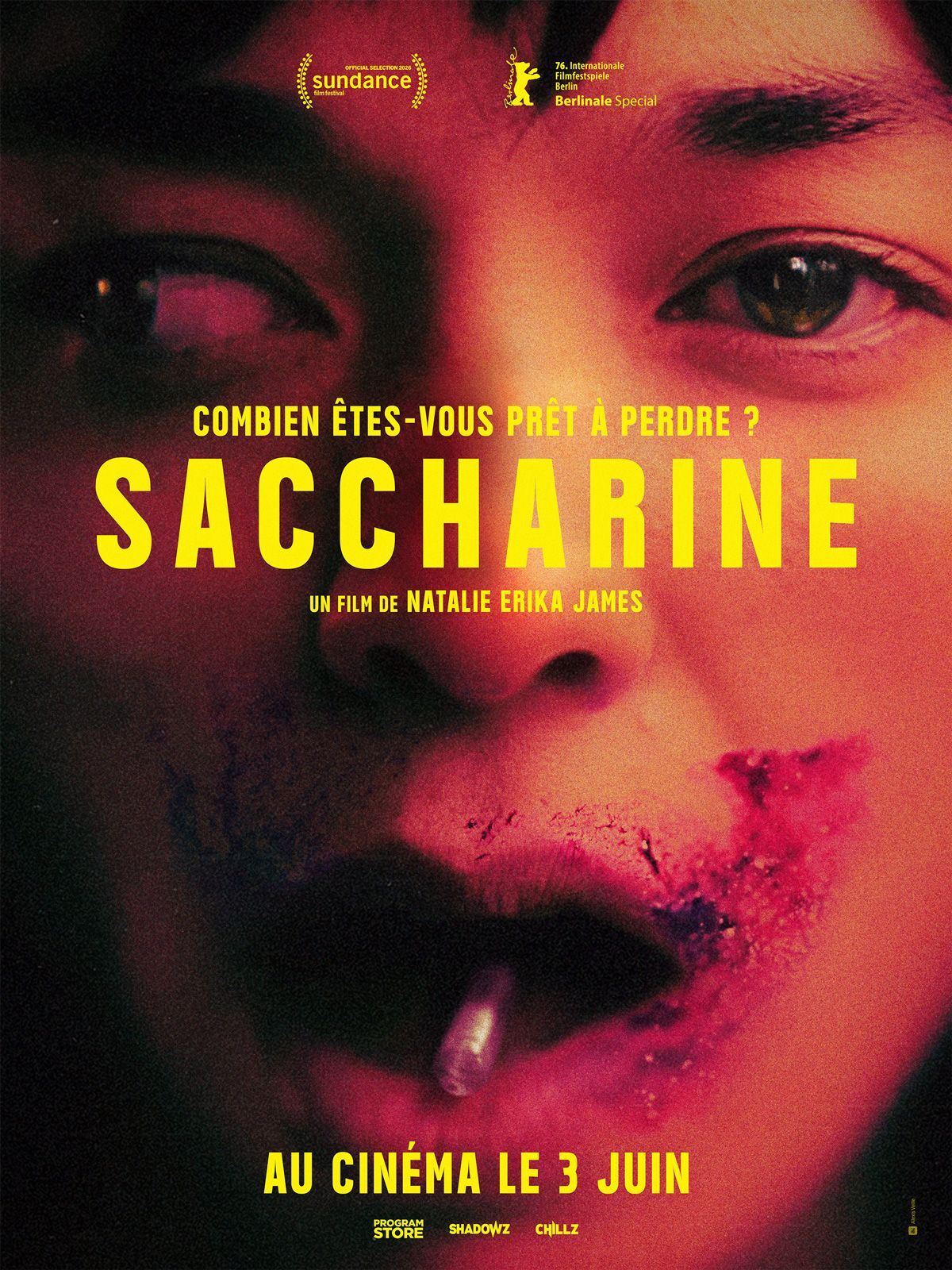
Natalie Erika James serves up a chilling dish: a gothic nightmare about dysmorphia and ravenous ghosts. Too pretentious or just macabre enough?

Chronicle from the PUFA: Gothic Paranoia and Flawless Queues (or How Horror Cinema Ate Valladolid Alive with Ashes and Self-Loathing)
The Pucela Fantástica isn’t just a festival—it’s a cult. One of those shadowy brotherhoods where acolytes—journalists, cinema geeks, and volunteers with Stepford Wives smiles—gather to worship the horror genre like it’s the last sacrament before the apocalypse. And boy, does it feel like it. Because on this Saturday, July 4th, while the rest of Spain drowned in sangria and plastic flags, in Valladolid, we were about to witness Natalie Erika James serve up a feast of rotting flesh, mirrored obsessions, and human ashes. Yes, ashes. Not a metaphor. Not a Twitter intellectual’s easter egg. It’s the tasting menu of Insatiable (Saccharine), the new nightmare from the Australian director who already left us breathless with Relic (2020), and who now returns to remind us that the body isn’t a temple—it’s a leaky prison.
The PUFA’s organization, by the way, deserves a monument. Or at least a shrine with black candles. Because in a world where film festivals seem designed by the same algorithm that runs airports—delays, endless queues, and volunteers eyeing the crowd like cattle—Valladolid shines like an oasis of efficiency. The lines at Cines Broadway weren’t just queues; they were processions of devotees. Screen 5, at 9:30 PM sharp, became a claustrophobic womb where 300 souls waited in reverential silence for the screen to birth something monstrous. And boy, did it deliver.
The Hunger That Can’t Be Sated: When Body Horror Gets Personal (and Disgusting)
Insatiable opens with a close-up of a fogged-up mirror. No coincidence. Natalie Erika James’ cinema is an obsession with reflections: the ones mirrors throw back at us, the ones we project onto others, and the ones that, in a Cronenbergian twist, end up devouring us. Hana (Midori Francis), a med student and failed self-destruction influencer, doesn’t just hate her body—she studies it, measures it, cuts it, and feeds it ashes like a low-budget science experiment. Her obsession isn’t vanity; it’s survival. Or something worse: the certainty that her flesh is a glitch in nature’s system, one that can only be fixed with blades, rituals, and, eventually, the help of a hungry ghost—that Asian folklore spirit doomed to wander with an eternally empty stomach and a mouth too small to ever be satisfied.
James doesn’t reinvent the wheel, but she paints it blood-red and spins it on a rusty nail. Body horror has spent decades exploring flesh as a landscape of fear—from The Fly (1986) to Titane (2021)—but few films have made the audience feel disgust and empathy in such equal measure. There are no spectacular mutations or cutting-edge CGI here. The horror of Insatiable is intimate, almost domestic: a scale that always shows the same number, a mirror that distorts your reflection, a plate of ashes that smells like burnt meat. It’s the terror of the everyday turned up to eleven, as if David Lynch had directed an episode of My 600-lb Life after OD’ing on Twin Peaks and a bad ayahuasca trip.
The film moves along two narrative tracks that, in theory, should complement each other: on one hand, an allegory about fatphobia and the social pressure to fit into an unattainable beauty standard; on the other, a classic ghost story, with a supernatural entity stalking its victim like a patient predator. The problem is that sometimes these tracks collide like trains in an abandoned station. Some scenes are so dense with symbolism that it feels like James is compensating for what the script can’t convey through action. Take the sequence where Hana eats ashes in a near-liturgical ritual—it’s powerful, but also confusing. Is she seeking redemption? Punishment? Or just a way to disappear, to turn to dust like the corpses she studies in med school? The script, written by James herself, doesn’t always clarify these doubts, and the result is a film that, at its worst, feels like a hungry ghost chasing its own tail in circles.
Direction: Natalie Erika James, or How to Film Disgust with Elegance
If contemporary horror cinema had a style manual, Natalie Erika James would be the author of the chapter titled "How to Make the Repulsive Look Like Art." Her direction in Insatiable is meticulous to the point of obsession, as if every shot were measured with a scalpel and a compass. James has a knack for framing that hurts: Hana staring at her reflection in a puddle of dirty water, the hungry ghost slithering through shadows like a whisper of smoke, or that scene where the protagonist cuts her own hair with kitchen scissors in a gesture that’s both liberating and self-destructive. These are images that lodge in your retina like splinters, proving that James understands something fundamental: horror doesn’t need jump scares to be effective. Sometimes, all it takes is a close-up of a sweaty face and eyes looking inward, as if searching for something lost long ago.
The director plays with spaces like an architect of fear. Hana’s apartment is a claustrophobic labyrinth, full of mirrors that multiply her image to infinity and dark corners where the hungry ghost could be hiding. The Finnish forests, meanwhile, are a perverted fairy-tale setting: trees that look like claws, lakes reflecting leaden skies, and light filtering through the branches as if the sun were sick. The cinematography by Charlie Sarroff is key here. Sarroff, who also worked with James on Relic, uses a color palette that oscillates between the clinical and the oneiric: pale blues for hospital scenes, bloody reds for moments of high tension, and a sickly golden light that seems to seep through a gauze veil. The result is an aesthetic reminiscent of Francis Bacon’s paintings, where flesh and blood mix with light in an almost obscene way.
But it’s not all perfection. There are moments when the film loses itself in its own labyrinth of symbolism, and the narrative becomes confusing, as if James had tried to cram too many ideas into a script that can’t always support them. For example, the relationship between Hana and her mother (Emily Milledge) is intriguing but so underdeveloped that it feels like an unnecessary appendix. The same goes for Bridget (Danielle Macdonald), who appears like some kind of sinister fairy godmother but whose role in the plot is so ambiguous that she ends up as little more than an emotional macguffin. Still, these stumbles don’t overshadow the overall achievement: Insatiable is a brave film that isn’t afraid to venture into uncomfortable territory, and despite its flaws, it leaves an indelible mark.
Performances: When Hunger Becomes Art (and Art Becomes Hunger)
The cast of Insatiable rises to the occasion, with Midori Francis as the undisputed lead. Her portrayal of Hana is heart-wrenching—a mix of vulnerability and determination that recalls the best performances of Mia Wasikowska in Stoker or Florence Pugh in Midsommar. Francis conveys her character’s torment with a naturalness that’s unsettling, as if she’s living every scene in real time. There’s no histrionics, no overacting—just a woman on the edge of the abyss, looking down and wondering whether to jump. Her chemistry with Danielle Macdonald (Bridget) is one of the film’s strengths, though the script doesn’t always capitalize on it. Macdonald, who already proved her talent in Patti Cake$ (2017), brings an interesting counterpoint as Hana’s mysterious friend, though her character is so ambiguous that she sometimes feels like just another ghost in the protagonist’s life.
The real star, however, is the hungry ghost, a creature James chooses not to fully reveal until the film’s climax. This is a risky move, but it works: by keeping the ghost in the shadows, the director ensures the audience projects their own fears onto it, turning it into a mirror of Hana’s insecurities. It’s a classic psychological horror device, but here it’s executed so well that it feels fresh. The ghost’s design, when finally revealed, is a mix of the grotesque and the poetic, as if H.R. Giger had collaborated with a Japanese poet. It’s not your typical monster: it’s a creature made of shadows and rotting flesh, with a mouth like a black hole and eyes that reflect Hana’s inner void. In short, it’s the perfect alter ego for a protagonist who hates her body as much as she needs it.
Technical Aspects: When Horror Dresses to the Nines (and Smells Rotten)
The technical work in Insatiable is flawless, starting with Charlie Sarroff’s cinematography, which creates an oppressive atmosphere without falling into the cliché of dark, grainy horror. Sarroff plays with cool and warm tones, using pale blues for hospital scenes and bloody reds for moments of high tension. The result is a color palette that seems lifted from a Francis Bacon painting, where flesh and blood mix with light in an almost dreamlike way. The production design by Alex Holmes is another highlight. The sets, from Hana’s claustrophobic apartment to the Finnish forests, are packed with details that reinforce the sense of isolation and despair. Even the most mundane objects—a scale, a mirror—become elements of terror, as if imbued with a curse.
The score by Hannah Peel is another undeniable success. Peel, known for her work on The Fall (2014) and Marjorie Prime (2017), composes a minimalist yet deeply unsettling soundtrack. There are no musical jump scares here—just a constant tension, like the hum of a refrigerator in an empty house. The editing by Andy Canny is brisk without being frantic, maintaining the film’s pace even in its slower moments. Canny knows when to cut and when to let a scene breathe, something not all horror editors understand.
The script, as mentioned earlier, is the film’s Achilles’ heel. Though it’s packed with interesting ideas, it sometimes feels like James tried to do too much, resulting in a narrative that feels a bit disjointed. There are subplots that don’t quite land, like the relationship between Hana and her mother, or the hungry ghost’s backstory, which could’ve been explored in more depth. Still, the script has its brilliant moments, like Hana’s monologue comparing her body to a map of scars, or the scene where the ghost whispers in her ear: "You’ll never be enough." These are lines that stick in the viewer’s mind like knives, proving that despite its flaws, Insatiable is a film with something to say.
### The best
Midori Francis, or How to Turn Self-Loathing into Art: Her performance as Hana is so raw it hurts. This isn’t acting—it’s an emotional autopsy in real time. If the Oscars had a category for "Best Actress in a Role That’ll Make You Hate Your Own Body,"* Francis would win in a landslide.
- Natalie Erika James’ Direction: Horror with Class (and a Dash of Sadism): James proves you can film the grotesque without being grotesque. Every shot is a macabre work of art, as if David Lynch and David Cronenberg had an Australian daughter with a master’s in horror cinema.
Charlie Sarroff’s Cinematography: When Body Horror* Becomes Poetry: A color palette straight out of a Francis Bacon painting, but with more guts. Clinical blues, bloody reds, and a light that reeks of decay. Stunning.
The Hungry Ghost’s Design: A Monster That’s Both Grotesque and Beautiful: Not your run-of-the-mill jump scare* with cheap CGI. It’s a creature straight out of an H.R. Giger nightmare, but with a touch of Japanese poetry. When it finally reveals itself, it doesn’t disappoint.
- Hannah Peel’s Score: The Sound of the Void: A minimalist, magnetic, and deeply unsettling soundtrack. No typical horror music here—just a constant tension that raises the hairs on your neck. Like the hum of a fridge in an abandoned house.
### The worst
A Script That Chases Its Own Tail (Like Its Hungry Ghost): Too many ideas in a script that can’t always support them. Abandoned subplots, confusing symbolism, and a message that sometimes seems more interested in body horror* than social critique.
Supporting Characters Who Feel Like Ghosts (and Not in a Good Way): Hana’s mother and Bridget are so underdeveloped they feel like emotional macguffins*. Do we really need more characters when the real conflict is in the protagonist’s head?
- Uneven Pacing: Moments of Genius Followed by Dragging Sequences: Some scenes feel like they’re from a high-end psychological thriller, while others seem like filler from an ‘80s B-movie. Not everything works, and it shows.
The Ambiguous Message: Social Critique or Just Body Horror*? The film tries to be an allegory about fatphobia, but sometimes it seems more interested in the grotesque than the discourse. Did James want to make a horror film or a feminist manifesto? In the end, it’s stuck in no-man’s-land.
- An Ending That Leaves You Hungry (and Tasting Ashes): The climax is impactful but also a bit confusing. It’s as if James wanted to wrap up the film too soon, leaving loose ends and unanswered questions. Not a bad ending, but a rushed one.
### The Verdict of Claqueta Ácida (8/10)
Insatiable isn’t a perfect film, but then again, what film is? It’s a feast of rotting flesh, mirrored obsessions, and human ashes that’ll leave you with a bitter aftertaste and an uncomfortable question: How much do you hate your own body? Natalie Erika James has crafted a gothic nightmare that blends body horror with psychological terror, and while it doesn’t always balance its narrative layers, the result is a brave, disturbing, and visually stunning film. It’s not for the squeamish (literally), but if you dare to look in the mirror after watching it, you might not like what you see.
And, by the way, a round of applause for the PUFA. Because in a world where film festivals seem designed by the same committee that runs Seville Fair after-parties, Valladolid shines like a beacon of organization, passion, and good taste. The flawless queues, the smiling volunteers, and the packed theaters full of devoted audiences prove that sometimes, the real horror isn’t on screen—it’s the fear that no other festival will ever live up to this one.
🎬 Tráiler Oficial
💬 El Veredicto de la Comunidad
¿Qué te ha parecido la película? Deja tu nota de 0 a 10 para contrastarla con el análisis de la redacción.
Aún no has votado
📢 ¿Te ha gustado el ácido?
Comparte esta crítica con tus amigos cinéfilos o desata la polémica en redes.
📩 📩 Get the poison in your inbox
Join our weekly mailing list. Honest film reviews, acid festival coverage, and cult recommendations every Sunday morning. Zero spam, pure celluloid.
🔒 We promise weekly poisonous reviews and exclusive coverage.Related Reviews
Recommended autopsies for demanding film buffs.
 🔥 Fusión Nuclear8.0
*Insatiable: When Hunger Becomes a Feast of Ashes and Guilt*
Natalie Erika James serves up a chilling dish: a gothic nightmare about dysmorphia and ravenous ghosts. Too pretentious or just macabre enough?
 ⚠️ Ácido Sulfúrico0.0
**PUFA 2026: "Bad Haircut" Wins the Festival—and Its Barber Gives Us a One-Way Ticket to Nuremberg (The Definitive Palmares, or How to Learn to Love the Absurd)**
*"Bad Haircut" takes home Best Film at the third edition of the Valladolid International Fantastic and Horror Film Festival, while the jury and critics remain deeply divided over the film’s quality.*
 ⚡ Ácido Cítrico5.0
Quantum Rave: The Neon Feast Nobody Asked For (And We All Deserved)
Paco Campano serves us a cocktail of cheap psychedelia and rusted robotics in 'Quantum Rave.' Art or cosmic vomit? Claqueta Ácida decides with boxing gloves on.