Went Up the Hill — The Thriller That Climbed the Slope Just to Tumble Down Like a Barrel of Clichés
An Australian mystery with more holes than a Swiss cheese and less tension than a telenovela episode. Claqueta Ácida dissects this suspense fiasco with a scalpel and a side of sarcasm.

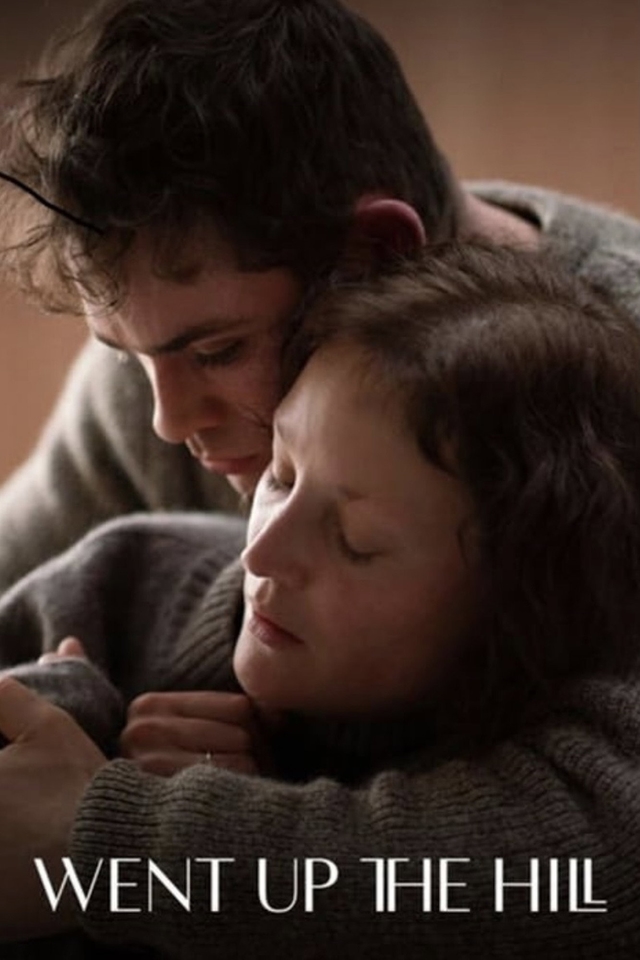
Australian mystery cinema boasts a tradition as glorious as it is uneven: from the desolate landscapes of Peter Weir in Picnic at Hanging Rock to the claustrophobic suburbs of The Babadook, the land of kangaroos has mastered the art of turning geography into a character. But Samuel Van Grinsven, a director whose résumé until now consisted of short films and a handful of TV episodes, seems to have mistaken “atmosphere” for “chronic boredom” in Went Up the Hill. Produced by POP Film and Causeway Films—two production companies that, apparently, don’t believe in scripts with more than three plot twists—this 2025 release serves as a reminder that indie cinema isn’t dead, though sometimes it damn well should be. Don’t expect the narrative pulse of The Invisible Man (2020) or the psychological depth of The Nightingale (2018) here. At best, this is an extended episode of Midsomer Murders shot on a student budget with the ambition of a Tasmanian survival reality show.
The premise is as old as cinema itself: a group of friends reunites at a rural house for a weekend of reconciliation, only to discover one of them has vanished. The titular hill, a rocky promontory looming over the landscape, becomes the epicenter of a search that, in theory, should set the audience’s nerves on edge. But this is where Van Grinsven commits his first catastrophic blunder: he confuses “mystery” with “letting the characters talk in circles for 45 minutes without moving the plot an inch.” There’s not a trace of David Fincher’s narrative economy or Karyn Kusama’s ability to turn a confined space into an emotional powder keg. Instead, we get a script that reads like it was scribbled on a bar napkin, with dialogue oscillating between forced poetry ("The silence here is heavier than lead") and irritatingly expository ("Remember when you slept with my sister in 2012?"). If this is the best Australian cinema can offer in 2025, the country should seriously reconsider its cultural export strategy.
The cast, led by Dacre Montgomery—an actor seemingly cast for his ability to furrow his brow as if solving a Rubik’s Cube blindfolded—does what it can with material that offers little. Montgomery, known for his role in Stranger Things, plays a traumatized ex-military man, a cliché so worn it should come with a "do not use in serious films" warning. Beside him, Vicky Krieps—the only one who seems to have received the memo that this is a movie, not a community theater exercise—tries to inject some life into her character, a journalist obsessed with an unsolved case. But even she hits a wall of mediocrity when the script forces her to spout lines like, "Sometimes, the truth is like a wounded animal: if you get too close, it bites." The rest of the ensemble, including Sarah Peirse and Arlo Green, act as if they’re auditioning for an insurance commercial, with chemistry so forced it could’ve been lifted from a How to Fake Liking Each Other on Camera manual.
But what truly sinks Went Up the Hill is its inability to generate tension. In a pivotal scene, the characters decide to split up to search for the missing friend in the woods—a trope so hackneyed even M. Night Shyamalan would’ve dismissed it as too obvious. The cinematography by Tyson Perkins, which in theory should’ve exploited the Australian landscapes to create an oppressive atmosphere, settles for framing trees and rocks like tourist postcards. There’s no trace of Adam Arkapaw’s work in True Detective or the visual rawness of The Rover (2014). Instead, we get a festival of wide shots that look like they were lifted from a local flora documentary, with a color palette so muted one suspects the DP mistook “somber tone” for “2012 Instagram filter.” The editing, meanwhile, is so predictable you can anticipate the cuts like a YouTube tutorial on How to Edit a Thriller in 10 Easy Steps.
The direction: A style exercise without substance
Samuel Van Grinsven seems to have studied the How to Make a Thriller manual in its most basic form but skipped the chapter on “How to Keep the Audience Engaged.” His direction is as flat as an Australian summer landscape, devoid of narrative pulse or the ability to build suspense. Every scene is filmed with the same intensity, whether it’s a moment of extreme tension or a banal conversation about the weather, as if the director decided monotony was an art form. There’s no trace of Denis Villeneuve’s meticulousness or Ari Aster’s knack for turning the mundane into something unsettling. Instead, we get a style exercise that never dares to dig deeper.
The script, also penned by Van Grinsven, is another major problem. The dialogue is so forced it reads like it was plucked from a beginner’s creative writing workshop, with lines that try to sound profound but land in the ridiculous. The characters, meanwhile, are archetypes without nuance: the traumatized ex-soldier, the obsessive journalist, the cowardly friend, the mysterious woman. There’s no trace of the complexity in Prisoners (2013) or the moral ambiguity of Gone Girl (2014). Instead, we get a script written by someone who’s watched too many mystery films but understood none of them.
The performances: A cast lost in the woods
If anything partially saves Went Up the Hill, it’s the performances—though even here, the material doesn’t offer much. Dacre Montgomery does his best with his role, but his performance is so one-dimensional one suspects the script didn’t give him any other options. Vicky Krieps, on the other hand, is the only one who manages to convey some humanity, though even she crashes into a wall of mediocrity when the script forces her to deliver lines straight out of a self-help manual. The rest of the cast, including Sarah Peirse and Arlo Green, act as if they’re in a completely different movie, with chemistry so forced it could’ve been lifted from a yogurt commercial casting call.
The technical aspects: A missed opportunity
The technical side of Went Up the Hill is, at best, functional. The cinematography by Tyson Perkins fails to leverage the Australian landscapes to create an oppressive atmosphere, settling for framing trees and rocks like tourist postcards. The editing is so predictable you can anticipate the cuts like a YouTube tutorial. The score, composed by Jed Palmer, is another weak point: instead of enhancing tension, it sounds like elevator music in a shopping mall, with generic melodies that add nothing to the mix. The sound design is so poor you can hear the wind in the microphones as if you’re watching a 1990s BBC documentary.
The best
- Vicky Krieps: The only one acting in an actual movie, with a magnetic presence that makes every scene she’s in at least bearable.
- The initial premise: The concept of a group of friends reuniting at a rural house only to discover one of them missing has potential—though the execution ruins it completely.
- Some wide shots: While the cinematography fails to create an oppressive atmosphere, a few shots of the Australian landscapes are at least nice to look at.
The worst
- The script: A festival of clichés, forced dialogue, and predictable twists that makes the film as exciting as watching paint dry.
- The direction: Samuel Van Grinsven seems to have confused “mystery” with “letting characters talk in circles for 45 minutes without advancing the plot.”
- The lack of tension: Despite the premise, the film is so boring one wonders if the director fell asleep on set.
- The performances: With the exception of Vicky Krieps, the rest of the cast acts as if they’re in a completely different movie, with chemistry so forced it could’ve been lifted from an insurance commercial casting call.
- The score: Elevator music in a shopping mall that adds nothing and often detracts from the tension.
- The editing: So predictable you can anticipate the cuts like a YouTube tutorial.
The Verdict of Claqueta Ácida
Went Up the Hill is the kind of film that makes you question not just the state of contemporary mystery cinema, but the life choices that led you to sit in that theater seat. With a script written by a Netflix algorithm in “deep sleep mode,” performances ranging from mediocre to outright painful, and direction that confuses “atmosphere” with “chronic boredom,” this movie is a reminder that indie cinema isn’t dead—but sometimes, it damn well should be. If you’re looking for a thriller that keeps you on the edge of your seat, stay home and watch an episode of True Detective. At least there, the mystery eventually gets solved. In Went Up the Hill, the only mystery is how anyone thought this deserved funding. 💀
🎬 Tráiler Oficial
💬 El Veredicto de la Comunidad
¿Qué te ha parecido la película? Deja tu nota de 0 a 10 para contrastarla con el análisis de la redacción.
Aún no has votado
📢 ¿Te ha gustado el ácido?
Comparte esta crítica con tus amigos cinéfilos o desata la polémica en redes.
📩 📩 Get the poison in your inbox
Join our weekly mailing list. Honest film reviews, acid festival coverage, and cult recommendations every Sunday morning. Zero spam, pure celluloid.
🔒 We promise weekly poisonous reviews and exclusive coverage.Related Reviews
Recommended autopsies for demanding film buffs.
 ⚡ Ácido Cítrico5.0
Went Up the Hill: The Thriller That Climbed the Slope Just to Tumble Down Like a Barrel of Clichés
An Australian mystery with more holes than a Swiss cheese and less tension than a telenovela episode. Claqueta Ácida dissects this suspense fiasco with a scalpel and a side of sarcasm.
 ⚠️ Ácido Sulfúrico0.0
**PUFA 2026: "Bad Haircut" Wins the Festival—and Its Barber Gives Us a One-Way Ticket to Nuremberg (The Definitive Palmares, or How to Learn to Love the Absurd)**
*"Bad Haircut" takes home Best Film at the third edition of the Valladolid International Fantastic and Horror Film Festival, while the jury and critics remain deeply divided over the film’s quality.*
 ⚡ Ácido Cítrico5.0
Quantum Rave: The Neon Feast Nobody Asked For (And We All Deserved)
Paco Campano serves us a cocktail of cheap psychedelia and rusted robotics in 'Quantum Rave.' Art or cosmic vomit? Claqueta Ácida decides with boxing gloves on.