The Boarding School — A Dormitory of Dread
The Boarding School (1969), a film that revives terror within the walls of a girls' boarding school—where repression and sadism dance a waltz in crinoline

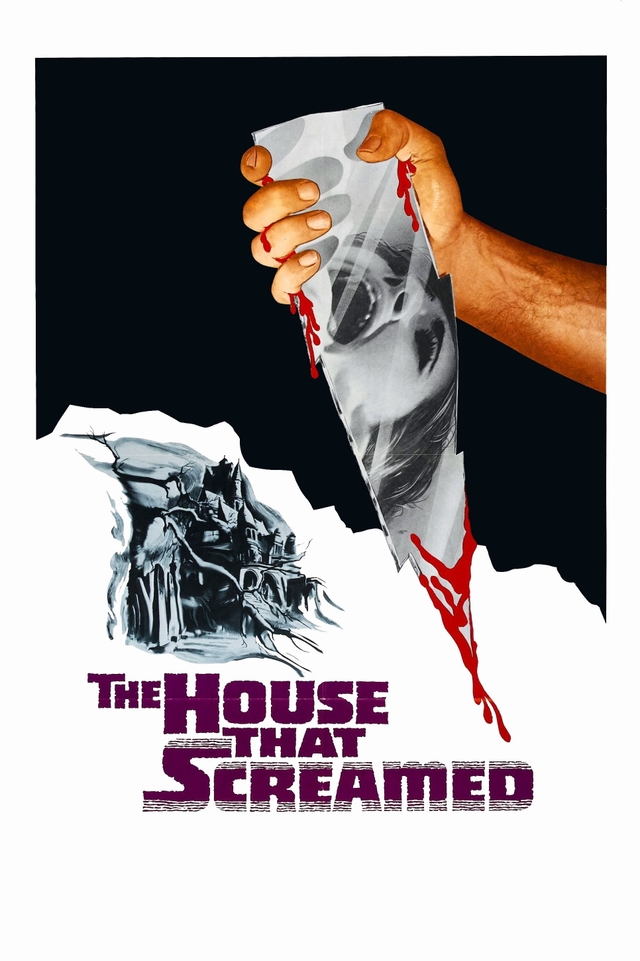
Celluloid groans under the strain of a rusted projector, spitting out yellowed frames that reek of mothballs and unconfessed sins. The Boarding School, that Gothic Spanish abomination birthed by the twisted mind of Chicho Ibáñez Serrador in 1969, isn’t just a film—it’s an exorcism committed to 35mm, a séance where the camera acts as a medium between the viewer and the demons haunting a girls' boarding school that stinks of melted wax, adolescent sweat, and moral rot. Here at Claqueta Ácida, we refuse to treat this classic like some untouchable fossil. Quite the opposite: we exhume it, strip it bare, and subject it to the scalpel of our cinephile scrutiny, because The Boarding School isn’t merely a horror film—it’s a manual on how to turn claustrophobia into art, repression into visual poetry, and sadism into mass entertainment. All without a single drop of explicit blood, because Chicho, that master of suggestion, knew that true terror doesn’t lie in what you see, but in what you sense lurking behind starched curtains and the furtive glances of students who seem plucked from a Zdzisław Beksiński painting—if he’d ever dressed his nightmares in Catholic schoolgirl uniforms.
The industrial context of The Boarding School is as fascinating as its plot. It was 1969, Spain was still suffocating under Franco’s boot, and domestic horror cinema was a wasteland where only Paul Naschy’s films sprouted, alongside the occasional Jesús Franco experiment that reeked more of bargain-bin psychoanalysis than genuine dread. Into this desert stepped Chicho Ibáñez Serrador, a Uruguayan transplant in Spain who had already revolutionized television with his program Historias para no dormir, and decided to make the leap to cinema with an ambitious production—shot in English to conquer international markets, featuring a cast of European stars including the legendary Lilli Palmer, an actress who carried drama in her gaze like a luxury perfume. The film was shot at Madrid’s Samuel Bronston Studios, the same soundstages that birthed biblical epics like King of Kings, but here the budget was poured into creating an oppressive microcosm: a boarding school that was both set and character, with labyrinthine hallways, staircases that seemed to ascend to hell, and rooms where time stood still like an Edward Hopper painting—if Hopper had ever dabbled in repressed hysteria. The Boarding School wasn’t an instant hit, but over the years it has become a cult object, one of those films cinephiles mention with reverence while wondering why the hell no one makes psychological horrors with this kind of elegance and refined malice anymore.
The screenplay, penned by Chicho himself alongside Juan Tébar, is a masterclass in suspense construction. Not a single frame is wasted, not a line of dialogue fails to tighten the noose to the snapping point. The plot follows Teresa (Cristina Galbó), a young woman who arrives at Mrs. Fourneau’s (Lilli Palmer) boarding school for young ladies—a place where rules are as rigid as the students’ corsets, and discipline is enforced with the same cruelty as a garrote. But Teresa soon discovers the school harbors a secret: students vanish without explanation, and Mrs. Fourneau’s son, Luis (John Moulder-Brown), a sickly and overprotected young man, seems closer to the truth than anyone suspects. The brilliance of the script lies in how Chicho doles out information, letting the viewer uncover the school’s horrors at the same pace as Teresa, as if we’re both trapped in the same labyrinth of shadows and whispers. And what’s most terrifying isn’t the crimes committed, but the normality with which they’re accepted: in The Boarding School, evil isn’t some fanged monster—it’s an institution that devours its charges with the same indifference as a crocodile snapping up a fawn in the Nile.
The influence of The Boarding School on subsequent horror cinema is undeniable. Films like Dario Argento’s Suspiria or Oz Perkins’ The Blackcoat’s Daughter owe much to that cursed boarding school atmosphere where young women are both victims and executioners. But what sets The Boarding School apart from its imitators is its lack of cynicism: Chicho doesn’t judge his characters, doesn’t turn them into caricatures or subject them to cheap moralizing. Instead, he observes them with clinical detachment, like a scientist dissecting an insect under a microscope, leaving us, the audience, as accomplices to his voyeurism. Because let’s be honest—who hasn’t felt the urge to peek through the keyhole of a boarding school where students whisper secrets while undressing for bed? The Boarding School is, at its core, a film about the pleasure of looking, about the morbid thrill of watching others suffer from the comfort of our seats, and Chicho knows it. That’s why the film works like clockwork: it’s designed so we can’t look away, even if what we see turns our stomachs.
Direction: The Art of Strangling with Silk Gloves
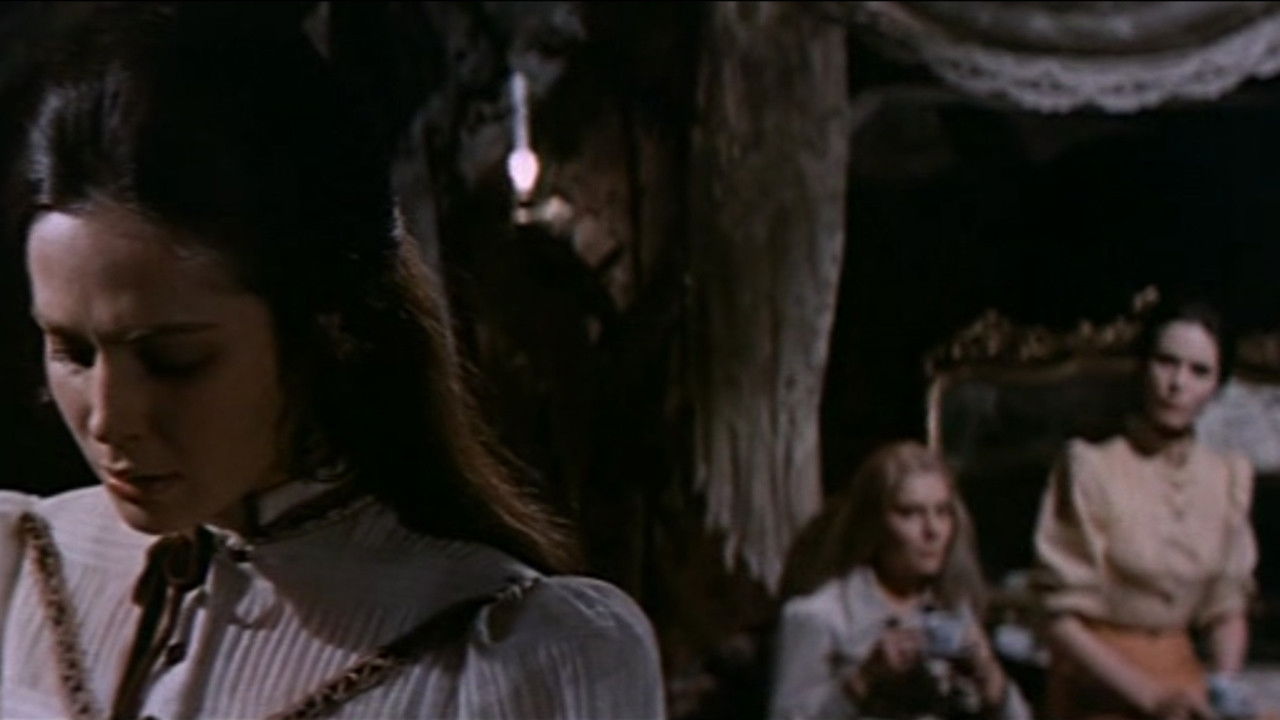
If horror cinema were a musical instrument, Chicho Ibáñez Serrador would be a violin virtuoso, capable of plucking shrill notes from our nerves with the slightest brush of the bow. His direction in The Boarding School is a masterclass in building tension without resorting to the genre’s cheap tricks. There are no tacky jump scares, no rubber monsters, no special effects that age worse than fondue cheese. Instead, Chicho opts for suggested terror, for fear born from what isn’t seen but sensed—like when Teresa wanders the school’s hallways and the camera lingers on a half-open door, or when Luis stares directly into the lens with that smile of a boy who knows too much. Every frame is meticulously calculated, every camera movement a backstab: take, for instance, the long take where Teresa follows a student up the school’s staircase—a tracking shot that seems lifted from Hitchcock but with a dash of Buñuel’s subtle cruelty. Or the scene where the students undress for bed, a moment that could’ve been erotic but Chicho twists into something unnervingly clinical, as if we’re witnessing a forced purification ritual.
But where Chicho truly proves his genius is in his use of sound. Waldo de los Ríos’ score, with its distorted Gregorian choirs and violins that seem to scrape the walls of your skull, is one of the most effective in Spanish horror. Yet beyond the music, Chicho wields silence like a lethal weapon: watch the scene where Teresa discovers a student’s corpse in the basement. No music, no screams—just the sound of her ragged breathing and the creak of wood underfoot. It’s in these moments that The Boarding School becomes a physical film, something you feel in your skin, your gut, as if fear were a viscous substance clinging to the frames, staining your hands. Then there’s the editing, that unhurried yet relentless rhythm Chicho imposes, where every cut feels like a lash drawing you closer to the abyss. No rush, no concessions: The Boarding School is a film that takes its time torturing us, like an executioner who knows the best way to break a victim isn’t with blows, but with anticipation.
Actors: A Cast That Bleeds (But with Class)
The cast of The Boarding School is like a cannibal’s feast where each actor brings their own flavor to the human flesh. At the center of the table, Lilli Palmer as Mrs. Fourneau, the school’s headmistress—a woman who wears cruelty like others wear pearl necklaces. Palmer, an actress who’d worked with Alfred Hitchcock and Orson Welles, doesn’t need to shout or flail to convey her character’s evil: a cold glance, a restrained gesture, a smile carved from marble suffice. She’s an aristocratic villain, the kind that makes you wonder if a British governess wouldn’t be more terrifying than a hockey-masked slasher. Beside her, John Moulder-Brown as Luis, the sickly and overprotected son, is a mix of victim and executioner, a character who oscillates between fragility and perversion with chilling naturalness. Moulder-Brown, who’d worked with Roman Polanski in Cul-de-Sac, has that quality of 60s British actors: they seem plucked from a Pre-Raphaelite painting, but with a hint of madness that makes them unpredictable.
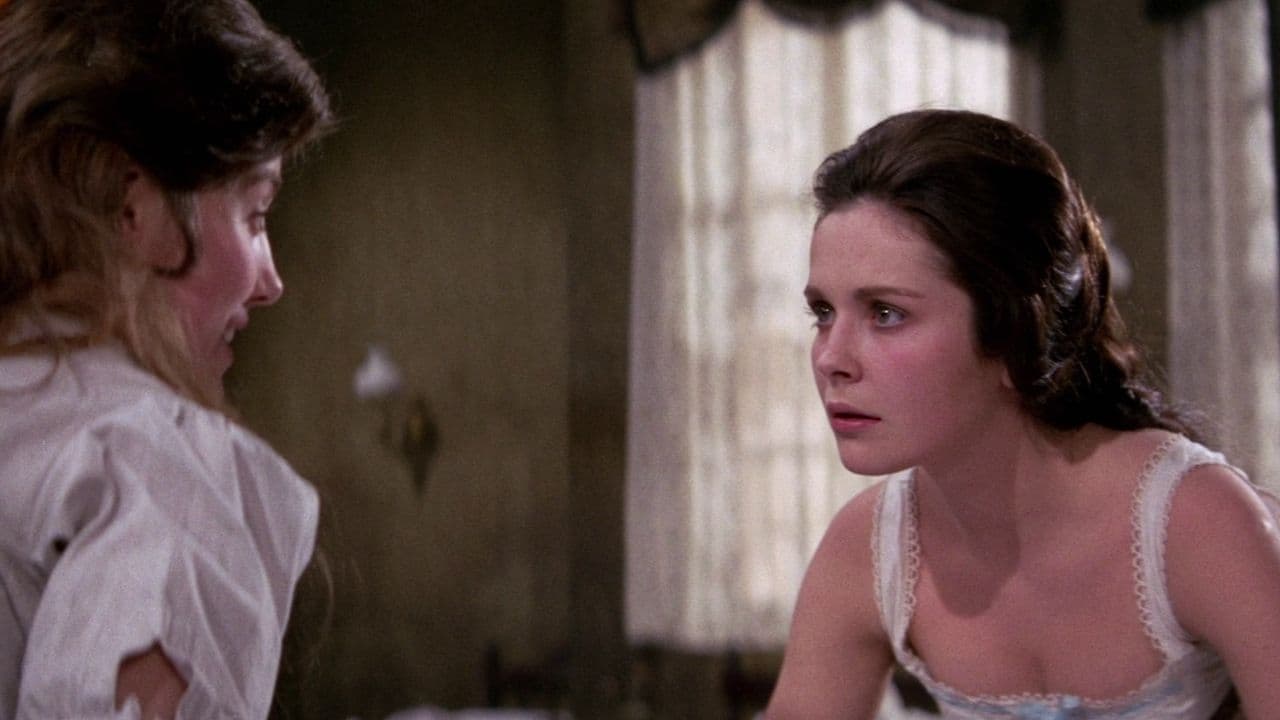
But if one performance steals the show, it’s Cristina Galbó as Teresa. At just 18, Galbó conveys a blend of innocence and determination that makes the audience root for her from the first frame. She’s no classic heroine, no final girl who screams and runs—she’s a young woman who observes, analyzes, and acts, as if solving a macabre puzzle. Her chemistry with Mary Maude, who plays Irene, one of the school’s most rebellious students, is one of the film’s highlights. Their scenes together crackle with unresolved sexual tension, adding an extra layer of complexity: are they friends, rivals, something more? Chicho leaves it ambiguous, and that’s what’s so fascinating. Because in The Boarding School, relationships are as murky as the shadows around them, and that’s what makes them so terrifying.
Technical Aspects: Terror as Craftsmanship
If The Boarding School were a piece of furniture, it’d be a hand-carved Victorian armoire, with secret drawers and hidden compartments where the worst secrets are stashed. The film’s technical aspects are a macabre craftsmanship, where every element is designed to plunge the viewer into a nightmare. Let’s start with Manuel Berenguer’s cinematography, a master of light and shadow who turns the school into a character in its own right. Berenguer, who’d worked with Luis Buñuel on Viridiana, knows how to play with lighting to create oppressive atmospheres: watch the night scenes, where candlelight casts elongated shadows on the walls, as if the characters are trapped in a Rembrandt painting—if Rembrandt had dabbled in hysteria. Or the basement shots, where the darkness is so thick it seems the walls are sweating fear. Berenguer doesn’t need digital effects or Instagram filters to create terror—just masterful chiaroscuro and a color palette that runs from gray to black, with a splash of blood-red lipstick on the students.
The production design, by Wolfgang Burmann, is another standout. The school is a labyrinth of narrow hallways, endless staircases, and rooms that reek of confinement and despair. Burmann, who’d later work on films like The Spirit of the Beehive, knows how to create spaces that feel both real and dreamlike, as if the school were an extension of its inhabitants’ sick minds. Notice the details: the students’ immaculate uniforms, the dark wood furniture, the mirrors reflecting distorted faces... Everything is designed to create a sense of visual claustrophobia, as if the viewer is trapped in that cursed place alongside the characters. Then there’s the costume design, by Yvonne Blake, who’d later win an Oscar for Nicholas and Alexandra. Blake dresses the students in uniforms that are both innocent and disturbing, as if beneath the starched fabric lurk bodies willing to do anything to escape their prison.
Waldo de los Ríos’ score deserves its own chapter. De los Ríos, an Argentine composer who’d worked with Alfred Hitchcock on the Spanish dub of Psycho, crafts a soundtrack that blends sacred music and cosmic horror. The Gregorian choirs, distorted and repetitive, sound as if sung by lost souls, while the violins scrape at your eardrums like fingernails on a chalkboard. But the most terrifying thing about The Boarding School’s music is its lack of melody: no recognizable themes, no leitmotifs to warn of danger—just a sonic atmosphere that envelops you like a thick fog, making it hard to breathe. And then there’s the ambient sound, that silence broken by the creak of floorboards, the whisper of skirts brushing the floor, the distant slam of a door... Chicho and his team knew terror isn’t just in what you see, but in what you hear, and that’s why The Boarding School is a film you listen to as much as watch.
The best
- The direction: A masterpiece of macabre goldsmithing where every frame is a backstab and every camera movement, a lash to the nape. Chicho Ibáñez Serrador proves terror doesn’t need special effects—just a twisted mind and a steady hand.
- The cinematography: Manuel Berenguer turns the school into a hellscape of shadows and tenebrous light, where every shot seems lifted from a Caravaggio painting—if Caravaggio had been a sadist.
- The cast: Lilli Palmer as Mrs. Fourneau is a textbook villain, a headmistress with a shark’s smile and an icy glare. And Cristina Galbó shines as Teresa, a protagonist who doesn’t scream or run—she just observes and acts with chilling detachment.
- The score: Waldo de los Ríos creates a sonic atmosphere that envelops you like toxic fog, with distorted Gregorian choirs and violins that seem to scrape your brain.
- The production design: The school is a character in itself, a labyrinth of narrow hallways and oppressive rooms where every detail seems to whisper a macabre secret.
The worst
- The runtime: At 99 minutes, The Boarding School leaves you wanting more—not because it’s short, but because the hell it depicts deserves at least a couple more hours of psychological torture.
- The pacing in some moments: While the editing is generally flawless, there are a few scenes where the film seems to lose steam, as if Chicho ran out of breath before reaching the climax.
- The lack of development for some characters: Some of the students are little more than extras in uniforms, and their lack of depth weakens the atmosphere of collective oppression.
- The ending: Without spoilers, let’s just say the resolution is effective but predictable, as if Chicho opted for the safest solution instead of a bolder twist.
- The absence of black humor: The Boarding School is a serious, almost solemn film, and at times you miss that touch of macabre irony Chicho so brilliantly infused into his Historias para no dormir.
The Verdict of Claqueta Ácida
The Boarding School isn’t just a horror film—it’s a filmed exorcism, a psychoanalytic session where the couch is a French boarding school and the patient is us, the audience, doomed to relive adolescent traumas between walls that sweat fear and shadows that whisper secrets. Chicho Ibáñez Serrador proves that true terror doesn’t lie in cardboard monsters or cheap digital effects, but in suggestion—in what you sense behind a half-open door or in the silence before the scream. This film is a masterclass in cinema, a manual on how to build tension with four walls, a talented cast, and a camera that knows more than it shows. The Boarding School is, in short, a classic that remains alive, like a virus passed down through generations of cinephiles, infecting us with its oppressive atmosphere and macabre elegance. If you haven’t seen it yet, do so. But don’t watch it alone: you’ll need someone to cling to when the school’s shadows stretch and whispers turn to screams. And remember: in The Boarding School, the real monster isn’t lurking in the dark—it’s the one inside you. 💀🎬 Tráiler Oficial
💬 El Veredicto de la Comunidad
¿Qué te ha parecido la película? Deja tu nota de 0 a 10 para contrastarla con el análisis de la redacción.
Aún no has votado
📢 ¿Te ha gustado el ácido?
Comparte esta crítica con tus amigos cinéfilos o desata la polémica en redes.
📩 📩 Get the poison in your inbox
Join our weekly mailing list. Honest film reviews, acid festival coverage, and cult recommendations every Sunday morning. Zero spam, pure celluloid.
🔒 We promise weekly poisonous reviews and exclusive coverage.Related Reviews
Recommended autopsies for demanding film buffs.
 🔥 Fusión Nuclear8.2
The Boarding School: A Dormitory of Dread
The Boarding School (1969), a film that revives terror within the walls of a girls' boarding school—where repression and sadism dance a waltz in crinoline
 🔥 Fusión Nuclear8.0
Who Can Kill a Child?: The Horror No Kid (or Adult) Should Ever See
Chicho Ibáñez Serrador crafts this Spanish nightmare where children are the monsters. Corrupted innocence or pure evil? Claqueta Ácida dissects this cursed classic.
 🔥 Fusión Nuclear9.0
The Texas Chain Saw Massacre: The Bloody Dawn of Modern Terror (Or How Tobe Hooper Gifted Us Nightmares with a Chainsaw and Zero Budget)
Tobe Hooper turned $140,000 and an abandoned slaughterhouse into hell on Earth. Claqueta Ácida dissects this horror classic with a chainsaw, pitch-black humor, and a devotion to bloodstained celluloid.