Lenore — The Rot of Existence
A psychological horror film that will make you question reality—if you can stomach the stench of its decay.

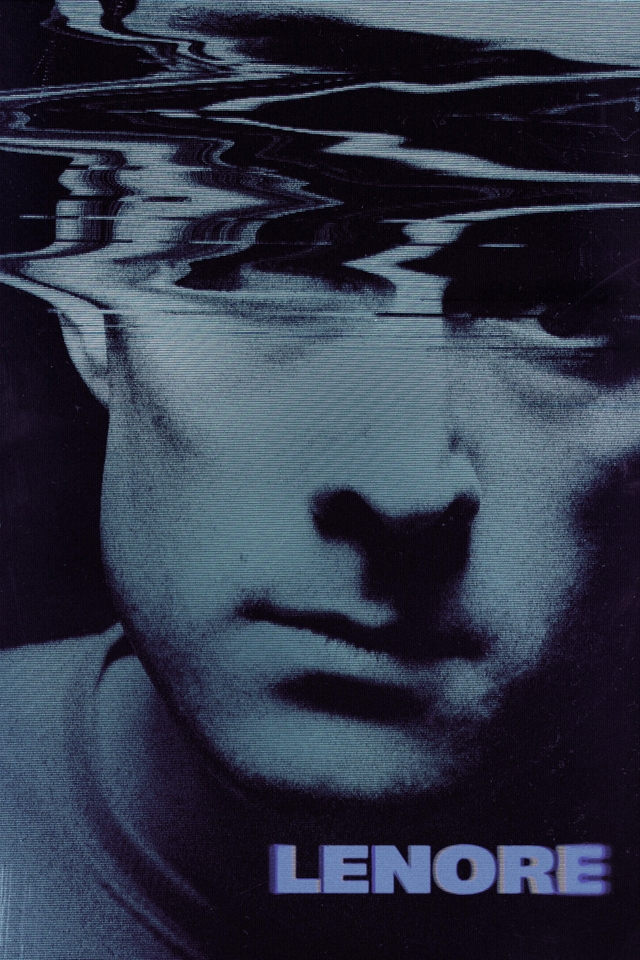
Darkness doesn’t just fall over the theater—it oozes from the edges of the frame like a viscous sludge, thick enough to stain the red velvet seats and seep through the cracks of your seat. Lenore, the latest abomination from David Ward, isn’t a film: it’s a real-time autopsy of sanity, a psychological horror experiment where the screen becomes a fogged mirror, steamed up by the breath of something breathing behind you. Ward, a director who until now had merely flirted with the genre in festival shorts and the odd The Twilight Zone episode for millennials, here dives headfirst into a vat of acid with a budget that reeks more of a desperate producer’s sweat than fresh dollar bills. $1.2 million, if the Reddit rumors are to be believed—a figure that explains why the practical effects smell like wet cardboard soaked in bleach and why the cast looks like it was recruited from a Craigslist casting call for “actors willing to shoot nightmare scenes in an abandoned Detroit warehouse.” But—oh, surprise—the guy pulls off something few directors with budgets twenty times larger manage: he jams you into his protagonist’s skull like a rusty nail and leaves you there, squirming, for 97 minutes of pure cinematic unease.
The project was born, like so many others, from Ward’s obsession with Lovecraftian myths and the cinema of David Lynch at his most indigestible (read: Lost Highway and Inland Empire). But here, there’s no Twin Peaks budget, no Hollywood stars, not even a script that survives more than two rewrites without collapsing like a house of cards in a hurricane. Josie Hess, the screenwriter, confessed in an r/horror thread that the original script was “a pretentious mess” and that Ward rewrote nearly the entire thing during filming, improvising dialogue on set as if possessed by the spirit of Ed Wood on a bad day. The result is a narrative that lurches forward like a drunk stumbling down a dark alley, but in its best moments, it conveys that feeling of reality decomposing like rotting flesh under a midday sun. The premise—a man who discovers his missing wife might be trapped in a parallel dimension where time behaves like a sadistic loop—sounds like a recycled X-Files cliché, but Ward injects it with a dose of body horror that recalls the best of Cronenberg (the Videodrome one, not Crash, for God’s sake). There’s a scene, around the 42-minute mark, where the protagonist, Nicholas Jaquinot, looks in the mirror and his reflection blinks a second later than he does, as if the entire universe is out of sync. The lighting, courtesy of Shaun Herbertson (a guy who comes from the music video world and here proves he knows more about shadows than most Hollywood cinematographers), bathes the scene in a sickly green glow, like watching through an Instagram filter applied by a schizophrenic. It’s not pretty, but it’s effective. And in horror, effectiveness is everything.
The shoot, according to actor testimonies in IndieWire, was a logistical hellscape. It took 18 days (yes, you read that right) in an abandoned Detroit warehouse, a place Ward described as having “the energy of a 1950s psychiatric hospital.” Conditions were so precarious that the crew had to jury-rig a lighting system with construction lamps and duct tape, which explains why some scenes look like they were filmed in Dante’s Inferno on an iPhone 6. But, oddly enough, that rawness suits the film. There’s something organic and filthy in the way Ward frames the spaces: narrow hallways, doors that don’t quite shut, peeling walls that seem to breathe. This isn’t the sterile terror of The Conjuring, where everything gleams like an IKEA catalog. Here, fear smells like damp, mold, something slowly rotting. And that, dear readers, is an achievement in an era where mainstream horror seems designed by a Netflix algorithm to offend no one.
But let’s talk about the cast, because this is where Lenore stakes its soul (or what’s left of it). Nicholas Jaquinot, an actor who until now had slipped by unnoticed in bit parts on SyFy shows and direct-to-VOD horror flicks, chews up the screen with his teeth. His portrayal of Ethan, the protagonist, is a cocktail of contained desperation and incipient madness, like he’s about to unravel at any moment but clings to the scraps of his sanity with fingernails and teeth. There’s a scene near the end where he screams until he’s hoarse, his face twisting in a close-up that recalls Klaus Kinski in Nosferatu (Herzog’s, not Murnau’s—this is Claqueta Ácida, and we have standards). It’s not subtle, but in the context of the film, it lands like a gut punch. Beside him, Lena Headey (yes, Cersei Lannister herself) appears in a supporting role as the missing wife, but her presence is so fleeting it feels more like a cameo than anything else. Wasted talent? Without a doubt. Does it matter? Not really, because Jaquinot steals every frame he’s in, even when sharing the screen with a CGI monster that looks like it escaped from a Half-Life 2 mod.
The rest of the cast is functional but forgettable. Tommy Flanagan (the Chibs from Sons of Anarchy) plays a detective who reeks of cheap whiskey and noir clichés, and Sophia Lillis (the Beverly Marsh from It) does her best with a character seemingly written in five minutes during a smoke break. No one shines, but no one ruins the film either—which, in indie horror, is nothing short of a miracle. What does ruin some moments is the shoddy dubbing in certain scenes, a detail the producers must’ve thought no one would notice but that screams “PIRACY!” like a 2000s meme. It’s not an acting issue—it’s a production one: someone decided to save a few bucks, and the result is lips moving out of sync with the words. It’s the kind of detail that yanks you out of the film and reminds you you’re watching a low-budget product, not a work of art.

Direction: The Art of Torturing the Audience with Style
David Ward doesn’t direct—he drives a truckload of nightmares straight into the audience. His style is claustrophobic, oppressive, and deliberately uncomfortable, like he studied every shot with the sole intention of inducing anxiety. There’s no respite in Lenore: the framing is tight, angular, like the camera is always too close to the actors’ faces, invading their personal space like a voyeur in an elevator. Ward uses POV shots with sickening frequency, forcing us to see the world through Ethan’s eyes—a guy who, let’s be honest, isn’t in his right mind. There’s a sequence where the camera spins 360 degrees around him while the environment distorts, a technique that recalls Darren Aronofsky’s Pi but with a budget that reeks of Red Bull and cold pizza.
The editing, by Sarah Beth Shapiro, is jarring and disorienting, with cuts that feel like deliberate jump-scare axis breaks and transitions that mimic the glitch of a VHS tape. It’s not subtle, but it’s effective: every cut hits like a sucker punch to the back of the head. Ward also weaponizes sound, using uncomfortable silences followed by jump scares that aren’t cheap—they’re necessary. The scene where Ethan finds his wife’s diary is a perfect example: the silence is so thick you can hear your own breathing, until a musical stinger (composed by Ben Lovett, a guy who seems obsessed with Ligeti drones) splits your soul in two. This isn’t horror for the faint of heart—it’s horror for masochists.
But where Ward truly shines is in his handling of ambiguity. Lenore doesn’t give you easy answers, not even at the end. There are sequences that feel like hallucinations, others that could be flashbacks or flash-forwards, and a moment where time seems to freeze as Ethan walks down a hallway that stretches infinitely. Is it real? A dream? A metaphor for depression? Ward won’t tell you, and that’s what makes the film stick to you like a splinter under the nail. This isn’t a movie you watch once and forget. It’s a movie that haunts you, like that rotten smell you can’t place but can’t ignore.
Acting: When the Stanislavski Method Meets Hell
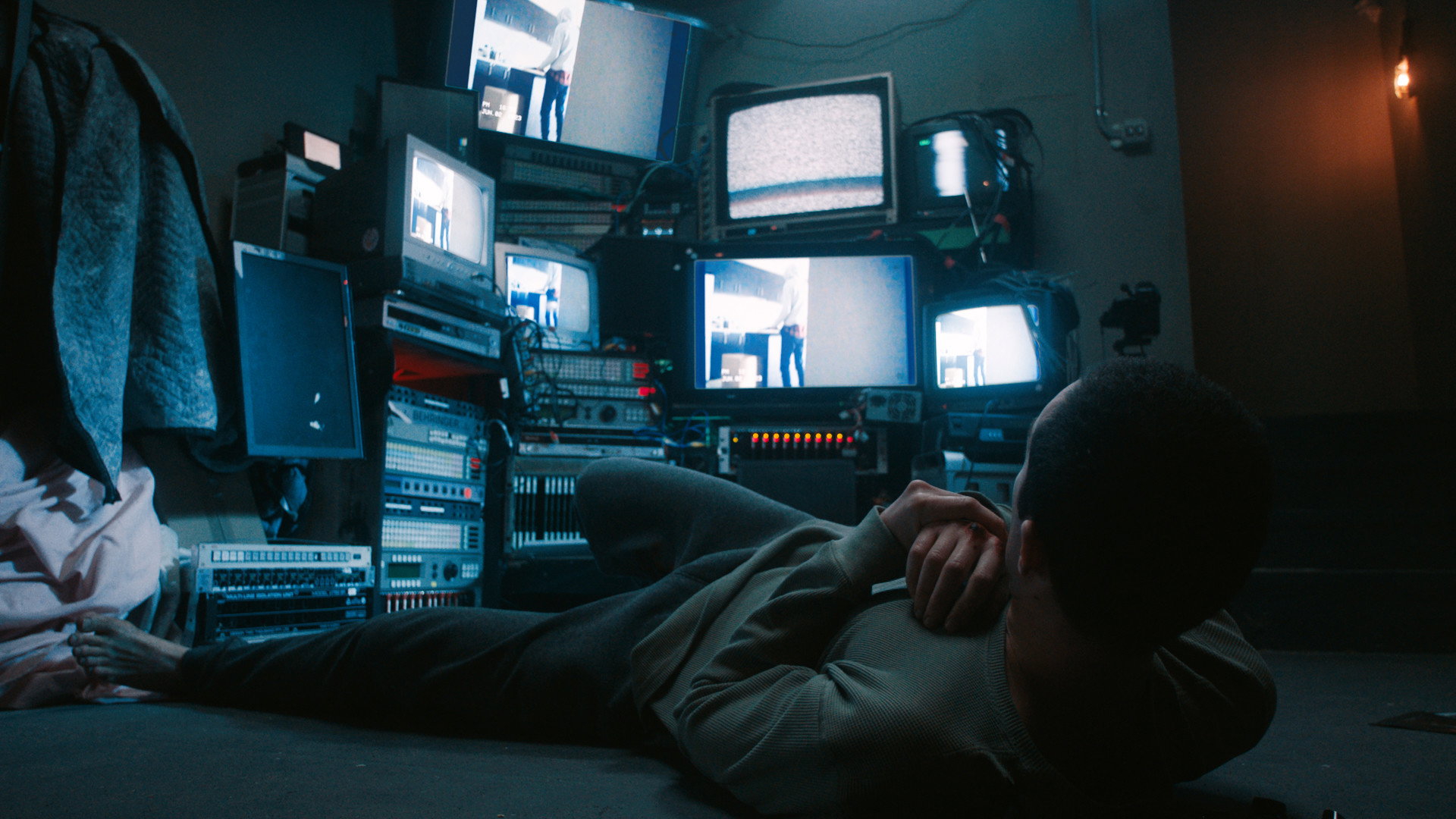
If there’s a lifeline in Lenore, it’s Nicholas Jaquinot. His performance as Ethan is a masterclass in conveying despair through physicality, even when the script hands him dialogue written by a Reddit bot on a bad day. Jaquinot doesn’t act—he suffers on screen, and he does it with an intensity that recalls a Willem Dafoe in the throes of his worst nightmares. There’s a scene where he crawls across the floor like a wounded animal, eyes bloodshot, mouth foaming with saliva, so uncomfortable to watch that you want to look away—but you can’t. It’s not pretty, but it’s real. And in horror, real hurts more than pretty.
The problem is the rest of the cast isn’t on his level. Lena Headey has a couple of memorable scenes (especially one where she whispers Latin phrases while her face distorts in a close-up), but her character is so underdeveloped she feels like a MacGuffin with legs. Tommy Flanagan does his best with his alcoholic detective, but his Scottish accent fluctuates between Glasgow and Texas like he’s improvising. And Sophia Lillis, though charismatic, has an arc that resolves with a deus ex machina so forced it feels lifted from a Supernatural episode.
But the real weak spot of the cast is the CGI. The digital effects in Lenore are so bad they look like they were ripped from a 2011 Skyrim mod. There’s a monster, some kind of amorphous tentacled entity, that appears in two scenes and looks like it was made in MS Paint with a lot of faith. This isn’t cosmic horror—it’s low-poly horror. Ward tries to compensate with practical effects (there’s a corpse scene that looks real because it is), but when the CGI fails, it hurts. It’s like watching a magician pull a rabbit from a hat—only the rabbit has the face of a Blender render.
Technical Breakdown: When Low Budget Becomes a Virtue
Shaun Herbertson’s cinematography is, without a doubt, Lenore’s saving grace. Herbertson, a guy who cut his teeth in music videos and commercials, understands that horror isn’t about showing—it’s about suggesting. His frames are drowned in a palette of sickly greens and bloody reds, like the film is being filtered through an infected eye. He uses harsh light and elongated shadows to create a sense of visual claustrophobia, and plays with the flicker of fluorescent lights to disorient the viewer. There’s a scene where Ethan walks down a hallway lit by a bulb flickering like a dying heart, and it’s so effective you’ll want to scream “TURN OFF THE LIGHTS!” like in a Poltergeist movie.
The production design, by Megan Fenton, is another win. The spaces in Lenore are narrow, filthy, and labyrinthine, like they were designed by an architect with agoraphobia. The walls are covered in incomprehensible graffiti (which, according to Ward, are fragments of Edgar Allan Poe poems translated into Latin and then Japanese), and the objects seem scattered at random, as if someone raked the set. It’s not pretty, but it’s coherent with the film’s tone: a world crumbling, both physically and mentally.
Ben Lovett’s score is an auditory nightmare. Lovett, known for his work on The Ritual and The Autopsy of Jane Doe, composes a soundtrack that sounds like someone scratching a chalkboard with metal nails. He uses dissonant strings, ambient drones, and distorted Gregorian chants to create an atmosphere of constant dread. There’s a scene where Ethan finds a cassette tape, and the music that plays is so disturbing it feels engineered to induce migraines. This isn’t a score you listen to for pleasure—it’s a score that forces you to cover your ears.
Josie Hess’s script, though far from perfect, has moments of brilliance. Hess plays with temporal ambiguity and fractured reality, and some dialogue sounds like it was written by a damned poet. But there are also plot holes the size of Texas, and an ending that feels like it was written in a fit of desperation (rumor has it Ward rewrote it three times in one night). It’s not a script that holds up to logical scrutiny, but in the context of the film, it works. It’s like a Lovecraft story: it doesn’t make sense, but it leaves you with the feeling that something terrible has happened.
The best
- David Ward’s direction: A masterclass in claustrophobic psychological terror that infects the protagonist’s mind like a virus. It’s not pretty, but it’s effective.
- Nicholas Jaquinot’s performance: An unhinged, visceral, and gut-wrenching portrayal that lingers like a bad hangover.
- Shaun Herbertson’s cinematography: A sickly color palette and lighting that traps you in a fever dream.
- Ben Lovett’s score: An auditory nightmare that forces you to cover your ears and amplifies the film’s oppressive atmosphere.
- Megan Fenton’s production design: A filthy, labyrinthine world that mirrors the protagonist’s fractured mind.
The worst
The shoddy CGI: The digital effects are so bad they look like a 2011 Skyrim* mod. It’s painful to watch.- The sloppy dubbing: Scenes where lips don’t match the words, yanking you out of the film like a slap.
- The plot holes: The script has more holes than Swiss cheese, and some twists feel written by a Netflix algorithm.
- The supporting cast: Aside from Jaquinot, the rest of the cast is forgettable or outright bad.
- The rushed ending: Feels written in five minutes and doesn’t wrap up the story properly.
The Verdict of Claqueta Ácida
Lenore isn’t a perfect film. It’s uneven, cheap in places, and pretentious in others. But it has something most modern horror has forgotten: soul. David Ward, with a paltry budget and a script scribbled on bar napkins, crafts a cinematic experience that leaves a mark. This isn’t a film you watch—it’s a film you endure. And in a genre increasingly designed by streaming committees obsessed with algorithms, that’s a breath of rancid fresh air. Don’t watch it if you want polished, edge-free horror. But if you’re after 97 minutes of nightmares that’ll stalk you for days, Lenore is your movie. Just don’t say we didn’t warn you when you start seeing shadows moving in the corners of your room. 💀
🎬 Tráiler Oficial
💬 El Veredicto de la Comunidad
¿Qué te ha parecido la película? Deja tu nota de 0 a 10 para contrastarla con el análisis de la redacción.
Aún no has votado
📢 ¿Te ha gustado el ácido?
Comparte esta crítica con tus amigos cinéfilos o desata la polémica en redes.
📩 📩 Get the poison in your inbox
Join our weekly mailing list. Honest film reviews, acid festival coverage, and cult recommendations every Sunday morning. Zero spam, pure celluloid.
🔒 We promise weekly poisonous reviews and exclusive coverage.Related Reviews
Recommended autopsies for demanding film buffs.
 🔥 Fusión Nuclear8.5
**Lenore: The Rot of Existence**
A psychological horror film that will make you question reality—if you can stomach the stench of its decay.
 ⚠️ Ácido Sulfúrico0.0
**PUFA 2026: "Bad Haircut" Wins the Festival—and Its Barber Gives Us a One-Way Ticket to Nuremberg (The Definitive Palmares, or How to Learn to Love the Absurd)**
*"Bad Haircut" takes home Best Film at the third edition of the Valladolid International Fantastic and Horror Film Festival, while the jury and critics remain deeply divided over the film’s quality.*
 ⚡ Ácido Cítrico5.0
Quantum Rave: The Neon Feast Nobody Asked For (And We All Deserved)
Paco Campano serves us a cocktail of cheap psychedelia and rusted robotics in 'Quantum Rave.' Art or cosmic vomit? Claqueta Ácida decides with boxing gloves on.