PUFA 2026 — Day 6: Psychological Horror and Castilian Legends (or How the Festival Proved Genre Cinema Can Be as Unbearable as an Influencer at a Funeral)
The sixth day of the **Valladolid International Fantasy and Horror Film Festival (PUFA)** offered a mix of premieres and screenings, including *Lenore*, *The Waiting Man*, and *Janur Ireng*, exploring psychological horror, black magic, and artificial intelligence.

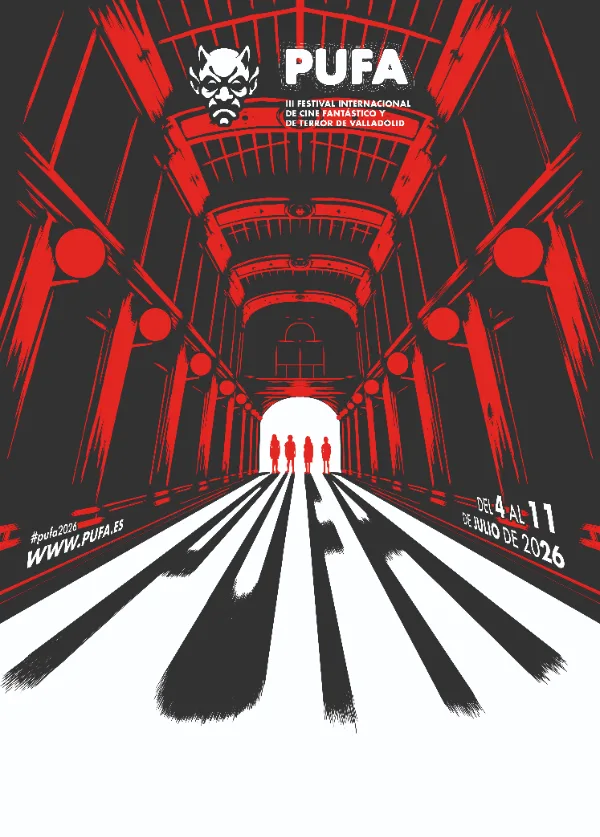
Day 6 of PUFA: Psychological Horror, Digital Myths, and Castilian Legends (or How the Festival Proved Genre Cinema Can Be as Insufferable as an Influencer at a Wake)
The midpoint of the Valladolid International Fantasy and Horror Film Festival (PUFA) served up a day that, on paper, promised a feast of psychological horror, local folklore, and digital avant-garde. In practice, however, it was more like a buffet of reheated leftovers—where the only thing truly terrifying was the possibility that someone, at some point, might ask for seconds. But let’s break it down, because today PUFA decided that the perfect balance between local identity and international cinema is just a euphemism for justifying the inclusion of films designed by a Netflix algorithm in "desperate suggestions" mode.
🏰 12:00 PM – "Legends and Mysteries of Castile and León": When Folklore Smells Like Mothballs
A morning of local myths and legends at Espacio Seminci, a place where, ironically, the only real mystery was why anyone thought listening to a writer talk about The Devil’s Armchair at noon was a good idea. Víctor M. del Pozo, a Valladolid-based author whose work seems to have been written with the same passion as a civil servant filling out a tax form, treated us to a "fascinating" tour of stories as well-known as they are forgettable. The Crime of Canterac, The Mystery of Puente Mayor... names that sound like cheap excuses to skip work on a Monday morning.
Del Pozo analyzed how the legendary heritage of Castile and León has been an "inexhaustible source of inspiration for fantasy literature and cinema." What he didn’t mention is that, in most cases, that engine has been sputtering for decades, coughing up black smoke and choking on its own irrelevance. Because let’s be honest: if local folklore were really that inspiring, Spanish cinema wouldn’t be doomed to endlessly recycle the same cursed village stories with telenovela actors and budgets that wouldn’t cover a made-for-TV movie on Antena 3. But hey, at least the coffee was hot. That’s more than we can say for some of the films that followed.
💻 4:15 PM – Screening of Lenore: Tech Horror for Dummies (or How Poe Rolled in His Grave)
The moment of truth arrived at the Auditorio Fundos Fórum, where David Ward’s debut feature, Lenore, promised to dissect digital identity with the surgical precision of an influencer slicing an avocado at brunch. Spoiler: it failed. What it did do was confirm that tech horror is the new found footage—a subgenre born with good intentions, prostituted within months, and now only good for directors without ideas to endlessly recycle the same clichés.
Lenore begins with the disappearance of an influencer—because, of course, what other kind of character could better embody the evils of the digital age than someone whose job is to sell smoke for likes? The premise supposedly echoes Edgar Allan Poe, we’re told. Bold-faced lie. If Poe rose from the dead and saw this movie, he’d demand to be reburied immediately. What Ward delivers here isn’t an homage to the master of Gothic horror but an unintentional parody of The Raven shot with an Instagram filter and dialogue written by a bank’s chatbot.
The problem isn’t just that the plot is predictable—it is, to the point where you could guess every twist just by watching the trailer—but that the execution is so clumsy it looks like it was directed by someone who discovered psychological horror last week. The cinematography, supposedly "visceral" (the director’s words, not mine), consists of a succession of dark shots where the only things visible are the film grain and the audience’s desperation. The editing, meanwhile, seems like the work of someone who mistook jump scares for a narrative device rather than a band-aid for lack of substance.
And then there’s the score, that eternal deus ex machina of modern horror. Here, the composer decided the best approach was to drown every scene in an ambient drone that sounds like someone scraping a violin with a fake nail. The result is a film that, instead of building tension, induces drowsiness. If Lenore were a person, it’d be that friend who recounts their nightmare in such excruciating detail that you fall asleep before they reach the end.
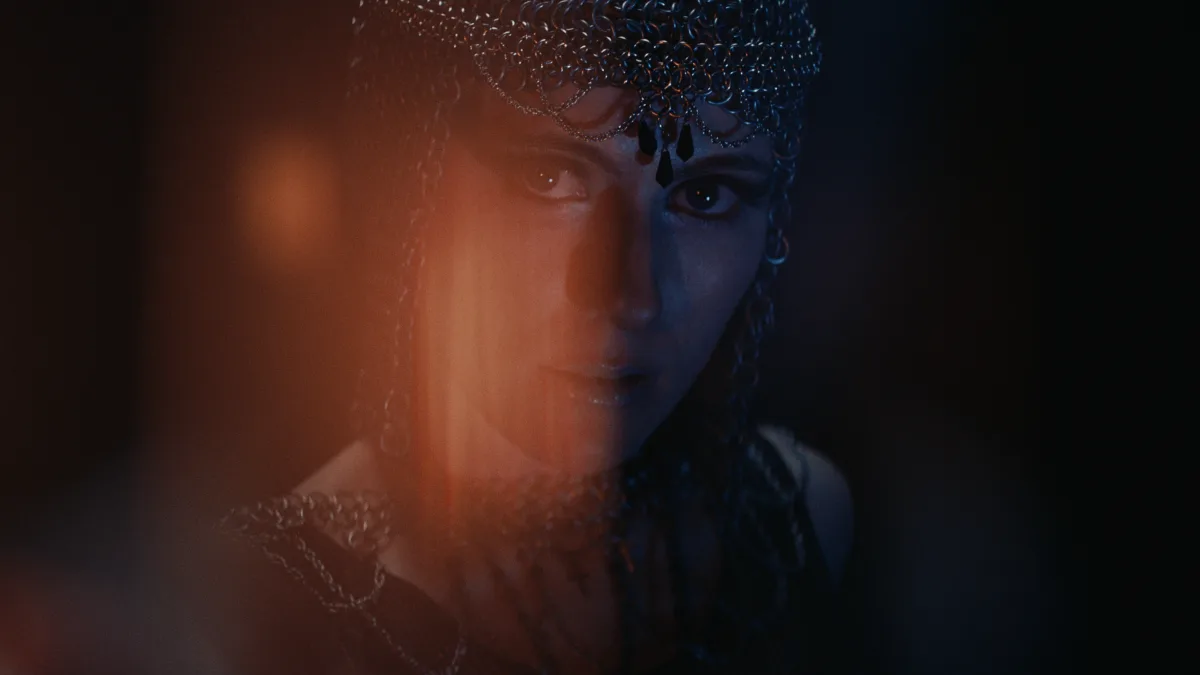
But not all is lost, because at least Lenore has one merit: it’s so bad it almost achieves the impossible—making you miss David Cronenberg’s cinema. Almost. Because let’s be clear: not even the master of body horror could save this mess. Ward wanted to make a film about digital dependency, but all he’s proven is that modern horror depends too much on clichés and too little on talent.
👁️ 6:00 PM – World Premiere of The Waiting Man: The Found Footage That Found Its Grave
If Lenore was bad, The Waiting Man is downright offensive. Not because it’s a terrible movie—which it is—but because it has the audacity to present itself as "unsettling" and "atmospheric," when in reality it’s a found footage film so generic it feels like an unofficial remake of Unfriended directed by a YouTube intern.
Directed by Swedish filmmaker Carl Sundström, The Waiting Man follows a streamer’s obsession with a sinister figure watching him from the shadows of his own screen. The premise sounds like a 2012 creepypasta, and the execution doesn’t disappoint: it’s exactly as deep as a 4chan meme. Sundström mixes found footage with Japanese folklore, but the result is as convincing as a The Ring cosplay made with a wig from a discount store and a dress from Zara.
The worst part is that the film seems to think it’s saying something new about the dangers of overexposure on the internet. Spoiler: it isn’t. All it proves is that Sundström has watched too many Black Mirror episodes and confused spoilers with depth. The dialogue is so forced it sounds like it was written by someone who learned English from dubbed anime, and the acting is as convincing as a politician promising to lower taxes.
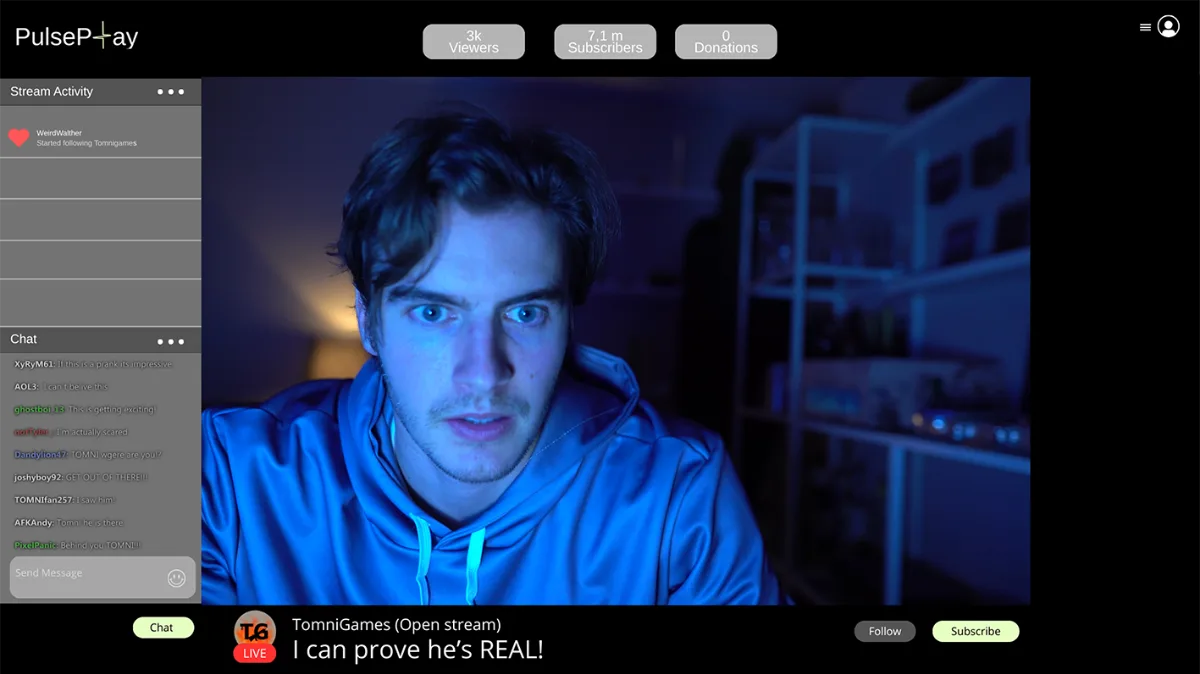
But the real crime of The Waiting Man isn’t its lack of originality—it’s its boredom. Found footage was a subgenre born exhausted, and Sundström does nothing to revive it. Instead, he gifts us an hour and a half of a guy staring at a screen while muttering things like "Who are you?" and "You shouldn’t be here." If this is what happens when Japanese folklore meets streaming, someone tell Japan to keep its yokai and give us a refund.
🎥 8:15 PM – Janur Ireng: Indonesian Black Magic for Insomniacs (or How to Waste a Budget on Cheap Practical Effects)
Night fell, and with it came the Official Section of PUFA, where the festival decided it was a good time to remind us that Asian horror isn’t what it used to be. Janur Ireng, the prequel to Sewu Dino directed by Kimo Stamboel, promised an "intense supernatural journey steeped in black magic, ancestral curses, and possessions." What we got was a film so generic it feels like an unauthorized remake of The Conjuring shot on a set of Indonesia’s Got Talent.
Stamboel, who at least has the decency not to hide behind found footage, plunges us into a world of Indonesian folklore where spirits roam freely, curses spread like viruses, and practical effects look like they were made in a high school makeup class. The film has moments where it tries to be poetic, like when a girl plays with a possessed doll while the camera zooms in on her teary eye. But even those moments are ruined by dialogue as deep as a puddle ("Evil never sleeps, it only waits").
The saddest part of Janur Ireng is that, in theory, it should work. Indonesian folklore is rich in myths and legends, and supernatural horror, when done right, can be terrifying. But Stamboel seems more interested in imitating James Wan than exploring his own culture. The result is a film that feels like a collage of scenes from other movies, with possessions straight out of The Exorcist, curses reminiscent of The Grudge, and an ending so predictable you could guess it in the first five minutes.
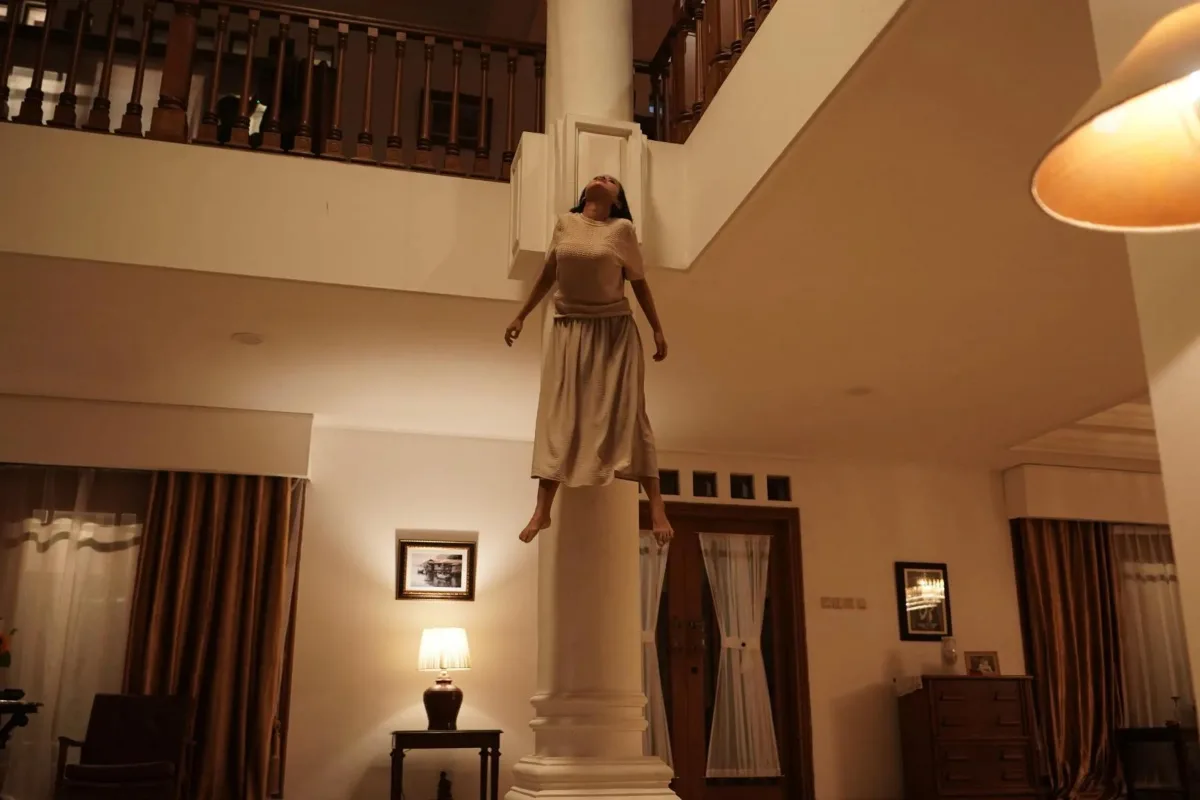
And then there are the practical effects—supposedly what gives the film "authenticity." Spoiler: they don’t. The creatures on screen look like they were designed by someone who’s only seen Stranger Things in low quality, and the possession scenes are as convincing as a community theater actor trying to imitate Linda Blair. If this is the best Indonesian horror has to offer, someone tell Stamboel to keep his curses and give us back the two hours of our lives we’ll never get back.
🤖 10:00 PM – Appofeniacs: AI Will Save Us (From Dying of Boredom)
The day closed with Appofeniacs, the feature debut of Chris Marrs Piliero, a guy previously known only for directing music videos for Ariana Grande and Britney Spears. If anyone thought that was a bad sign, congratulations: you were right. Appofeniacs is a film so pretentious it seems written by an AI fed Black Mirror, Fight Club, and a How to Be an Indie Filmmaker Without a Clue manual.
The film plunges us into a world where deepfakes and AI have advanced to the point where you can’t even trust your own shadow. The premise sounds interesting, especially at a time when technology is outpacing ethics. But instead of exploring the real implications of this, Piliero turns it into an action-thriller with touches of dark humor that sounds like a bad joke told by a Silicon Valley bro.
The dialogue is so forced it seems lifted from a South Park script written by someone who doesn’t understand satire. The acting is so over-the-top it feels like self-parody, and the plot lurches forward like Piliero discovered non-linear editing five minutes before shooting. There are scenes where the film seems like a comedy, others where it wants to be a social drama, and some where it just gives up and becomes a cheap action movie.
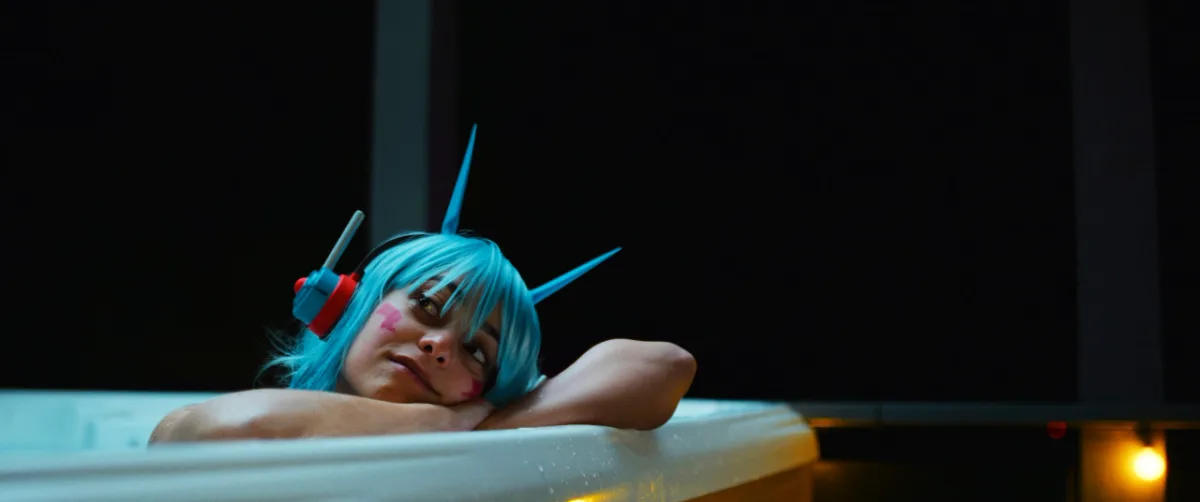
The most ironic thing about Appofeniacs is that, in its eagerness to criticize the dangers of artificial intelligence, it ends up being as artificial as a deepfake of a politician making empty promises. Piliero wanted to make a film about dehumanization in the digital age, but all he’s achieved is dehumanizing cinema into a product as cold and calculated as an Amazon recommendation algorithm.
A sixth day that, instead of reaffirming PUFA as an essential window into genre cinema, turned it into a showcase of everything wrong with modern horror: films without ideas, directors without personality, and an unhealthy obsession with clichés. If this is the best the festival has to offer, someone tell Valladolid to keep its local legends and give us back our faith in cinema.
### The best
- The coffee at Espacio Seminci—at least it was hot and didn’t try to sell you a metaphor about loneliness in the digital age.
- The absence of popcorn in the theater—because if you’re going to suffer, at least don’t do it to the sound of someone chewing next to you.
### The worst
- The feeling that PUFA confused "avant-garde" with "YouTube videos with a feature-film budget."
### The Verdict of Claqueta Ácida (0/10)
Day 6 of PUFA was a festival of missed opportunities, a parade of directors who mistook copy-paste for originality, and irrefutable proof that psychological horror died the day someone decided an influencer could be a profound character. If this is the midpoint of the festival, God help us for what’s to come—because at this level of mediocrity, even Sharknado looks like The Godfather. Someone call an exorcist, but not the one from Janur Ireng—that guy doesn’t even know where the demon is.📸 Galería de imágenes


💬 El Veredicto de la Comunidad
¿Qué te ha parecido la película? Deja tu nota de 0 a 10 para contrastarla con el análisis de la redacción.
Aún no has votado
📢 ¿Te ha gustado el ácido?
Comparte esta crítica con tus amigos cinéfilos o desata la polémica en redes.
📩 📩 Get the poison in your inbox
Join our weekly mailing list. Honest film reviews, acid festival coverage, and cult recommendations every Sunday morning. Zero spam, pure celluloid.
🔒 We promise weekly poisonous reviews and exclusive coverage.Related Reviews
Recommended autopsies for demanding film buffs.
 ⚠️ Ácido Sulfúrico0.0
**PUFA 2026: "Bad Haircut" Wins the Festival—and Its Barber Gives Us a One-Way Ticket to Nuremberg (The Definitive Palmares, or How to Learn to Love the Absurd)**
*"Bad Haircut" takes home Best Film at the third edition of the Valladolid International Fantastic and Horror Film Festival, while the jury and critics remain deeply divided over the film’s quality.*
 ⚠️ Ácido Sulfúrico0.0
**PUFA 2026 – Day 7: A Night of Terror and Madness (Or: How I Learned to Stop Worrying and Love the Trainwreck)**
A recap of the festival’s second day, featuring *Horror and Love*, *Quantum Rave*, *Pinocchio Unstrung*, and *Frankie, Maniac Woman*—a night packed with terror, madness, and enough emotional whiplash to make a rollercoaster jealous.
 ⚠️ Ácido Sulfúrico0.0
**PUFA 2026 - Day 6: Psychological Horror and Castilian Legends (or How the Festival Proved Genre Cinema Can Be as Unbearable as an Influencer at a Funeral)**
The sixth day of the **Valladolid International Fantasy and Horror Film Festival (PUFA)** offered a mix of premieres and screenings, including *Lenore*, *The Waiting Man*, and *Janur Ireng*, exploring psychological horror, black magic, and artificial intelligence.