PUFA 2026 — Day 2 – Nostalgia and "Outstanding" Discoveries (Or How Cinema Reminds Us Hell Is Paved with Good Intentions)
The second day of PUFA 2026, Valladolid’s genre film festival, brought together unsettling classics like *Who Can Kill a Child?* and exciting newcomers like *Went Up the Hill*—though "exciting" might be a stretch.

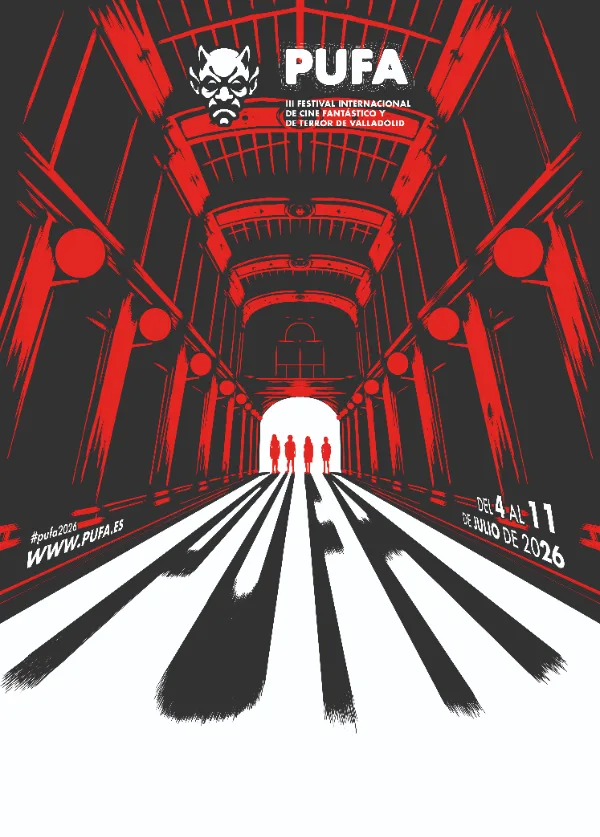
RECAP: PUFA 2026 – DAY 2: BETWEEN HAUNTING CLASSICS AND SOUL-CRUSHING WOUNDS (OR HOW CINEMA PROVES HELL IS PAVED WITH GOOD INTENTIONS)
The second day of the third edition of Pucela Fantástica (PUFA) confirmed what we already suspected: this festival isn’t just a showcase for monsters and practical effects—it’s a cinematic operating room, where humanity’s worst nightmares are dissected with a celluloid scalpel. In Valladolid, a city that smells of wine and Castilian folklore, genre cinema has become the only valid exorcism against mediocrity. And boy, did they deliver: between a classic that still bleeds through its seams and a new film that feels like a failed experiment in emotional autopsy, PUFA 2026 proved that when it comes to horror, Spain remains the country where even children know more about cruelty than adults.
🕰️ 16:30 – Who Can Kill a Child?: The Sun That Scorches the Conscience
It’s no exaggeration to say that Who Can Kill a Child? (1976) is one of those films that should come with a trauma warning, like cigarette packs. Directed by Narciso Ibáñez Serrador, a man who understood terror as a contagious virus, this masterpiece of Spanish social horror remains as uncomfortable today as it was upon its release—back when Franco’s censorship still reeked of mothballs, and Catholic morality tried to veil what cinema already exposed without shame.
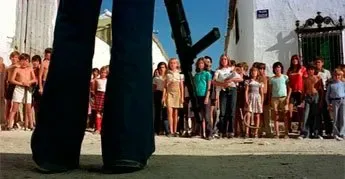
The screening at PUFA was an act of cinephilic devotion, but also a reminder that terror doesn’t age—it rots, like a corpse in the sun. The presence of Alejandro Ibáñez Nauta, the director’s son, added a touch of necrophilic melancholy to the event. Hearing anecdotes about how his father shot scenes with real children (yes, the same ones who would later massacre adults on screen) while the audience nervously laughed was like witnessing a collective expiation ritual. Because let’s be honest: Who Can Kill a Child? isn’t just a film about murderous children—it’s about adult guilt, about a generation that allowed the world to become a place where the innocent turn into executioners.
#### Direction: The Master of Discomfort
Ibáñez Serrador didn’t direct films—he incubated them. His style, heir to Hitchcockian suspense but with a dash of Iberian sleaze, turns every frame into a trap. The island of Altea, bathed in a sun that feels like acid spilled on the film, is the perfect setting for a horror that doesn’t need monsters—just the empty stare of a child holding a knife. The opening sequence, with archival footage of wars and famines, isn’t just a prologue—it’s a summary judgment against humanity. And the verdict is clear: we are the monsters.
#### Cinematography: The Sun as Executioner
The cinematography by José Luis Alcaine (yes, the same one who later lit Pan’s Labyrinth) is visual torture. The contrast between the blinding Mediterranean light and the elongated shadows of the characters creates an atmosphere of daytime nightmare, where even the air feels laden with threat. The wide shots of the island, with those children playing like little demons in a schoolyard, are as beautiful as they are terrifying. Ibáñez Serrador and Alcaine understood something modern cinema has forgotten: horror doesn’t need darkness to exist.
#### Score: The Silence That Screams
Waldo de los Ríos’ music is minimalist, almost absent, but when it appears, it strikes like a whip crack. The main theme, with its distorted childlike melody, is the sonic equivalent of a spoon scraping a porcelain plate. And then there’s the silence. Oh, the silence. In Who Can Kill a Child?, silence isn’t the absence of sound—it’s the sound of guilt. When the adults scream, no one hears them. When the children laugh, the world stops. That’s the film’s true score: the echo of our own cowardice.
#### Performances: Children Who Know Too Much
The child actors in the film don’t act—they exist. There’s nothing more terrifying than a child staring into the camera with a smile that never reaches their eyes. Lewis Fiander and Prunella Ransome, as the trapped tourist couple, embody the adult panic in the face of the incomprehensible perfectly. Their acting is clumsy, almost amateurish, but that’s precisely what makes it so effective: they’re victims, not heroes, and their desperation is so real it hurts.
🌃 21:30 – Went Up the Hill: The Ghost No One Invited (And We All Deserved)
If Who Can Kill a Child? is a classic that hurts for what it shows, Went Up the Hill is a film that hurts for what it doesn’t show. Directed by Samuel Van Grinsven, a name that until yesterday sounded like a pronunciation error at an Australian short film festival, this movie was billed as the big revelation of PUFA 2026’s Official Selection. Spoiler: it isn’t. What it is, though, is a pretentious self-indulgent exercise masquerading as psychological horror.
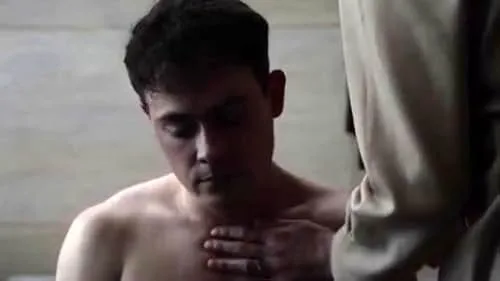
The plot—if you can call it that—follows a man (played by Dacre Montgomery, the same guy who played Billy in Stranger Things and who here seems to be auditioning for the role of "man with trauma" in an acting workshop) returning to his hometown to confront the ghosts of his past. Literally. Because, of course, in Went Up the Hill, ghosts aren’t metaphors—they’re clingy entities with poor circulation that whisper unintelligible things and appear in mirrors when the protagonist is brushing his teeth. How original.
#### Direction: Minimalism as an Excuse
Van Grinsven seems obsessed with the idea that less is more, but in his case, less is simply less. The film moves at a pace that would make 2001: A Space Odyssey look like a TikTok clip, with static shots of rural landscapes lasting long enough for the viewer to start wondering if they’ve fallen asleep. The director abuses fake suspense, that cheap trick of showing something off-screen before cutting to a close-up of the protagonist looking like he’s smelled something rotten.
There’s a sequence where Montgomery walks through a forest while the camera follows him in an endless long take. The problem? Nothing happens. Absolutely nothing. It’s as if Van Grinsven confused tension with boredom and decided the audience should suffer as much as the character. Spoiler: it doesn’t work.
#### Cinematography: Grays, More Grays, and the Occasional Brown
Marty Scope’s cinematography is so bland it looks like it was lifted from an IKEA catalog. Everything is earth tones, dim lighting, and shadows that hide nothing because, apparently, there’s nothing to hide. The production design is just as inspired: rural houses with solid wood furniture, fireplaces that never light, and a town that looks abandoned by both God and the art department. If the goal was to create an oppressive atmosphere, the result is more depressing, like a Sunday afternoon in a village with no cell service.
#### Score: The Sound of Nothing
Jed Palmer’s music is so understated you might forget it exists. When it does appear, it’s in the form of single piano notes that sound like someone learning to compose horror music from a "For Dummies" book. The sound design, meanwhile, is pretentious to the point of nausea: unintelligible whispers, footsteps that lead nowhere, and a silence so thick it feels like rotten cotton candy.
#### Performances: Trauma, Trauma, and More Trauma
Dacre Montgomery does what he can with a character seemingly written by someone who just discovered psychoanalysis. His performance swings between catatonic muteness and desperate screaming, as if someone told him trauma is expressed this way and he decided to follow the manual to the letter. Vicky Krieps, who in other films has proven to be a formidable actress, here seems lost in a script that gives her nothing to do. Her character, a mysterious woman with an even more mysterious past, is so one-dimensional she might as well be a hologram.
Conclusion: A Day of Contrasts (Or How Cinema Can Be Sublime or Unbearable in 24 Hours)
The second day of PUFA 2026 was a reminder that genre cinema is like a buffet: there are dishes that take your breath away and others that make you wonder who the hell cooked them. Who Can Kill a Child? remains an uncomfortable masterpiece, a mirror that reflects our own cruelty disguised as innocence. Went Up the Hill, on the other hand, is a pretentious failure, a film that mistakes silence for depth and boredom for tension.
But in the end, that’s what makes a festival like PUFA great: the ability to spark debate, even when the debate is about why a film is so bad it hurts. Because let’s be honest—in a world where commercial cinema sells us canned emotions and happy endings wrapped in cellophane, even a bad movie can be more honest than a thousand blockbusters.
### The best
- Ibáñez Serrador’s legacy: Someone tell Hollywood that horror doesn’t need jump scares to be terrifying.
### The worst
- Van Grinsven’s direction: Less is more, but nothing is nothing.
### The Verdict of Claqueta Ácida (0/10)
Went Up the Hill is the kind of film that makes you wonder if the director mistook the film festival for a group therapy session. With a script seemingly written by an indie horror trope algorithm, performances that oscillate between soporific and ridiculous, and a direction that confuses boredom with depth, this movie is the cinematic equivalent of watching paint dry in a windowless room. If PUFA wanted to prove that genre cinema is still alive, Went Up the Hill is proof that sometimes, all that’s resurrected is the corpse of our expectations. 0/10, and that zero is generous.📸 Galería de imágenes


💬 El Veredicto de la Comunidad
¿Qué te ha parecido la película? Deja tu nota de 0 a 10 para contrastarla con el análisis de la redacción.
Aún no has votado
📢 ¿Te ha gustado el ácido?
Comparte esta crítica con tus amigos cinéfilos o desata la polémica en redes.
📩 📩 Get the poison in your inbox
Join our weekly mailing list. Honest film reviews, acid festival coverage, and cult recommendations every Sunday morning. Zero spam, pure celluloid.
🔒 We promise weekly poisonous reviews and exclusive coverage.Related Reviews
Recommended autopsies for demanding film buffs.
 ⚠️ Ácido Sulfúrico0.0
**PUFA 2026: "Bad Haircut" Wins the Festival—and Its Barber Gives Us a One-Way Ticket to Nuremberg (The Definitive Palmares, or How to Learn to Love the Absurd)**
*"Bad Haircut" takes home Best Film at the third edition of the Valladolid International Fantastic and Horror Film Festival, while the jury and critics remain deeply divided over the film’s quality.*
 ⚠️ Ácido Sulfúrico0.0
**PUFA 2026 – Day 7: A Night of Terror and Madness (Or: How I Learned to Stop Worrying and Love the Trainwreck)**
A recap of the festival’s second day, featuring *Horror and Love*, *Quantum Rave*, *Pinocchio Unstrung*, and *Frankie, Maniac Woman*—a night packed with terror, madness, and enough emotional whiplash to make a rollercoaster jealous.
 ⚠️ Ácido Sulfúrico0.0
**PUFA 2026 - Day 6: Psychological Horror and Castilian Legends (or How the Festival Proved Genre Cinema Can Be as Unbearable as an Influencer at a Funeral)**
The sixth day of the **Valladolid International Fantasy and Horror Film Festival (PUFA)** offered a mix of premieres and screenings, including *Lenore*, *The Waiting Man*, and *Janur Ireng*, exploring psychological horror, black magic, and artificial intelligence.