Who Can Kill a Child? — The Horror No Kid (or Adult) Should Ever See
Chicho Ibáñez Serrador crafts this Spanish nightmare where children are the monsters. Corrupted innocence or pure evil? Claqueta Ácida dissects this cursed classic.

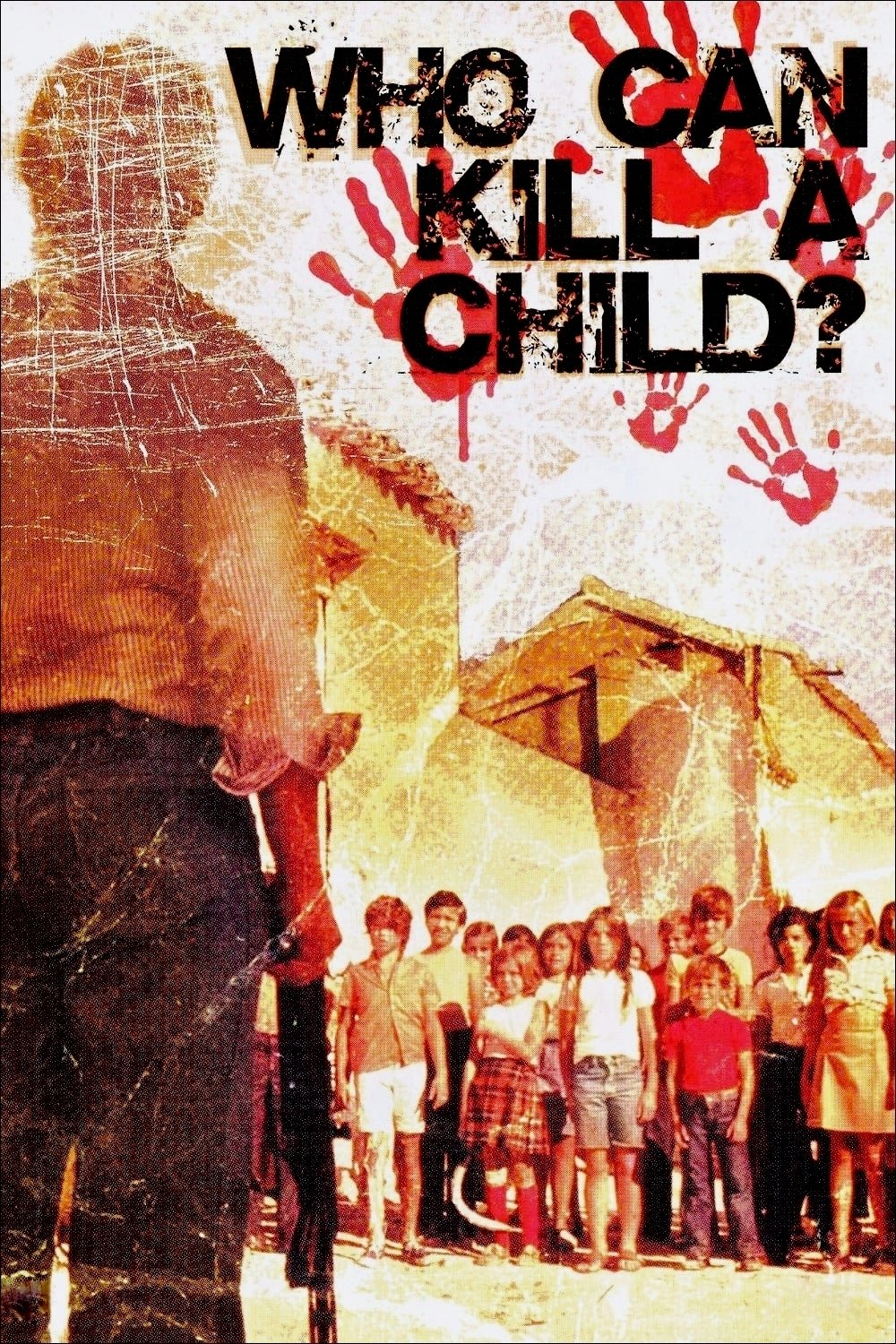
Celluloid burns with the sluggishness of an eternal summer in Almanzora, that cursed village where the sun scorches harder than guilt and children smile as if they’ve just uncovered the universe’s darkest secret. Chicho Ibáñez Serrador, that sorcerer of Spanish television who gifted us canned nightmares like Historias para no dormir, decided in 1976 it was the perfect time to remind us that innocence is just a cheap disguise. And boy, did he succeed. Who Can Kill a Child? isn’t just a horror film—it’s a shattered mirror where Spain, fresh out of Franco’s grip, stared at itself in fear. What’s more terrifying than an unsupervised child? An entire town of them, armed with the impunity of those who either don’t know killing is wrong… or worse, those who do and couldn’t care less.
The context couldn’t be juicier. We’re in 1970s Spain, a country shaking off the dust of dictatorship while cinemas overflowed with spaghetti westerns and destape flicks. Amidst this, Ibáñez Serrador—a man who understood terror like few others—decided it was time to export Spanish fear. Not the ghosts of the Civil War, not political repression, but something far more universal: the fear of the inexplicable. And what better than murderous children, those beings who should be angelic but, in Chicho’s hands, become something worse than demons? Because demons, at least, have rules. These kids don’t.
The film arrives at a time when European horror was in full bloom. While Dario Argento bled his victims in Technicolor and Roman Polanski reminded us the devil could wear a little girl’s face in Rosemary’s Baby, Ibáñez Serrador opted for something grittier, more intimate. No special effects, no makeup monsters—just the raw terror of the everyday turned nightmare. And that, dear readers, is what truly stings. Because Who Can Kill a Child? doesn’t need a masked villain or a serial killer with daddy issues. It just needs a child’s smile after stabbing an adult with the same casualness as asking for candy.
But let’s not kid ourselves—this isn’t a film about children. It’s a film about us, the adults, those pathetic beings who think they’re in control until reality reminds them they’re nothing but easy prey. Lewis Fiander and Prunella Ransome, those two lost English tourists in deep Spain, are the perfect reflection of our arrogance. They arrive in Almanzora as if the world owes them something, as if their mere presence should make everything picture-perfect. Then the town stares back. A stare that doesn’t ask permission, doesn’t negotiate—it simply takes. And that’s Ibáñez Serrador’s genius: turning what should be a vacation paradise into an inescapable hell.
The Direction: When Silence is More Terrifying Than Screams
Chicho Ibáñez Serrador wasn’t your typical director. He wasn’t interested in long takes or virtuoso camera movements. His thing was psychological terror, the kind that slithers through the cracks of your mind and festers there. In Who Can Kill a Child?, the direction is so restrained it hurts. No ominous music to warn you something bad’s coming, no POV shots to put you in the killer’s shoes. Just the weight of silence. A silence broken by children’s laughter, the crunch of a branch under a kid’s foot, the sound of a body hitting the water. Ibáñez Serrador understands terror doesn’t need frills. Just show a group of kids playing soccer on the beach while, in the distance, an adult runs for his life. Then the camera holds. And waits. And the viewer, like poor Fiander, realizes there’s no way out.
The use of space is masterful. Almanzora isn’t a town—it’s a trap. Narrow streets, whitewashed houses, the sea that should mean freedom but here becomes a liquid grave. Ibáñez Serrador films it all with almost documentary coldness, as if recording a social experiment rather than a horror movie. And in a way, he is. Because Who Can Kill a Child? is an experiment about what happens when you remove adult morality from the equation. Spoiler: nothing good.
The Performances: When Panic is the Best Actor
If anything saves this film from ridicule—and trust us, with a premise like this, the ridiculous lurks around every corner—it’s the acting. Lewis Fiander is, quite simply, brilliant. Not because he does anything particularly memorable, but because his performance is so real it aches. He’s not the hero fighting evil, not the protective father trying to save his family. He’s an ordinary man, a lost tourist suddenly trapped in a nightmare he can’t wake up from. His performance is pure vulnerability, a reminder that when terror tightens its grip, we’re all equally pathetic.
At the other end, we have the children. And this is where Ibáñez Serrador shows his genius. There’s no overacting, no demonic stares or textbook sinister laughs. The kids of Almanzora are normal. They play, laugh, fight. The only difference is that when they decide to kill someone, they do it with the same naturalness as asking for ice cream. No drama, no remorse. Just action. And that, dear readers, is what makes this film so terrifying. Because evil doesn’t always wear a mask. Sometimes, it wears pigtails.
The Technical Department: When Simple is Scarier Than Spectacle
In an era when horror was measured by gallons of fake blood and increasingly elaborate practical effects, Who Can Kill a Child? bets on the opposite: less is more. The cinematography by José Luis Alcaine is functional, almost austere, but that doesn’t make it any less effective. The shots are clean, unadorned, as if the camera were documenting a real event rather than a film. And that’s precisely its greatest virtue. Because when terror is real, it doesn’t need embellishments.
The script, written by Ibáñez Serrador himself, is another strong point. No unnecessary dialogue, no forced explanations. Everything flows with a naturalness that’s uncannily eerie. The characters talk like they would in real life, without grand monologues or dramatic revelations. And that makes the terror even more palpable. Because in real life, evil doesn’t announce itself with organ music. It just happens.
The score—or rather, its absence—is another win. Ibáñez Serrador understands silence is terror’s best ally. No violins to warn you something bad’s coming, no children’s choirs singing macabre songs. Just ambient sound: the wind, the waves, kids laughing. And every so often, a muffled scream. That’s all it needs.
The best
- Chicho Ibáñez Serrador’s direction: A masterclass in psychological terror, where what you don’t see is far scarier than what you do.
- Lewis Fiander’s performance: An ordinary man trapped in a nightmare, played with a rawness that hurts.
- José Luis Alcaine’s cinematography: Austere but effective—just like terror should be when it’s real.
- The script: No unnecessary dialogue or forced explanations. Evil doesn’t need justification.
- The use of silence: The absence of music makes every sound, every laugh, every scream hit like a sledgehammer.
The worst
- The pacing at times: Some scenes drag on longer than necessary, as if the film isn’t quite sure how to move forward.
- The lack of child character development: While their normality is terrifying, some of the kids could’ve used more depth.
- The ending: No spoilers, but let’s just say it’s way too abrupt. Like Ibáñez Serrador decided he’d tortured the audience enough and just cut it short.
- The chemistry between the leads: Fiander and Ransome don’t quite sell it as a couple, which undercuts some scenes.
- The lack of historical context: The film ignores Francoism entirely, which could’ve added another layer of political terror.
The Verdict of Claqueta Ácida
Who Can Kill a Child? is one of those films that lodges in your memory like a splinter under the nail. It’s not perfect—it has its slow moments, some characters could use more depth—but it has something few horror films can boast: it’s terrifying without resorting to cheap tricks. Ibáñez Serrador understood that real terror isn’t in what you see, but in what you sense. And in Almanzora, what you sense is that no one is safe. Not the tourists, not the kids, not even the viewer, left with the uncomfortable feeling that, deep down, we all have a monster inside. Or worse: that the monster was always a child. And children, as we all know, never lose. 💀
🎬 Tráiler Oficial
💬 El Veredicto de la Comunidad
¿Qué te ha parecido la película? Deja tu nota de 0 a 10 para contrastarla con el análisis de la redacción.
Aún no has votado
📢 ¿Te ha gustado el ácido?
Comparte esta crítica con tus amigos cinéfilos o desata la polémica en redes.
📩 📩 Get the poison in your inbox
Join our weekly mailing list. Honest film reviews, acid festival coverage, and cult recommendations every Sunday morning. Zero spam, pure celluloid.
🔒 We promise weekly poisonous reviews and exclusive coverage.Related Reviews
Recommended autopsies for demanding film buffs.
 🔥 Fusión Nuclear8.0
Who Can Kill a Child?: The Horror No Kid (or Adult) Should Ever See
Chicho Ibáñez Serrador crafts this Spanish nightmare where children are the monsters. Corrupted innocence or pure evil? Claqueta Ácida dissects this cursed classic.
 🔥 Fusión Nuclear8.2
The Boarding School: A Dormitory of Dread
The Boarding School (1969), a film that revives terror within the walls of a girls' boarding school—where repression and sadism dance a waltz in crinoline
 ⚠️ Ácido Sulfúrico0.0
**PUFA 2026: "Bad Haircut" Wins the Festival—and Its Barber Gives Us a One-Way Ticket to Nuremberg (The Definitive Palmares, or How to Learn to Love the Absurd)**
*"Bad Haircut" takes home Best Film at the third edition of the Valladolid International Fantastic and Horror Film Festival, while the jury and critics remain deeply divided over the film’s quality.*