PUFA 2026 — Day 3 – Analog Delirium and Mind Paranoia (or How Modern Cinema Insists on Reminding Us That Hell Is Other People—Especially If They’re Algorithms)
The third day of the **Valladolid Fantastic Gateway (PUFA 2026)** was less a film marathon and more a *social experiment*—a rollercoaster where the festival, like a hoarder Frankenstein, stitched together scraps of marginal genius, digital autopsies, and Freudian nightmares to serve up a four-course tasting menu that, as a whole, tasted like *cheap whiskey and expired Xanax*. From the **FUNDOS Auditorium**—a cinema temple reeking of spilled beer and screenwriters’ shattered dreams—to the **Broadway Cinemas**, where the Official Selection tried (and failed) to convince us that psychological horror is still a noble genre, July 6th was a masterclass in how contemporary cinema can be *simultaneously mesmerizing and nauseating*. And no, that’s not a compliment.

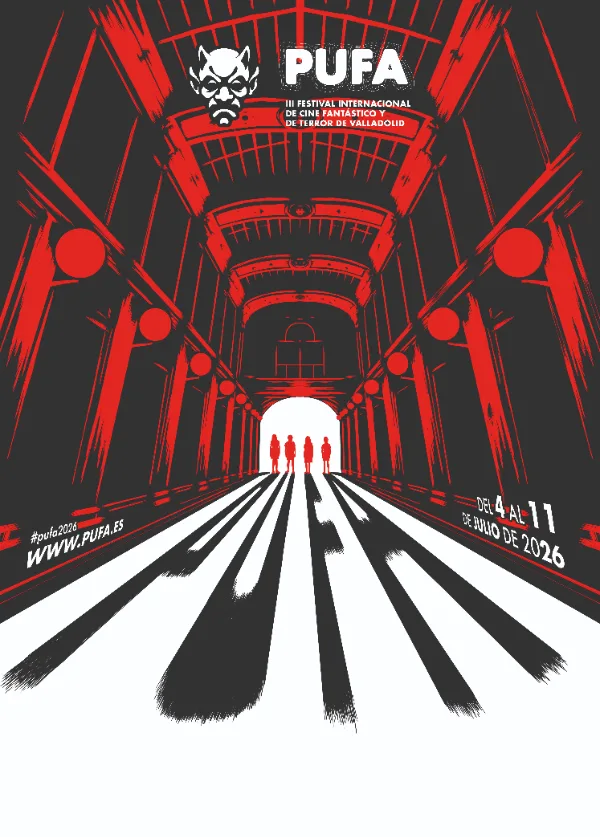
PUFA 2026 – Day 3: Analog Delirium and Mind Paranoia (or how modern cinema insists on reminding us that hell is other people—especially if they’re algorithms)
The third day of the third edition of Pucela Fantástica (PUFA) wasn’t just a film event—it was a full-blown social experiment. A rollercoaster ride where the festival, like a hoarder Frankenstein with Diogenes syndrome, stitched together scraps of marginal genius, digital autopsies, and Freudian nightmares to serve up a four-course tasting menu that, as a whole, tasted like cheap whiskey and expired Xanax. From the FUNDOS Auditorium—a cinema temple that smells like spilled beer and screenwriters’ shattered dreams—to the Broadway Cinemas, where the Official Selection desperately tries (and fails) to convince us that psychological horror is still a noble genre, Monday, July 6th, was a masterclass in how contemporary cinema can be simultaneously fascinating and vomit-inducing. And no, that’s not a compliment.
⏰ 4:15 PM — Afternoon of B-Movie Madness: Babybacks, or the Art of Shitting on Everything (Including the Audience)
We kicked off the afternoon with Babybacks (94 min.), the latest monstrosity from Geno Marx, a director who seems to have struck a deal with the devil at an Arizona truck stop in exchange for the ability to film scenes so gratuitously violent that even A Serbian Film fans would demand a trigger warning. Screened in the Aquelarres section—a festival euphemism for "we’re shoving in stuff even Fantastic Fest wouldn’t touch for fear of lawsuits"—the film is a border horror road movie where the only possible destination is gore, misogyny, and black humor so dark it makes coal look like a Monet painting.
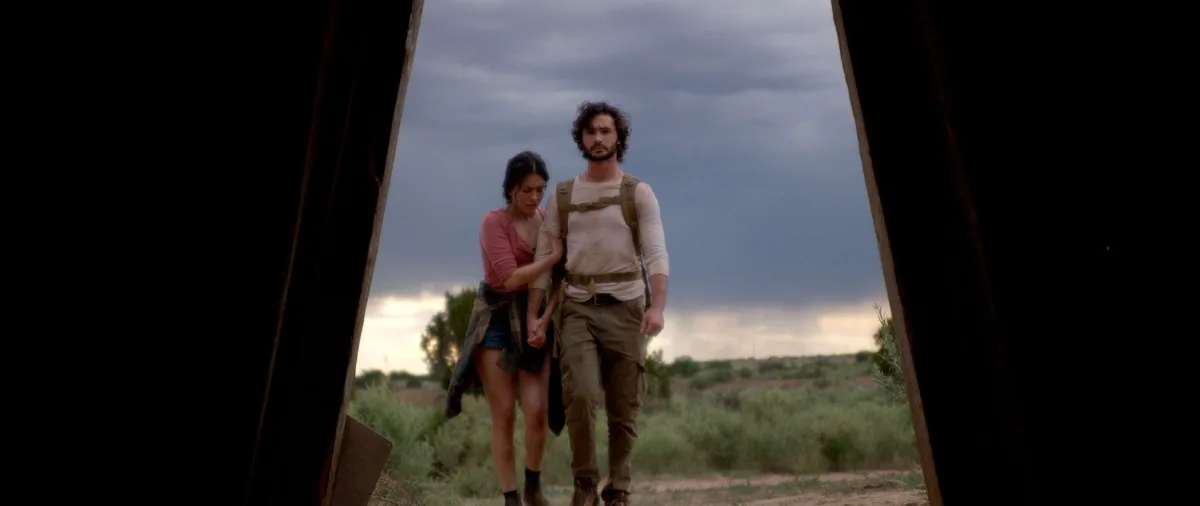
The plot—if you can call it that—follows a group of rednecks with more testosterone than brain cells who decide to kidnap a young woman to turn her into the trophy of their twisted hunting party. What starts as a B-movie exploitation flick transforms, thanks to Marx’s direction, into a tour de force of stylized violence that, at its best, recalls the excesses of Rob Zombie, but with the subtlety of a jackhammer. The cinematography, drenched in sepia and oversaturated reds, evokes '70s grindhouse, though the budget screams crowdfunding rather than studio backing. The editing is frenetic and chaotic, seemingly designed to induce migraines, while the soundtrack—a mix of distorted country and '80s synthwave—sounds like someone tossed a boombox into a woodchipper.
But the most interesting thing about Babybacks isn’t its trash aesthetic—it’s its attitude. Marx isn’t trying to move or even entertain; he’s trying to provoke, and he succeeds with the grace of a bull in a china shop. The film is a giant fuck you to political correctness, wokeism, and any attempt to sanitize genre cinema. In an era where even the bloodiest slasher comes with a disclaimer about "the importance of empathy," Babybacks is a gut punch that makes it clear: when horror is honest, it doesn’t need apologies. That said, don’t expect thematic depth or relatable characters here—the protagonists are as deep as a mud puddle, and their character arcs consist of going from drunk to murderous in the blink of an eye. But in a festival where 90% of films seem designed by a focus group committee, Babybacks is a breath of fresh air… even if that air reeks of cheap whiskey and rotting viscera.
⏰ 6:00 PM — Digital Suffocation in Premiere: Killing Time, or How the Algorithm Ate Your Children
After the visceral shock of Babybacks, the festival offered a change of pace with Killing Time (83 min.), the South Korean thriller by Jang Jun-yeop that promised to be a ferocious critique of like culture and digital dehumanization. And oh boy, is it ever… though it’s also so claustrophobic and repetitive that you’ll start wishing the characters would just kill themselves already to put an end to the misery.
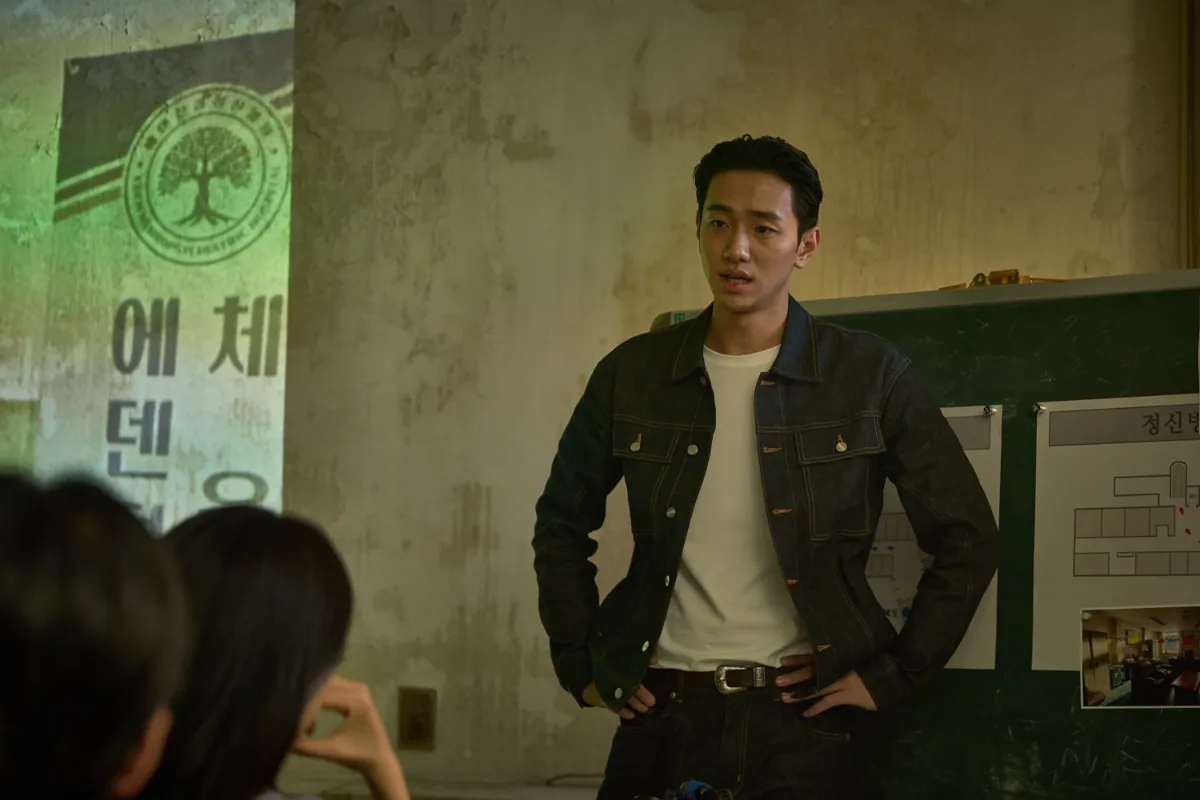
The premise is painfully timely: a group of influencers and content creators lock themselves in a bunker to participate in a real-time reality show where the goal is to generate engagement at any cost. The catch—or the joke, depending on how you look at it—is that the game turns real when they discover that if they don’t get enough likes, the system will activate a mechanism that kills them. What starts as a biting satire of the attention economy quickly devolves into a bloodbath where the characters, reduced to avatars of themselves, betray, humiliate, and murder each other live for survival. The critique is obvious: in the age of social media, we’re all digital gladiators, and the Coliseum is the Instagram feed.
The problem is that Killing Time falls into the same trap it criticizes: it’s so obsessed with its message that it forgets that, for a film to work, it first has to entertain. The pacing is suffocating, but not in the good way—like Uncut Gems—but in the "Oh God, when will this end?" way. The director opts for an endless long take that, in theory, should heighten tension but in practice feels like being trapped in a Zoom meeting with your most insufferable coworkers. The cinematography, cold and desaturated, effectively conveys the depersonalization of the characters, but it also makes the film look like a tutorial on how not to light a set. And the soundtrack, composed of electronic beeps and digital glitches, sounds like someone dropped an iPhone into a microwave.
That said, Killing Time deserves credit for its boldness in portraying digital alienation. The performances are surprisingly strong, especially the lead actress, who manages to convey the existential emptiness of someone whose life depends on a like counter. But the film is pretentious: in its eagerness to be relevant, it forgets that cinema, first and foremost, must be cinematic. Killing Time is more of a sociological essay with images than a movie in the traditional sense. Still, at least it has the decency not to sugarcoat its ending: in the age of social media, we’re all disposable. Even those who make movies about how disposable we are.
⏰ 8:15 PM — Collective Paranoia in the Official Selection: Capture, or the Horror of What You Don’t See (But Should)
We arrived at the Broadway Cinemas with our stomachs churning from the digital feast of Killing Time, only to be served Capture (85 min.), a psychological thriller that, at least in theory, should have been the antidote to all that excess. Directed by an anonymous team—because, apparently, mystery is part of its marketing—the film promises to explore the limits of perception and the terror lurking in the margins of reality. And for the first 40 minutes, it delivers.
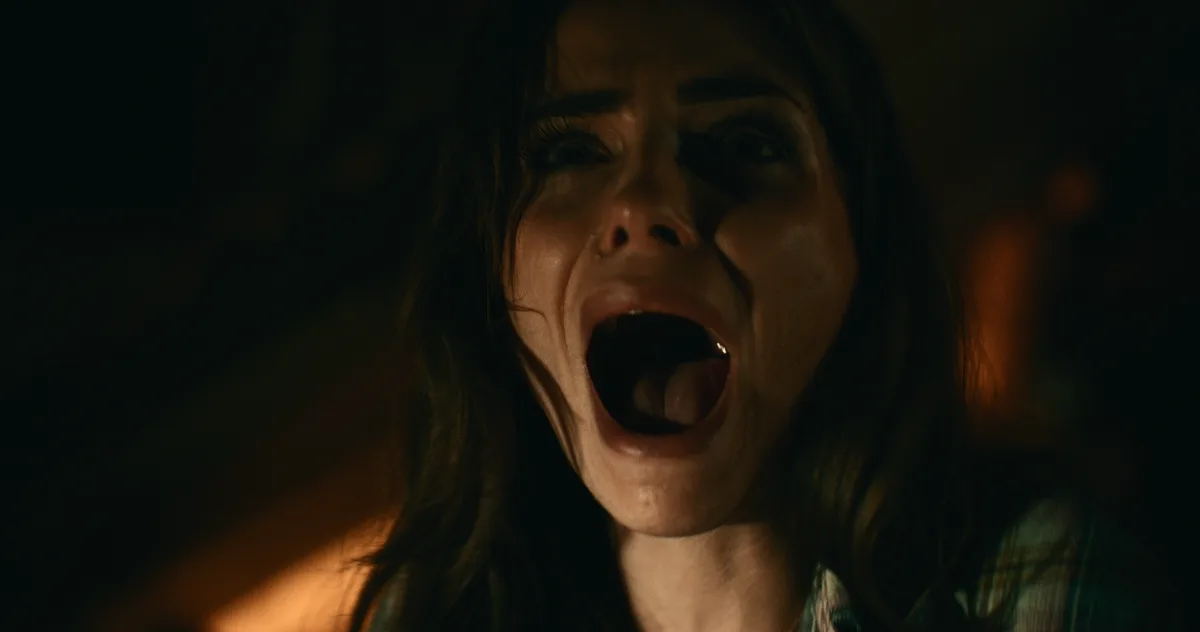
Capture follows a photographer who, after a car accident, begins experiencing hallucinations that make her question her own sanity. The premise is classic—vaguely reminiscent of Polanski’s Repulsion or The Babadook—but the approach is fresh: instead of relying on cheap jump scares, the film opts for slow, oppressive tension, where the real horror isn’t in what you see but in what you sense. The sound design is brilliant: unintelligible whispers, footsteps that shouldn’t be there, breaths that aren’t yours. The cinematography, cold and desaturated, reinforces the protagonist’s disconnection, while the editing, with its abrupt cuts and disorienting ellipses, makes the audience feel like they’re losing their minds too.
But here’s the problem: Capture promises more than it delivers. For its first half, it’s a flawless stylistic exercise, a masterclass in building tension without resorting to the cheap tricks of commercial horror. But in its second half, the film deflates like a punctured balloon. The plot twists are predictable, the characters—who had been mere archetypes—become inconsistent, and the ending, which should be devastating, is anticlimactic. It’s as if the directors, after building a first-class haunted house, decided to burn it down before the audience could explore it fully.
Still, Capture has enough merits to stand out in the Official Selection. Its atmosphere is immersive, its direction is precise, and its soundtrack—composed of ambient sounds and dissonant strings—is one of the most effective at the festival. But it lacks something: maybe courage, maybe originality, maybe just a script that doesn’t give up halfway. In a festival where psychological horror often stays on the surface, Capture at least tries to go deeper. Too bad it gets lost along the way.
⏰ 10:00 PM — A Toxic Grand Finale: Bad Haircut, or the Terror of Looking in the Mirror and Not Recognizing Yourself
And so we arrived at the night’s main event: Bad Haircut (110 min.), the psychological thriller from the Official Selection that left the Broadway Cinemas audience hypnotized and disturbed in equal measure. Directed by a team that, like Capture’s, prefers to remain anonymous—because, apparently, mystery sells—the film is a Freudian nightmare disguised as a domestic drama. And unlike its predecessor in the lineup, this one delivers on its promises.
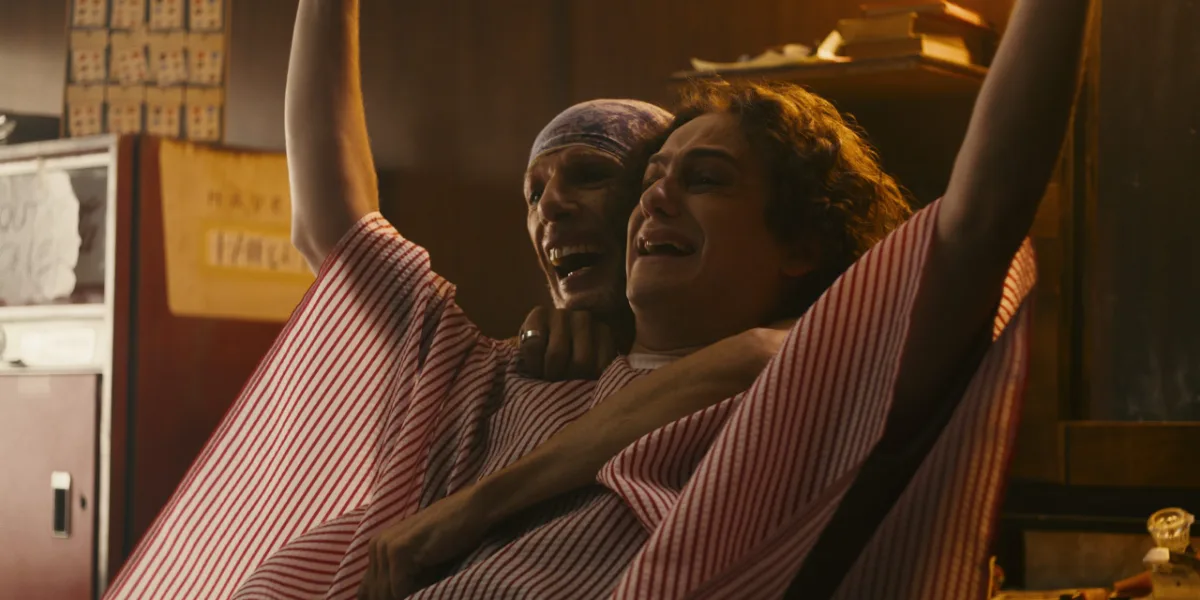
The plot follows Lena, a woman who, after a car accident, wakes up with selective amnesia that erases the last five years of her life. What begins as an intimate drama about lost identity quickly morphs into a labyrinth of obsessions, lies, and split personalities that recalls—for better and worse—the best work of David Lynch and David Cronenberg. The film plays with the audience’s perception, presenting scenes that could be flashbacks, hallucinations, or reality, and letting the viewer decide what to believe. Or rather, try to decide, because Bad Haircut has no intention of giving easy answers.
The film’s strength lies in its atmosphere: dense, oppressive, and loaded with symbolism. The cinematography, with its palette of sickly grays and bilious greens, evokes the surrealism of Eraserhead, while the soundtrack—a mix of distorted strings and industrial sounds—reinforces the sense that something is very wrong. But the standout is the acting: the lead, played by an actress whose name won’t be remembered—because, apparently, anonymity is part of the experience—delivers a gut-wrenching performance, full of nuance and ambiguity. It’s the kind of acting that makes you forget you’re watching a movie and immerses you completely in its nightmare.
That said, Bad Haircut isn’t for everyone. Its pacing is deliberately slow, its narrative is fragmented, and its ending—which we won’t spoil—is so open that some viewers will leave the theater furious. But it’s precisely that ambiguity, that refusal to give answers, that makes the film work. In a genre—psychological horror—that often falls into clichés and formulas, Bad Haircut dares to be uncomfortable, challenging, and, above all, honest. It’s not a perfect film—it has its gaps and self-indulgent moments—but it’s one of those rare works that leaves a mark. And in a festival where most films are forgotten five minutes after they end, that’s saying a lot.
### The best
Babybacks: A fuck you in movie form that proves trash horror* is still alive… and mean as hell. Bad Haircut: A Freudian nightmare that dares not to give answers—a rarity in today’s cinema, like an influencer* with self-awareness.### The worst
Killing Time: A critique of social media that falls into the same vices it denounces: pretentious, repetitive, and ultimately boring*. Capture: A film that promises heaven but delivers purgatory*, with an ending that feels like it was written by a Netflix algorithm.### The Verdict of Claqueta Ácida (0/10)
The third day of PUFA 2026 was a rollercoaster ride where the thrill didn’t come from the twists, but from the inconsistency of its offerings. From the unapologetic gore of Babybacks to the Freudian nightmare of Bad Haircut, passing through the failed sociological essay of Killing Time and the half-baked psychological thriller of Capture, the day was a reminder that when cinema is good, it can be transcendent—but when it’s bad (or just mediocre), it can be unbearable. And the worst part? Even the bad films here had something interesting to say. Which, deep down, is worse than if they’d said nothing at all. Because at least then we’d be spared the headache. 0/10, but with the hope that tomorrow, someone—anyone—gives us something that doesn’t make us want to gouge our eyes out.📸 Galería de imágenes


💬 El Veredicto de la Comunidad
¿Qué te ha parecido la película? Deja tu nota de 0 a 10 para contrastarla con el análisis de la redacción.
Aún no has votado
📢 ¿Te ha gustado el ácido?
Comparte esta crítica con tus amigos cinéfilos o desata la polémica en redes.
📩 📩 Get the poison in your inbox
Join our weekly mailing list. Honest film reviews, acid festival coverage, and cult recommendations every Sunday morning. Zero spam, pure celluloid.
🔒 We promise weekly poisonous reviews and exclusive coverage.Related Reviews
Recommended autopsies for demanding film buffs.
 ⚠️ Ácido Sulfúrico0.0
**PUFA 2026: "Bad Haircut" Wins the Festival—and Its Barber Gives Us a One-Way Ticket to Nuremberg (The Definitive Palmares, or How to Learn to Love the Absurd)**
*"Bad Haircut" takes home Best Film at the third edition of the Valladolid International Fantastic and Horror Film Festival, while the jury and critics remain deeply divided over the film’s quality.*
 ⚠️ Ácido Sulfúrico0.0
**PUFA 2026 – Day 7: A Night of Terror and Madness (Or: How I Learned to Stop Worrying and Love the Trainwreck)**
A recap of the festival’s second day, featuring *Horror and Love*, *Quantum Rave*, *Pinocchio Unstrung*, and *Frankie, Maniac Woman*—a night packed with terror, madness, and enough emotional whiplash to make a rollercoaster jealous.
 ⚠️ Ácido Sulfúrico0.0
**PUFA 2026 - Day 6: Psychological Horror and Castilian Legends (or How the Festival Proved Genre Cinema Can Be as Unbearable as an Influencer at a Funeral)**
The sixth day of the **Valladolid International Fantasy and Horror Film Festival (PUFA)** offered a mix of premieres and screenings, including *Lenore*, *The Waiting Man*, and *Janur Ireng*, exploring psychological horror, black magic, and artificial intelligence.