PUFA 2026 – Day 4 — Greed, Isolation, and a Feast of Mediocrity Served on a Silver Platter
The fourth day of PUFA 2026 delivered an intense mix of horror, suspense, and mysticism with films like *Grand Ciel*, *El llanto del perro*, *Cruel Hands*, and *Samakdo*. Each brought a unique—if uniquely painful—experience for festivalgoers.

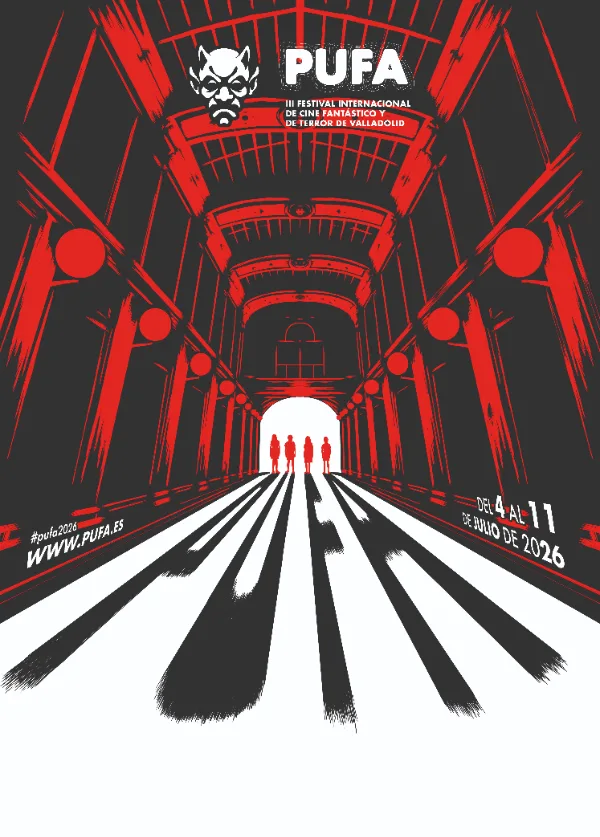
PUFA 2026 – Day 4: The Consequences of Greed and the Isolation of the Flesh: A Banquet of Mediocrity Served on a Silver Platter
The fourth day of the third edition of Pucela Fantástica (PUFA) was sold as a descent into the abysses of physical horror, mysticism, and human fatality. In reality, it was a parade of broken promises, a feast of reheated clichés, and a stark demonstration that genre cinema—when made without ambition, talent, or budget—can be as unbearable as a Sunday sermon in a town with no bars. Four films, four distinct ways to waste the viewer’s time, four stylistic exercises oscillating between the pretentious and the downright insulting. But fear not, dear readers of Claqueta Ácida, because today we won’t just give you a pretty summary with flowery words. Today, we’re going to flay these films with the precision of a drunk surgeon and the savagery of a critic who’s seen too much bad cinema to stay polite.
⏰ 4:15 PM — Grand Ciel (The Site): The Industrial Thriller That Smells Like Sweat and Corporate PowerPoints
We started strong—or at least, as strong as one can start with Grand Ciel (The Site), a French production that promised to plunge us into the dark secrets of a remote facility where human control and workplace alienation danced a macabre waltz. What we got was an office thriller on steroids, minus the wit of The Platform or the tension of The Belko Experiment. Here, "psychological isolation" boiled down to a handful of actors with the expressions of people who’ve just caught a whiff of something rotten in the company fridge, shuffling through hallways lit by that fluorescent glow designed to make us all look like decomposing corpses.
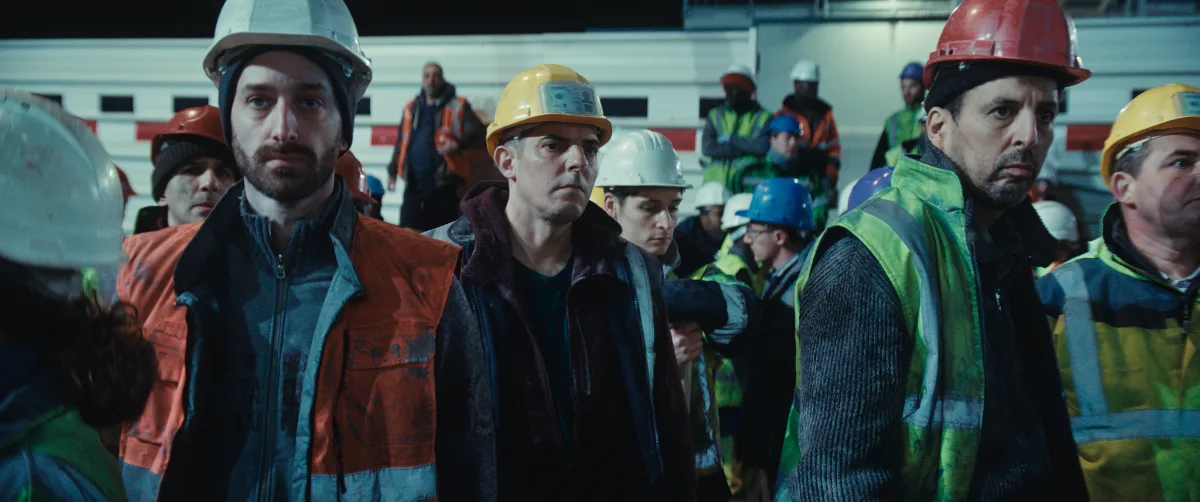
The direction, credited to a committee of "various" who probably met at a 90s screenwriting workshop, opts for gritty realism as if that were synonymous with depth. Spoiler: it’s not. The problem isn’t that the film is cold—cold can be interesting—but that it’s as dull as an IKEA instruction manual. The dialogue sounds like bad translations of an original English script, and the plot lurches forward with all the grace of an elephant in a china shop. There’s a mystery at the heart of Grand Ciel, but it’s the same mystery as your electricity bill: something shady is going on, but no one bothers explaining it because they know you won’t care.
The cinematography, meanwhile, looks like it was lifted from an 80s office furniture catalog, all those green and gray tones making everything seem coated in a layer of visual mold. And the editing... God, the editing. It’s as if the editor decided every shot needed to last exactly three seconds too long, just to remind us that suspense isn’t built on awkward pauses, but on intelligence. But when your film has nothing interesting to say, what else can you do but stretch out the silences until the audience starts questioning their life choices?
⏰ 6:00 PM — El llanto del perro: The Rural Horror That Barks But Doesn’t Bite
After the French snoozefest appetizer, the festival treated us to El llanto del perro, a Spanish production that, according to the synopsis, would lock us into a tale of silence and rural decay, where the setting would be a character in itself. And oh boy, was it ever: a character so flat, dull, and shallow as a puddle after a summer storm.
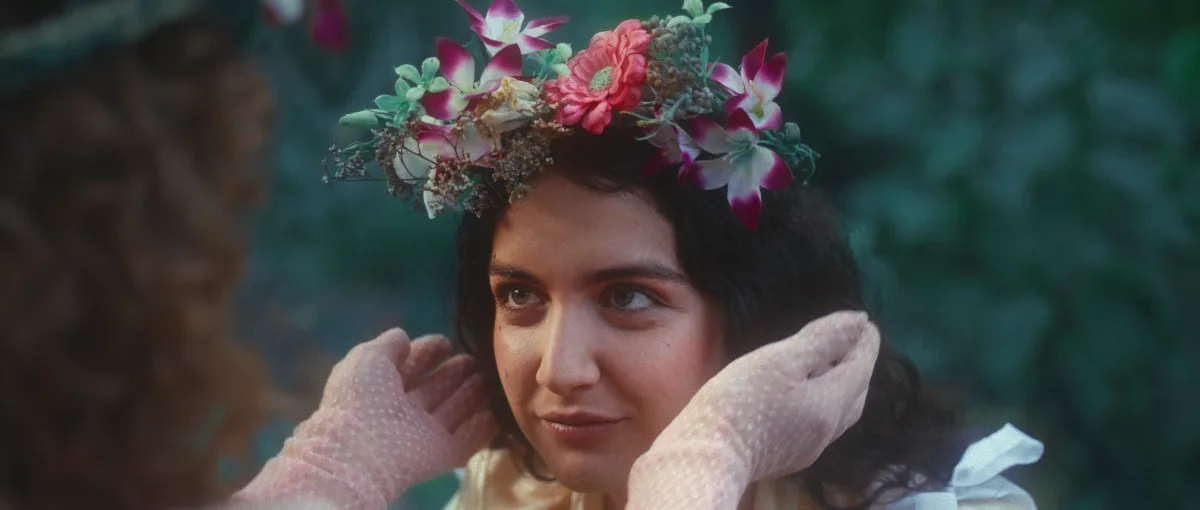
At a mere 72 minutes, you’d think the film would cut to the chase, that every shot would be loaded with meaning, that every silence would be a stab. Nope. El llanto del perro is the definitive proof that psychological terror isn’t achieved with long stares and cello music, but with ideas. And here, ideas are nowhere to be found. The plot revolves around a dysfunctional family in a godforsaken village, where secrets fester like forgotten fruit in a bowl. But the problem is those secrets are as predictable as the ending of a daytime soap opera.
The acting swings between over-the-top and comatose, as if the performers had received contradictory instructions: "Be natural, but also convey the weight of generational trauma." The result is a festival of facial tics and dramatic sighs that would make a mannequin laugh. And the rural setting, that supposed "character," is nothing more than a cardboard backdrop where the trees look like they were poorly cut out from a green screen, and the wind sounds like a stock sound effect.
The director—or directors, because at this festival everything seems to be made by committee—seems obsessed with minimalism, but confuses minimalism with laziness. There are entire scenes where nothing happens, as if the crew decided that, since they had no budget for special effects, they might as well stretch out the shots until the audience falls asleep. And boy, do they succeed. El llanto del perro is the kind of film that makes you wonder if the real horror isn’t having to watch it again in a genre marathon ten years from now.
⏰ 8:15 PM — Cruel Hands: Violence as a Substitute for Talent
Night fell, and with it, the promise of blood, sweat, and tears in the form of Cruel Hands, a revenge thriller that, according to the synopsis, would shake us with its visceral visuals and jugular-level direction. What we got was a hollow stylistic exercise, a film that mistakes violence for substance and tense pacing for chaotic editing.
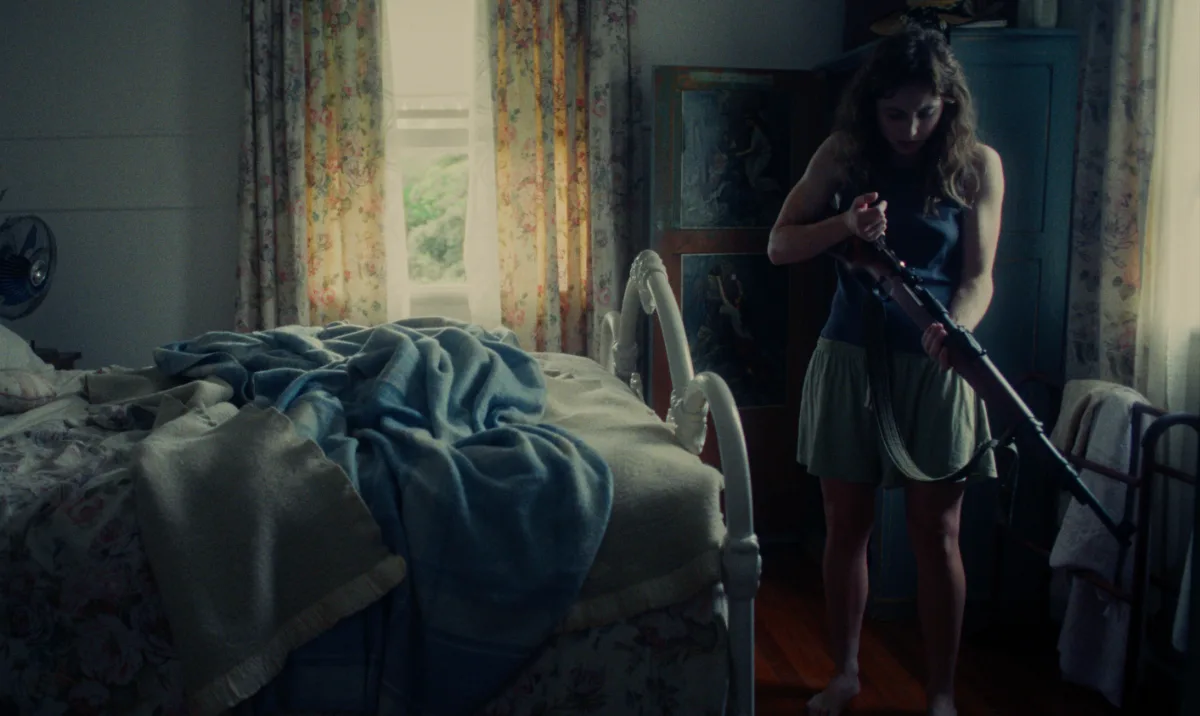
From the first minute, Cruel Hands insists on reminding us that 70s exploitation cinema is still dead, and resurrecting it without grace, irony, or a shred of self-awareness is a cardinal sin. The plot is so simple it could fit in a tweet: "A guy seeks revenge. There are punches. The end." But of course, since the screenwriter—or screenwriters, because at this festival everything is plural—decided that wasn’t enough, they threw in a couple of plot twists as predictable as a Saw ending.
The acting is worthy of a screaming contest in an asylum, with a protagonist who seems to have confused intensity with staring into the camera while clenching his teeth. And the direction... well, the direction looks like it was lifted from a YouTube tutorial titled "How to Make an Action Movie with Your Phone." The shots are so close it feels like the camera is trying to crawl into the actors’ mouths, and the fight choreography is so clumsy it’s cringe-inducing. There’s one scene in particular—a brawl in a warehouse—that seems shot by someone who just discovered slow motion and decided to use it for everything, as if merely slowing down the image could turn a schoolyard fight into a ballet of stylized violence.
But the worst thing about Cruel Hands isn’t its lack of originality, its erratic editing, or even its screenplay written with the feet. The worst thing is that it has nothing to say. The violence here isn’t a commentary on society, an exploration of human psychology, or even a well-executed spectacle. It’s pure filler, a cheap trick to keep the audience awake after two films that already put them in a medically induced coma. Cruel Hands is the definitive proof that genre cinema isn’t saved by fake blood and screams. It needs something more, and that something is glaringly absent.
⏰ 10:00 PM — Samakdo: Asian Folklore as an Excuse for Having No Script
And so we arrive at the night’s main course, the grand finale, the film that promised mysticism, blood, and breathtaking visual imagery: Samakdo. With 100 minutes of runtime and a synopsis teeming with dark myths, blood legacies, and vengeances from beyond, one might think the festival was finally about to deliver something memorable. Nope. Samakdo is the kind of film that makes you wonder if the creative team confused "stylized" with "incomprehensible" and "atmospheric" with "boring to tears."
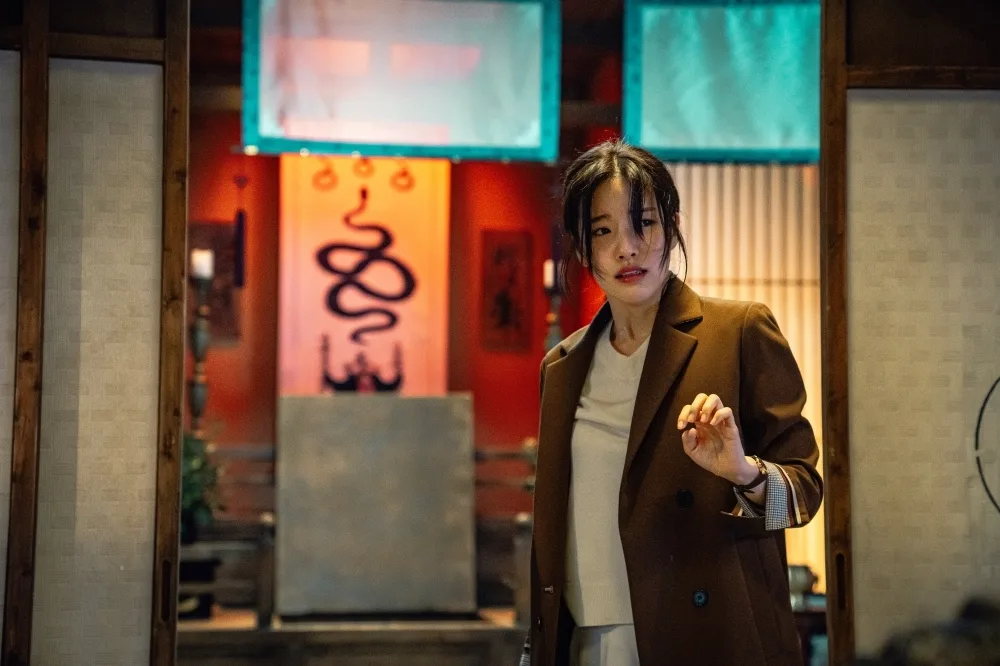
The film plunges us into a world where Eastern folklore blends with supernatural horror, but it does so with the grace of a drunk tourist trying to tell a joke in a language they don’t speak. The plot is a gibberish of unpronounceable names, convoluted family ties, and plot twists straight out of a "How to Write a Screenplay in 10 Easy Steps" manual. There’s one scene, for example, where a character discovers their grandmother was actually a vengeful spirit, and the revelation is so underwhelming it feels like the actor just remembered they left the gas on.
The production design, which should have been the film’s strong suit, is so overloaded it looks like a collage made by someone with visual hoarding syndrome. Every shot is packed with details, sure, but none of them add anything to the story. It’s as if the director decided that, since they couldn’t afford a decent script, they’d at least fill the screen with visual clutter to distract the audience. And distract it does: at times, Samakdo looks less like a horror film and more like an After Effects special effects catalog.
The acting is so stiff it seems like statues with constipation problems, and the soundtrack, which should have been hypnotic, sounds like someone mixed a gong with a washing machine on spin cycle. But the worst part is that Samakdo has no idea what it wants to be. Is it a family drama? A supernatural thriller? A ghost story? It’s all of those things and none at once, a narrative Frankenstein that lurches forward as if the screenwriter wrote each scene on a different Post-it and then stuck them together in random order.
### The best
- The intermission between films, which at least lets you step outside and remember there’s a world beyond this festival.
- The certainty that, after watching these four gems, any other bad movie will seem like a masterpiece in comparison.
### The worst
- The feeling that these films’ directors confused "art" with "self-indulgence" and "horror" with "noise and fury signifying nothing."
- The fact that, after four films, the only mystery left unsolved is how the hell anyone gave them money to make these.
### The Verdict of Claqueta Ácida (0/10)
If PUFA 2026 was meant to be a journey into the abysses of horror and suspense, what it delivered on its fourth day was a tour through the purgatory of cinematic mediocrity. Four films that mistake pretension for depth, violence for substance, and style for vacuity, served on a silver platter for the audience to wonder, again and again, what they did wrong in life to deserve this. If genre cinema is a feast, today they served us leftovers from a menu that was never good to begin with. And the worst part? Not even dessert could save us. 0/10, and even zero feels insulted.📸 Galería de imágenes


💬 El Veredicto de la Comunidad
¿Qué te ha parecido la película? Deja tu nota de 0 a 10 para contrastarla con el análisis de la redacción.
Aún no has votado
📢 ¿Te ha gustado el ácido?
Comparte esta crítica con tus amigos cinéfilos o desata la polémica en redes.
📩 📩 Get the poison in your inbox
Join our weekly mailing list. Honest film reviews, acid festival coverage, and cult recommendations every Sunday morning. Zero spam, pure celluloid.
🔒 We promise weekly poisonous reviews and exclusive coverage.Related Reviews
Recommended autopsies for demanding film buffs.
 ⚠️ Ácido Sulfúrico0.0
**PUFA 2026: "Bad Haircut" Wins the Festival—and Its Barber Gives Us a One-Way Ticket to Nuremberg (The Definitive Palmares, or How to Learn to Love the Absurd)**
*"Bad Haircut" takes home Best Film at the third edition of the Valladolid International Fantastic and Horror Film Festival, while the jury and critics remain deeply divided over the film’s quality.*
 ⚠️ Ácido Sulfúrico0.0
**PUFA 2026 – Day 7: A Night of Terror and Madness (Or: How I Learned to Stop Worrying and Love the Trainwreck)**
A recap of the festival’s second day, featuring *Horror and Love*, *Quantum Rave*, *Pinocchio Unstrung*, and *Frankie, Maniac Woman*—a night packed with terror, madness, and enough emotional whiplash to make a rollercoaster jealous.
 ⚠️ Ácido Sulfúrico0.0
**PUFA 2026 - Day 6: Psychological Horror and Castilian Legends (or How the Festival Proved Genre Cinema Can Be as Unbearable as an Influencer at a Funeral)**
The sixth day of the **Valladolid International Fantasy and Horror Film Festival (PUFA)** offered a mix of premieres and screenings, including *Lenore*, *The Waiting Man*, and *Janur Ireng*, exploring psychological horror, black magic, and artificial intelligence.