PUFA 2026 — "Bad Haircut" Wins the Festival—and Its Barber Gives Us a One-Way Ticket to Nuremberg (The Definitive Palmares, or How to Learn to Love the Absurd)
*"Bad Haircut" takes home Best Film at the third edition of the Valladolid International Fantastic and Horror Film Festival, while the jury and critics remain deeply divided over the film’s quality.*

PUFA 2026: Bad Haircut Wins the Festival and Its Barber Treats Us to an Express Trip to Nuremberg (The Definitive Palmares, or How to Learn to Love the Absurd)
Look, dear readers, let’s be honest: nobody kicked us out of Valladolid, though given the quality of some screenings, they wouldn’t have been wrong to do so. We left of our own accord, like guests who bail on a party the moment the host breaks out the photo album from their 1998 trip to Benidorm. The scent of cheap car air freshener and watered-down beer tipped us off that the weekend was going to be special, and our bodies—wise beyond measure—decided the dance floor (or, in this case, the festival afterparty) was a more dignified place than enduring the Official Selection. But here we are, with our journalistic pride intact—or what’s left of it after eight days of dubious horror and fantasy cinema—and a reheated coffee that tastes like equal parts salvation and despair. Because let’s face it: closing a festival the right way (or the way the devil demands) takes more than a keyboard and a bad attitude. It takes faith that somewhere in this universe, there’s genre cinema that wasn’t shot on a Nokia 3310 by a Fortnite-addicted teenager.
Pass the coffee. The twists, the snips, and the barber with a Führer complex are coming.
The Great Schism: Bad Haircut Crowned, and the Jury Treats Us to a Masterclass in Self-Congratulation
There are moments in a festival’s life when cinema achieves the impossible: uniting humanity in a collective embrace of emotion, terror, or laughter. And then there’s PUFA 2026, where cinema has pulled off something even more extraordinary: creating an unbridgeable chasm between the jury and critics, a rift that threatens to split the world into two irreconcilable factions—those who applaud Bad Haircut and those, like us, who now need therapy after watching it. The official jury—composed of Vanesa Bocanegra, José Cabrera Betancort, and actress Veki Velilla—has decided, in a display of either bravery or masochism (we’re still not sure which), that Kyle Misak’s film is the Best Picture of this edition. According to them, Bad Haircut stands out for its "successful blend of comedy, tension, and horror," a description that sounds about as convincing as an encyclopedia salesman in 2024.
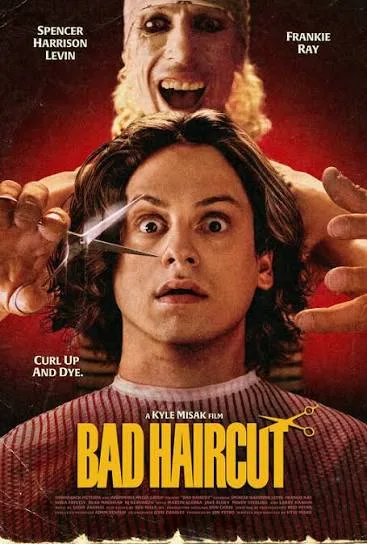
We, on the other hand, have an alternative theory: either the jury mistook the film for a conceptual art experiment on urban alienation, or someone spiked their coffee breaks with something stronger. Because let’s be clear: Bad Haircut isn’t a movie. It’s a pretentious, empty stylistic exercise, a desperate attempt to emulate the tone of Get Out mixed with the aesthetics of a Black Mirror episode directed by a TikTok intern. The plot—for those unfortunate enough not to have seen it—follows Mick, a barber with a shady past (and an even shadier haircut) who runs a barbershop where clients leave… different. No, we’re not talking about an innovative haircut. We’re talking about something far more sinister: a metaphor so obvious even the most distracted viewer could solve the mystery in the first twenty minutes.
But here’s the kicker: the jury didn’t just award the film; they praised its "solid performances and the personality of its visual proposal." Solid. Personality. Two words that, when applied to Bad Haircut, sound as forced as a Rajoy joke in a dark comedy monologue. Because let’s be honest, the only thing solid about this movie is the consistency of a flan in an earthquake, and its visual proposal looks like it was lifted from an After Effects tutorial for beginners. Director Kyle Misak demonstrates a staggering talent for wasting shots, with cinematography that oscillates between amateurish and downright cheap, as if the budget vanished on bad wigs for the cast. And let’s not even talk about the editing, which looks like it was done by someone who discovered the "cut" button in Premiere Pro five minutes before starting.
But of course, the jury is sovereign, and if they see a masterpiece where we see a pretentious mess, who are we to question it? Mr. Cynicism, our star critic, has already left his mark on the Broadway Cinemas—literally. After the screening, he was forced to destroy a seat in a fit of repressed rage, muttering something about "the death of cinema" and "the end of civilization as we know it." In a display of professionalism, we restrained him from torching the theater, but we understand his frustration. Because in the end, this is what cinema is about: where some see art, others see a toothache with delusions of grandeur.
BREAKING NEWS: The Barber Sends Us Back to 1939 (And No, It’s Not a Metaphor)
As we were drafting this chronicle from a distance—specifically, from a dive bar where the coffee tastes like dirty water and the patrons look like they’ve wandered out of The Walking Dead—we received an email that put the cherry on top of this PUFA edition. The Bad Haircut team, visibly miffed by Mr. Cynicism’s review (who, let’s recall, called the film "an insult to intelligence, horror, and the barber profession"), decided it was the perfect time to send us a love letter disguised as a veiled threat.
The email, written in the tone of someone who’s just discovered the world doesn’t revolve around their movie, begins with a "Dear" so insincere it could cut glass. They tell us, with hearts on their sleeves (and, we assume, daggers in their hands), that Bad Haircut had "garnered rave reviews at its world premiere at Fantastic Fest," as if that’s a valid argument and not the cinematic equivalent of "my mom thinks I’m handsome." Then they get to the point: the PUFA jury is full of "wise professionals," while our review is a "malicious attack completely devoid of reality." In other words, according to them, we’re ignorant, bitter critics who don’t understand art when it’s right in front of us.
But the best part is yet to come. Frankie Ray, the actor who plays Mick the Barber (and whose performance is so over-the-top it looks like he’s gunning for a Razzie), decided to escalate the debate to historic levels. In a masterclass of diplomacy, he declared, verbatim: "Hitler had an opinion, but as a human race we realize that some opinions are toxic." Boom! From Valladolid to Nuremberg in one paragraph. Because, of course, comparing a film review to the Nazi regime is the height of elegance and subtlety, right, Frankie? We, being peaceful folk, responded with a message full of affection: "Relax, Frankie. If the rest of the Claqueta Ácida team sees the movie, I’m sure the opinion will be totally different… or not, because maybe we’ll still think it’s trash. But hey, at least we won’t compare you to a genocidal maniac."
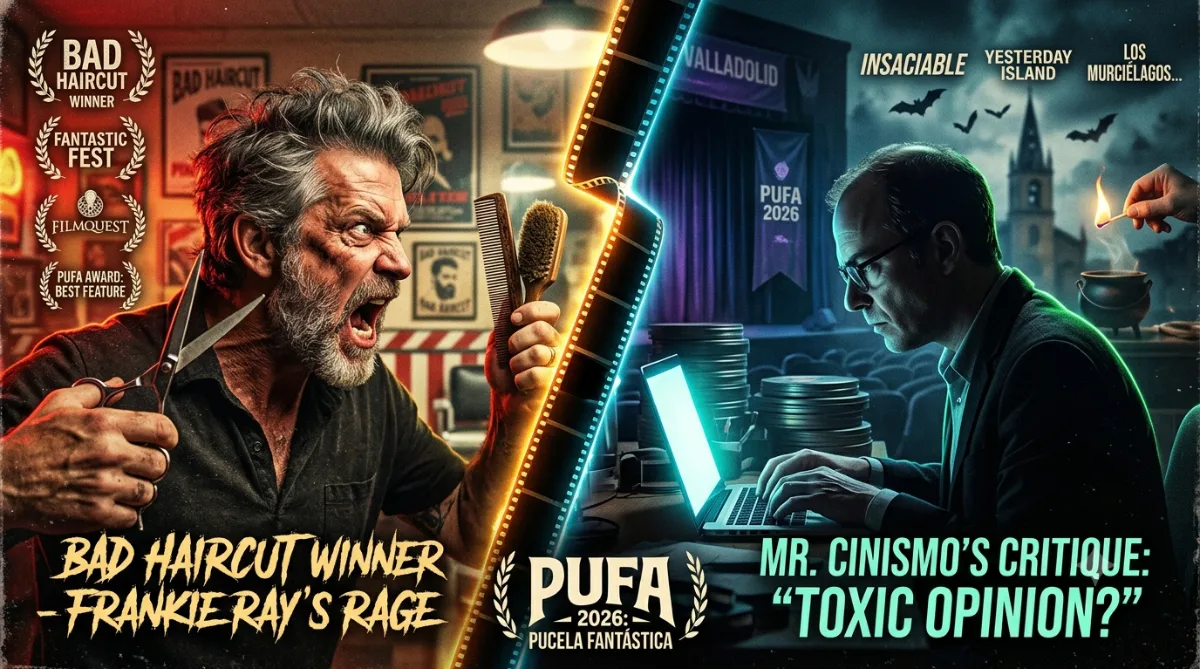
At the end of the day, this is what festival roulette is all about: some get lucky, others get Mr. Cynicism, and a few fortunate souls get a jury that mistakes horror for a YouTube tutorial. From here, we send a big hug to Frankie Ray, Kyle Misak, and the entire Bad Haircut team. We’re glad to know that, even though we bailed early, our critic’s bile is still crossing the Atlantic and leaving its mark. Just don’t forget: next time, invite us to the premiere. After all, it can’t be worse than the movie.
Ignorant, Bitter, or Just Blessed with Taste? (Spoiler: A Bit of Everything)
Given the chasm between our rankings and the jury’s palmares, the million-dollar question arises: Are we hopelessly bitter, ignorant critics who don’t understand modern cinema, or do we just have standards so high even The Godfather would look like a Telecinco production to us? The answer, as with most things in life, is a bit of everything.
The truth is, we suffer from the blessed syndrome of the indomitable avant-garde, a chronic condition that forces us to question anything that smells like self-congratulation. Because let’s be honest, every festival needs a critic to deflate the industry’s ego, someone who isn’t afraid to say the emperor has no clothes when the rest of the world is applauding like trained seals. The history of film criticism is written on this tension between easy applause and sharp fangs, and we, dear readers, have chosen the side of the biters.
To better understand, let’s revisit some of the great titans of Spanish criticism, those giants who taught us that cinema, when it’s good, deserves to be defended to the death, and when it’s bad, deserves to be burned at the stake of secondhand embarrassment:
- Carlos Boyero: The king of acidity, capable of destroying a blockbuster with a couple of sentences while getting emotional over a classic noir. Boyero doesn’t review movies; he dissects them with a rusty scalpel and leaves them bleeding on the operating table. His legacy is that of a man who hated bad cinema with the same passion he loved good cinema, and that, dear readers, is something we deeply admire.
- Alfonso Pumares: A hurricane of opinions, a critic who shouted "useless!" at a director live on air while infecting you with his mystical passion for Asian or B-movie cinema. Pumares didn’t do criticism; he did performance, and his legacy is that of a man who understood that cinema, when it’s great, deserves to be defended with claws and teeth, and when it’s trash, deserves to be treated as such.
- Ángel Sala: The great guru of fantasy, a man who loves extreme gore with the same intensity he hates lazy proposals. Sala turned the Sitges Festival into a global benchmark, but he’s also shown that horror isn’t a lesser genre—it’s a battleground where only the brave survive. His demands are brutal but necessary, because in the end, genre cinema deserves the same respect as the most prestigious drama.
- José Luis Garci: The last romantic, a man who watched cinema with nostalgia and lyricism, capable of praising a minor work if it touched the right nerve but ruthless with empty modernities. Garci understood that cinema is pure emotion, and that sometimes, a bad movie can be more interesting than a good one if it connects with the audience the right way.
At Claqueta Ácida, we stand in that tradition: the one that isn’t afraid to say what it thinks, even if it means making enemies at every festival. The fact that the PUFA jury crowned Bad Haircut while we tore it apart doesn’t make us ignorant—it makes us necessary. Because in the end, cinema isn’t just technique, nor is it just art: it’s an experience, and if that experience consists of two hours of boredom disguised as indie horror, someone has to say it.
And if Mick the Barber (or Frankie Ray, or Kyle Misak) is stung by our opinion, welcome to the club: cultural journalism isn’t a popularity contest; it’s an exercise in honesty. And we, dear readers, would rather be honest than liked by everyone.
Witchcraft, Shorts, and What We Missed While Drinking (Or How to Learn to Love FOMO)
As good journalists (or at least, as people paid to pretend to be), we haven’t the faintest idea what the vibe was like in the room for the rest of the awards, because we were too busy living our best lives (or, in other words, drinking cheap beer in a bar where the Wi-Fi didn’t work and the owner looked like he’d stepped out of a horror movie). But the official record is the official record, and we, as professionals, will trust the jury’s judgment… reluctantly.
In the Aquelarres section (that catch-all category where the festival dumps everything that smells like sci-fi, fantasy, or dubious Martian nonsense), the winner was the Australian 'Yesterday Island', by Sam Voutas. A time-loop sci-fi film that, according to the jury, not only takes home the top prize in its category but also snags the Panic House Award – #ConUnPack. Since we didn’t see it (because, remember, we were drinking), we’ll trust the professionals’ judgment, though something tells us that if the jury awarded Bad Haircut, we might want to watch Yesterday Island with a critical eye… and a bottle of whiskey nearby, just in case.
There was also a special mention for the Japanese 'Grand Ciel (The Site)', a film that, according to the rumor mill (or, in other words, the jury), "dazzles with its oppressive atmosphere and innovative narrative." We, who’ve been fans of Japanese horror since we saw Ringu and shat ourselves on the couch, are happy for them, though something tells us that if the film is that innovative, maybe we should’ve seen it before hitting the bars. But hey, FOMO (Fear Of Missing Out) is the bread and butter of festivals, and this time was no different.
In the short film category, 'Los murciélagos han abandonado el campanario' (The Bats Have Left the Belfry), by Alfonso and Manuel Bernal, was crowned the best short of the edition. According to the jury, it has "great poetic force," a description that sounds as pretentious as a teenager’s existential crisis poem. But hey, we’ll take their word for it. The category’s mention went to 'Época de plagas' (Plague Season), and the audience, ever the contrarians, awarded 'El fantasma de la quinta' (The Ghost of the Fifth). Finally, a pat on the back in the form of the "Young Talent" award for actress Mavournee Hazel for 'Cruel Hands'. Congratulations to all—you escape the bonfire because we didn’t see you, but something tells us that if the jury awarded Bad Haircut, we should maybe watch these shorts with caution.
National Pride and Witchcraft to Close the Festival (Or How to Love Spanish Cinema, Even When It’s Bad)
The institutional highlight of the evening (which, of course, we missed because we were too busy enjoying the weekend) was the presentation of the PUFA Honorary Award to a true legend of Spanish genre cinema: Jorge Guerricaechevarría.
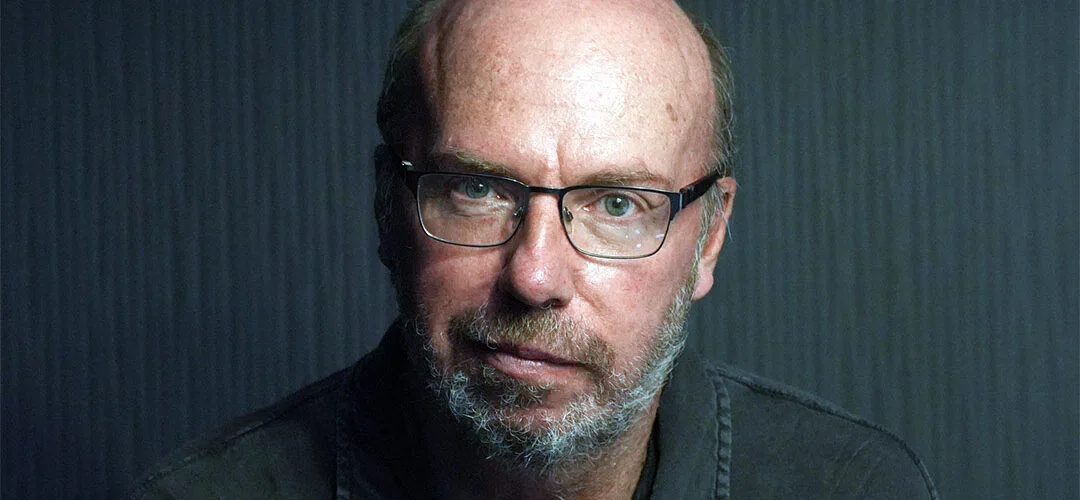
If the name doesn’t ring a bell, let’s refresh your memory: this man is the screenwriter behind some of the most iconic Spanish films of the last few decades, from Álex de la Iglesia’s The Day of the Beast to Jaume Balagueró’s [REC]. A master of blending horror, black comedy, and social satire, Guerricaechevarría has spent his career proving that Spanish cinema can be as brutal, funny, and unhinged as the best of them. And if there’s one thing we’ve learned from his work, it’s that genre cinema isn’t just about scares or laughs—it’s about telling stories that reflect the madness of the world we live in.
So, while we were out there toasting to the end of the festival with questionable life choices, the PUFA paid tribute to one of the few people who actually deserves an award. Because let’s be real: in a year where Bad Haircut took home Best Picture, someone had to remind us that good cinema still exists. And if that someone is Jorge Guerricaechevarría, then we’ll take it as a sign that not all hope is lost.
The Verdict of Claqueta Ácida
So, what’s the final word on PUFA 2026? A festival that, like a bad haircut, will be remembered more for the damage it caused than the style it tried to project. The jury’s decision to award Bad Haircut as Best Film is a symptom of everything that’s wrong with modern cinema: the obsession with style over substance, the confusion of pretension with artistry, and the inability to distinguish between a bold vision and a half-baked idea. But it’s also a reminder that festivals, like life, are subjective, and that sometimes, the most interesting
💬 El Veredicto de la Comunidad
¿Qué te ha parecido la película? Deja tu nota de 0 a 10 para contrastarla con el análisis de la redacción.
Aún no has votado
📢 ¿Te ha gustado el ácido?
Comparte esta crítica con tus amigos cinéfilos o desata la polémica en redes.
📩 📩 Get the poison in your inbox
Join our weekly mailing list. Honest film reviews, acid festival coverage, and cult recommendations every Sunday morning. Zero spam, pure celluloid.
🔒 We promise weekly poisonous reviews and exclusive coverage.Related Reviews
Recommended autopsies for demanding film buffs.
 ⚠️ Ácido Sulfúrico0.0
**PUFA 2026: "Bad Haircut" Wins the Festival—and Its Barber Gives Us a One-Way Ticket to Nuremberg (The Definitive Palmares, or How to Learn to Love the Absurd)**
*"Bad Haircut" takes home Best Film at the third edition of the Valladolid International Fantastic and Horror Film Festival, while the jury and critics remain deeply divided over the film’s quality.*
 ⚠️ Ácido Sulfúrico0.0
**PUFA 2026 – Day 7: A Night of Terror and Madness (Or: How I Learned to Stop Worrying and Love the Trainwreck)**
A recap of the festival’s second day, featuring *Horror and Love*, *Quantum Rave*, *Pinocchio Unstrung*, and *Frankie, Maniac Woman*—a night packed with terror, madness, and enough emotional whiplash to make a rollercoaster jealous.
 ⚠️ Ácido Sulfúrico0.0
**PUFA 2026 - Day 6: Psychological Horror and Castilian Legends (or How the Festival Proved Genre Cinema Can Be as Unbearable as an Influencer at a Funeral)**
The sixth day of the **Valladolid International Fantasy and Horror Film Festival (PUFA)** offered a mix of premieres and screenings, including *Lenore*, *The Waiting Man*, and *Janur Ireng*, exploring psychological horror, black magic, and artificial intelligence.