Yesterday Island — Paradise Found in the Cliché Swamp No One Asked For
Sam Voutas gifts us a desert-island getaway engineered by a Netflix algorithm: predictable, dull, and starring actors plucked straight from a TikTok casting call.

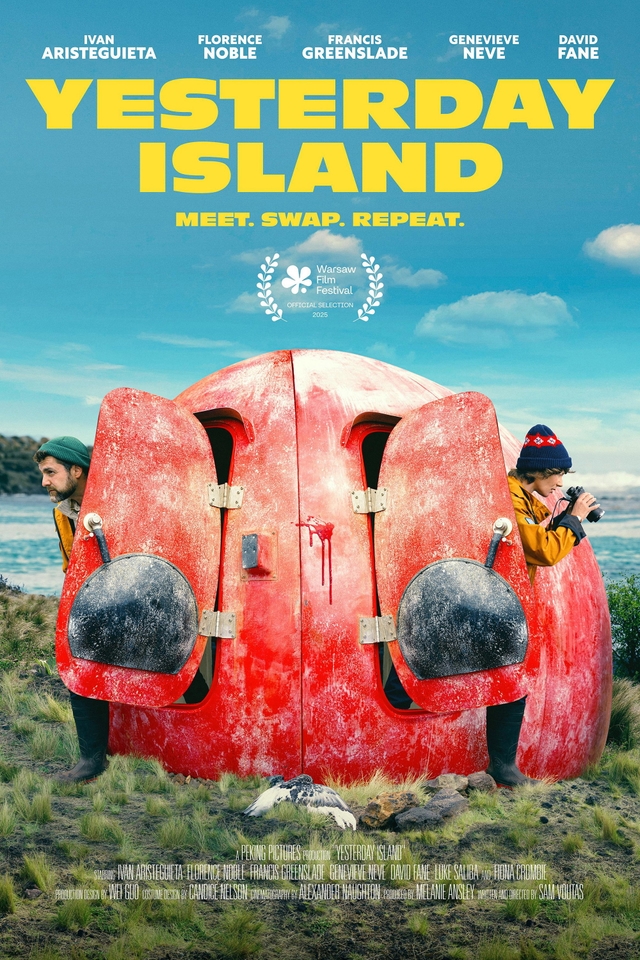
Survival cinema has always been a battleground where humanity grapples with itself between palm trees and operatic storms. From Robinson Crusoe to Cast Away, with a detour through Danny Boyle’s infamously pretentious The Beach, the genre has teetered between existential reflection and cardboard entertainment. Yesterday Island, the latest brainchild of Sam Voutas, joins this tradition with the grace of a bull in a china shop: it promises an emotional journey but delivers a guided tour through the most threadbare tropes in the Lifetime Movies catalog. It’s not that the Australian director is a rookie—his previous effort, Kickboxer: Retaliation, already proved he could churn out action flicks with the depth of a puddle—but here, he seems to have mistaken minimalism for creative laziness. The film bills itself as a fable about human resilience, but it’s really a how-to manual on how not to make a survival movie in the 21st century: devoid of tension, originality, and featuring a cast that looks like they’re competing in a who seems the most lost at sea contest.
The genesis of Yesterday Island reeks of shameless opportunism. In the age of streaming, where content is mass-produced at industrial speeds and algorithms reward familiar (read: repetitive) stories, Peking Pictures—a production company previously known for financing low-budget martial arts films—decided it was the perfect time to launch their own Lost knockoff, minus the mystery, memorable characters, and, crucially, a budget for special effects that don’t look like they were ripped from a 90s video game. Sam Voutas, who both directs and writes the script, seems to have taken notes from Cast Away (2000) and The Blue Lagoon (1980) but forgot the most important detail: both films, flaws and all, had soul. Here, everything tastes like cheap recycling, as if someone blended the worst moments of Survivor with the cheesiest lines from a Hallmark rom-com. The result is a movie that trudges along with the energy of a comatose snail, where every scene feels designed to kill time between the rare moments when, by sheer accident, something interesting—or at least competent—happens on screen.
The cultural climate in which Yesterday Island debuts is, unfortunately, one where mediocrity has been normalized as currency. In a world where platforms prioritize content over cinema, where stories are measured by engagement metrics rather than artistic merit, this film is the perfect product: safe, inoffensive, and as forgettable as the last episode of a series you abandoned halfway. Sam Voutas isn’t the only culprit, of course. Behind him lies a system that rewards repetition over innovation, one that prefers to invest in tired formulas—worn thinner than a Big Bang Theory joke—rather than risk challenging the audience. Yesterday Island isn’t bad by accident; it’s bad because someone, somewhere, decided the audience deserved something good enough to kill time, as if cinema were a mere distraction rather than an art capable of moving, horrifying, or at least entertaining with a shred of dignity.
The saddest part is that the premise had potential. A deserted island, a group of strangers forced to coexist, the struggle for resources, internal conflicts... All of this could have birthed a gripping psychological thriller, a meditation on human nature, or, at worst, decent entertainment. But Voutas seems more interested in padding out 91 minutes with scenes of characters strolling along the beach, staring into the distance with what now? expressions, and spouting dialogue that sounds like it was written during a beginner’s creative writing workshop. The film doesn’t just fail to capitalize on its setting—which, by the way, is the only thing that saves it from the trash heap, with landscapes straight out of a screensaver—it turns it into a cardboard backdrop, as if the characters were trapped on a Survivor set rather than a remote location where their lives are supposedly at stake. If this is the best survival cinema can offer in 2025, maybe the genre should drown in its own irrelevance.
Direction: The Art of Saying Nothing with Style
Sam Voutas directs Yesterday Island as if he’s shooting a travel commercial: plenty of pretty shots of paradise beaches, but zero interest in what’s happening within the frame. His staging is as flat as the dialogue, with a camera that merely follows the characters from one side to the other without contributing any visual tension. There’s no rhythm, no narrative pulse, and certainly none of that claustrophobic or desperate atmosphere a survival film should evoke. Instead, we get a succession of static scenes, as if the director confused realism with boredom. The wide shots of the island are the only thing salvaging the cinematography, but even these feel more like a homage to National Geographic than a survival thriller. Alexander Naughton, the director of photography, does what he can with subpar material, but not even his work can mask the lack of ideas behind the camera.
The editing is another glaring sin of Yesterday Island. Transitions between scenes are so abrupt they look like editing errors, and the cuts follow no narrative or emotional logic. There are moments when the film seems to speed up for no reason, as if someone hit the fast-forward button, while others drag on with unnecessary shots of characters staring into the void. Voutas doesn’t seem to grasp that survival cinema requires precise time management: every second must count, every scene must advance the plot or develop the characters. Here, everything feels arbitrary, as if the screenwriter flipped a coin to decide what happens next. The result is a film that lurches forward without fluidity, tension, or that spark of brilliance that might have saved it from being a hollow stylistic exercise.
Actors: A Casting of Sleepwalkers on a Cardboard Island
The cast of Yesterday Island is, at best, uneven. Ivan Aristeguieta is the only one who seems to understand he’s in a movie, though his performance swings between telenovela-level melodrama and a failed attempt at looking like a believable castaway. His character, a guy named Mateo (because, of course, he had to have an exotic yet easy-to-remember name), is the typical natural leader every survival film includes so the audience has someone to root for. The problem is Aristeguieta fails to convey either charisma or depth, and his acting is limited to furrowing his brow and spouting motivational phrases like he’s in a corporate coaching seminar. Florence Noble, who plays Lena, the strong but vulnerable woman of the group, has moments where she almost convinces, but her character is so poorly written it’s impossible to take her seriously. Every time she opens her mouth, it’s as if the script is whispering: No, no, just say the line and get out of the shot.
The rest of the cast is, quite simply, forgettable. Francis Greenslade and Genevieve Neve do their best with characters straight out of a How to Write Archetypes Instead of People manual, while David Fane and Luke Saliba spend most of the film as extras in their own story. The most frustrating part is that there are glimpses of chemistry between some actors, but the script blows them up with dialogue that sounds like it was written by a cliché generator. At one point, a character says, We’re not castaways, we’re survivors, and it’s hard not to laugh at such a painfully obvious line. If the cast had been given decent material to work with, they might have salvaged something, but as it stands, Yesterday Island is a painful reminder that even the most committed actors can’t save a script written with the feet.
Technical Aspects: The Only Thing That Doesn’t Stink
If there’s anything that saves Yesterday Island from being a total disaster, it’s its technical department. The cinematography by Alexander Naughton is, without a doubt, the film’s highlight. The shots of the island, with its white-sand beaches and turquoise waters, are so stunning they almost make you forget how mediocre everything else is. Naughton captures the natural beauty of the setting with a sensitivity that starkly contrasts with the clumsiness of the rest of the film. The colors are vibrant, the lighting is warm, and there’s an attention to detail in every frame that proves at least someone on this project knew what they were doing. It’s a shame the script isn’t up to par, because with a decent story, this cinematography could have elevated the film to another level.
The sound design and score, on the other hand, are so understated they’re almost invisible. There’s no memorable soundtrack, no standout sound effects, and certainly none of that atmospheric sound work that could have added tension to the scenes. It’s as if the sound team decided the best approach was to stay out of the way, and in this case, they might have been right. The production design, meanwhile, is functional but uninspired. The island looks real, but the objects and settings the characters use—from their makeshift huts to the tools they craft—lack the authenticity that could have made the film feel immersive. Instead, everything looks like it was pulled from an IKEA for Castaways catalog, as if someone said, This is what people expect to see in a survival movie.
The best
- Alexander Naughton’s cinematography: A breathtaking oasis in the desert of mediocrity that is the rest of the film. The island shots are so spectacular they almost justify the ticket price.
- The natural setting: The island where the film was shot is so beautiful it feels like a character in its own right. Too bad the script doesn’t know what to do with it.
- Ivan Aristeguieta: The only actor who seems to inhabit the same planet as the rest of humanity, even if his character is written with the subtlety of a sledgehammer.
The worst
- Sam Voutas’ script: A festival of clichés, cheesy dialogue, and predictable situations. It reads like it was written by a hungover Netflix algorithm.
- The characters: Hollow archetypes that could have been interesting if someone had bothered to give them an ounce of depth. Instead, we get textbook stereotypes.
- The pacing: The film moves as if someone forgot to wind it up. Some scenes drag on forever, while others zip by in a blink, with no rhyme or reason.
- The lack of tension: A survival film without tension is like a joke without a punchline. Yesterday Island isn’t just unfunny—it doesn’t even try.
The Verdict of Claqueta Ácida
Yesterday Island is the kind of film that makes you question not just the state of survival cinema, but the industry as a whole. It’s not bad because it’s pretentious, nor because it takes risks and fails; it’s bad because it doesn’t try anything at all. It’s a safe, calculated product designed to offend no one and, therefore, incapable of moving anyone. Sam Voutas had the chance to tell a story about human resilience, the struggle for survival, the instinct that keeps us alive even in the worst circumstances. Instead, he gifted us 91 minutes of characters walking along the beach, staring into the horizon, and spouting lines that could have been written by a self-help AI bot. If this is the best Australian cinema can offer in 2025, maybe it’s time for the continent to sink into the ocean and leave us in peace. 💀
💬 El Veredicto de la Comunidad
¿Qué te ha parecido la película? Deja tu nota de 0 a 10 para contrastarla con el análisis de la redacción.
Aún no has votado
📢 ¿Te ha gustado el ácido?
Comparte esta crítica con tus amigos cinéfilos o desata la polémica en redes.
📩 📩 Get the poison in your inbox
Join our weekly mailing list. Honest film reviews, acid festival coverage, and cult recommendations every Sunday morning. Zero spam, pure celluloid.
🔒 We promise weekly poisonous reviews and exclusive coverage.Related Reviews
Recommended autopsies for demanding film buffs.
 ⚠️ Ácido Sulfúrico3.0
Yesterday Island: Paradise Found in the Cliché Swamp No One Asked For
Sam Voutas gifts us a desert-island getaway engineered by a Netflix algorithm: predictable, dull, and starring actors plucked straight from a TikTok casting call.
 ⚠️ Ácido Sulfúrico0.0
**PUFA 2026: "Bad Haircut" Wins the Festival—and Its Barber Gives Us a One-Way Ticket to Nuremberg (The Definitive Palmares, or How to Learn to Love the Absurd)**
*"Bad Haircut" takes home Best Film at the third edition of the Valladolid International Fantastic and Horror Film Festival, while the jury and critics remain deeply divided over the film’s quality.*
 ⚡ Ácido Cítrico5.0
Quantum Rave: The Neon Feast Nobody Asked For (And We All Deserved)
Paco Campano serves us a cocktail of cheap psychedelia and rusted robotics in 'Quantum Rave.' Art or cosmic vomit? Claqueta Ácida decides with boxing gloves on.