Recuerdo querido
A Japanese supernatural drama that reeks of cheap incense and telenovela tears. A masterpiece of intimate terror or a kimono-clad exercise in self-indulgence?

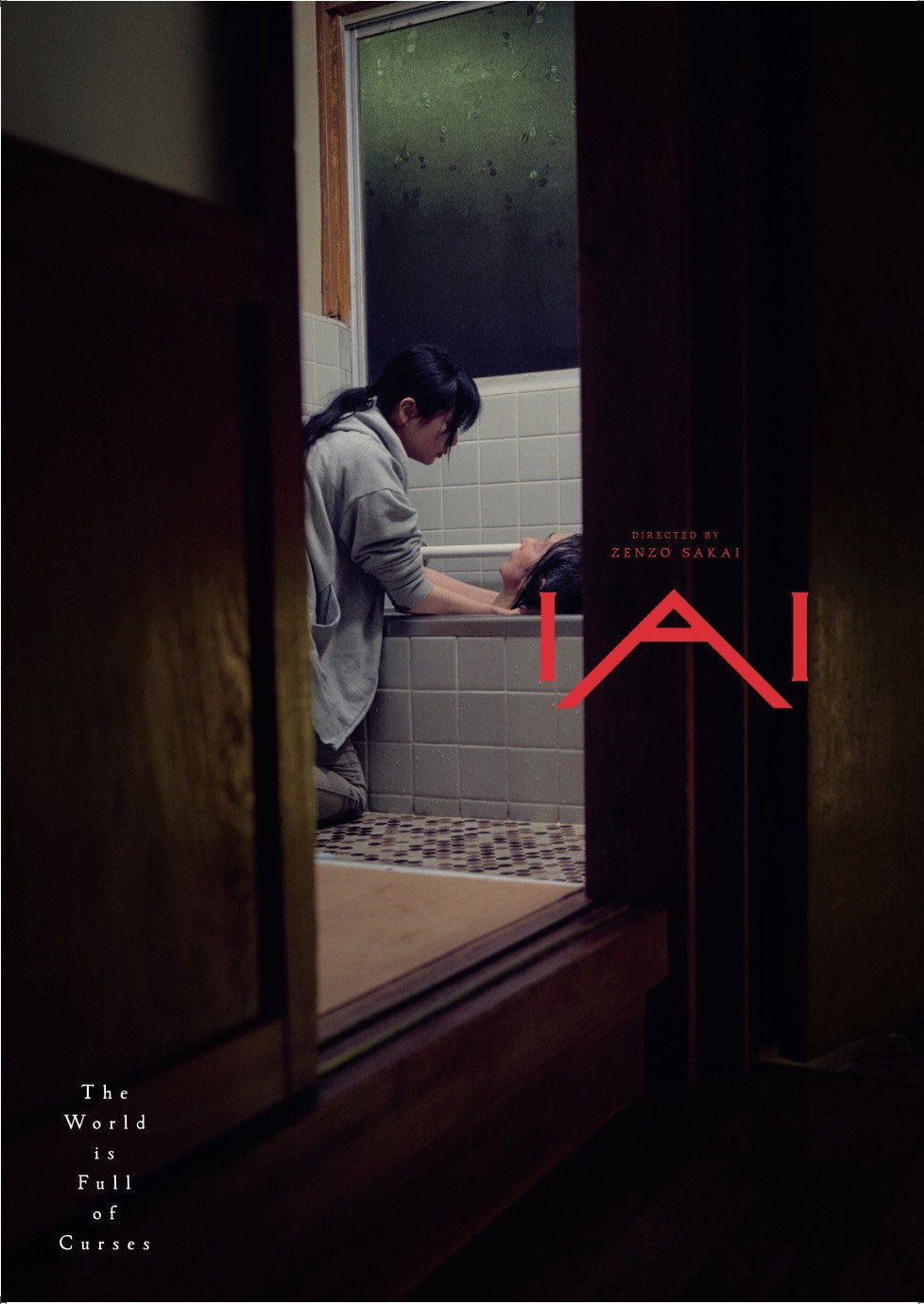
The stench of stale incense and glycerin tears hits you from the very first frame of Iuai, as if the cinema itself has morphed into a poorly ventilated Shinto shrine. Zensan Sakai, a name that until now only echoed through the late-night credits of Japanese TV dramas, strides into the director’s chair with the ambition of a drunken samurai: he wants to craft art from pain but ends up tripping over his own kimono. The film, produced by Drunken Bird (yes, the name says it all) and TV Tokyo, reeks of a tight budget and sleepless nights spent staring at scripts that changed more often than a teenager’s mood. Keisuke Miyazaki, the screenwriter, seems to have penned the story between sips of sake and sighs for a lost love, because the result is as predictable as an episode of Crying Out Love in the Center of the World—just with less charm and more ghosts who don’t know when to shut up.
We find ourselves in a theater that feels less like a screening room and more like a Buddhist temple: the walls sweat humidity, the projector wheezes like an ancestral sigh, and the audience—mostly film students who look like they haven’t slept in weeks—murmurs as if in prayer. Iuai isn’t a movie; it’s a sensory experience designed to make you feel guilty for not suffering enough. The plot, or what little of it peeks through all the weeping and candles, revolves around Rio Yamashita, a woman who returns to her hometown to confront the ghosts of her past (literally). But here’s the problem: Japanese ghosts don’t scare anymore—they just make you pity them. Instead of a Ringu that leaves your heart in your throat, Iuai offers Ju-on meets telenovela, where the specters cry harder than the living and the jump scares are so predictable even the theater cat sees them coming.
The shoot, according to rumors swirling through Japanese film forums like cockroaches in a Tokyo apartment, was a disaster worthy of a horror movie in its own right. Ryotaro Kawaguchi, the cinematographer, had to wrestle with a budget calculated by a monk in deep meditation, resulting in dark frames where the only things visible are the actors’ tear-streaked eyes and the occasional shroud that looks like it was plucked from a bargain bin. The locations, supposedly dripping with symbolism, resemble cheap TV sets where the wind blows artificially and doors creak as if performing their own lament. Then there’s the cast, led by An Ogawa, whose performance is the sole lifeline keeping this ship from sinking entirely. The rest of the ensemble, including Kyoko Fujii, who seems to be in another movie (or another dimension), is content to cry, sigh, and repeat lines like “love never dies” with the conviction of someone reciting a self-help manual.
But not all is lost. There’s something in Iuai that, despite its glaring flaws, slithers under your skin like a ghost that refuses to leave. Maybe it’s Zensan Sakai’s raw honesty in tackling grief, or maybe it’s the fact that, in a world where J-horror has become just another mass-produced commodity, this film at least tries to do something different—even if it stumbles over its own shadows. Don’t expect scares, though. The real terror here is the glacial pace of the plot, as if every scene is steeped in the melancholy of a love that refuses to die but doesn’t know how to live.

The best
- An Ogawa’s performance: An intense, heart-wrenching turn that elevates even the script’s most ridiculous moments.
- The cat: Without a doubt, the film’s best actor. Its presence is so commanding you’ll wonder if it’s the real ghost of the story.
- A few visual sequences: Like the bamboo forest encounter or the candlelit hallway, proving that with a little more ambition, this could’ve been something great.
- The soundtrack: Subtle but effective, whispering along with the film’s melancholic atmosphere like a ghost that doesn’t want to disturb.
The worst
- The pacing: The film crawls like a funeral in the rain—slow, heavy, and with the nagging feeling it’ll never end.
- The dialogue: Lines plucked straight from a self-help book for ghosts, so bad they hurt.
- The cinematography: Dark to the point of exasperation, as if the film fears light might expose its ugliest secrets.
- The production design: Austere to the point of looking cheap, like it was shot in a Buddhist temple’s storage closet.
- The ghosts: Instead of scaring, they just make you sad. They’re less supernatural entities and more soap opera characters.
Direction: The Art of Tripping Over Your Own Kimono
Zensan Sakai directs Iuai like a man learning to walk on stilts: clumsy, but with a determination that borders on heroic. His visual style is about as subtle as a hammer to the temple, favoring long takes designed to give the audience time to count the cracks in the walls. The lighting, courtesy of Ryotaro Kawaguchi, is dark to the point of obsession, as if the film fears sunlight might banish its ghosts prematurely. The framing is mostly static, recalling those old Japanese paintings where what matters isn’t what you see but what you sense. The problem? In Iuai, what you sense is pure, unadulterated boredom.
The pacing is another major issue. Iuai moves like a funeral procession in the rain—slow, heavy, and with the creeping dread that it’ll never end. The transitions between scenes are so jarring they feel like editing mistakes from an ‘80s B-movie, and the dialogue, penned by Keisuke Miyazaki, sounds like it was lifted from a ghostly self-help manual. “Love is like the wind—you can’t see it, but you feel it,” one character intones, and in that moment, you don’t know whether to laugh or cry, because the line is so bad it physically aches. Yet, again, there are flashes of brilliance amid the wreckage. A few sequences, like Rio Yamashita’s encounter with her lover’s ghost in a bamboo forest, drip with an eerie atmosphere reminiscent of Kiyoshi Kurosawa at his best. The problem is these moments are so rare they feel like continuity errors in a film that otherwise drags like a lost soul.
Performances: Tears, Shrouds, and a Cat That Steals the Show
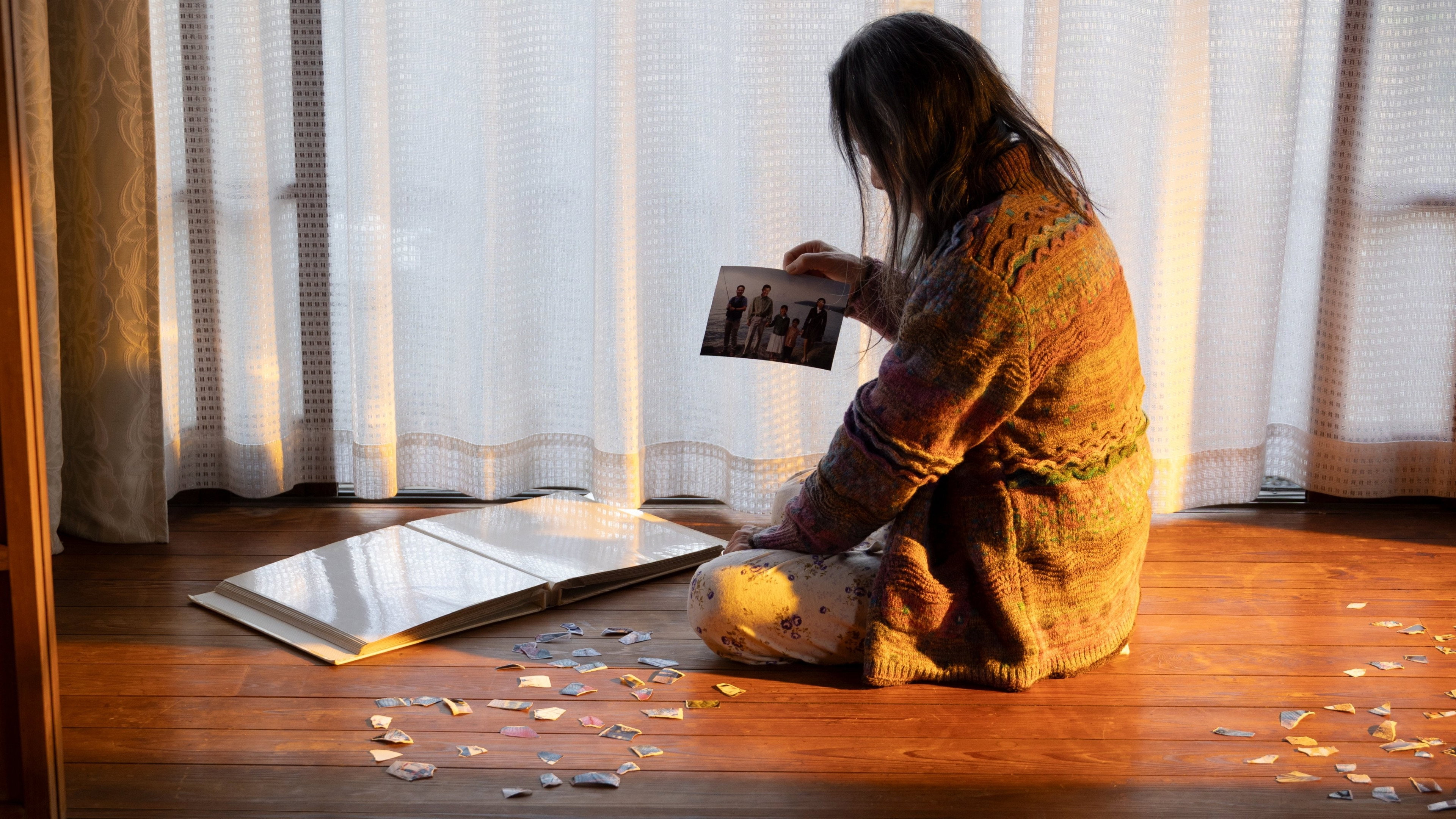
The cast of Iuai is a cocktail of performances ranging from merely adequate to downright painful. An Ogawa is, without question, the film’s saving grace. Her portrayal of a woman trapped between grief and guilt is so raw it makes you forget, if only for a moment, how absurd the script is. She has a magnetic presence, as if every gesture is laced with hidden meaning. When she cries, it’s with a rawness that hurts; when she locks eyes with the camera, you feel like she’s staring into your soul. The rest of the cast, however, seems to be in a different movie. Kyoko Fujii, as the ghost’s mother, overacts so hard she might as well be in a high school play. Her tears are so exaggerated they look like oil droplets, and her sighs sound like a balloon deflating.
But if there’s one actor who deserves special mention, it’s the cat. Yes, you read that right. There’s a cat in Iuai that, without uttering a single word, steals more scenes than the entire cast combined. It appears at the most unexpected moments, always with that feline gaze that seems to say, “Are you people serious right now?” In one scene, the cat sits in front of a mirror while Saori Seto’s ghostly reflection flickers behind it, and for a second, you’re convinced the cat is about to speak. It doesn’t, but its presence is so potent you’ll wonder if it isn’t the real ghost of the story.
Technical Aspects: When the Budget Shows More Than the Talent
The technical side of Iuai is a reminder that sometimes less is just… less. Ryotaro Kawaguchi’s cinematography is dark to the point of obsession, as if the film fears light might expose its deepest (and ugliest) secrets. The shots are mostly static, with a color palette that oscillates between ash gray and jet black, as if the movie was shot in a world where color has been outlawed. The sound design is another weak spot: the ghosts’ whispers sound like low-quality recordings, and the sound effects—wind, creaking doors—feel like they were pulled from a free audio library.
The costumes, handled by a team whose name isn’t worth remembering, are another disaster. The ghosts’ shrouds look like they were made from old bedsheets, and the kimonos on the living characters are so stiff they might as well be armor. The production design, in general, is so austere it feels like the film was shot in a Buddhist temple’s storage room. Yet, again, there are flashes of brilliance. The scene where Rio Yamashita walks down a hallway lined with candles is visually stunning, with lighting that recalls Caravaggio’s paintings. The problem is these moments are so rare they feel like continuity errors in a film that otherwise looks like it was shot on a 2010 flip phone.
The Verdict of Claqueta Ácida
Iuai is one of those films that leaves you with the nagging sense you’ve witnessed something important, even if you can’t quite put your finger on what. Zensan Sakai has ambition, that much is clear, but he lacks the finesse to turn his vision into something memorable. The film limps between supernatural drama and ghostly telenovela, never fully committing to either, and ends up as a bizarre hybrid that doesn’t quite work. That said, there are glimmers of genius amid the wreckage—An Ogawa’s performance, a few striking visual sequences—that prove with a little more talent and a lot less pretension, this could’ve been something great. As it stands, Iuai is a stylistic exercise that reeks of cheap incense and glycerin tears. It’s not bad, but it’s not good either. It’s, in the end, a film that drowns in its own shroud. 💀
💬 El Veredicto de la Comunidad
¿Qué te ha parecido la película? Deja tu nota de 0 a 10 para contrastarla con el análisis de la redacción.
Aún no has votado
📢 ¿Te ha gustado el ácido?
Comparte esta crítica con tus amigos cinéfilos o desata la polémica en redes.
📩 📩 Get the poison in your inbox
Join our weekly mailing list. Honest film reviews, acid festival coverage, and cult recommendations every Sunday morning. Zero spam, pure celluloid.
🔒 We promise weekly poisonous reviews and exclusive coverage.Related Reviews
Recommended autopsies for demanding film buffs.
 ⚡ Ácido Cítrico6.0
Recuerdo querido
A Japanese supernatural drama that reeks of cheap incense and telenovela tears. A masterpiece of intimate terror or a kimono-clad exercise in self-indulgence?
 ⚠️ Ácido Sulfúrico0.0
**PUFA 2026: "Bad Haircut" Wins the Festival—and Its Barber Gives Us a One-Way Ticket to Nuremberg (The Definitive Palmares, or How to Learn to Love the Absurd)**
*"Bad Haircut" takes home Best Film at the third edition of the Valladolid International Fantastic and Horror Film Festival, while the jury and critics remain deeply divided over the film’s quality.*
 ⚡ Ácido Cítrico5.0
Quantum Rave: The Neon Feast Nobody Asked For (And We All Deserved)
Paco Campano serves us a cocktail of cheap psychedelia and rusted robotics in 'Quantum Rave.' Art or cosmic vomit? Claqueta Ácida decides with boxing gloves on.